
Melbourne
First stop on the grand tour of Australia was visiting Geraldine and Troy in Melbourne. I thought it was a cool city with a cultured, artsy vibe—the perfect match for my cool, cultured friends. They taught me a lot about Australian culture, including history, geography, slang, and food.
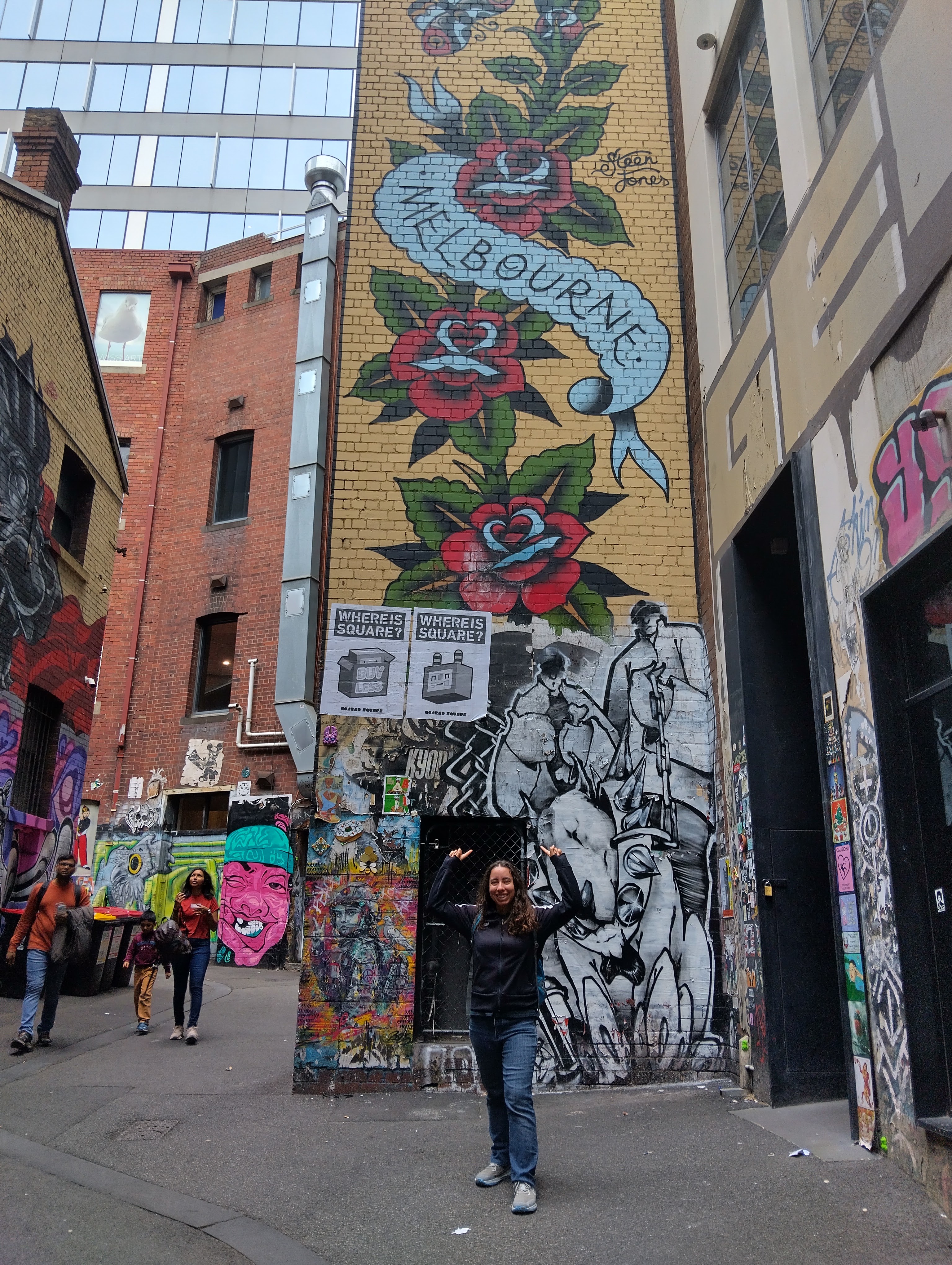
Geraldine took me all around the city. A highlight was an Aboriginal walking tour at the botanical gardens. The guide showed us many native plants which were historically used by the Aboriginals. Some of them were edible or scented, and Geraldine and I instantly became obsessed with lemon myrtle, which smells like lemon drops. We were also shown some tools and pelts with totems on them, and heard about the darker side of Australian history, specifically the “stolen generation”. The stolen generation were children with mixed European and Aboriginal heritage who were kidnapped and raised without access to Aboriginal cultural influence. I was shocked to learn that this had happened as late as the second half of the twentieth century. As I continued to travel around the country, I would hear about and see the effects of this again and again.
To get a good view of the city, we went up to the communal floor of a skyscraper where their friend Juan lives. Juan, originally from Colombia, told me about the concept of “the cosmic race” (la raza cósmica). It’s an ideology of a new race of people made up of all the races of the world. I like the idea of being a member of the cosmic race, and I imagine that that kind of thinking would have prevented the stolen generation from happening.
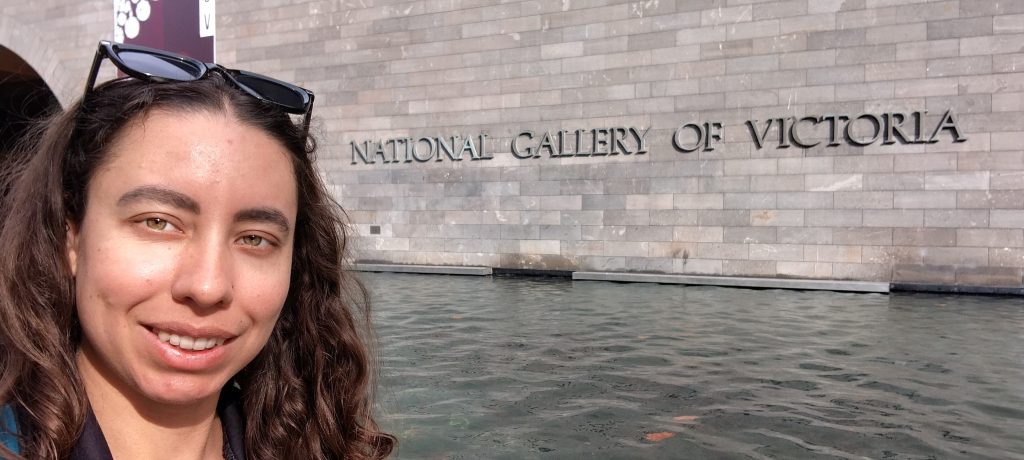
Melbourne has a great tram network, and public transportation happened to be free while I was there. When my friends had to work, I rode the tram to the National Gallery. It was so big that I ended up spending almost the whole day there and got caught in the rain on the way back.
Of course, culture isn’t all fine art and history. It’s also going to the pub for a chicken “parma” with the “footy” on TV. Australia has more than one sport that they call football and neither one is soccer, which they correctly call soccer (sorry Europe). As I understand it, down in Victoria, footy is kind of like rugby but with a round field and a funky four-post goal; whereas in the rest of the country football is so much like rugby that, to an untrained viewer such as myself, it looks exactly the same as rugby. I think. (My friends will correct me.) Chicken parma also has a slightly different name depending on what state you’re in. Like the USA, Australia is a big country, so naturally there are some differences within the country itself.
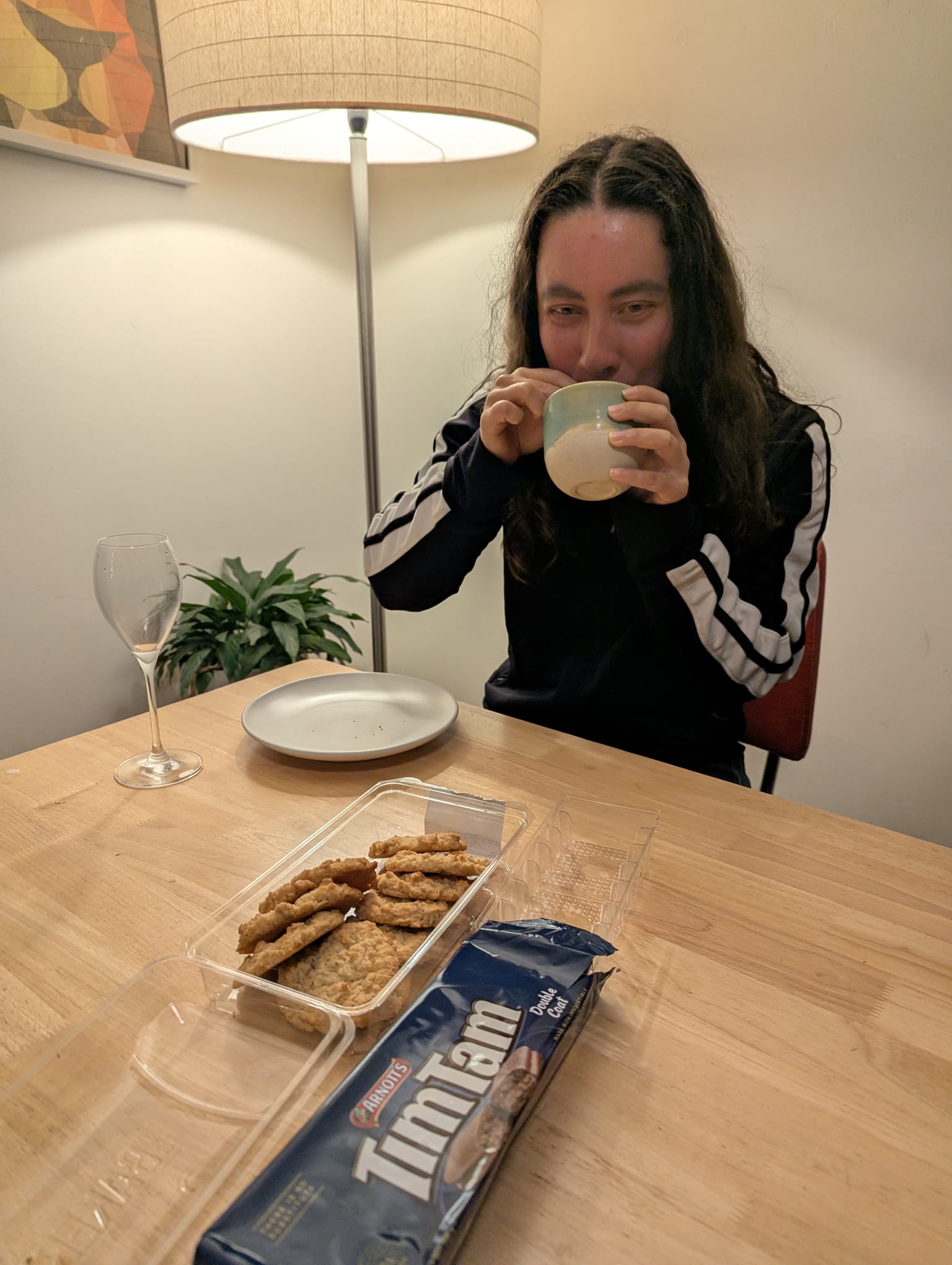
I was introduced to another very important Aussie food ritual when I joined Geraldine and Troy for dinner at their friend’s place: the “tim tam slam”. A tim tam is a chocolate biscuit (cookie), kind of like a kit-kat with a thicker outer layer. To do a tim tam slam you bite off both ends and use it like a straw to drink milk. 10/10 from me!
The Great Ocean Road and The Twelve Apostles
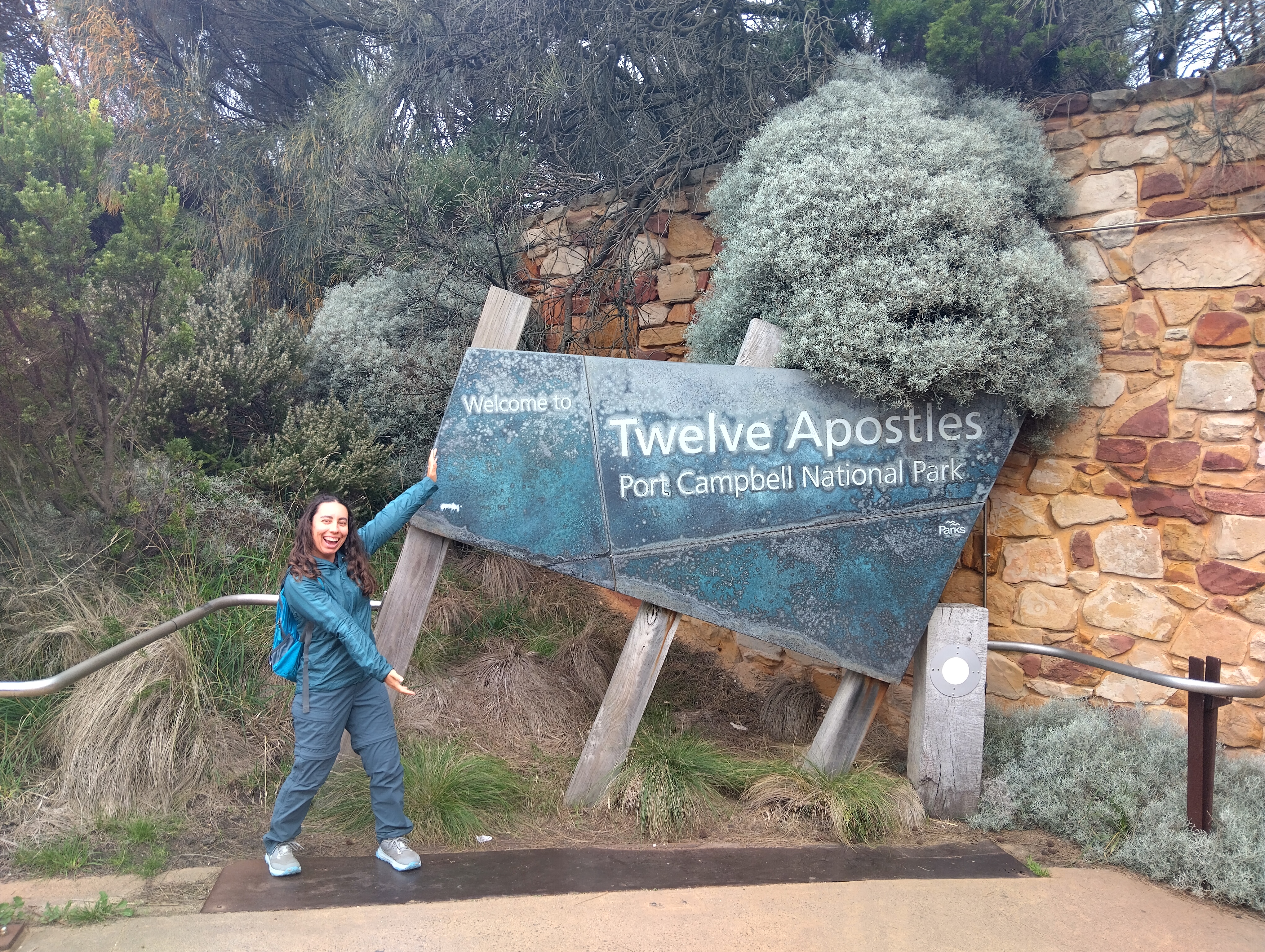
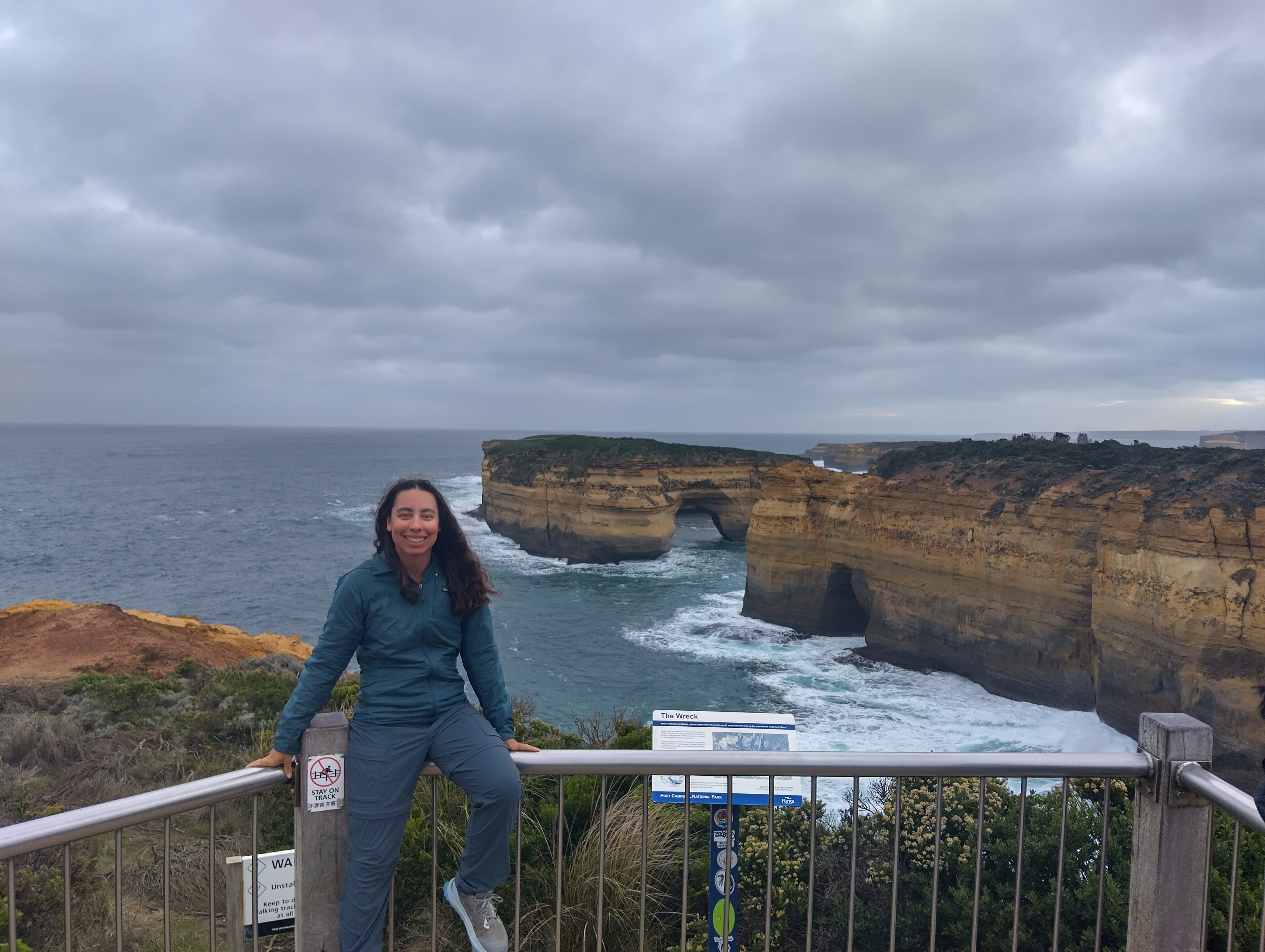
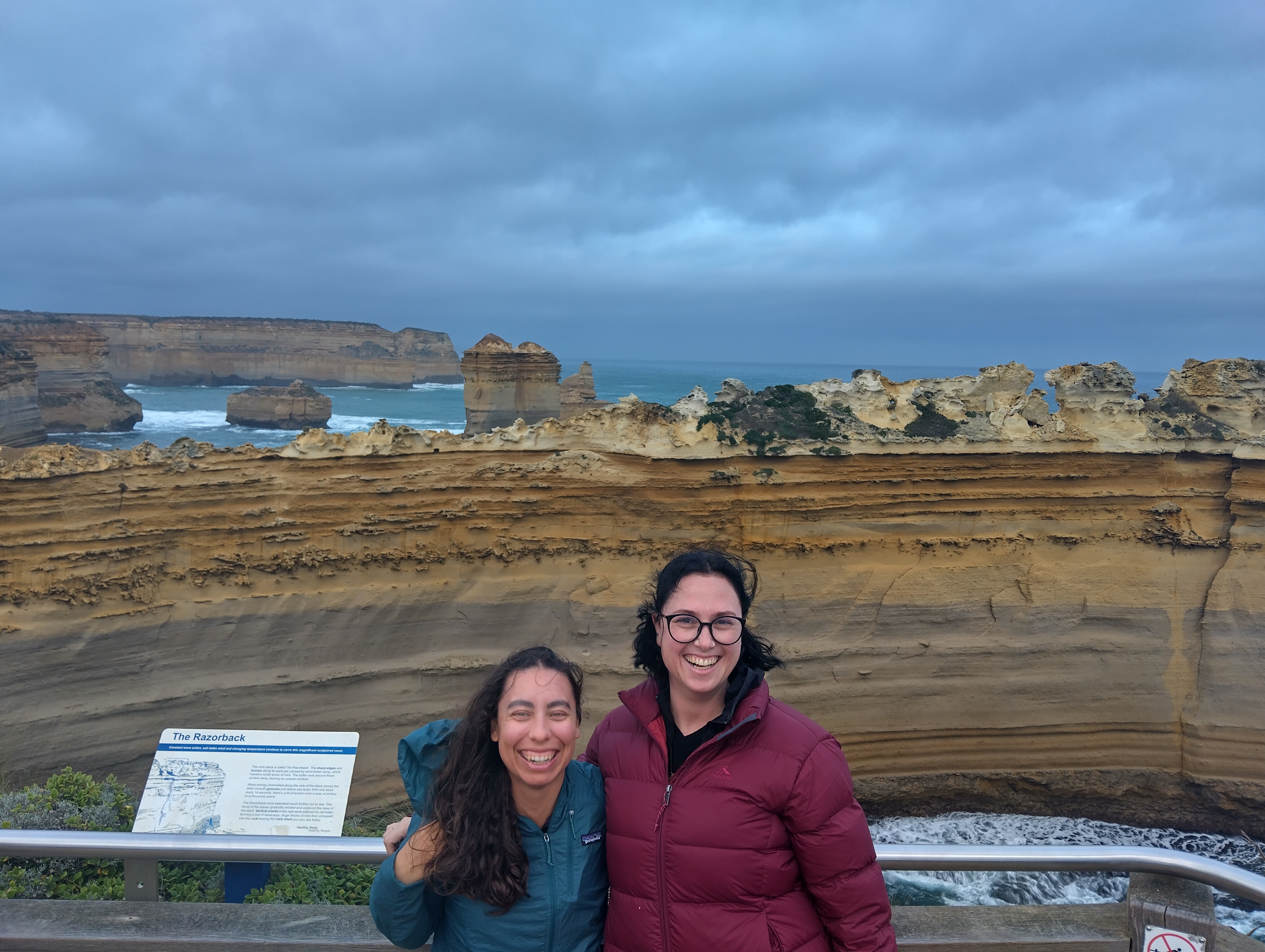
Road trip time! The three of us hopped in the car to drive along the Great Ocean Road and see the iconic Twelve Apostles.
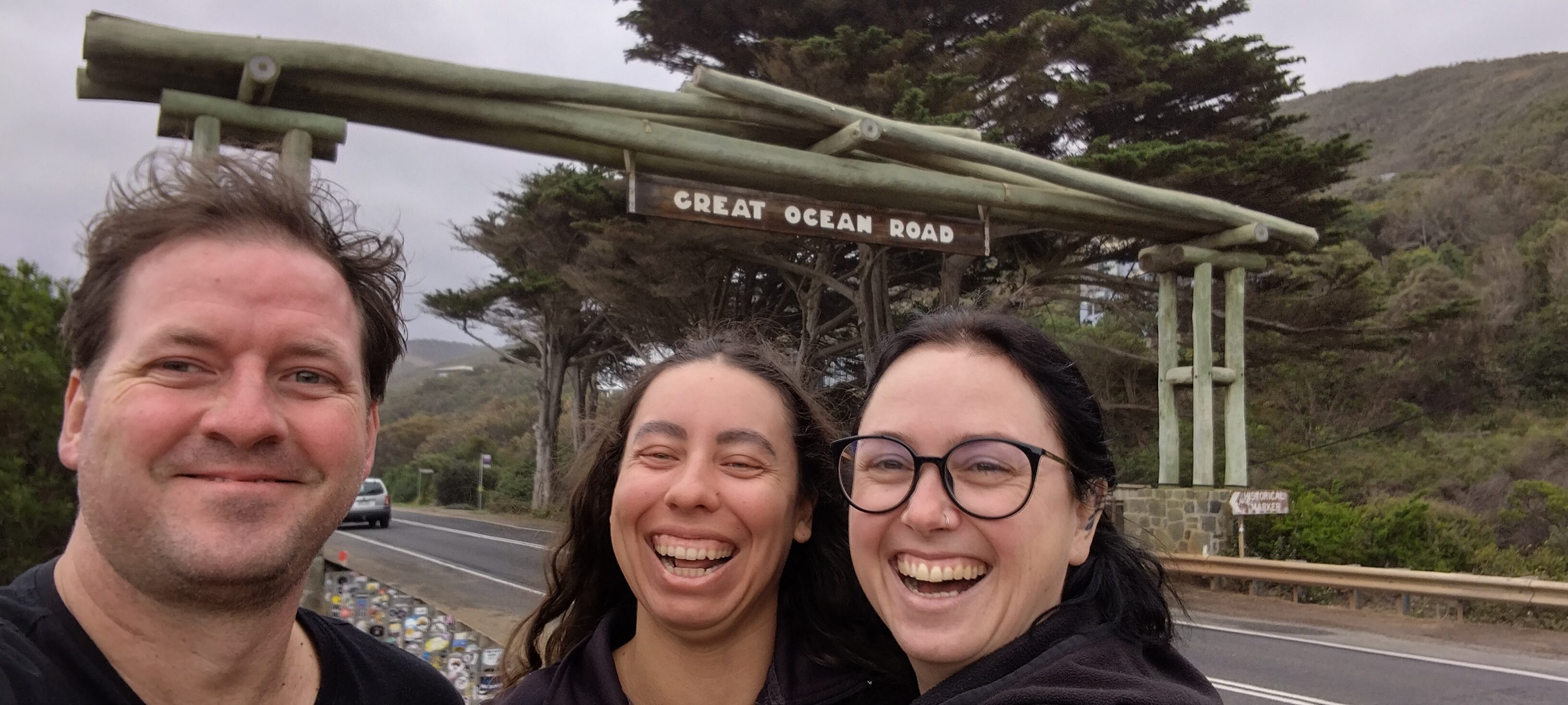
In between taking photos with unique Australian road signs, I sat in the back munching on lamington fingers (a soft cake covered in chocolate and coconut) and trying to convince my brain that we weren’t driving on the wrong side of the road.
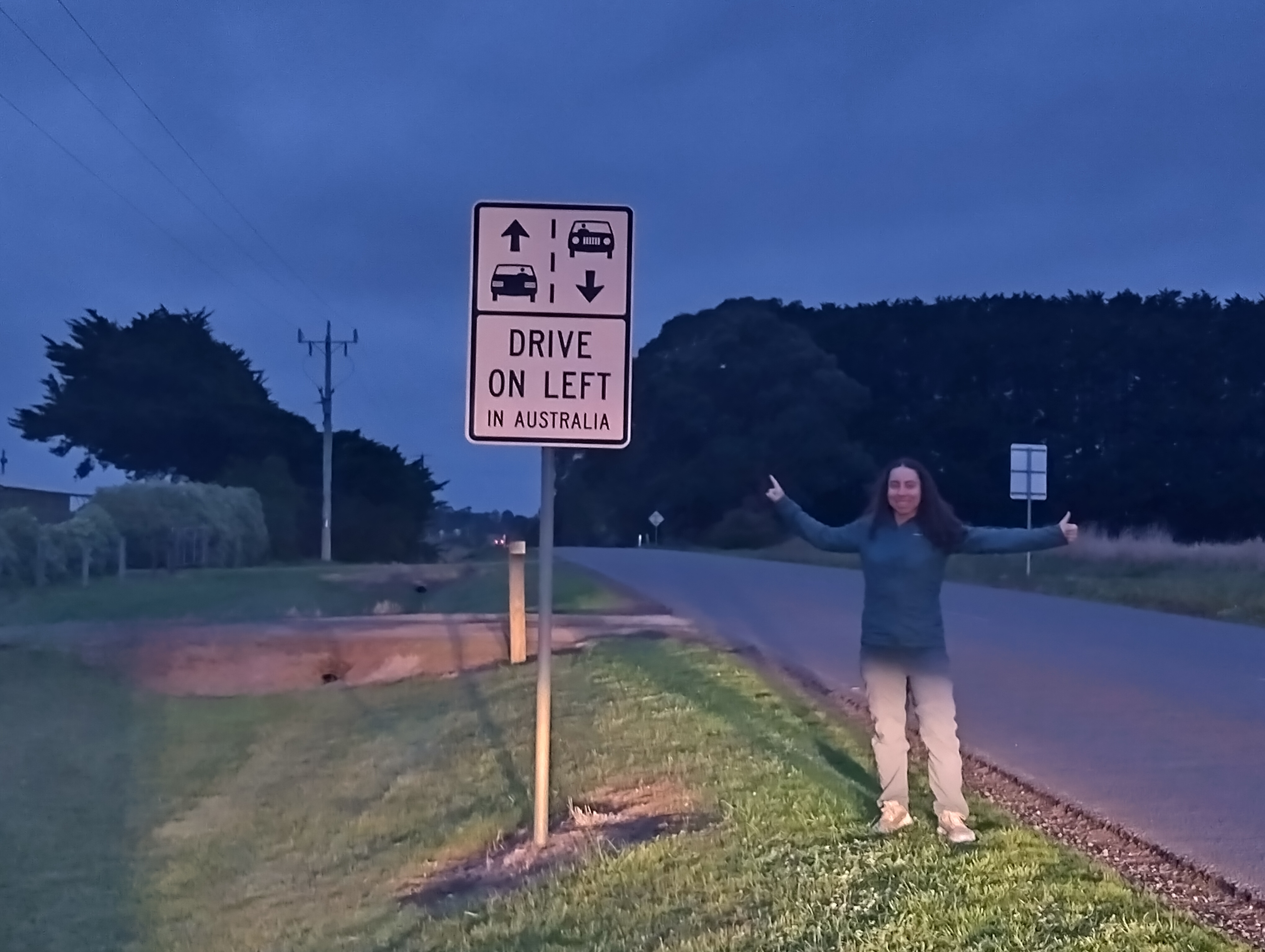
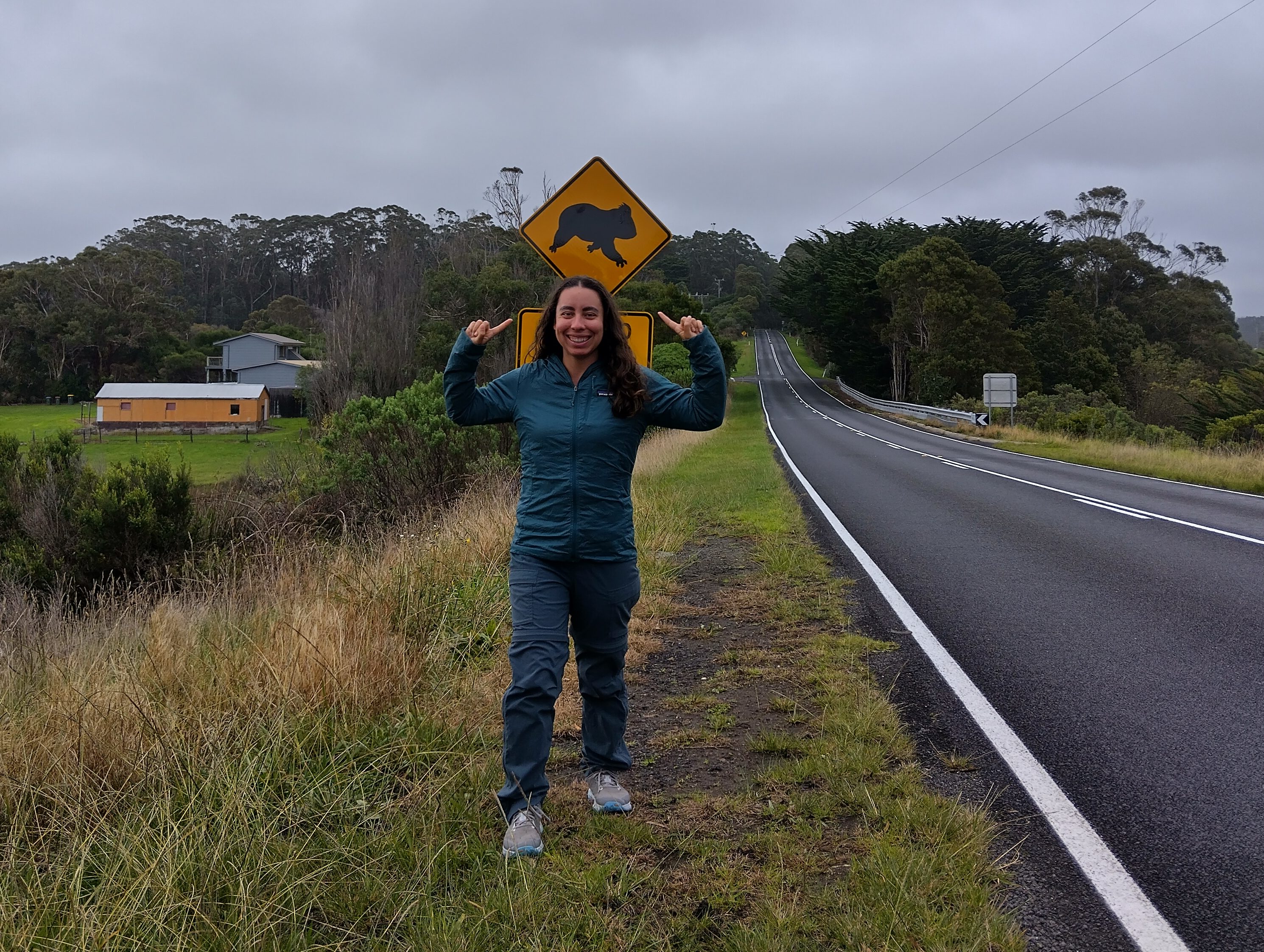
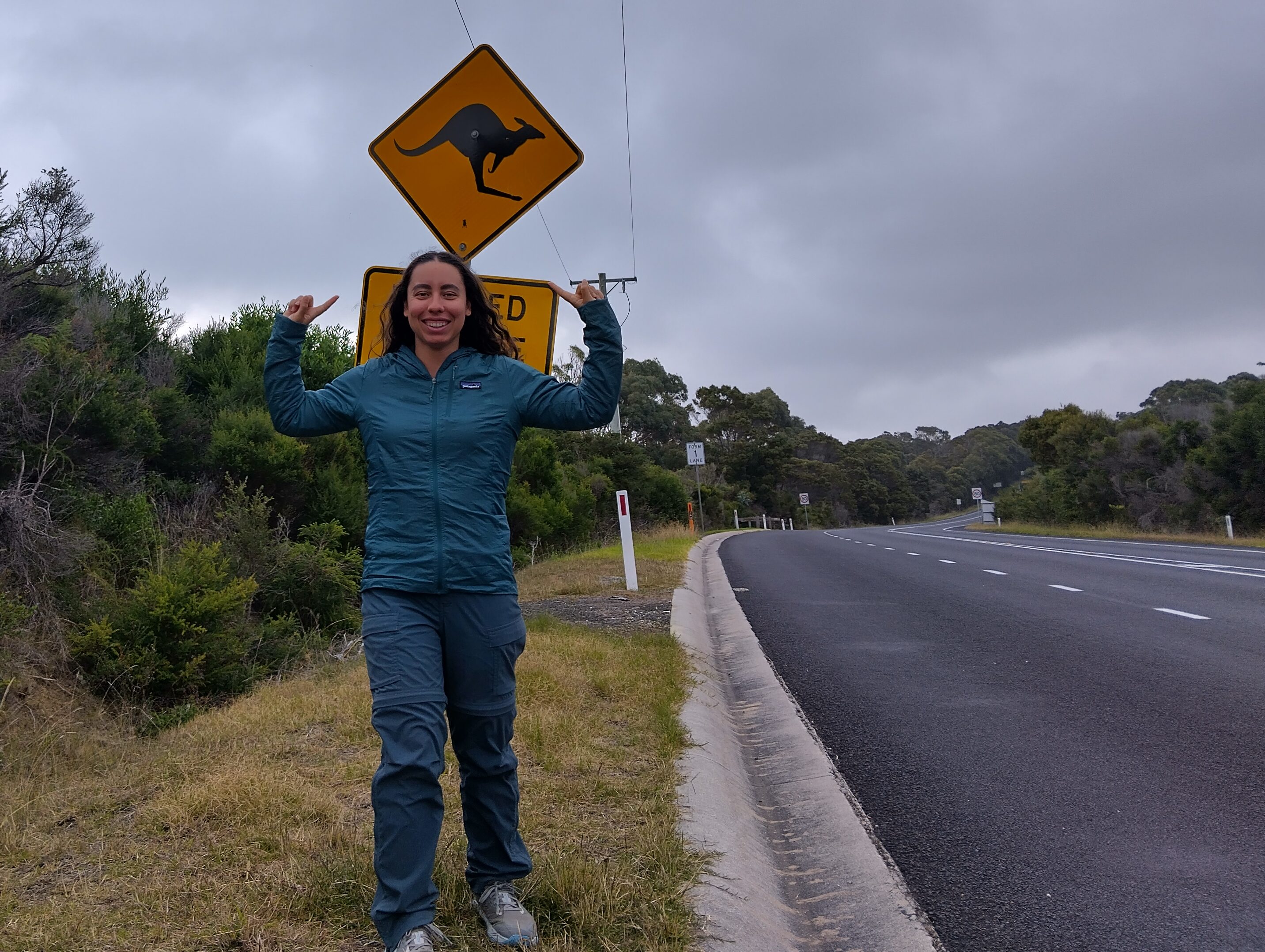
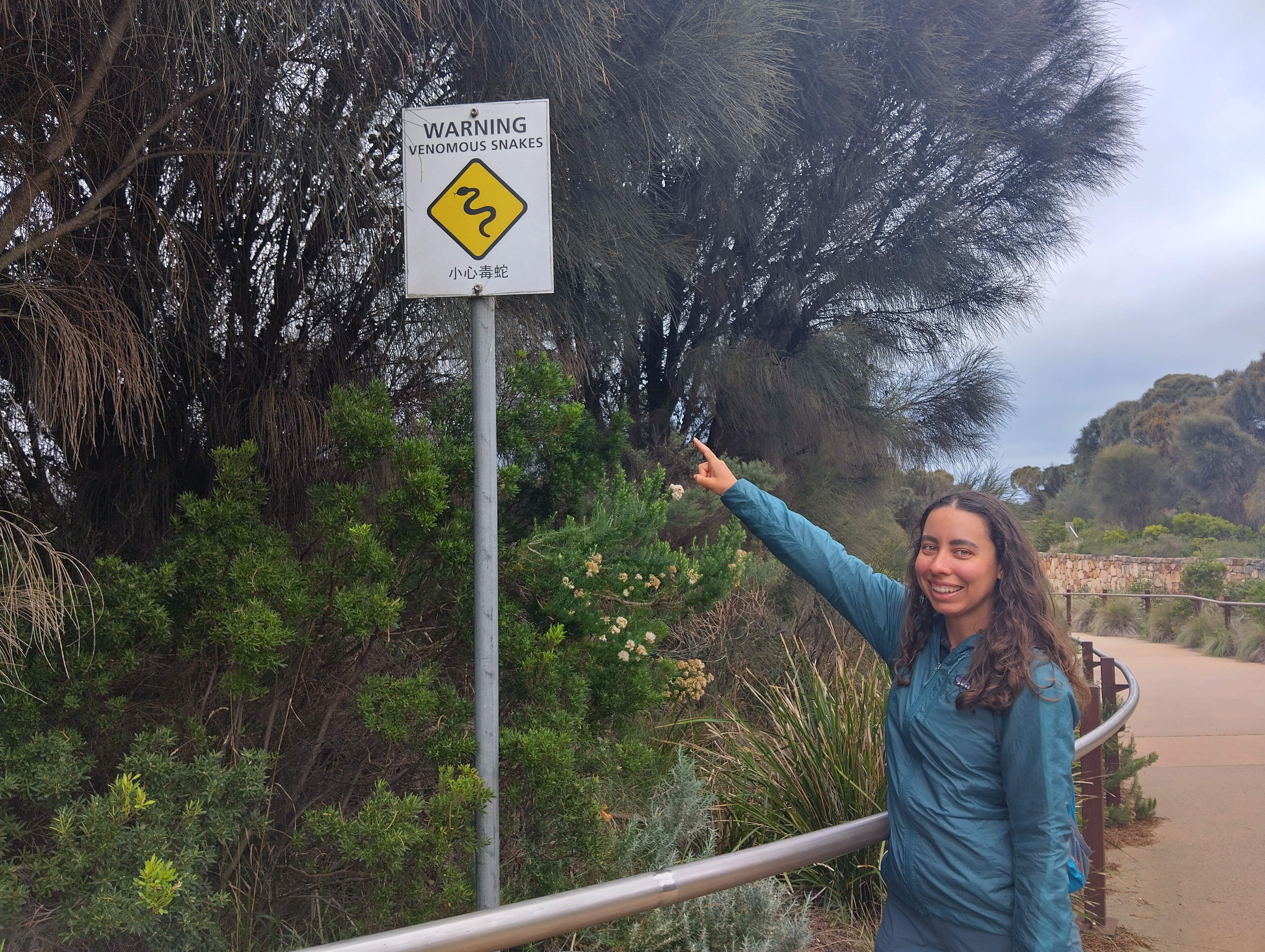
I had an absolute blast getting to know my friends better and learning more about Aussie culture. They taught me some slang like “bogan” (an uncultured person) and what it means to “chuck a sickie” (take a sick day when you’re not sick). When we stopped for lunch I had my very first meat pie, which would later become a staple during my travels.
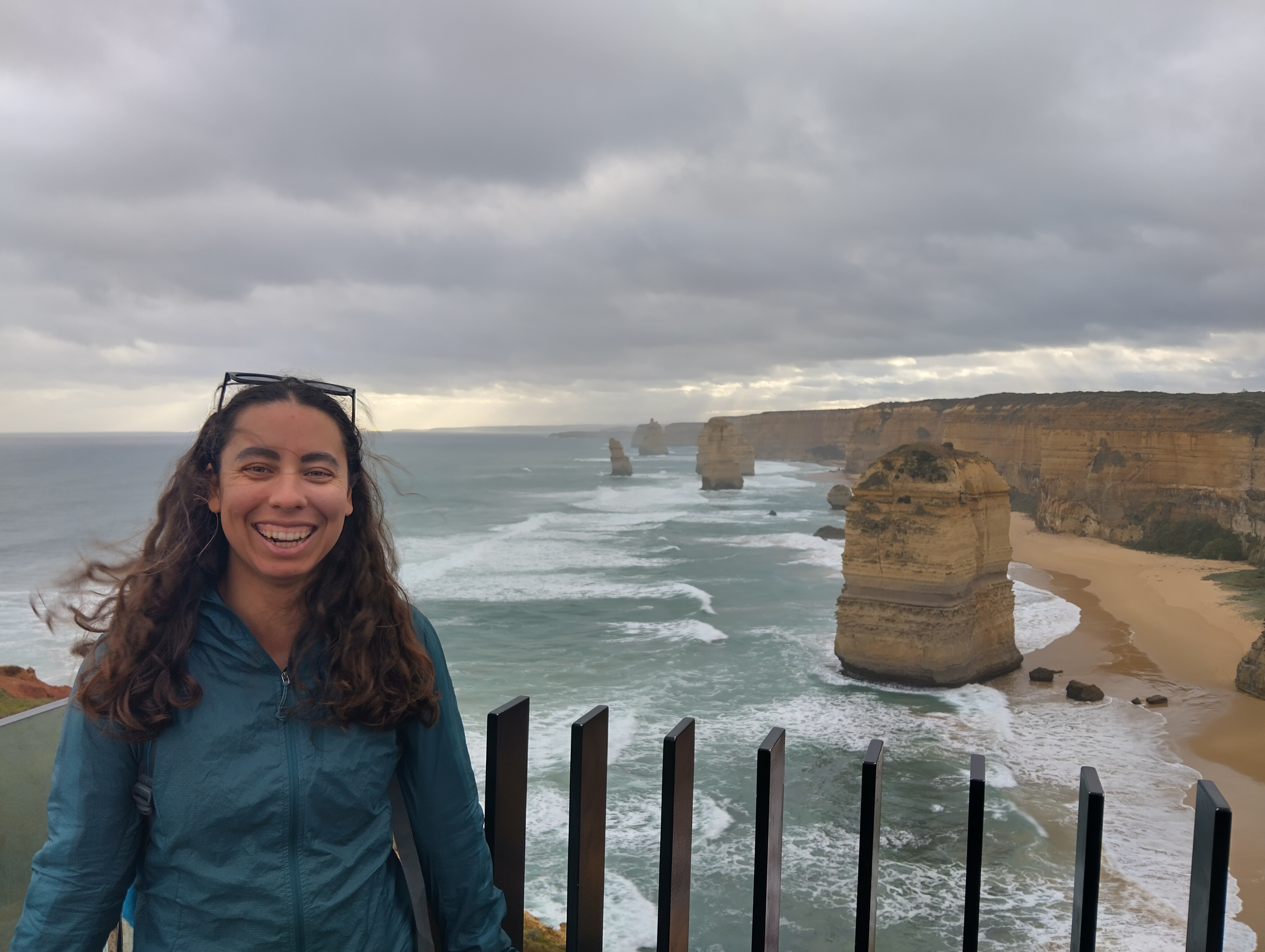
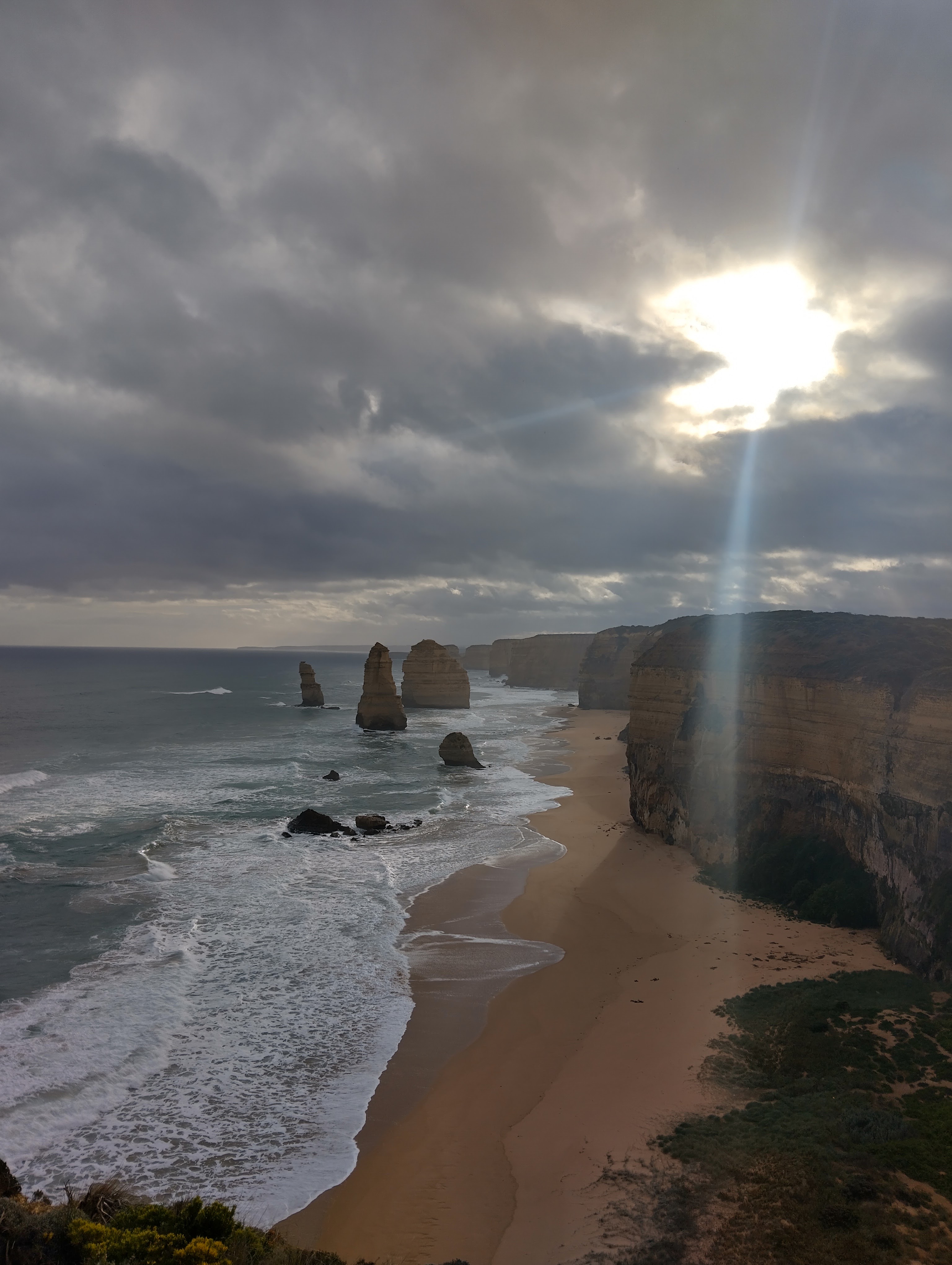
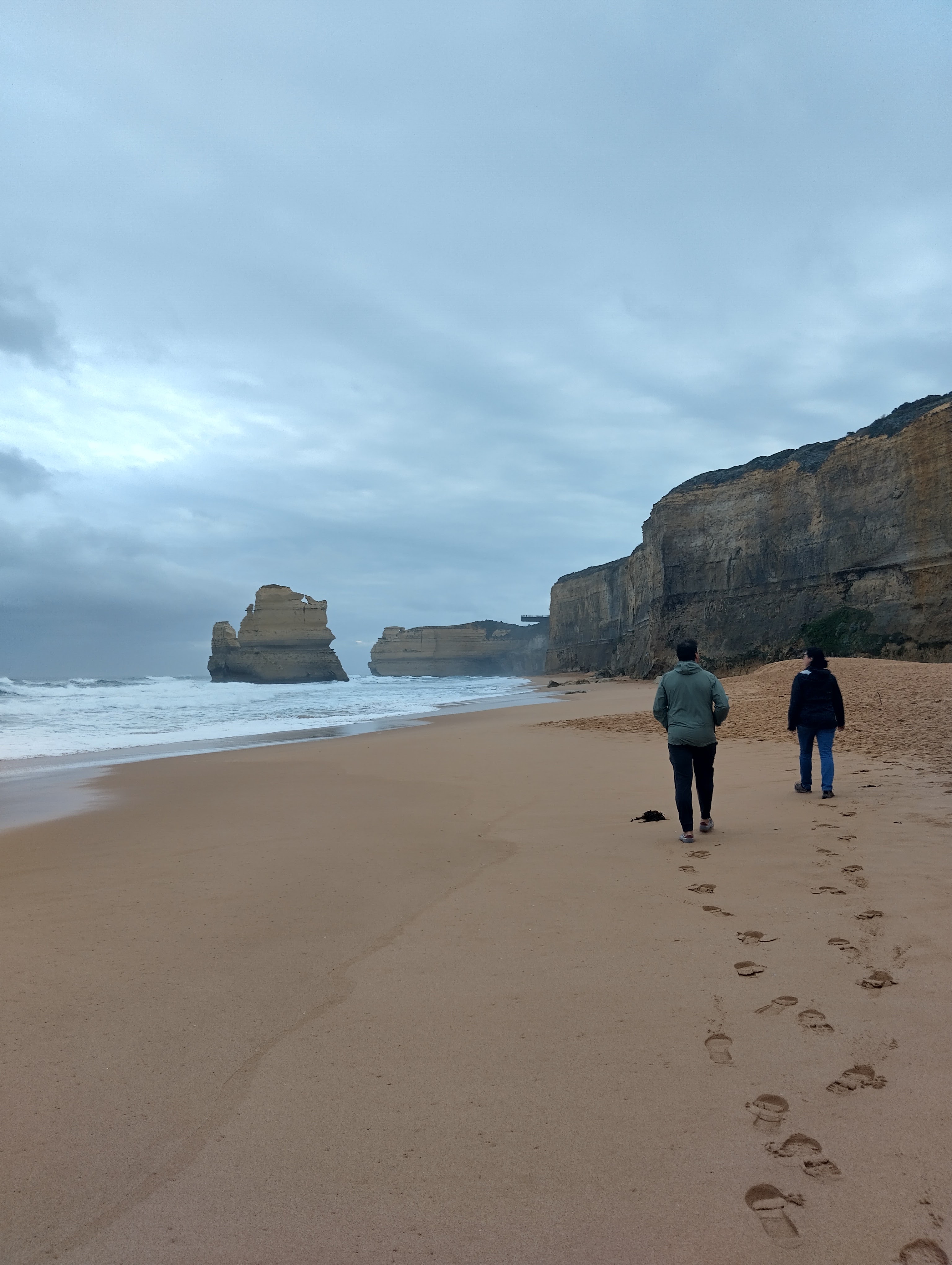
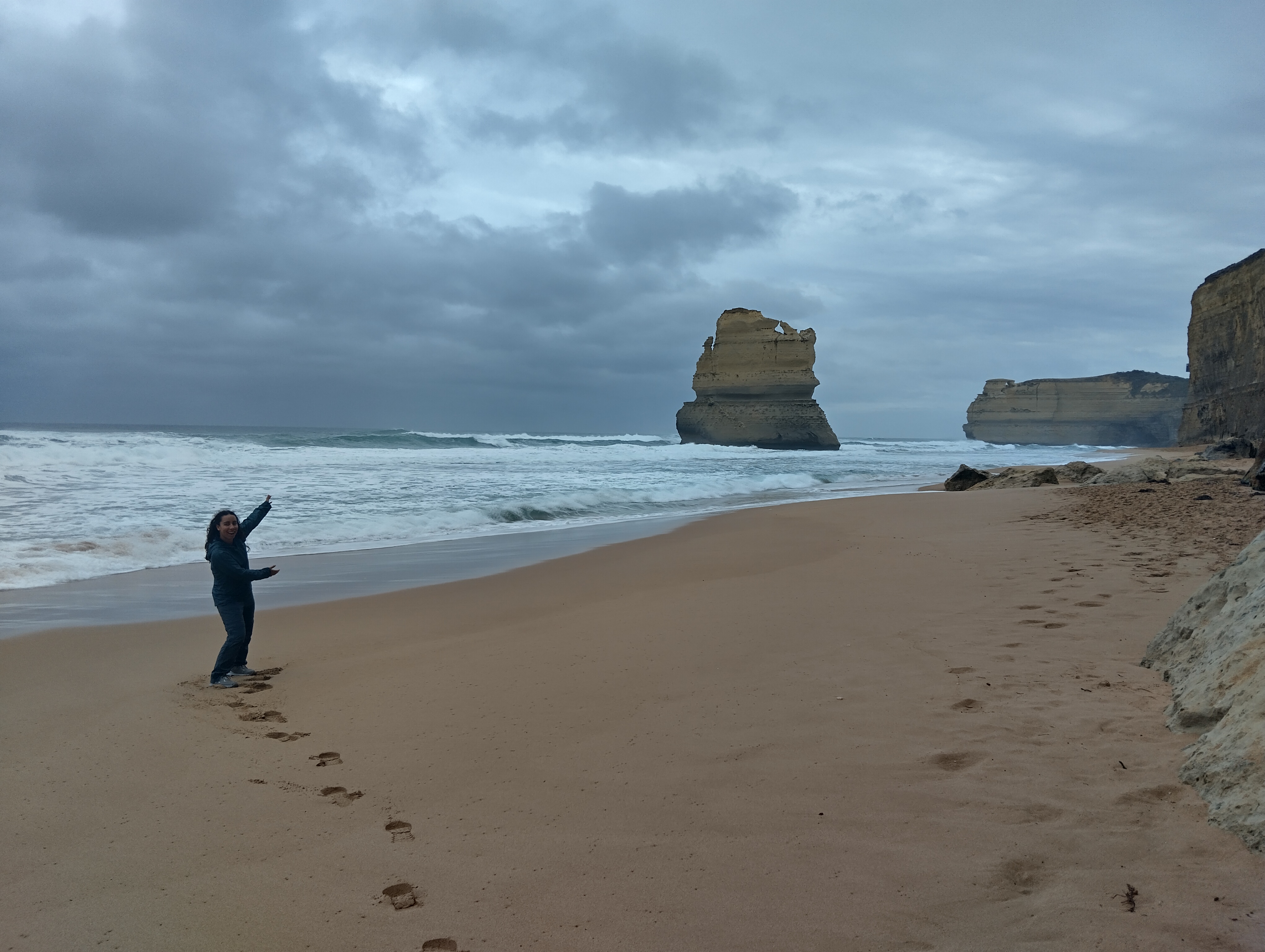
Exactly when we pulled up to the Twelve Apostles the sun shone through the clouds to give us a gorgeous view. May is late fall in the southern hemisphere, so it was a little chilly and windy. I was glad I wore my thermal base layer that day. The so-called Twelve Apostles are huge pillars of sandstone that are constantly eroding into the ocean. There used to be nine of them but several have collapsed since they were first discovered. They are still a spectacular sight.
Philip Island
Another day, despite feeling a cold coming on, I waited in the pouring rain until I was completely soaked to the skin for a tour bus to Philip Island. The comfortably warm bus dried me off just in time for the first stop at a wildlife sanctuary where I gladly got soaking wet all over again because there were kangaroos and wallabies roaming freely around, and you could feed them. I made friends with a couple of adorable wallabies.
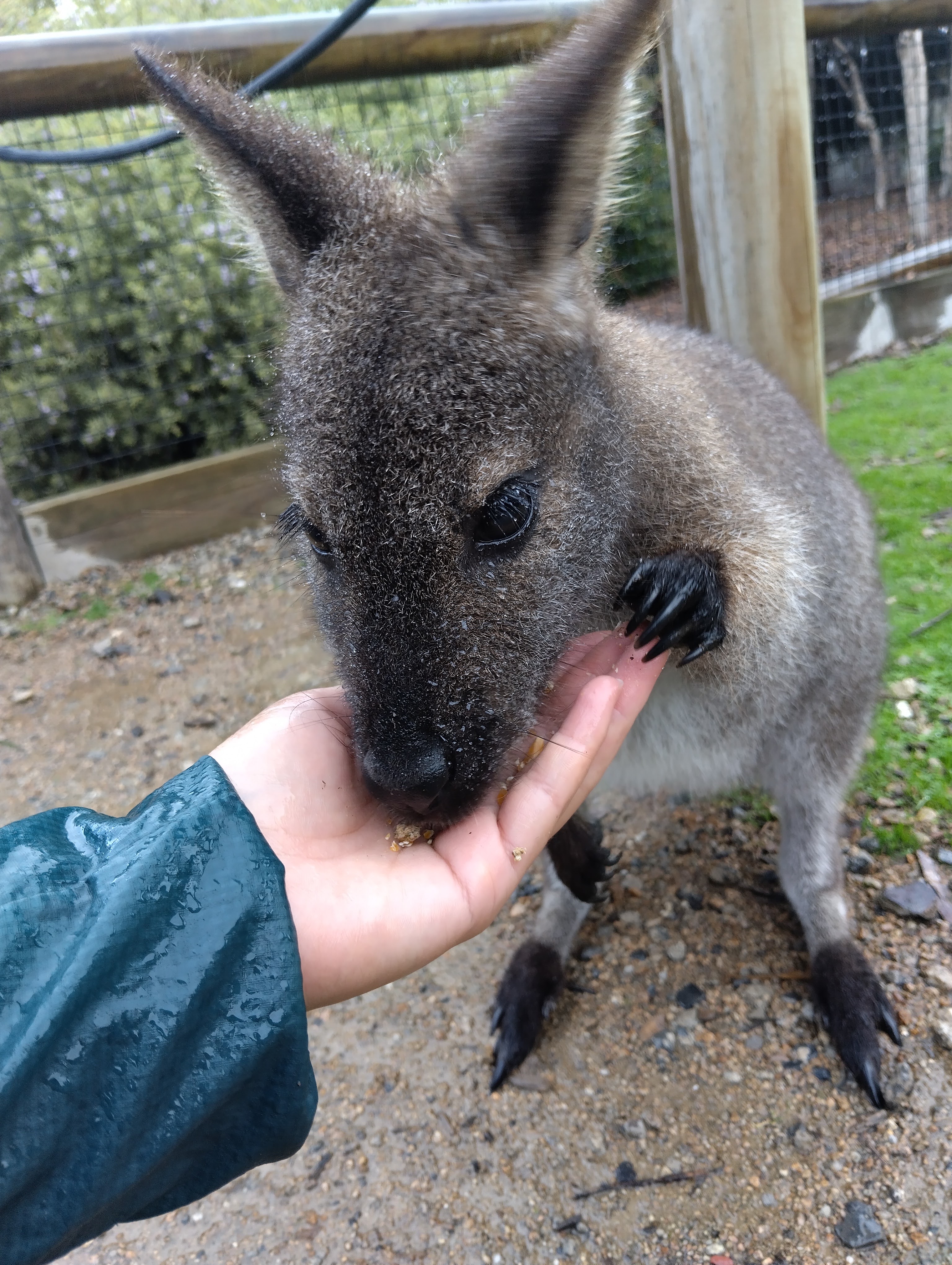
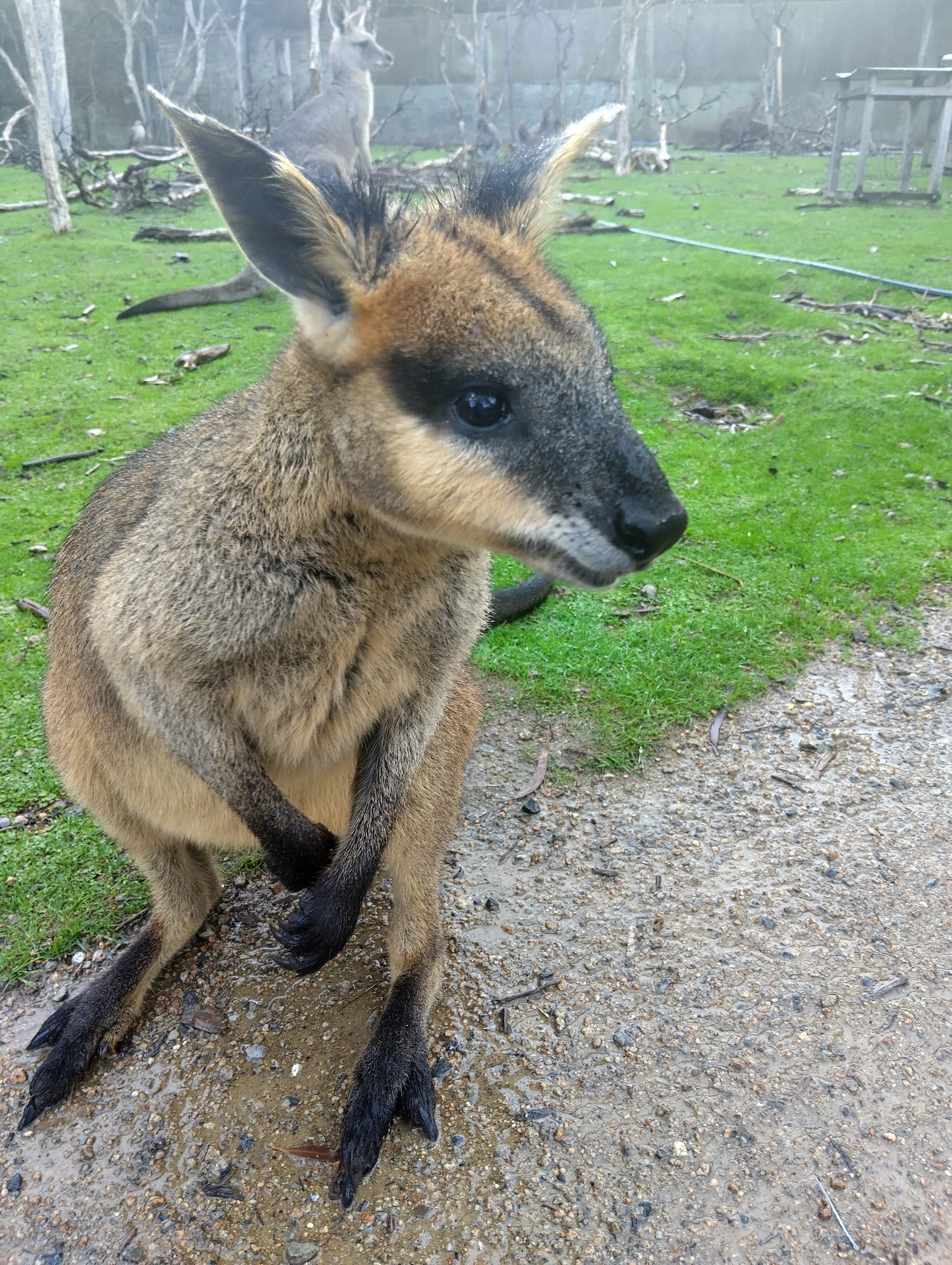
The bus traveled around the island through fields of wild wallabies and geese to beaches and cliffs where the penguins burrow. Blue penguins, also called little penguins or fairy penguins, are the smallest species of penguin. Basically, a blue penguin is to an emperor penguin as a chihuahua is to a great dane. I caught a glimpse of about three hiding deep in their burrows, but that was really just a way to kill time until the main event: the penguin parade. The seating and paths are designed so that people can watch the penguins come out of the water and walk up the hills to their burrows without disturbing them. We were warned that they are sensitive to camera flashes and phone lights, so to avoid confusing them no photography was allowed. I didn’t want any of the little guys to get lost and not be able to find their way home, so I followed the rules. I’ll do my best to make up for the lack of photos with a detailed description of one of the cutest scenes I’ve ever witnessed.
Just after sunset it started raining again, and the dark ocean waves glowed a faint blue as they crashed and churned up tiny bioluminescent organisms, a sight I’d seen back home in California. As I strained my eyes in vain to try to make out anything else in the water, one tiny little penguin, no more than a foot tall with blueish grey feathers on top and white underneath, suddenly appeared standing on the sand, looking back into the water, waiting. Then another appeared, and another, and another, until a little squad was formed. They waddled a short way up the beach together, moving like an awkward school of fish until, suddenly, the whole group suddenly ran back into the water! The reason quickly became clear. They were missing some of the squad! It was difficult to discern a solitary penguin making its way through the surf, but once the group jumped in together, they could be seen rounding up the stragglers. Then they reemerged from the water together and moved up the beach again until—wait, somebody is still missing! Everybody back in the water! The whole group went in again, even to retrieve just one other penguin, as many times as it took until they had everybody. I don’t know if they were waiting for specific individuals or if they were responding to nearby calls (any sound was drowned out by the surf and didn’t make it up to the viewing platforms), but either way, no little penguins left behind! Many squads formed along the beach in the same way, and once they were fully assembled with at least thirty penguins, they began the long waddle up the beach into the hills.
It wasn’t long after the first penguin was onshore until the surrounding hills started echoing with the sound of their calls. I’m sorry to report that the call of the blue penguin does not match the cuteness of its appearance. They basically screamed, surprisingly loudly, like a small child throwing a tantrum. If you can imagine the sound a baby wookiee from Star Wars would make, you’re imagining a blue penguin call.
After watching many penguin squads form and leave the beach, I moved to another platform running along the “penguin highway”, a heavily trafficked path through a neighborhood of burrows. Squad by squad, they waddled up the path with fast moving feet, passing inches away from the excited tourists who were separated from them by well-designed railings and fences. As the penguins traveled along, individuals would branch off and enter their burrows, like a group of kids walking each other home after school. It was almost as if each one said, “Bye, friends! See you tomorrow!”, and waved goodbye. Then the squad would get smaller and smaller until everyone was snug in their burrow.
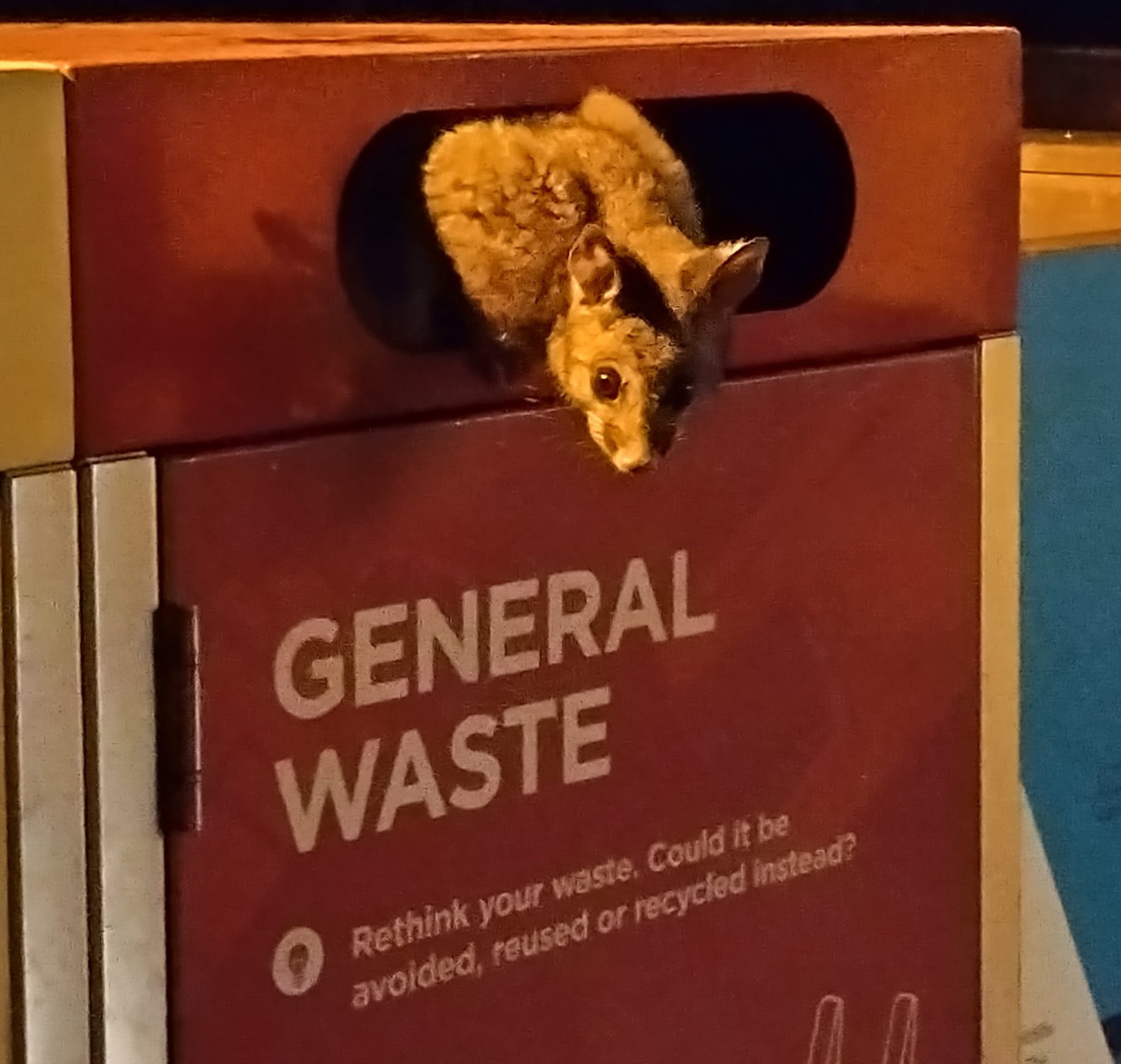
I could have watched the adorable penguins waddle all night, but the tour bus was my only way back to Melbourne. On the way back to the bus I went to throw away a tissue (I was getting sicker from being in the rain a third time) and almost threw it in the face of a possum that was sticking its head out of the trash can rubbish bin. I didn’t know about Australian possums before, only ugly pink North American opossums (colloquially also called “possums”). I prefer the Aussie ones. There were several more in the trees along the path to the parking lot car park, and their cuteness made me the last one to make it to the bus.
I spent my last day in Melbourne in bed with a cold, but it was 100% worth it. Thank you to Geraldine and Troy for your amazing hospitality and wonderful adventures!


Leave a Reply