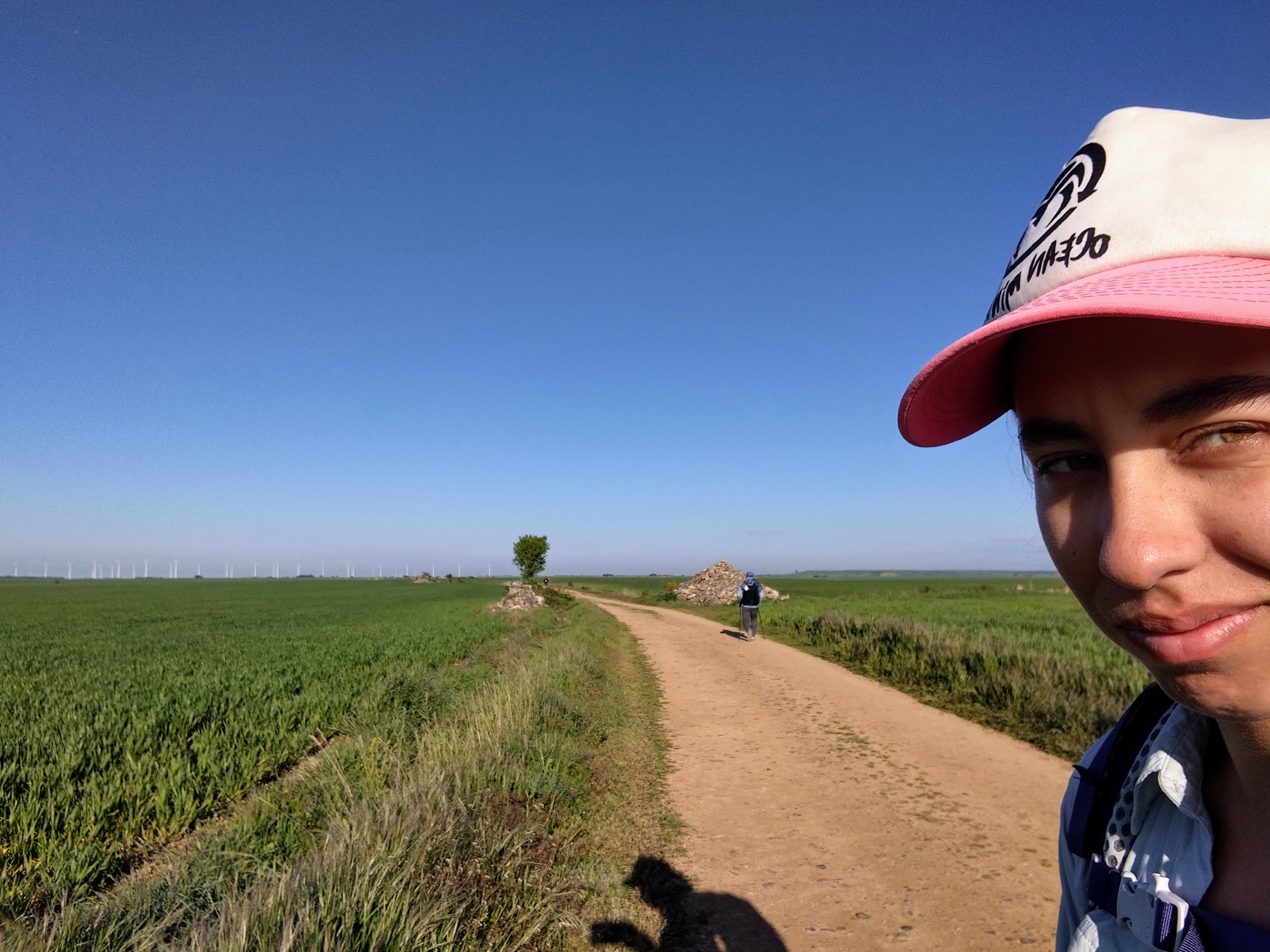
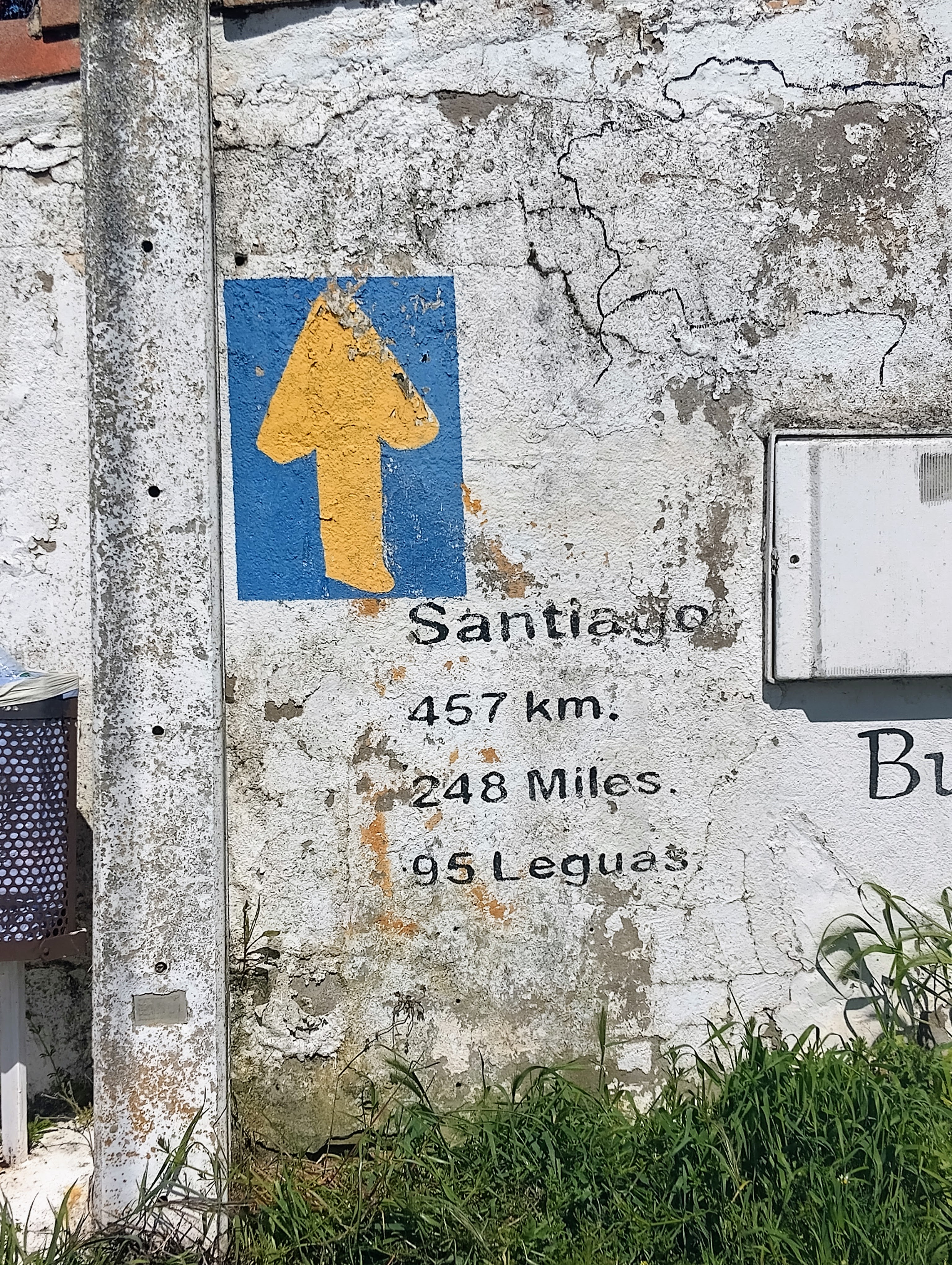
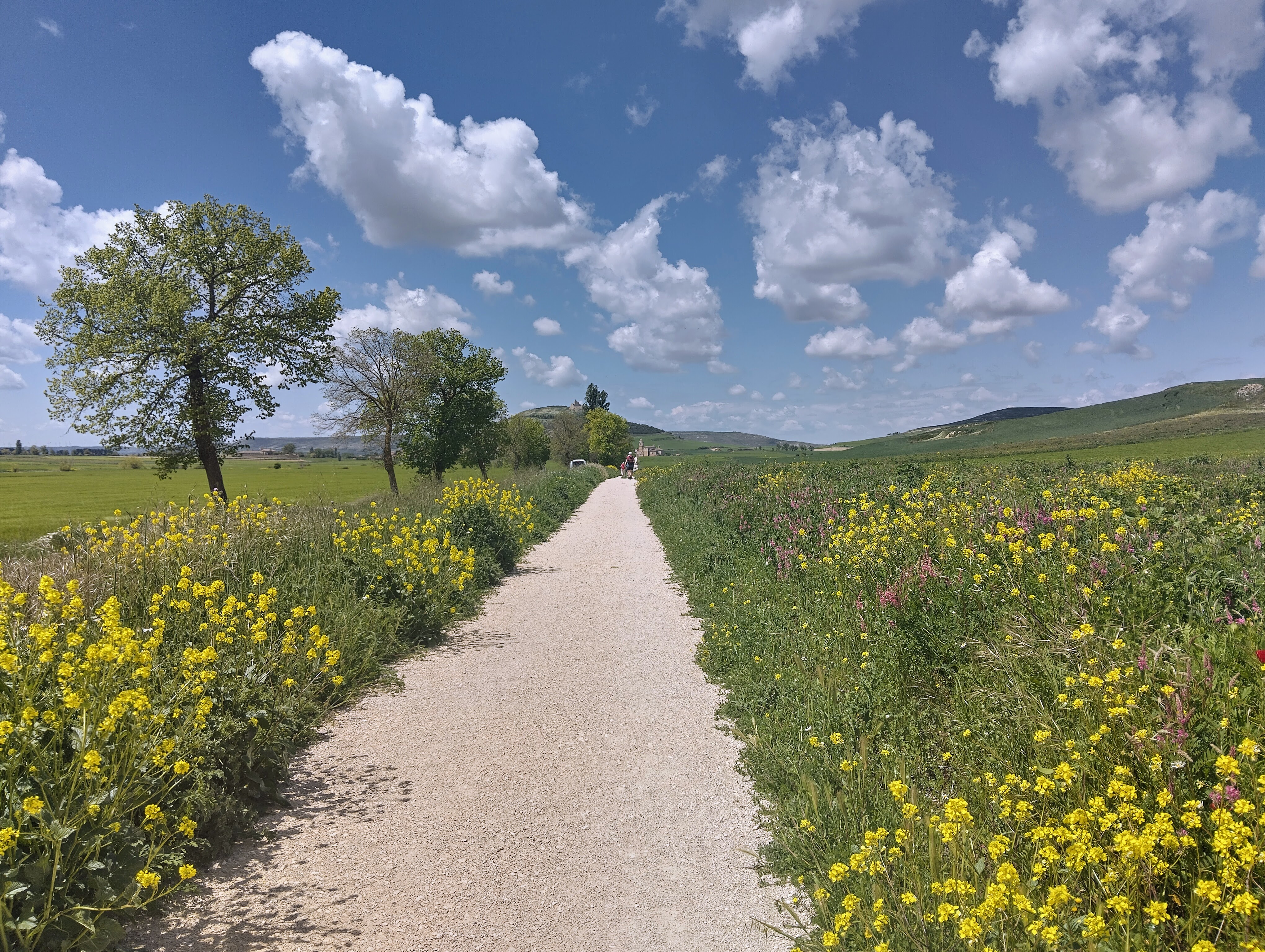
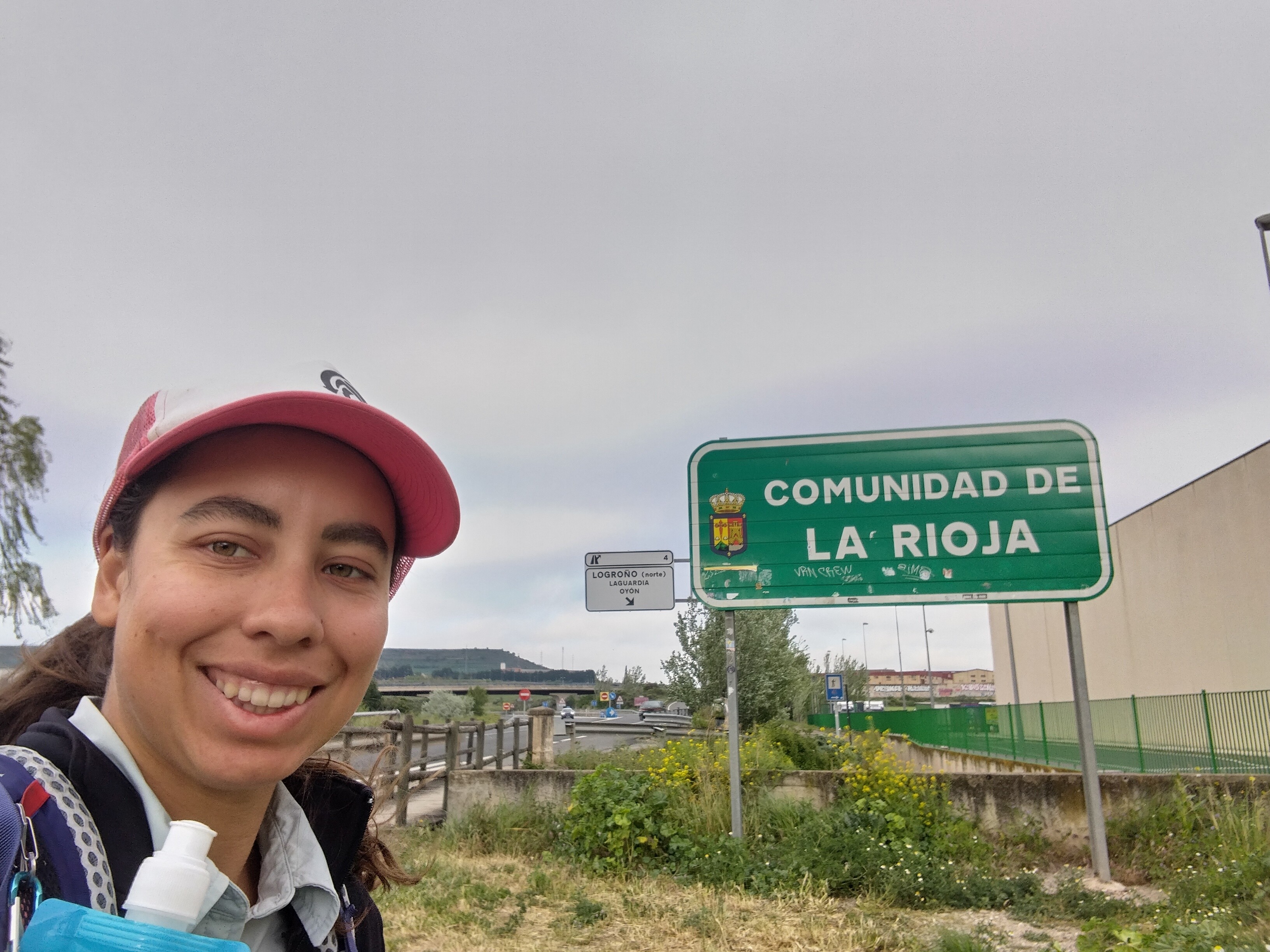
Tag: pilgrimage

  • Camino de Santiago – Days 32-37: Cruz de Ferro to Sarria

    Day 32: Cruz de Ferro → Molinaseca (17.19 km)

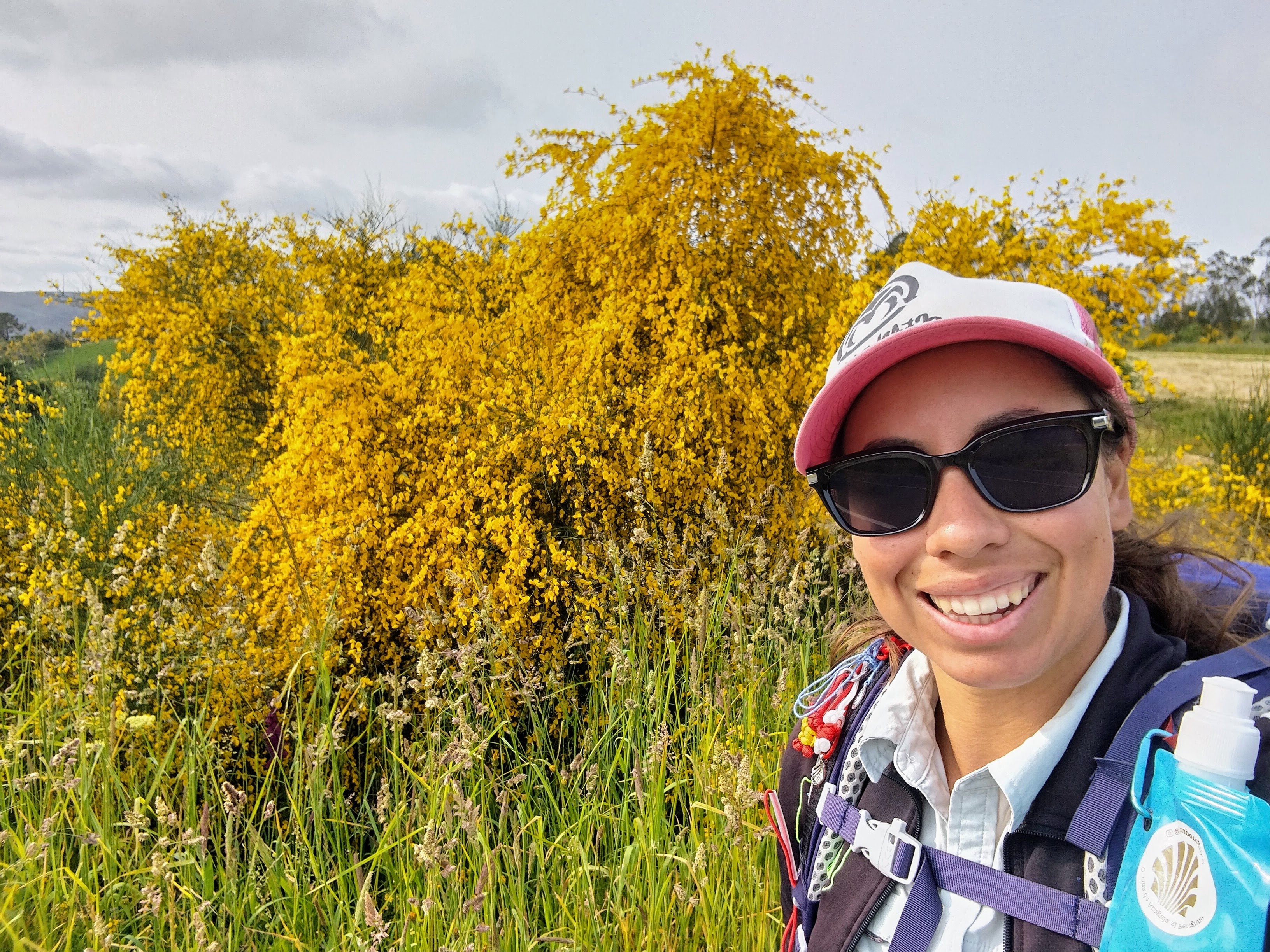
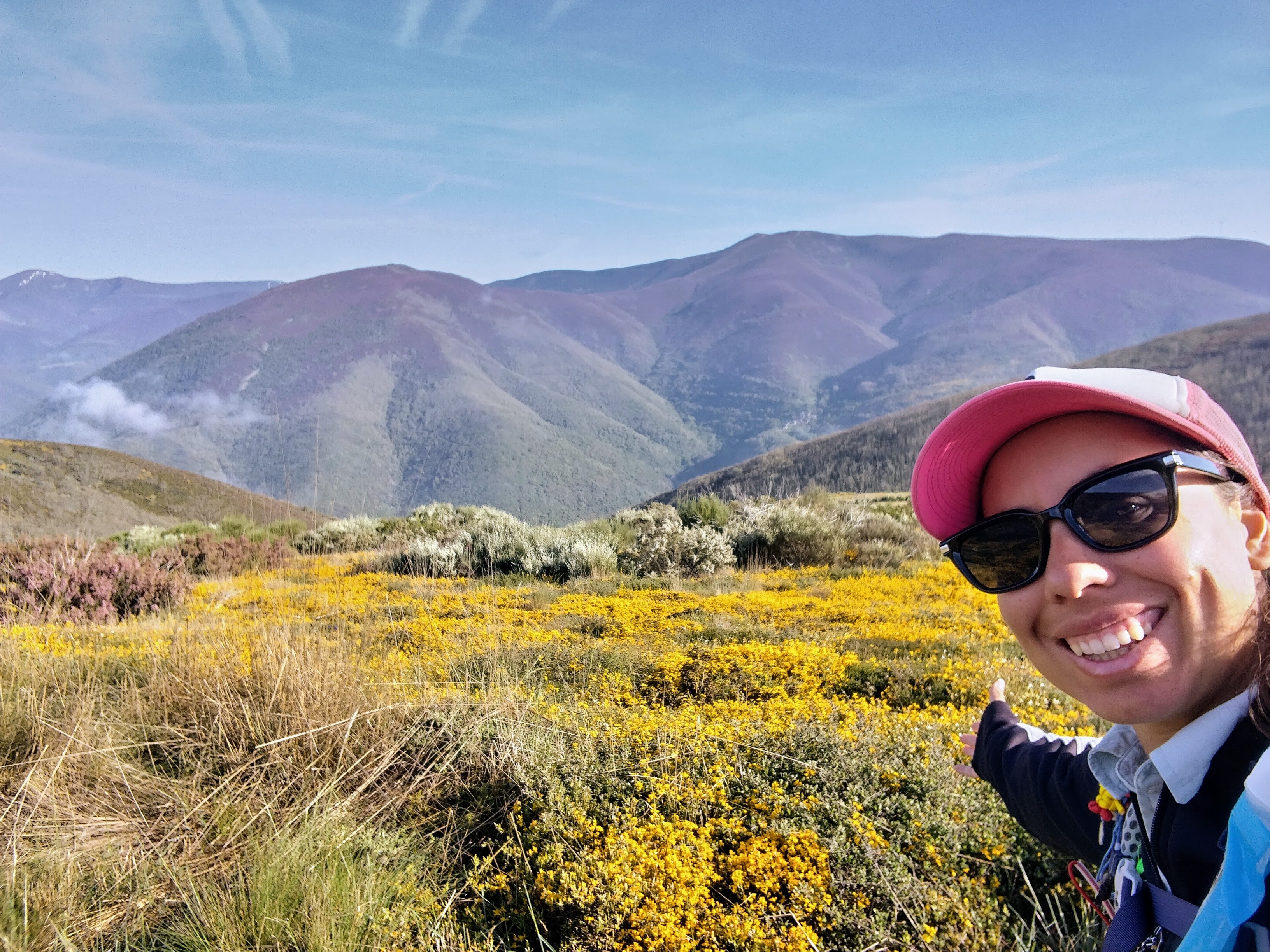
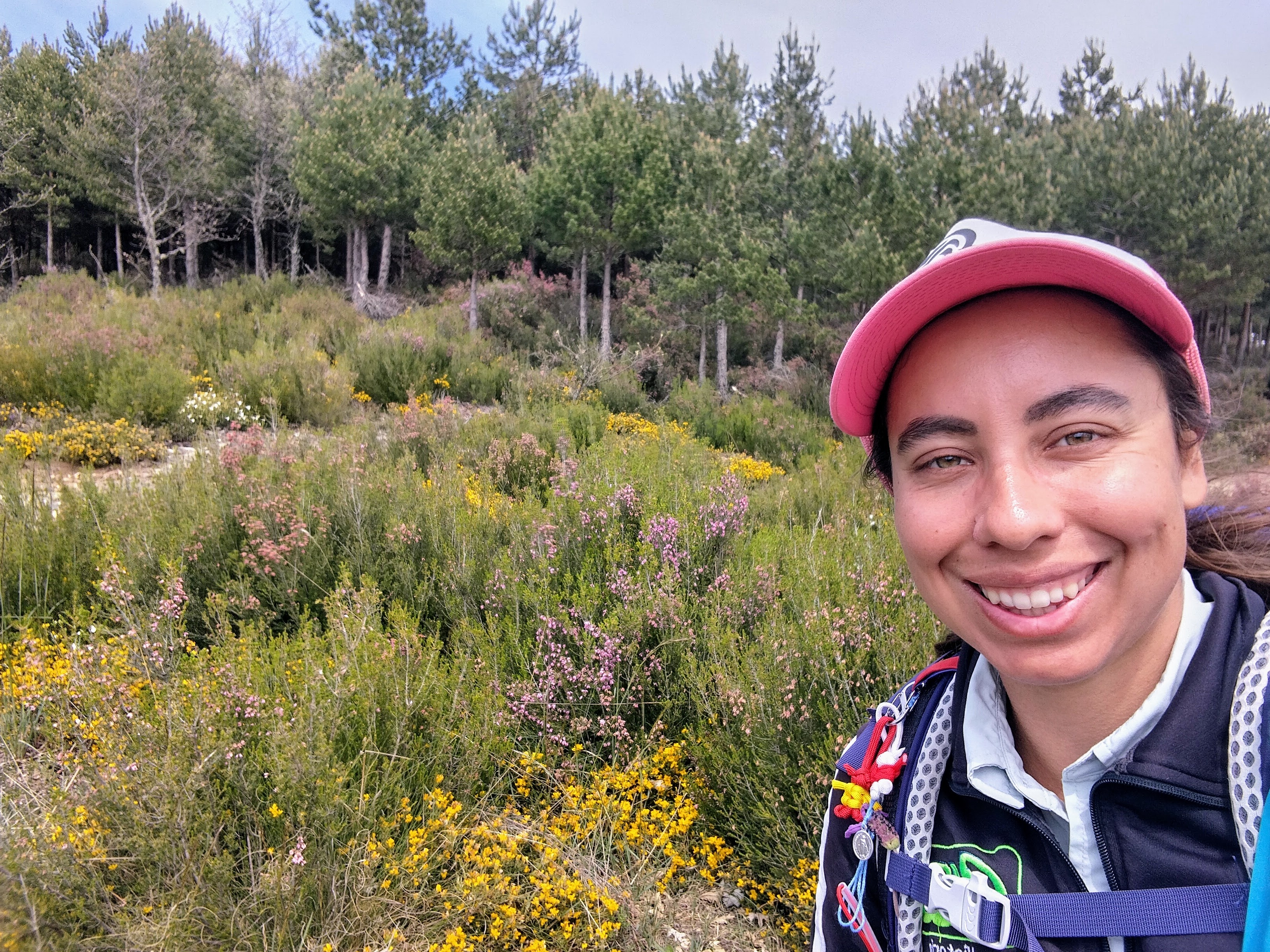
    As I walked away from the iron cross I felt lighter. I was able to let myself enjoy my surroundings again.The young rays of sunlight revealed mountains covered in beautiful yellow, purple, and white flowers with little butterflies flitting around them. For the first time in weeks I heard the gentle ringing of livestock bells and saw cows grazing freely on the hillside.

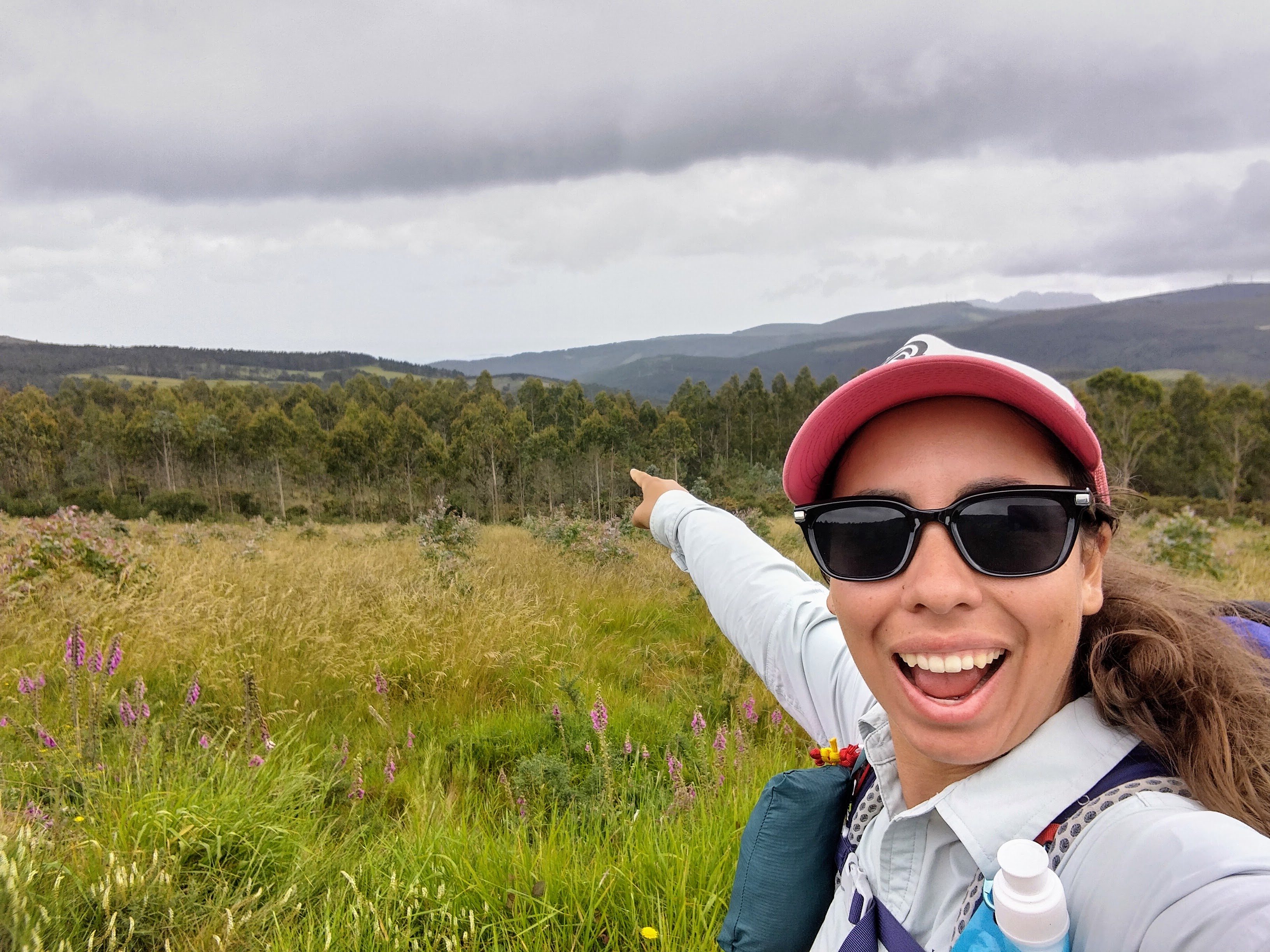
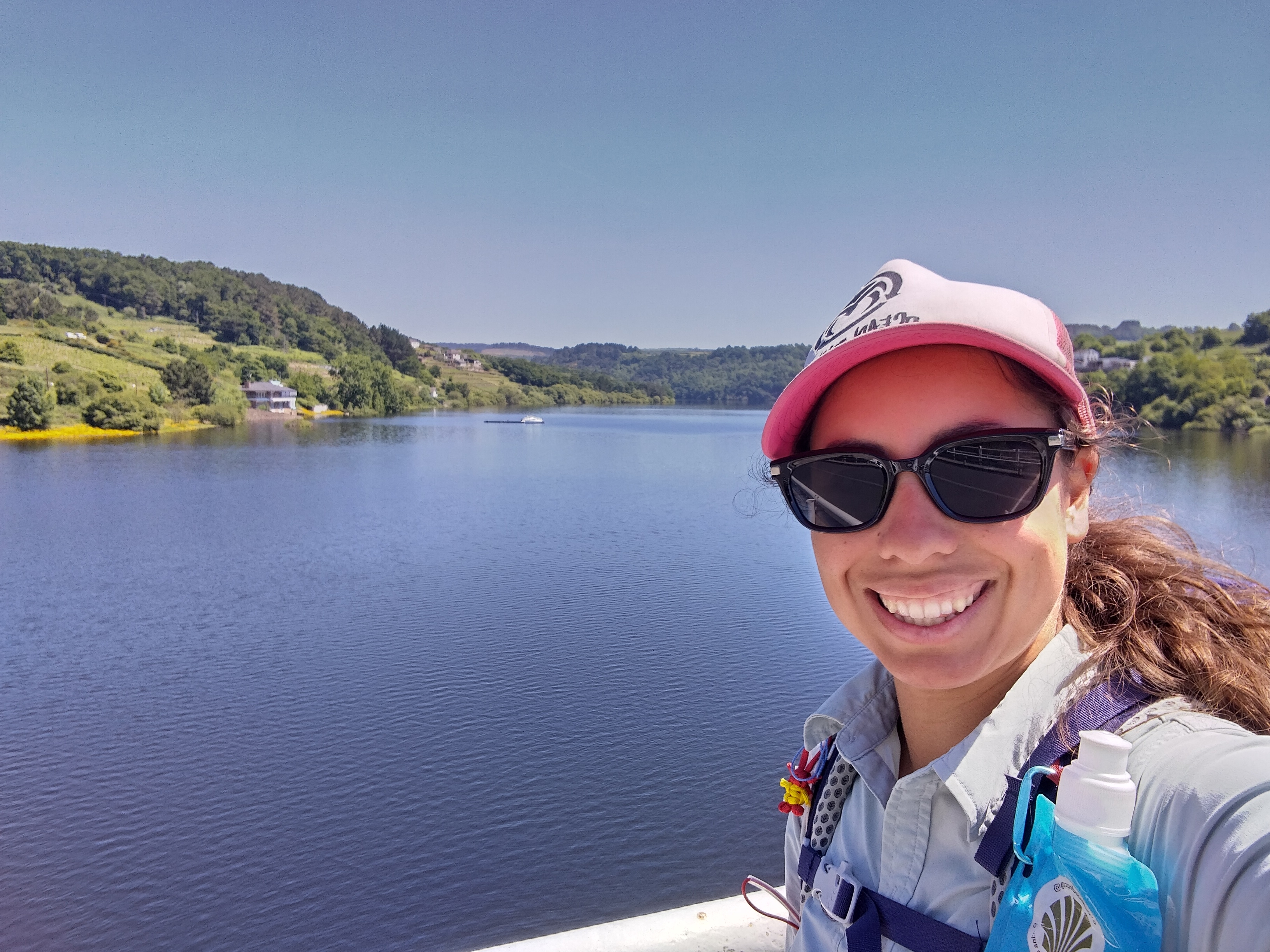
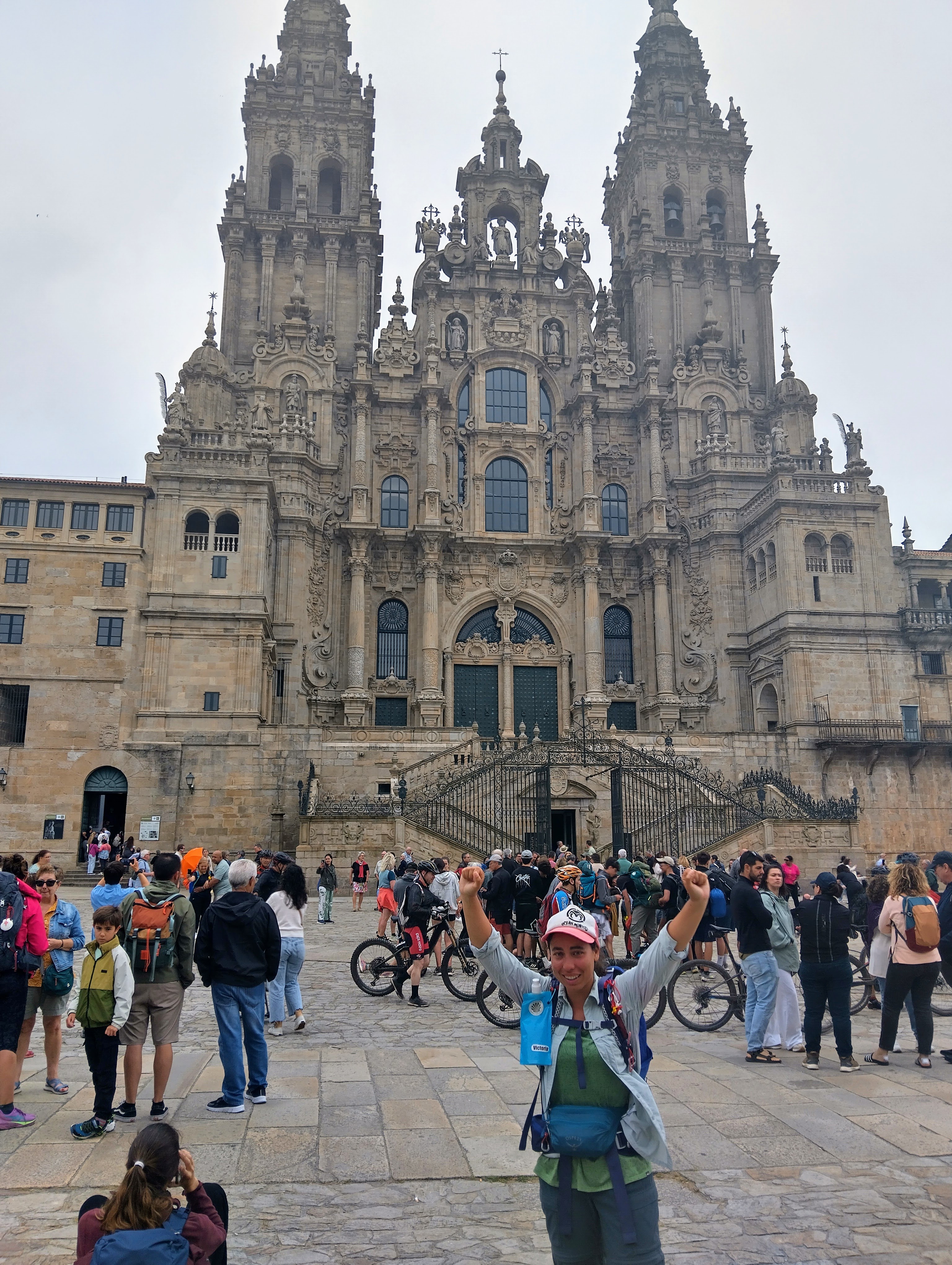
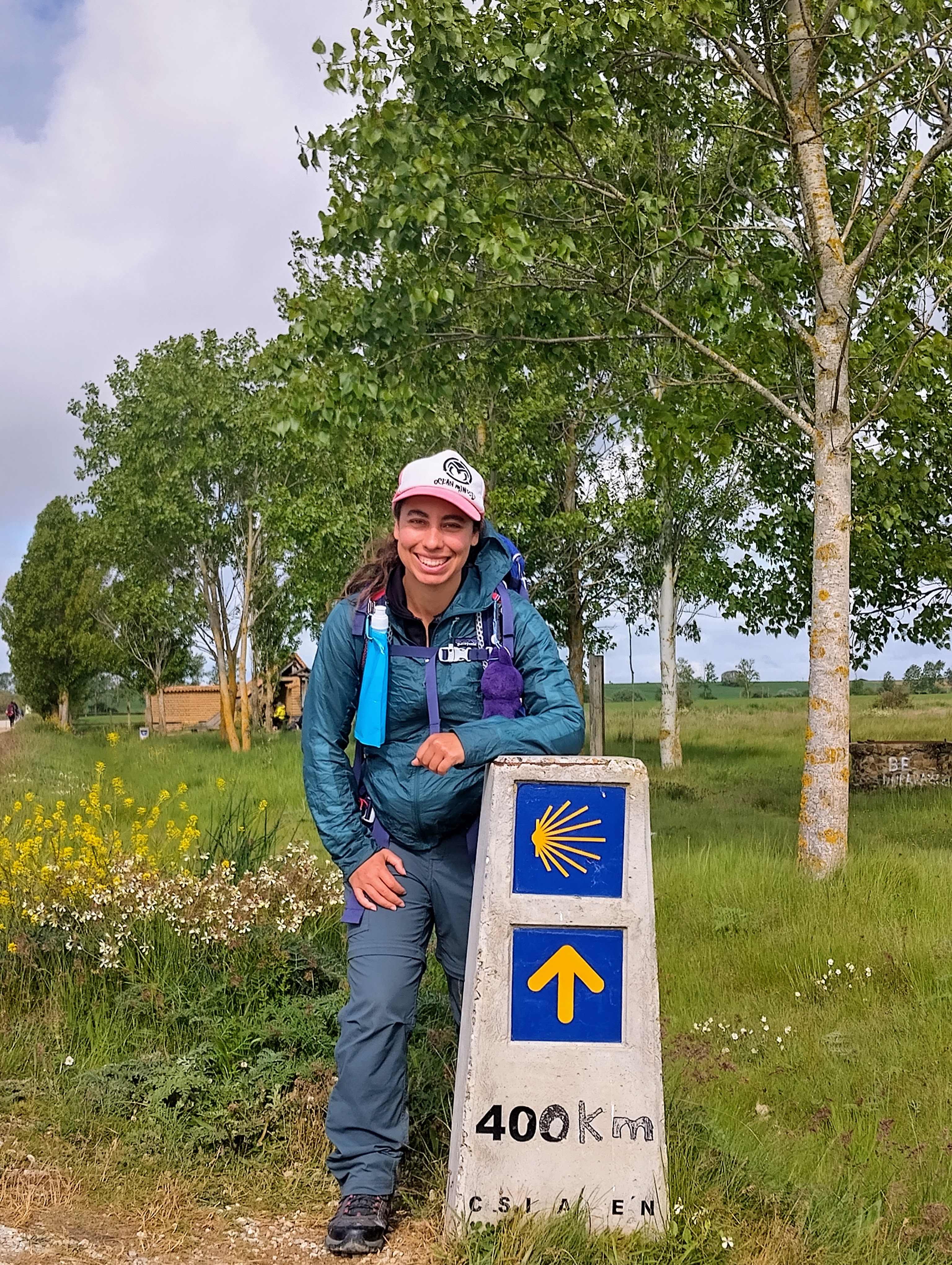
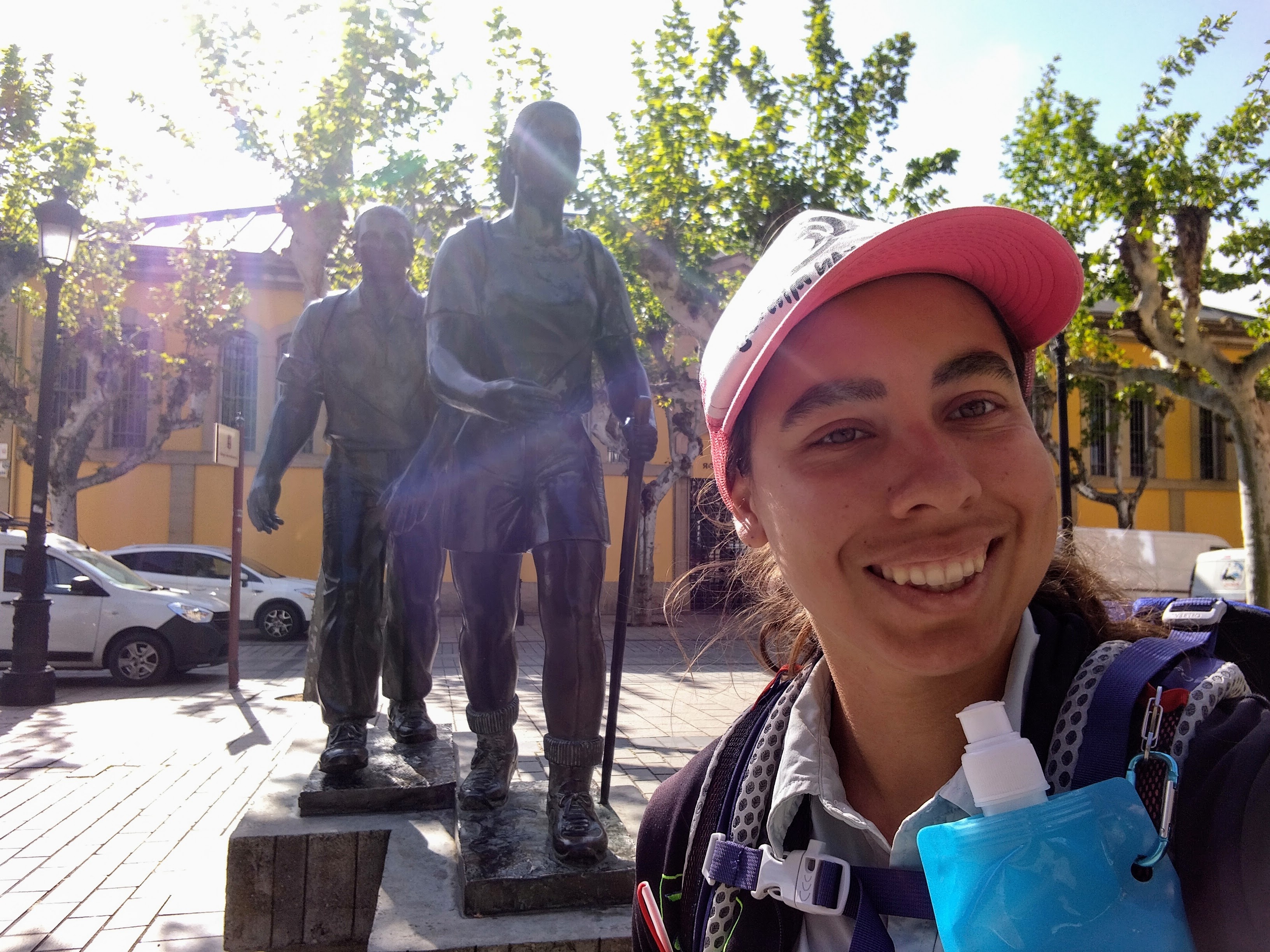
    Victoria Castillo on the Camino de Santiago

    Around a bend I suddenly heard medieval music. It was emanating from a little bar on the mountainside. I had no idea when the next opportunity for food would be so I stopped for breakfast. Naturally I ordered a pincho de tortilla and zumo de naranja. The tortilla came with some bruschetta which was absolutely amazing.

    I passed through the mountain town of El Acebo where I stopped for a second breakfast of cake and ran into Larry and Desi. The place was so beautiful and peaceful that I wanted to stay there, but it was still really early in the day, so it made sense to keep going.

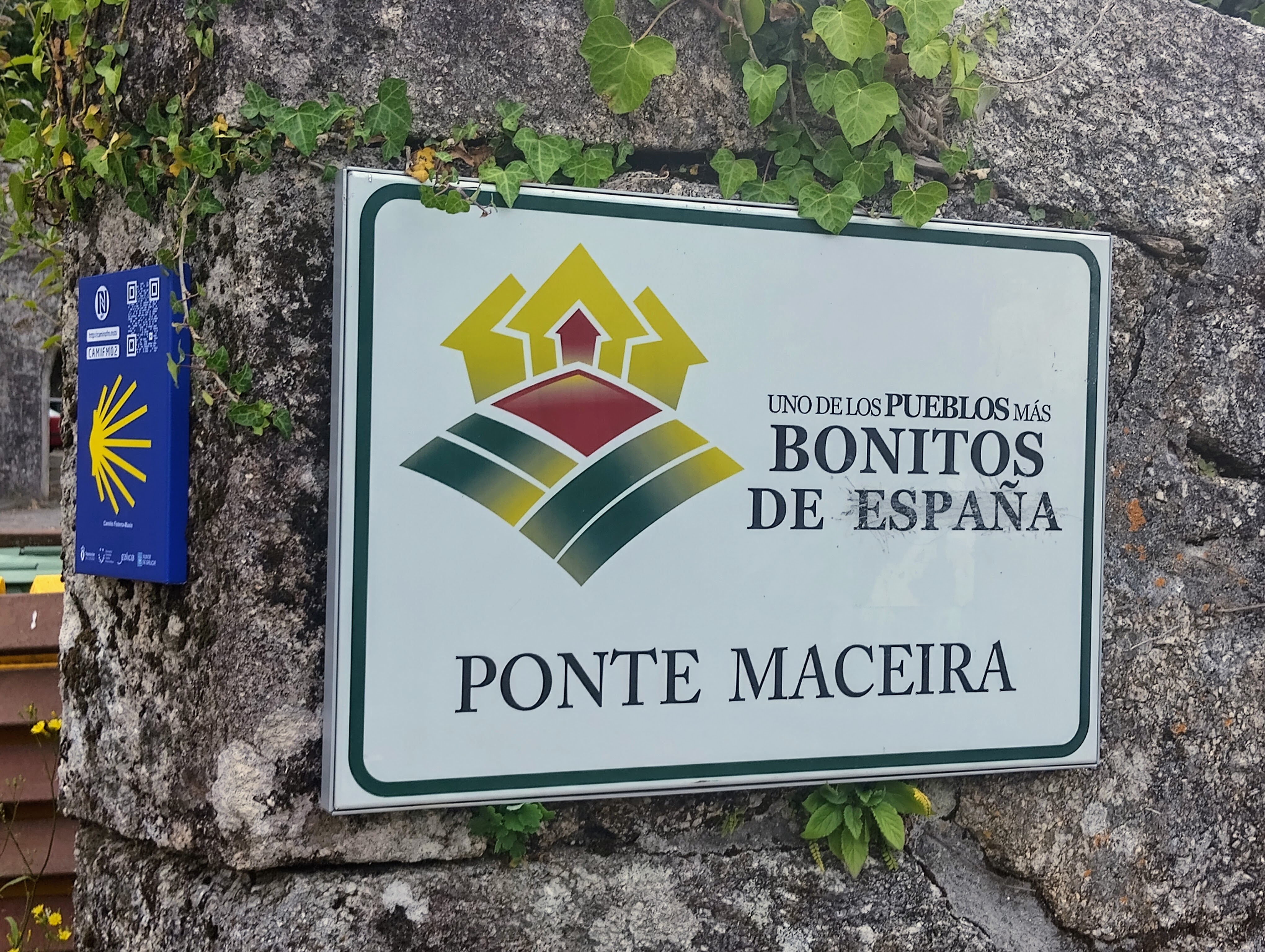
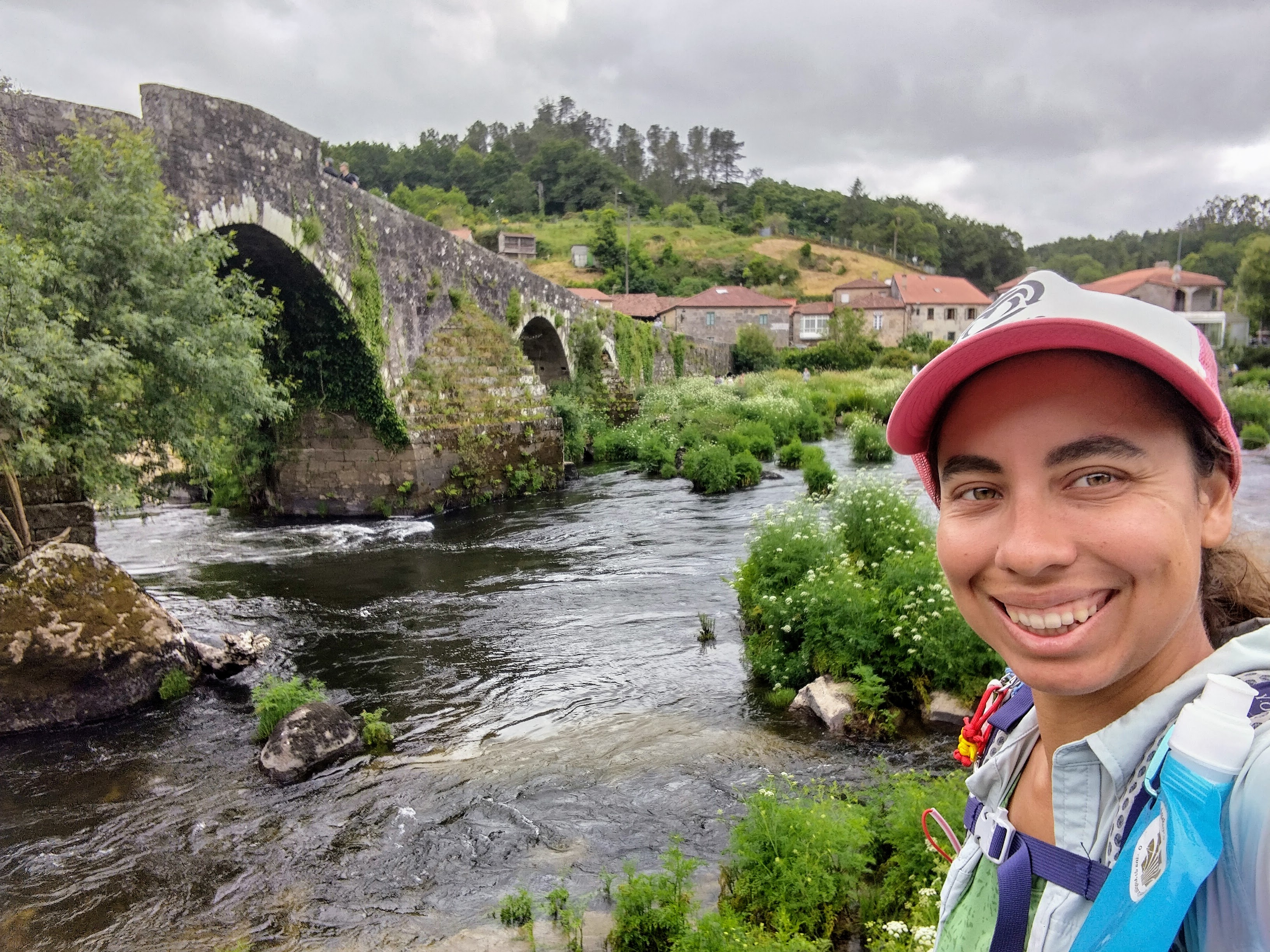
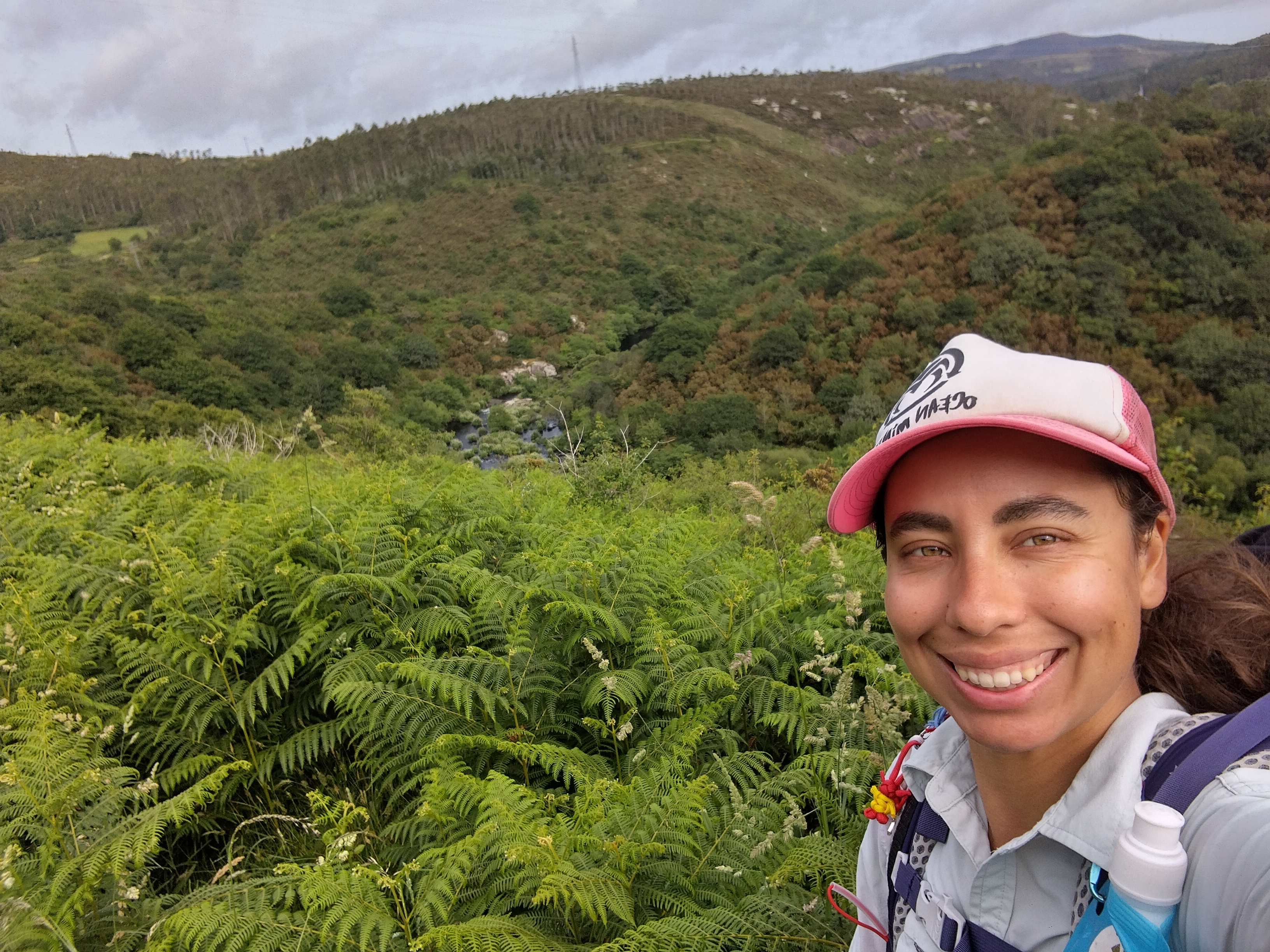
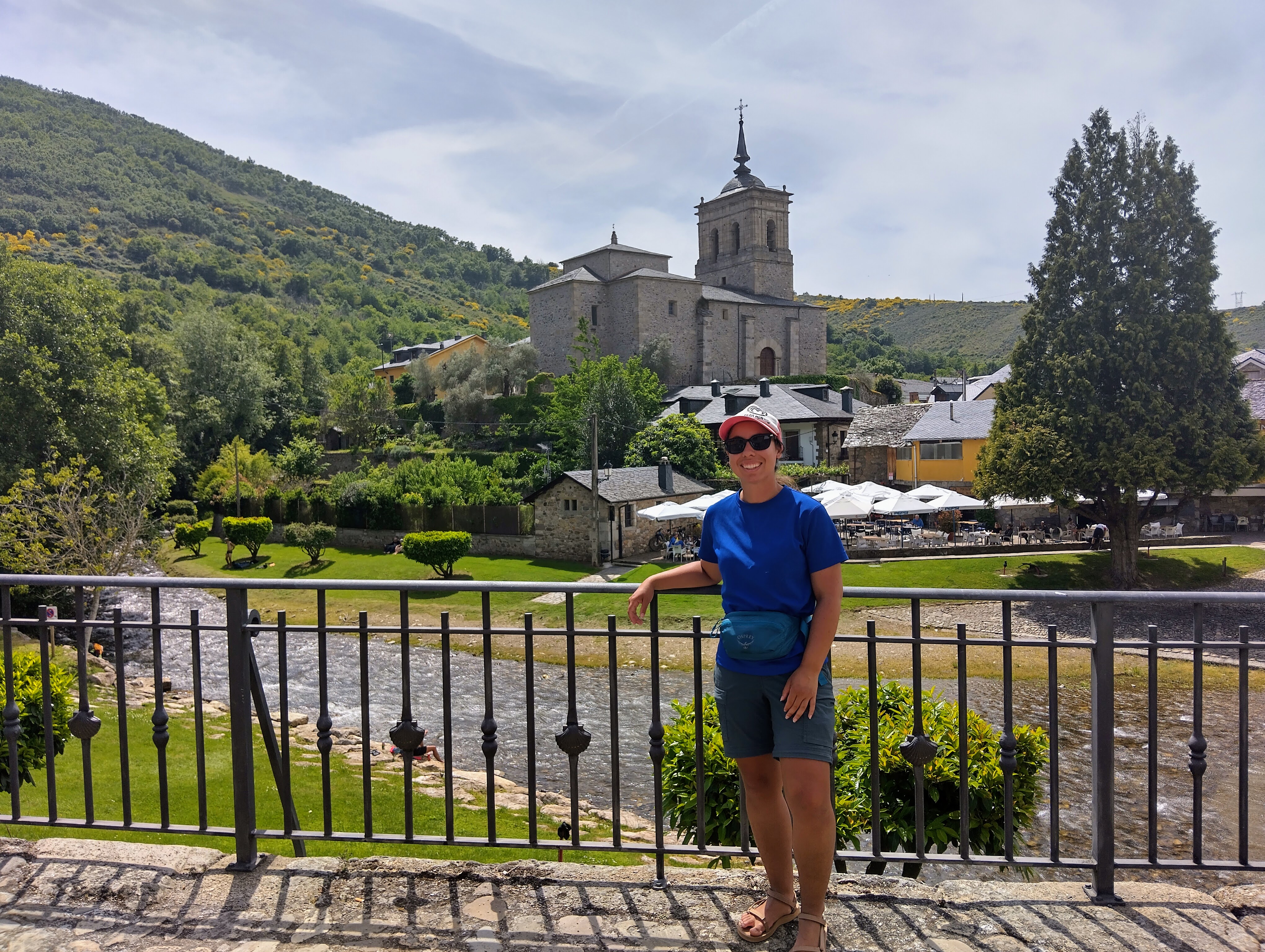
    The rest of the way was mostly a steep downhill descent, with rocks reminiscent of the dragon’s teeth on the descent to Zubiri but not quite as big. These were the baby dragon’s teeth. I felt tempted to send a warning message to some of my friends who I knew were a day behind, but ultimately decided not to spoil the surprise. It might have ruined their enjoyment of the top of the mountain to be anticipating the walk down. It was well worth the slow and steady baby steps and the second blister on my big toe to arrive in Molinaseca. There was a sign proclaiming it to be one of the prettiest towns in Spain, and, as someone who by this time had seen a significant number of towns, I feel qualified to agree.

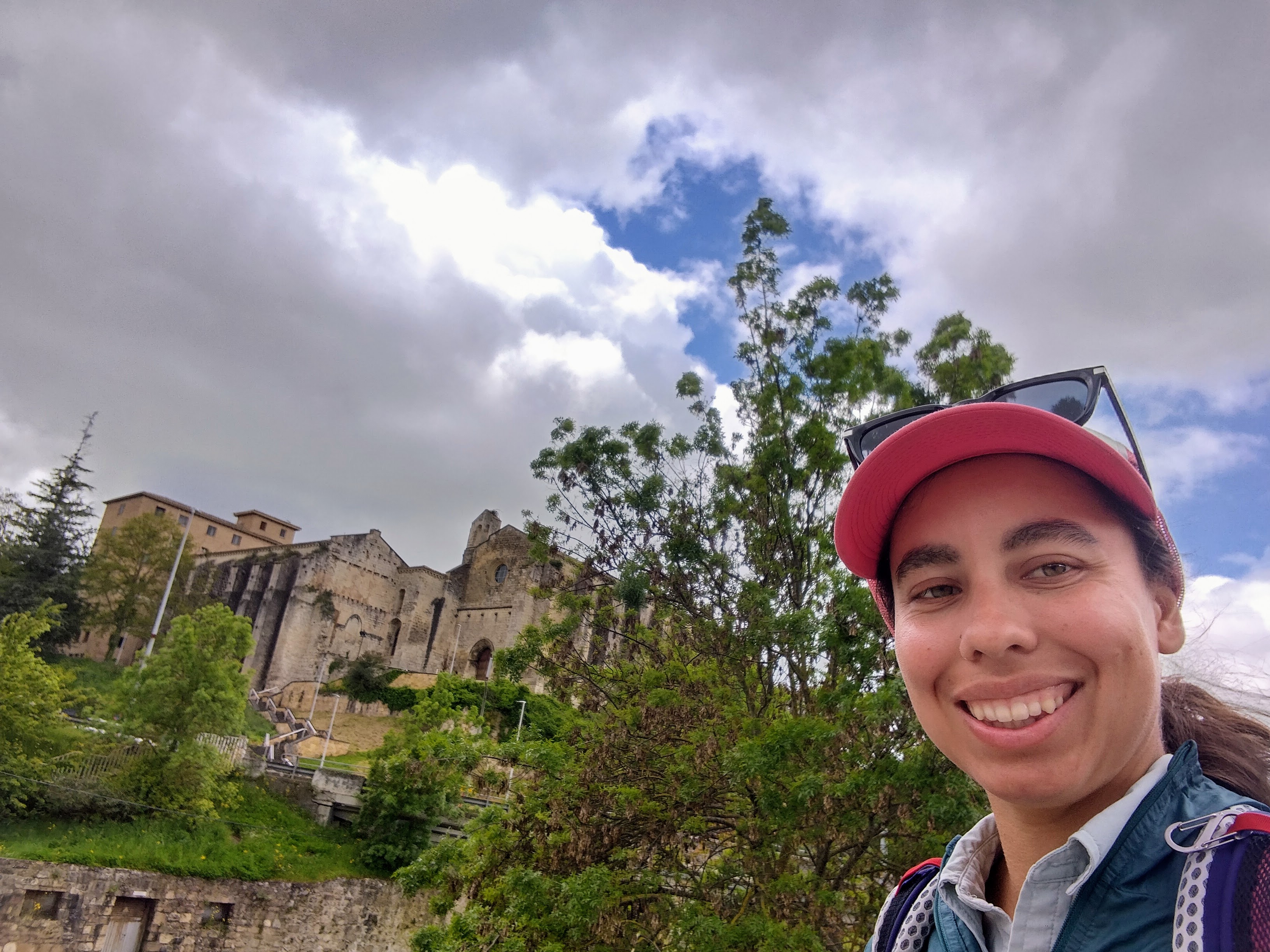
    Victoria Castillo in Molinaseca on the Camino de Santiago

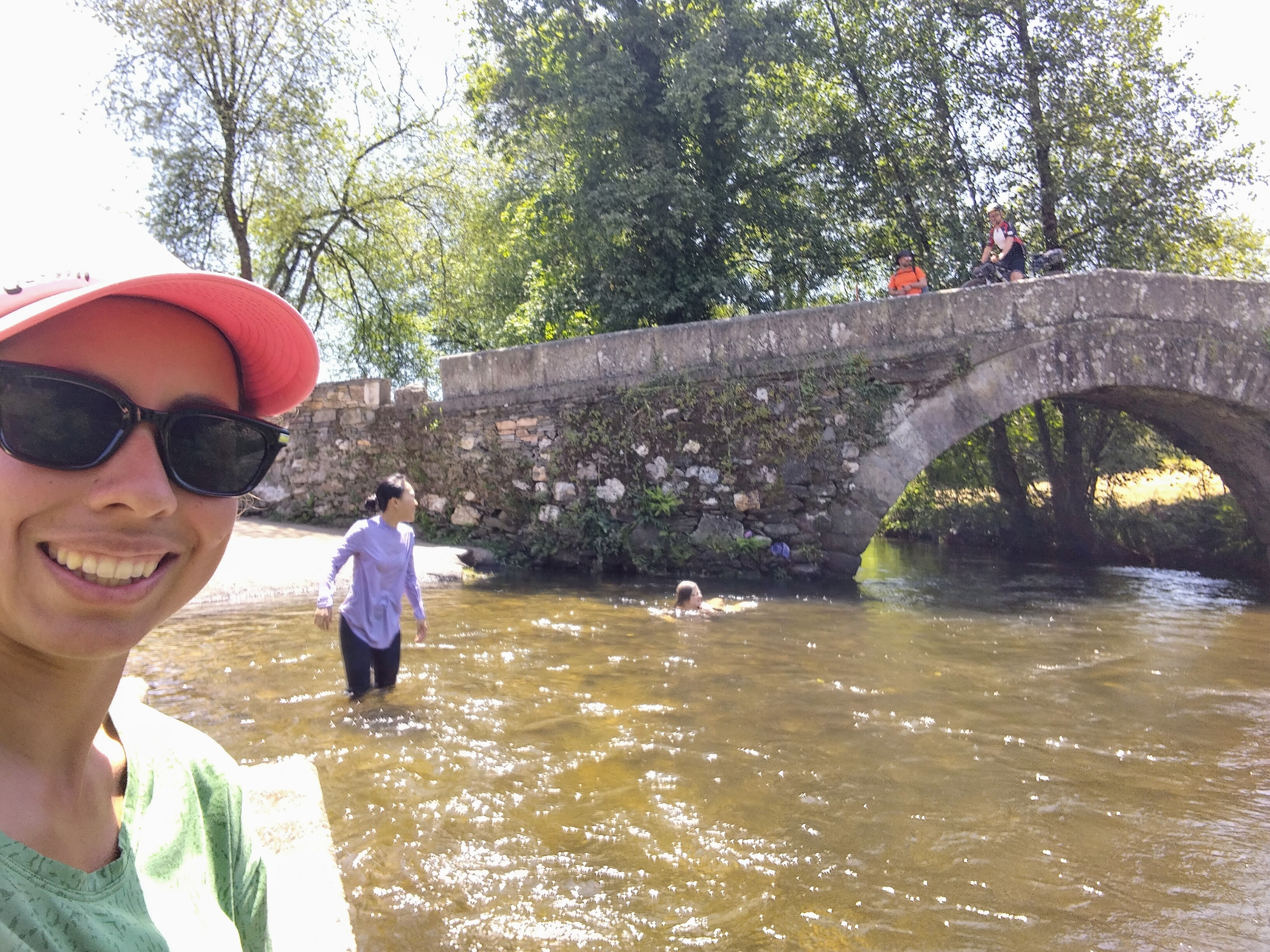
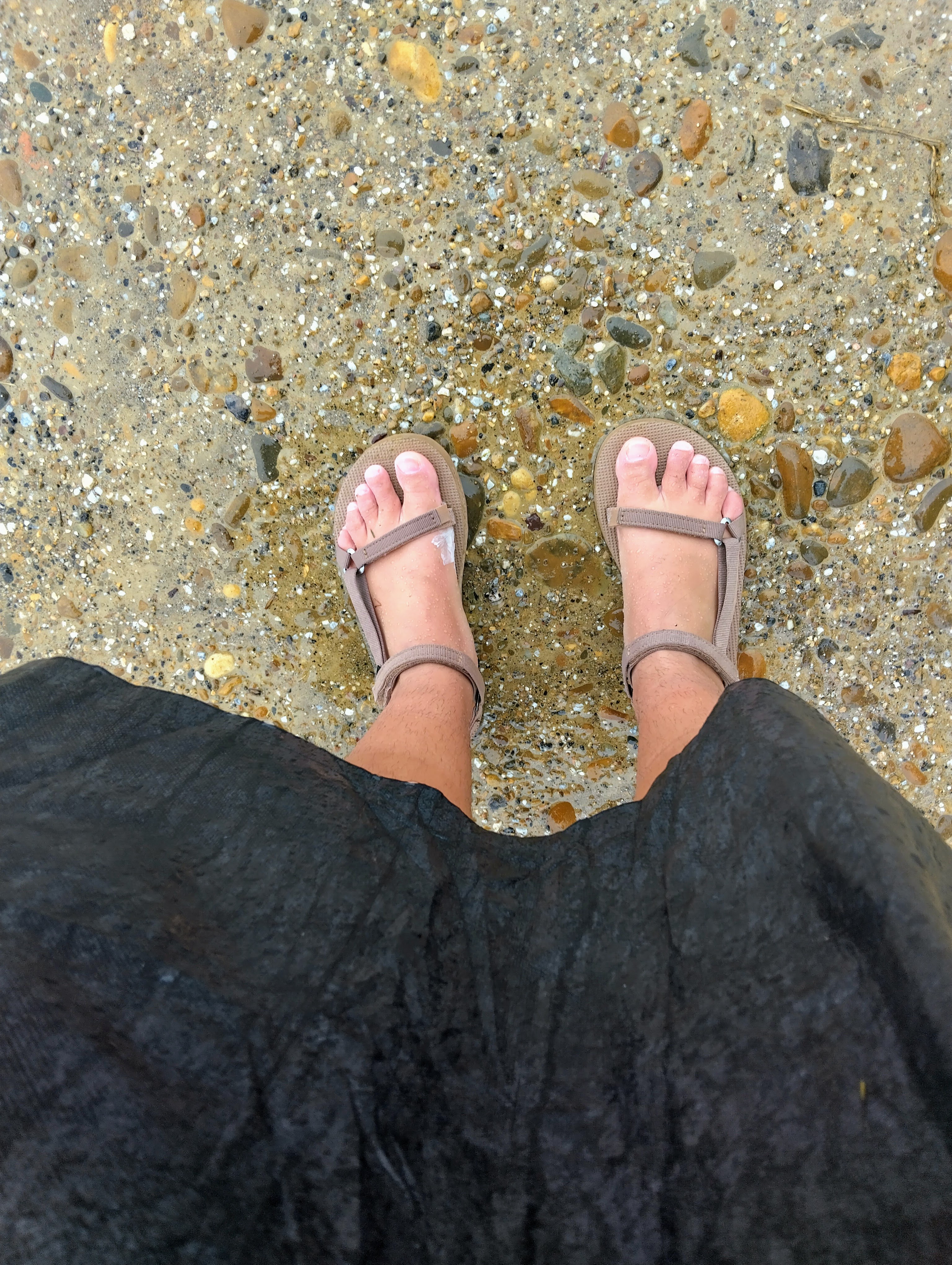
    My top priority was to soak my feet in the river, so I found an albergue nearby, threaded my blister and came out in shorts and sandals ready to be refreshed. The water was freshly melted snow from the mountaintop that was so cold it hurt after only a few seconds. I put my feet in again and again, a little longer each time, until eventually I could sit on the bank with the water flowing over my legs up to my knees. I probably spent over two hours like that, and it really helped my shin splints. Every Camino town needs a cold river.

    Victoria Castillo in Molinaseca on the Camino de Santiago
    Victoria Castillo in Molinaseca on the Camino de Santiago

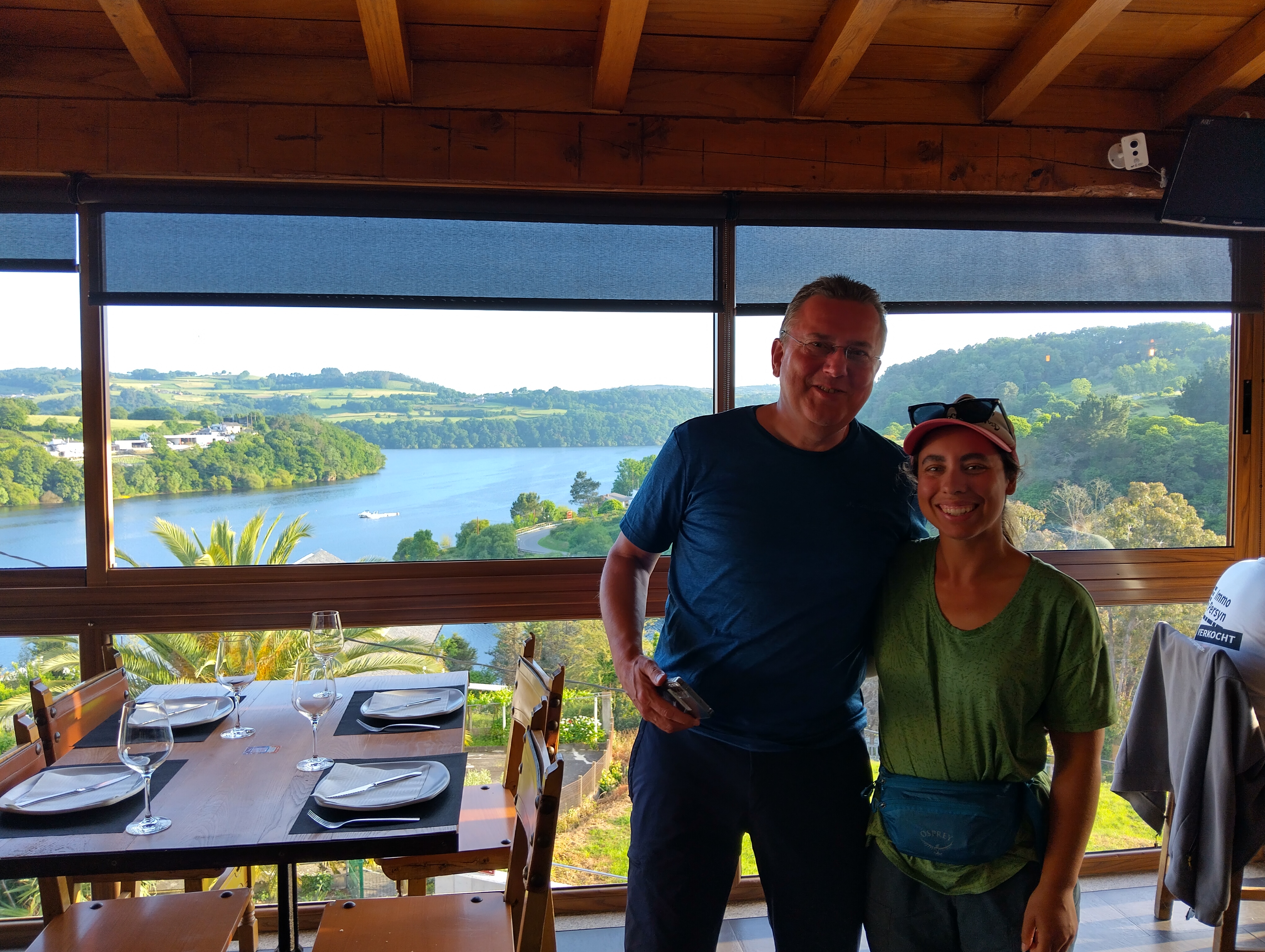
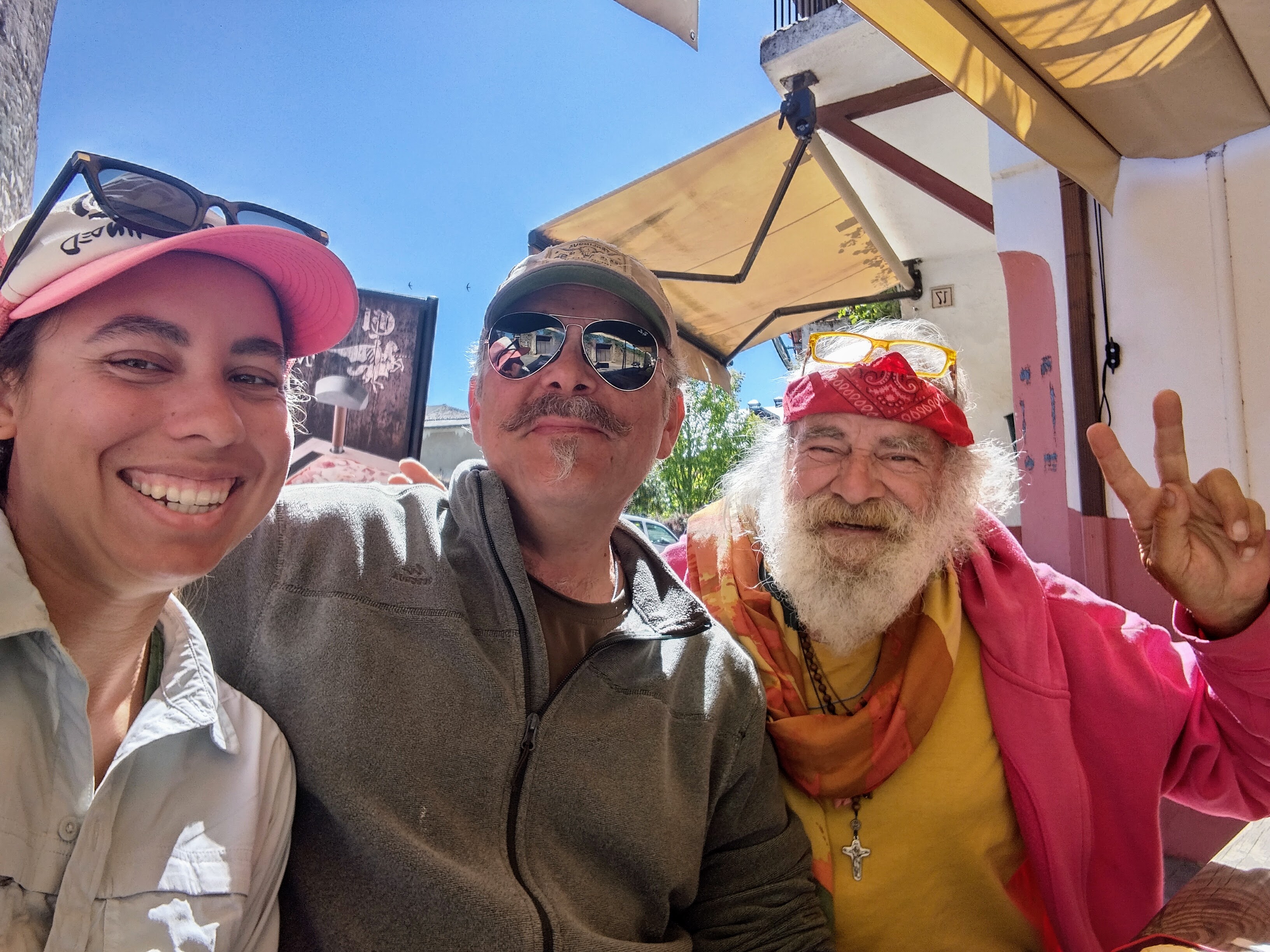
    As I was soaking, I saw Lori across the river. She joined me for a while and told me about her upcoming plans (she did a lot more research than I did). Later we met up for dinner and were also joined by Rob from Canada who I recognized from the singing circle with the nuns in Carrion. I regret that I didn’t get a picture of us that day, especially since more than one person surreptitiously asked me if Rob was a movie star. With his face, he could have been, but he became an expert on the medieval era instead, and told me we would see a medieval castle tomorrow in Ponferrada.

    Throughout dinner my eyes became very itchy and Lori wisely insisted that I go to the pharmacy. I took her advice and picked up some drops for allergies. Another new addition to the ever-growing first aid kit.

    The shower in the albergue was good, although as usual there could have been more hooks for hanging things. I tried to get comfortable on my top bunk, but there was a pilgrim on the other side of the room moaning loudly. I’m not sure if he was ill or drunk, but some of the men checked on him and dealt with whatever the issue was. When it was quiet I drifted to sleep anticipating the big city.

    Day 33: Molinaseca → Camponaraya (16.99 km)

    The morning was sunny and warm as I walked through the foothills and surrounding mountains to Ponferrada. When I arrived in the city it was still early by Spanish standards and not much was open. I stopped for a croissant and zumo de naranja for breakfast and then waited outside the tourist office until they opened. My pilgrim passport was almost full, so I wanted to get a second one in town lest I run out of room for stamps in the middle of nowhere. It turned out they didn’t sell pilgrim passports there, but they are available at most albergues, which I hadn’t realized. They directed me to the nearest albergue and I got one for a couple euros.

    Victoria Castillo in Ponferrada on the Camino de Santiago
    A harmless statue of a penitent in a capirote sure to startle the living daylights out of Americans.

    With my new passport in hand, I went straight to the castle. It was exactly what comes to mind when you hear the word “castle”, something I’d only seen in fairytales and Disneyland and until now hadn’t fully realized was real. I spent a couple of hours exploring. The highlight was sitting on the castle wall listening to an accordion player in the street below and watching random old ladies dance.

    Victoria Castillo in Ponferrada on the Camino de Santiago
    Disney didn’t make it up!
    Victoria Castillo in Ponferrada on the Camino de Santiago
    A dried up moat is still a real moat.
    Victoria Castillo in Ponferrada on the Camino de Santiago
    I went down and met the accordion player.

    Next I went to a place my sister had recommended for churros con chocolate. The place was filled with fun, quirky decorations, but there was no one else there, the woman behind the counter was dead-eyed, and the food disappointing. I had thought I was going to stay in Ponferrada and even had some out-of-character dreams of city night life, but it was still early in the day and I was a pilgrim, not a tourist. Overall, I ended up spending two hours in the city before moving on. As I fled the city, I seemed to be always surrounded by children. There was a class of adorable kindergarteners holding hands on a field trip, kids at recess from school, and a toddler playing outside with her grandpa very sweetly wished me “buen camino”.

    Outside of the city there were a couple of tiny towns lined with roses and then the path became blanketed in what looked almost like snow but was actually thick white cotton-like pollen falling from the trees. Nestled cozily among the pollen I found Sarah, Emma, Andrew, and Gillian having a picnic. They invited me to join them and I gladly finished off their scraps. We walked together for a while until I decided to stop, partly because it was a little late to find a place sans-reservation and partly because my allergies were flaring up from all the pollen. My friends continued on to make their reservation in the text town, but it wouldn’t be the last time I saw them.

    The albergue I ended up in was fairly quiet. I enjoyed paella for dinner and spent most of the evening on the bed with tissues and eye drops. My bunkmate was an 80-year-old Spanish man, and I admit I felt a push to make sure he didn’t beat me in walking distance the next day.

    Day 34: Camponaraya → Trabadelo (24.56 km)

    The day’s walk was pleasant and easy through a new wine country that looked so much like Temecula, California (about an hour north of where I live) that it didn’t make sense to take pictures to send home because everyone would think I hadn’t really left. It’s no wonder the Spanish colonized California—they probably thought they’d made a wrong turn and had landed back in Spain.

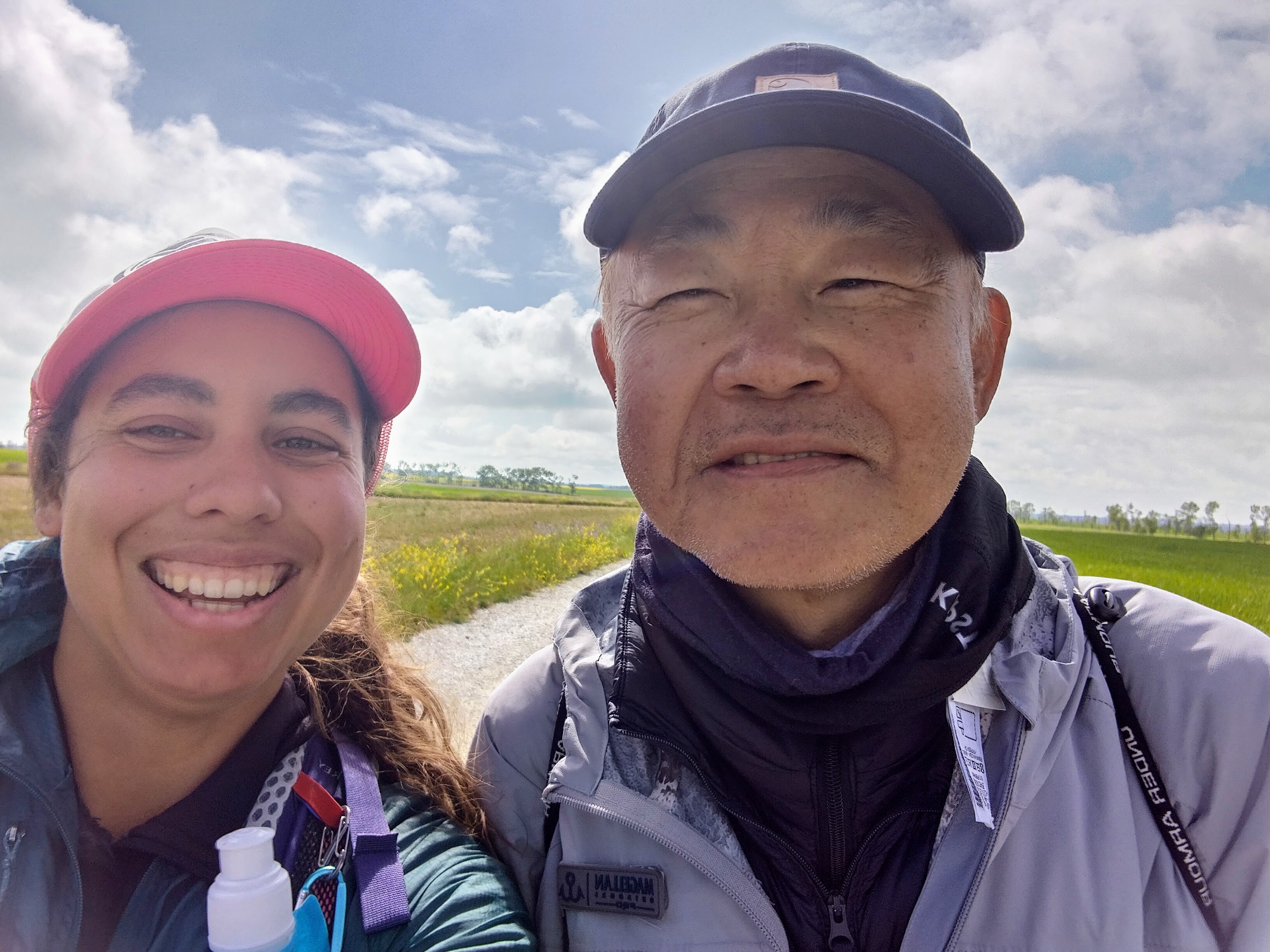
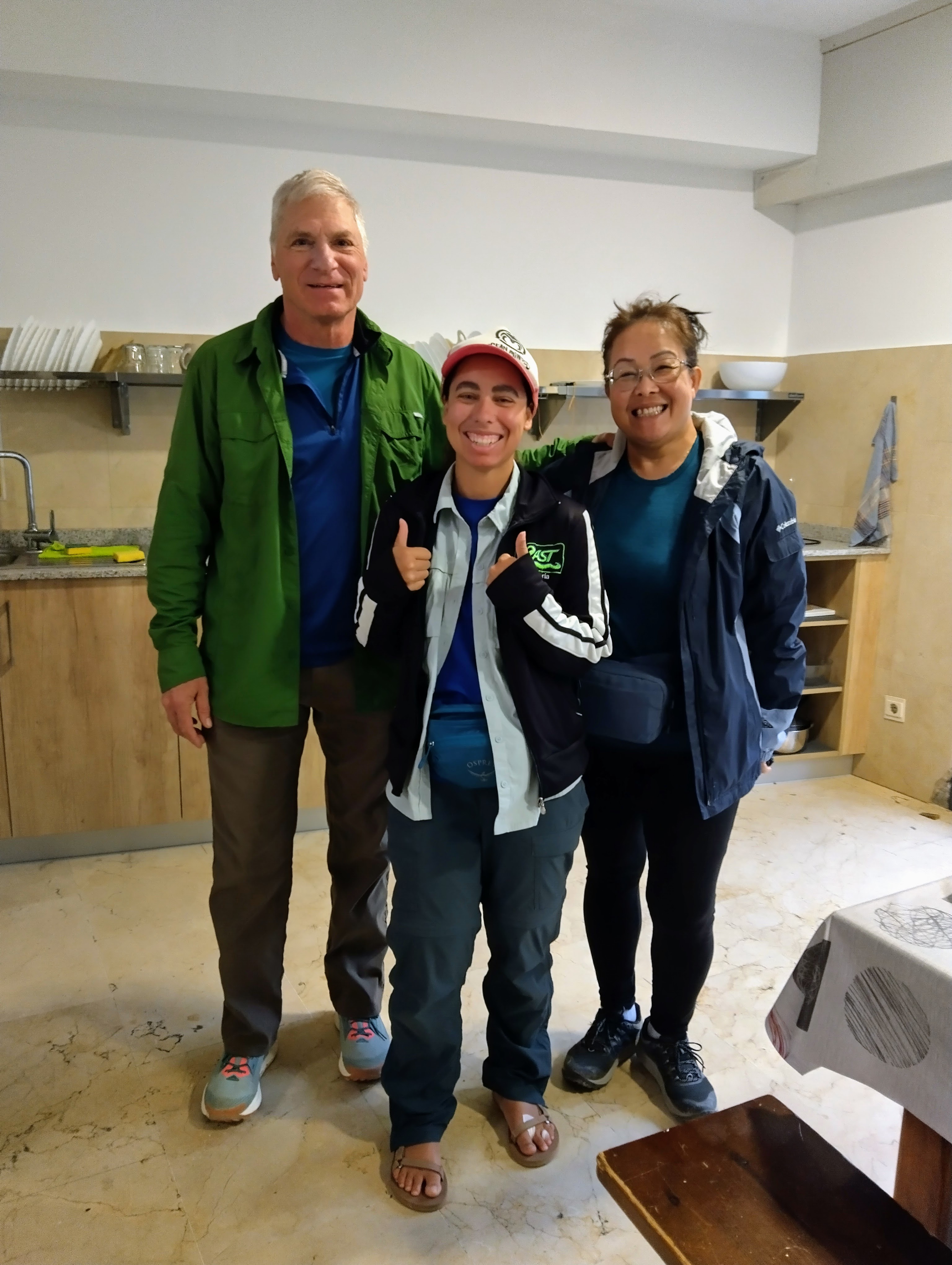
    I stopped for a pincho de tortilla and some fresh zumo de naranja in Villafranca del Bierzo, a nice town down in a valley. My Italian friends joined me. I’m glad I got a picture with them because it ended up being the last time we saw each other. We’ll probably never see each other again, but I’ll always remember them for their kind encouragement on the meseta.

    Victoria Castillo and friends on the Camino de Santiago
    Me, Pasqual, and Giuliani.

    Somewhere in this valley was a fork where my sister had recommended taking the alternate route, but I missed it and continued on the road along the river.

    Victoria Castillo on the Camino de Santiago

    I wasn’t disappointed though because pretty soon the adventuring Aussie family caught up to me (I don’t know how they ended up behind me) and invited me for a picnic lunch by the river. We found a nice secluded spot off the trail and sat down for a feast. Andrew told me about how he traveled all the way around the world in his twenties without ever getting on a plane. This is a family who has their priorities straight.

    Victoria Castillo and friends on the Camino de Santiago
    Sarah, Andrew, Emma, Gillian, and me at a jaunty camera angle.

    We arrived in town and I saw Larry and Desi again. They were staying at the same place as my picnic friends. I was tired, so I just beelined for the municipal, but I later wished I had tried to get a bed where my friends were. When I look back at my Camino, I try not to have regrets, but this is one that bugs me. I didn’t have to choose to be alone.

    I got word that Eunseok had arrived in Santiago. He’d really picked up some serious speed, especially considering he walked the whole way. I still didn’t want to admit that we probably wouldn’t see each other again and I missed my first Camino friend a lot that night.

    Day 35: Trabadelo → O Cebreiro (18.34 km)

    I started out alone as usual, following the path along the road until the first place open for breakfast. It was a truck stop, something I was used to seeing back in the US but not in Spain. Halfway through the door I could see shiny plastic seats and tables. I froze for a second in revulsion before turning right around and continuing down the road. Maybe I’m a bit of a snob, but this wasn’t the Camino to me. Not much farther down the road was a quaint little place with a very good dog named Oreo who watched me eat chocolate con churros for breakfast. That’s more like it.

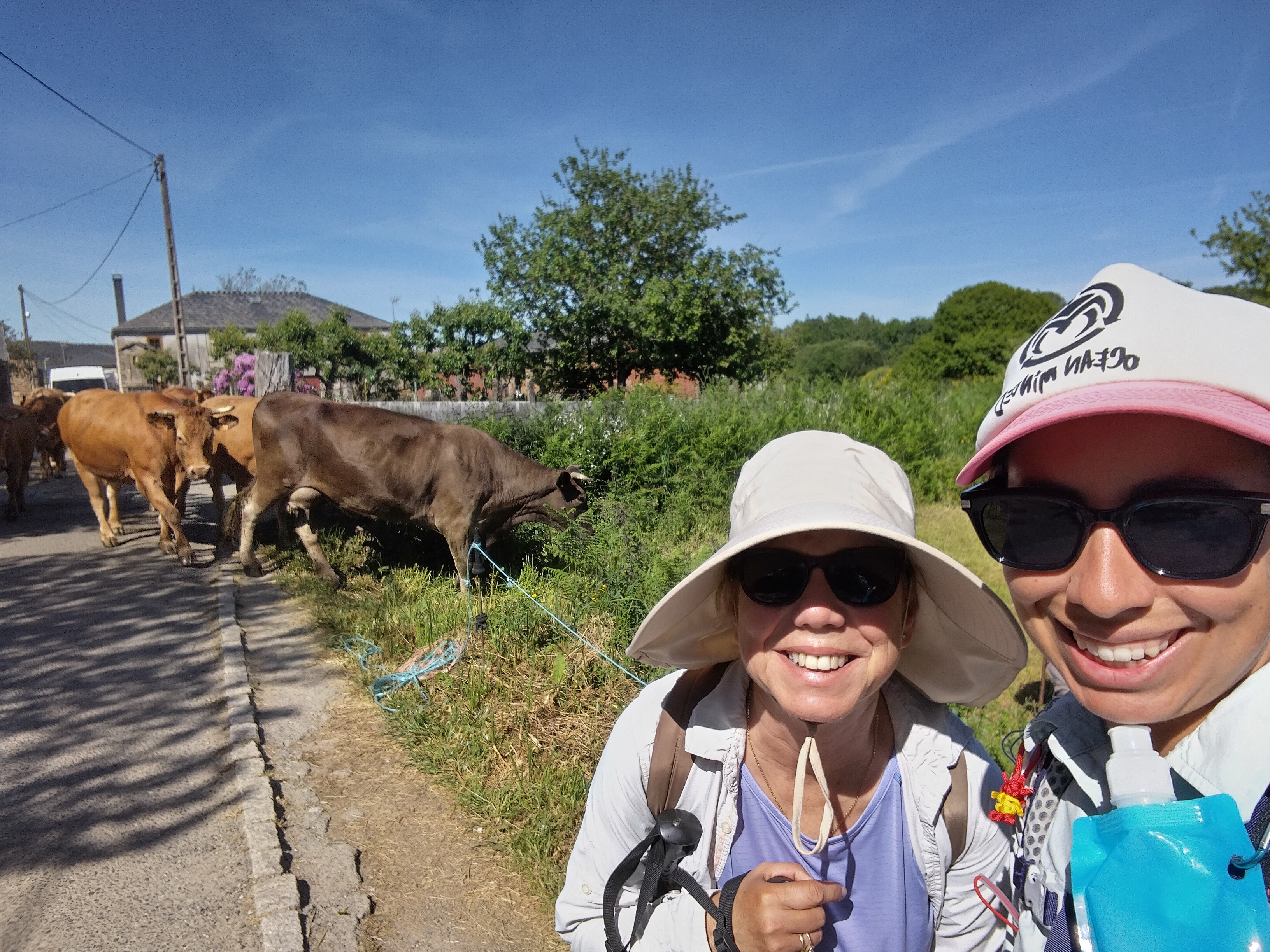
    The terrain was hilly and I could hear cowbells echoing through the pastures like the wind chimes that echo through the canyon where I live. A herd of cows came up the path in the opposite direction. I moved to the side but apparently not far enough in the opinion of the woman who was herding them. She yelled and cursed at me in Spanish, probably assuming that I didn’t understand what she was saying. But I did understand and it was more upsetting than I’d like to admit. As I continued up the hill, the cowbell sounds transformed from peaceful windchimes to ominous threats, and I had to sit down in the shade for a while and calm down until they turned back to windchimes.

    Some time later, another local came down the trail leading horses. There were three tethered horses and one untethered white one was following. I stayed well out of the way and, to my relief, he didn’t yell and curse at me at all—he wished me “buen camino”.

    I saw big green lizard eating a snail.

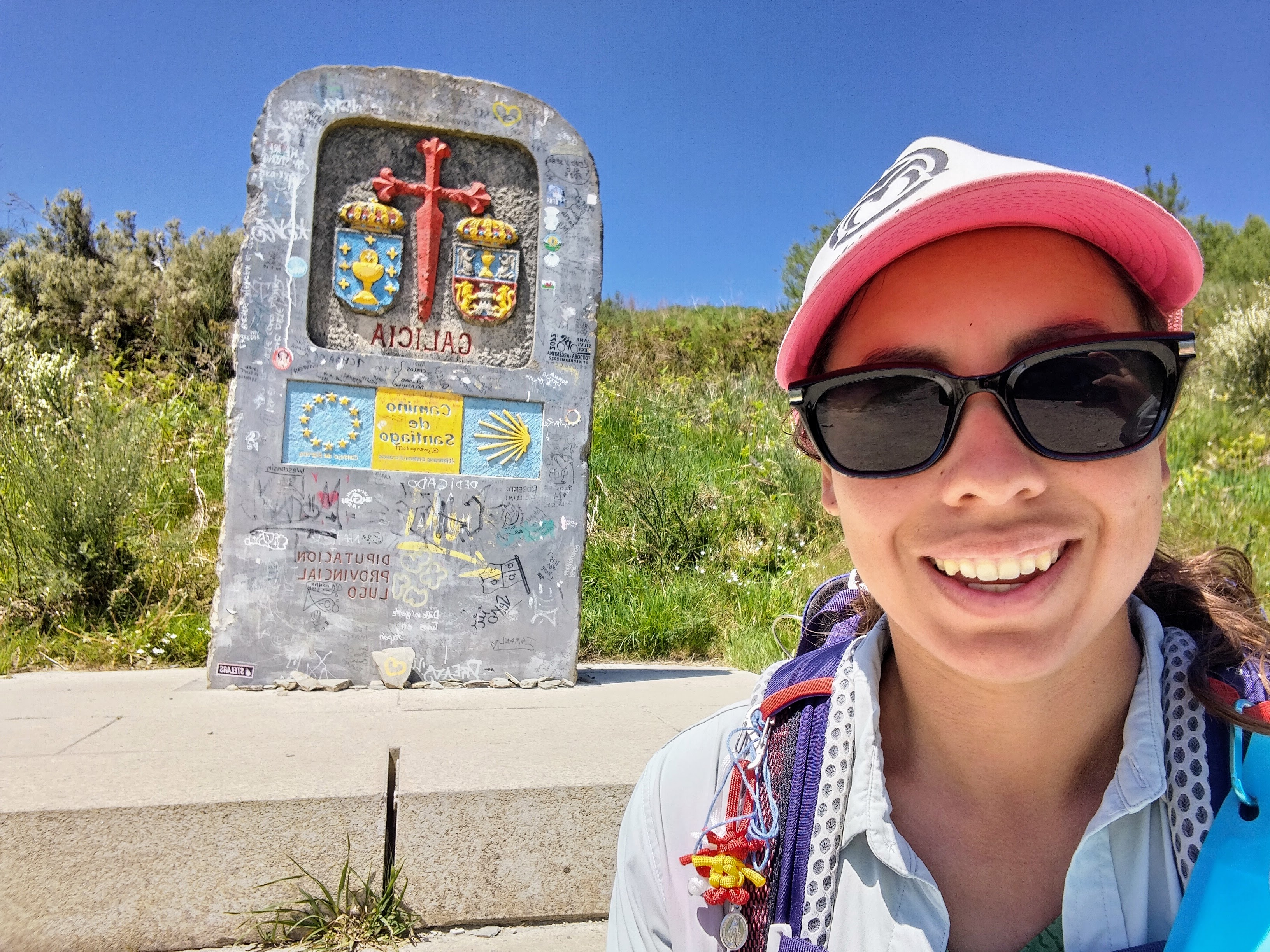
    The final ascent that day brought me into the region of Galicia. The only thing I’d heard about Galicia was that it’s guaranteed to rain, but so far it was hot and sunny. My uninformed self was also surprised to learn that Galicia is Celtic. Pilgrims were welcomed into the cute little mountain town of O Cebreiro by a bagpipe player (who was greatly in need of practice) and the town was filled with Celtic symbols.

    Victoria Castillo on the Camino de Santiago

    I lined up at the municipal albergue and got a bunk. It was one of the nicer municipals with a great view. After doing a little laundry by hand, I went into town to enjoy the atmosphere. I sat with a group that I would soon affectionately deem “the drinking gang” because pretty much every time I saw them they were enjoying a round at a bar. I opted for an Aquarius to rehydrate.

    Someone said the church is the oldest on the Camino and I was inspired to go to mass until Sarah et al arrived and I went to dinner with them instead. No regrets this time. We had a good time, some great burgers, and met a cool Irish couple.

    Day 36: O Cebreiro → Triacastela (20.83 km)

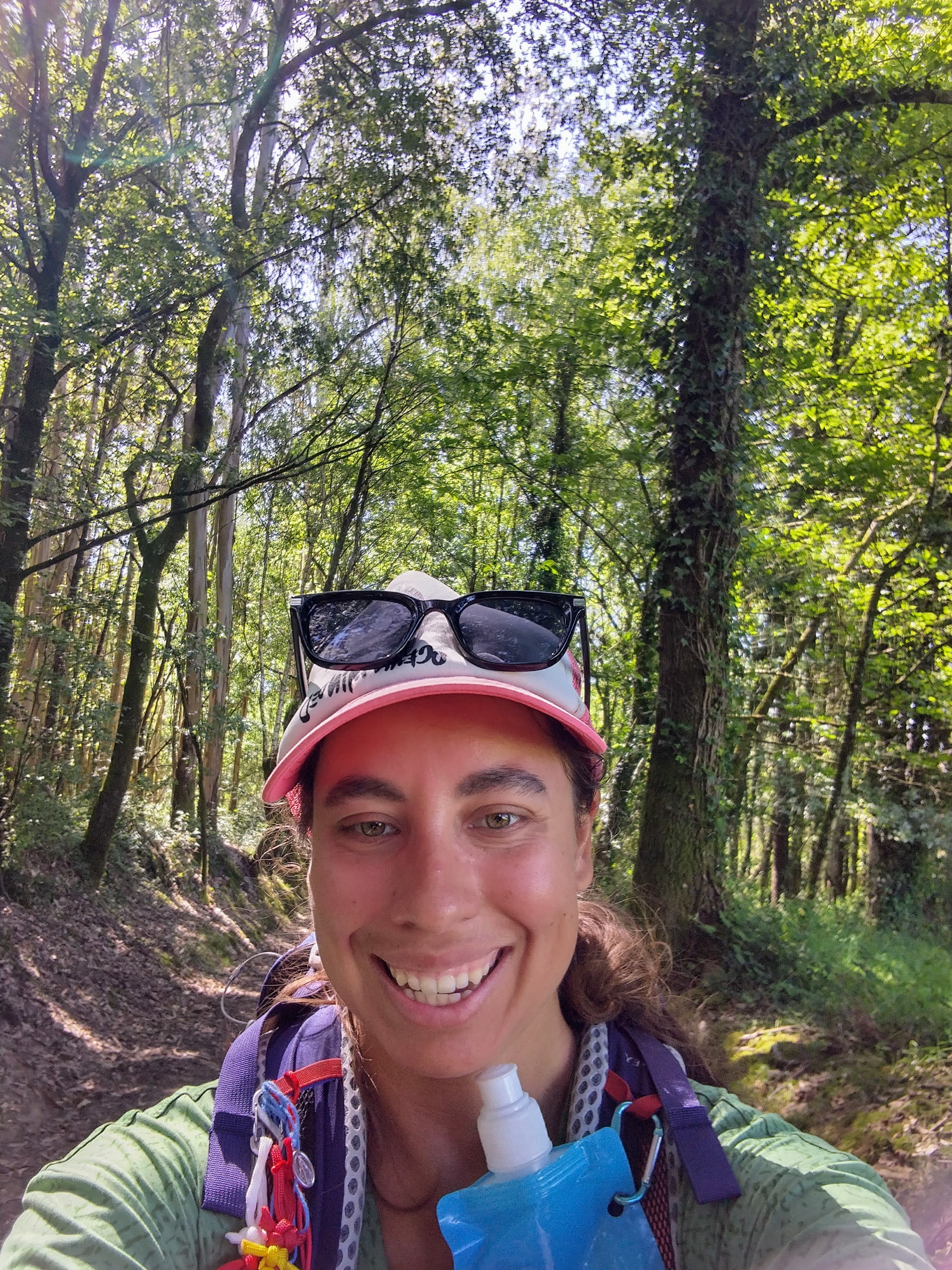
    I set out at dawn on a short alternate path through the forest because it looked farther from the road. It wasn’t much more than a kilometer detour before it merged again with the main route.

    Victoria Castillo on the Camino de Santiago
    Hanging on to my lucky hat.

    My eyes feasted on beautiful views through the mountains but my nose was accosted by the stench of the cow patties. The road was practically paved with poop. A lot of cows crossed the path throughout the day, the highlight being when a herd surrounded a young Korean girl. She got scared and barreled through them slowly, with an arm in front of her, and a muffled scream to avoid frightening the animals. Her Spanish walking buddy couldn’t stop laughing and neither could I.

    Victoria Castillo on the Camino de Santiago

    My breakfast stop was at a little basement cafe where I couldn’t resist adding a piece of homemade chocolate cake to my regular order. Fantastic decision. This was also the place where I first noticed that Galician Spanish was a little different, although I couldn’t yet put my finger on why. (Spoiler alert: I figure it out embarrassingly late.)

    The trail was busy and I walked on and off with friends, including Uwe from Germany who told me that the white horse symbolizes freedom, and Larry and Desi, who told me about what it was like in Australia during the pandemic. Desi also asked me about my heritage. At first my insides tensed up, but this was different from the disguised “why do you look like that?” question that I get all the time. She was genuinely trying to get to know me and told me about her own Greek heritage and how they were going there for a wedding right after the Camino. I must have sounded silly when I was shocked that she still visits as an adult, but a quick reflection later worked it out. I haven’t been able to go visit Venezuela where my dad is from since there has been a lot of political upheaval there, and I must have unconsciously compartmentalized visiting international relatives as belonging exclusively to that lost and irretrievable dimension known as childhood. Silly me. Not everyone’s experience is the same as mine. I listened with enthusiasm to Desi. Australia and Greece were both already high on my list of desired travel destinations, and her descriptions bumped them right up to the top.

    Victoria Castillo on the Camino de Santiago

    We arrived in town and found a barbeque going on. I hung around there for a while before looking for an albergue. The one I chose was pretty nice, but I had a somewhat harrowing experience in the shower. At first I was delighted with the women’s shower room with large stalls and plenty of space outside them to put clothes and towels. The shower itself was hot with good water pressure. I happened to have the whole place to myself and had achieved a level of relaxation rarely found in my other albergue shower experiences. That is, until I stepped out of the stall in my birthday suit and saw two male pilgrims pass by. I jumped right back in the shower before my brain had time to fully process what was going on. What I hadn’t realized was that there was a full-length window, partly stained-glass, partly clear looking right out to the street. There was also a full length mirror on the wall directly across from the window. I’m pretty sure no one actually saw me, but I still take umbrage with whoever designed this place.

    Victoria Castillo on the Camino de Santiago

    I had dinner with Desi and Larry and ordered a famous Galician dish that I had been looking forward to trying: pulpo (octopus). I wanted to like it. I tried to like it. I didn’t like it. Luckily Desi loves it, so she ate mine. I felt so bad, but she was really nice about it.

    More fast walking friends, Anastasia, Alexa, and Dana arrived in Santiago. I wish I could walk into Santiago with all my new friends, but of course that’s not how it goes.

    Day 37: Triacastela → Sarria (24.23 km)

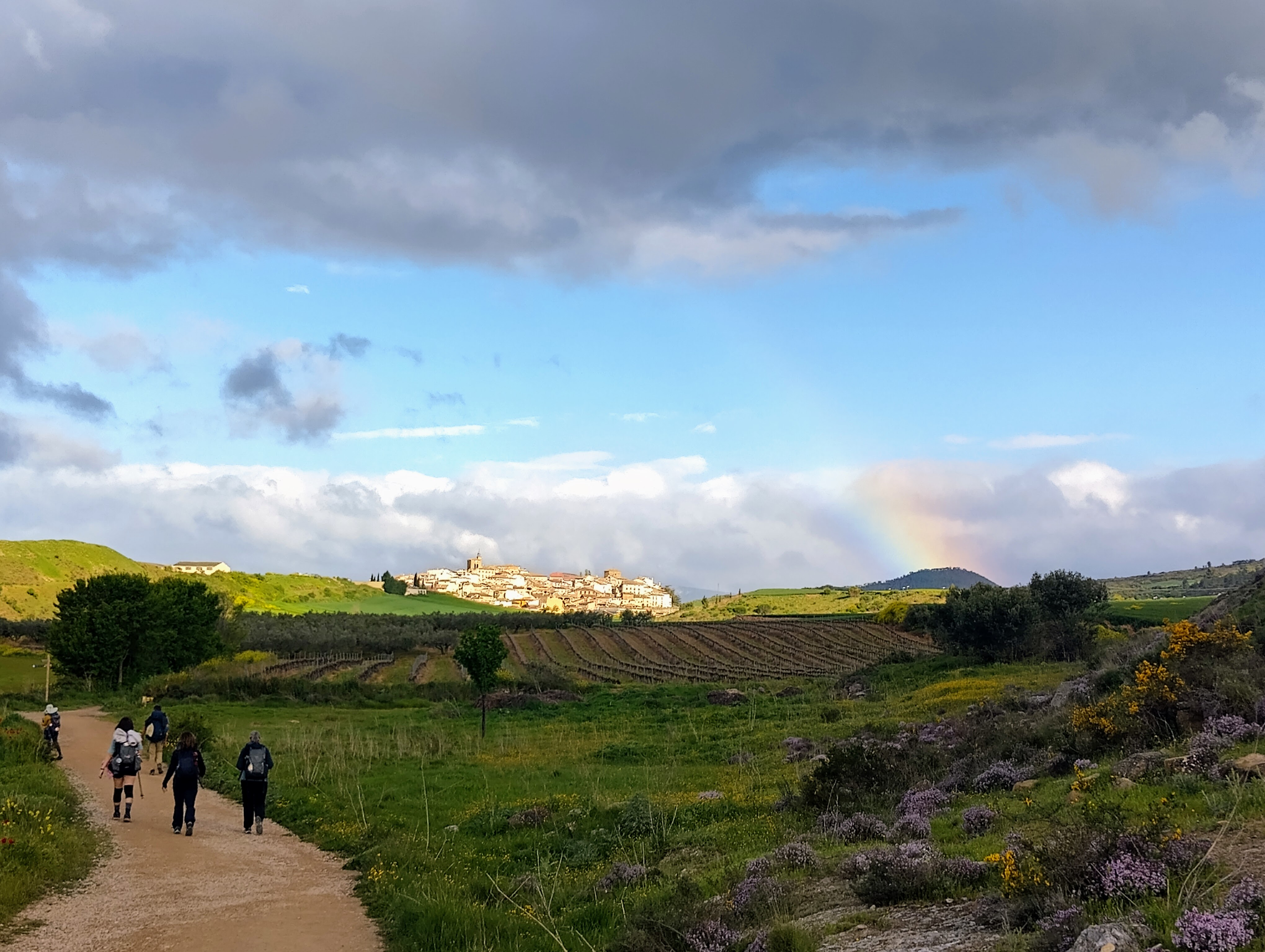
    The day started off with a fork in the Camino and the easy decision to choose the shorter path. I walked with Desi and Larry all day—I’m pretty sure they officially adopted me. There were many beautiful sights to admire. Mist and low clouds that covered the valley ahead making it look like we were moving toward the end of the earth; cows with cute calves dotting the hillsides; arches of luscious green trees.

    Victoria Castillo on the Camino de Santiago
    Victoria Castillo and friends on the Camino de Santiago
    It was hard to catch speed-walker Larry for a photo.

    Larry walked ahead and I talked to Desi about all kinds of things. She told me about her daughter and son-in-law’s boxing studio and about how her son did the Running of the Bulls in Pamplona (and I thought I was adventurous!). It was good to talk to someone while walking. It felt easier and faster and I got to know my friend better.

    Victoria Castillo on the Camino de Santiago

    Almost everyone stopped at a beautiful bohemian-style donativo for snacks and they even had a ukulele.

    Camino time.

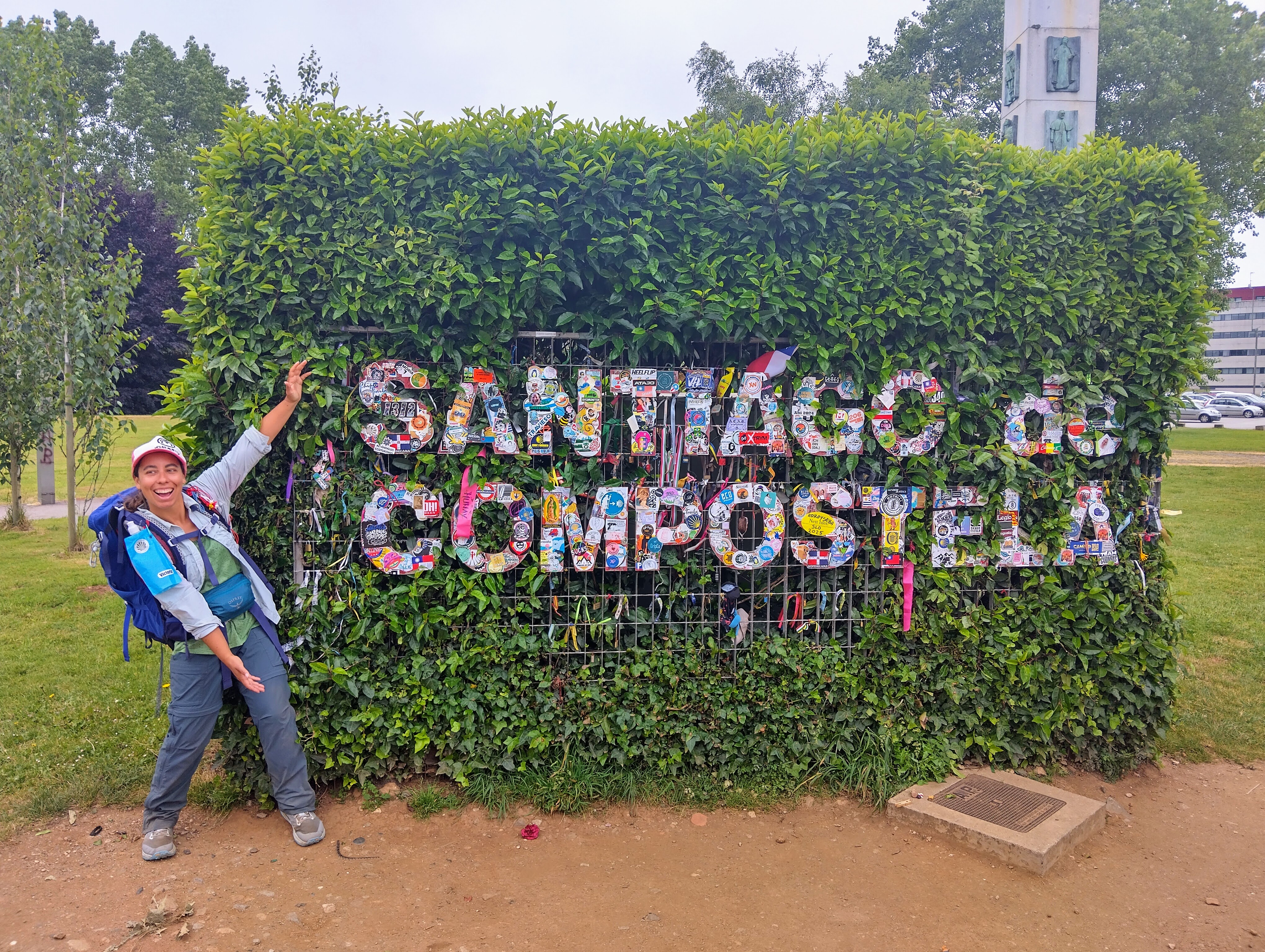
    In the outskirts of Sarria we saw octopus being boiled in a big pot. The sight did not increase its culinary appeal. Larry and Desi continued on to meet their reservation another kilometer along the Camino while I looked for an albergue. By now even I was aware that from Sarria on this was going to be a different game. The town is a little over 100 km from Santiago, the minimum distance required to get credit for walking the Camino, making it a popular starting location for pilgrims who don’t want to walk the full 800 km.

    I was a little worried about finding accommodations, but I got a bed at a nice place right on the main path with no problem. It had real sheets and an excellent shower that finally had enough hooks! The owner didn’t speak English, so I ended up hanging around and translating for her and even made a sign. Pilgrims coming in started thinking I worked there. When the albergue rush was over I went outside to check out the area, but the work wasn’t done. I helped a couple of guys talk to their albergue on the phone and then helped a girl get directions to the grocery store. It felt awesome to be so useful.

    Throughout the afternoon I saw various acquaintances pass through and chatted with the drinking gang, who naturally were having a round. After an early dinner of paella by myself, I got drinks with Sarah and her parents as well as Paula from Australia who was always a lot of fun to run into. We had a great time! Once again I’d intended to go to mass, but ended up staying and talking with Sarah for a long time. Both of us were on career breaks (I think that’s the PC way of saying having a quarter-life crisis) and trying to figure out how to make the most of life. It turns out being a young adult isn’t as easy as it looks. You’re trying to figure life out with the help of advice that’s invariably out of date, because by the time anyone has learned what they should have done it’s already too late. The game is constantly changing.

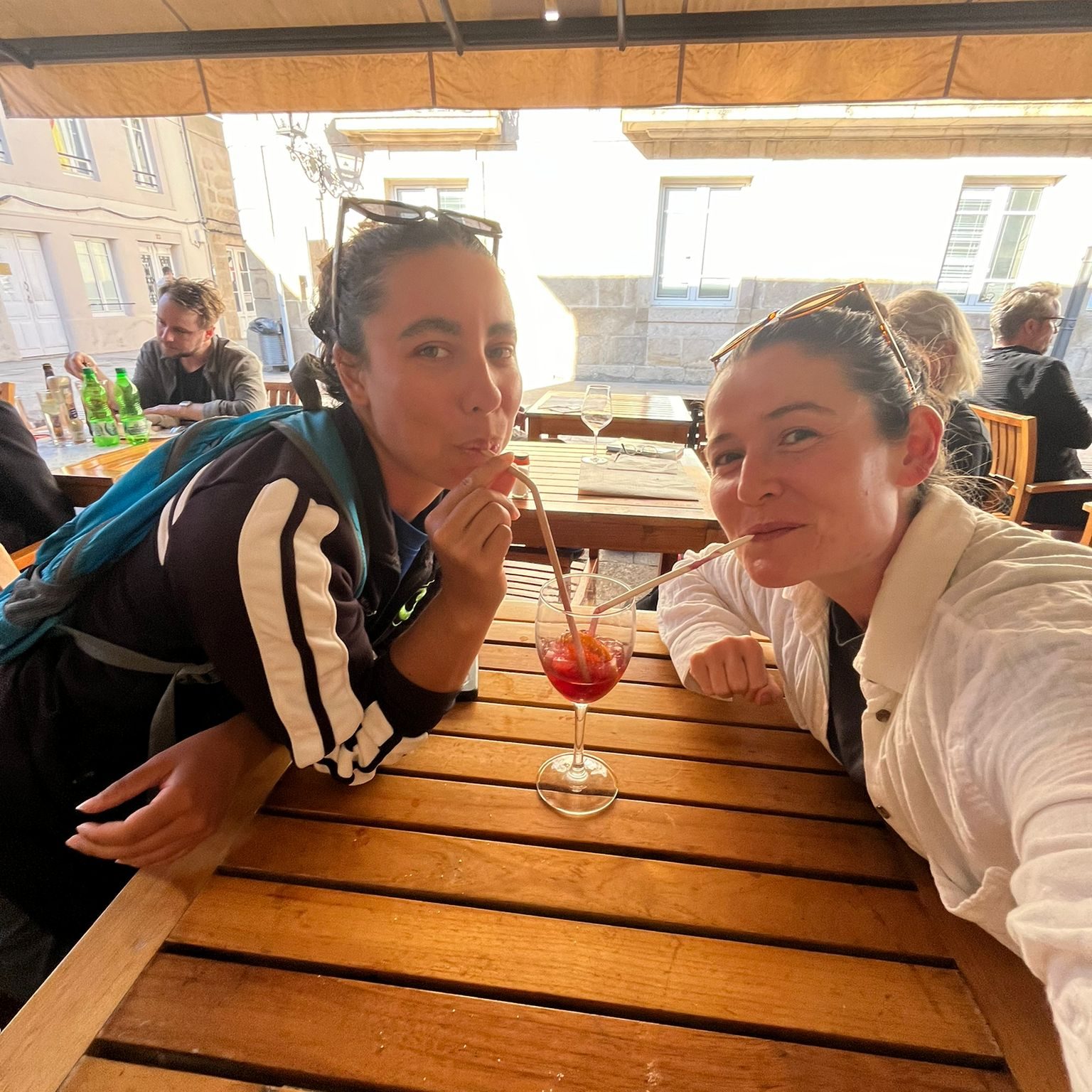
    Victoria Castillo and friend on the Camino de Santiago
    Sipping sangria with Sarah in Sarria

    The Camino was constantly changing. By now we were surely well into the third phase. The first was physical, the second mental, and the third had seemed so far ahead for so long that I’d forgotten what it was supposed to be. I’d gotten a little reminder from my Italian friends. “Transformation”.

  • Camino de Santiago – Days 28-32: León to Cruz de Ferro

    Day 28: León → Villar de Mazarife (20.95 km)

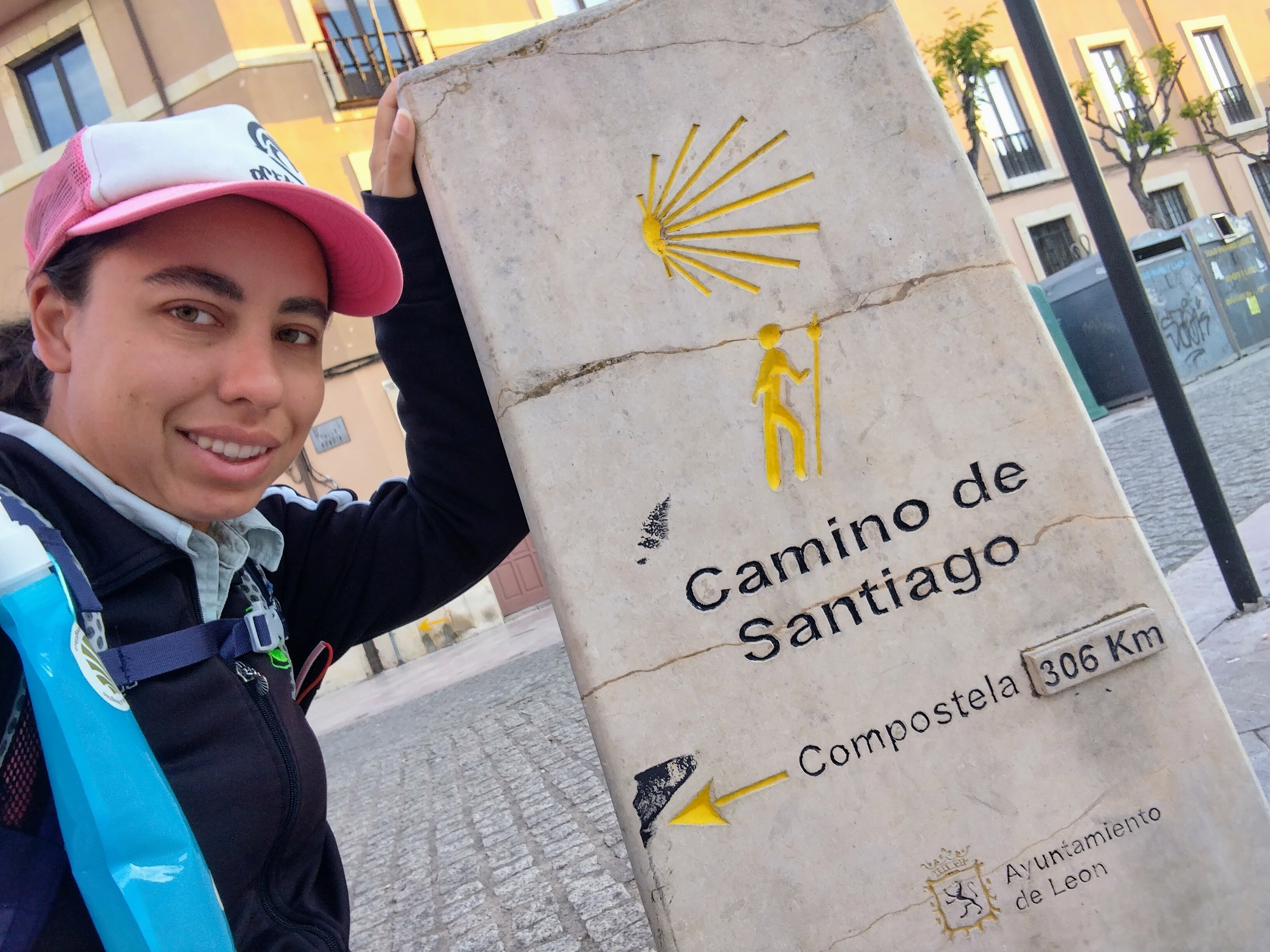
    Victoria Castillo in León on the Camino de Santiago.
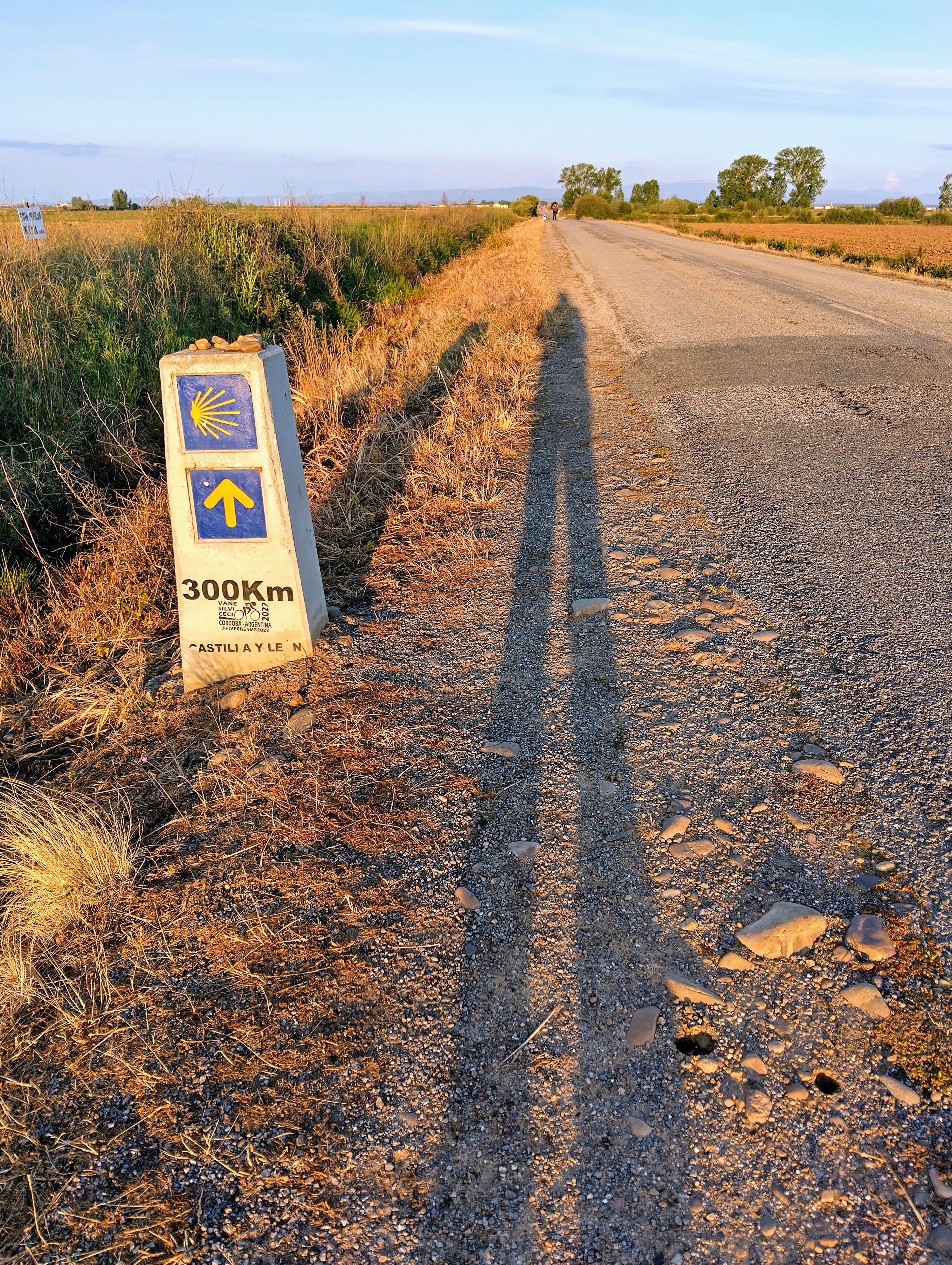
    Remember the number 306….

    I started walking in the early light, when the only people out are the pilgrims and the street sweepers. I felt strong in my new shoes. The shells and arrows leading out of the city weren’t always obvious and sometimes I didn’t see the next one until I was literally on top of it. Walking out of the city was undeniably gross, and at one point the trail literally went through the middle of a gas station. Since I had taken the train, I had missed the walk into the city, but from what I heard it was similarly lacking in beauty. If I lived in León, I would run a rickshaw service where pilgrims could pay a couple euros to be towed behind a bicycle in and out of the city. Feel free to steal my idea.

    Actual building in León. Why?

    I stopped for breakfast at a café on the outskirts of town, not long before a significant fork in the trail that had been much discussed in the last couple of days. The traditional route apparently ran next to the highway, but the alternate southern route, which was a few kilometers longer, was supposed to be more remote. Fully aware of my own sensitivity to the aesthetics of my surroundings, I opted for the southern route and was glad that I did. After a short amount of road walking, during which I saw no cars at all, I soon found myself surrounded by meadows of wildflowers and once again heard the cuckoo bird calling.

    The trail went through farmland and a few nice small towns. One of the towns had more arrows pointing to the bar than the Camino and I stopped there for a bite to eat.

    Despite my new shoes, which certainly proved to be an improvement, by the last few kilometers my shins and feet were in a lot of pain. I saw a copse of trees in the distance that looked like they might be part of a rest area and decided I would stop there for at least 10 minutes. As I approached, I could see benches in the shade of the trees and was about to cross over to them when I saw something else. Lying in the sun, between a bench and a trash can was a big, black hog with its feet sticking up in the air, dead. I did not stop to rest.

    At the entry to the small town where I would spend the night, there was a little pond with a lot of loud chirping and barking sounds coming out of it. I stopped to see the cause and stretch my feet while I was there. There were lots of little frogs swimming along the surface and calling to each other.

    I quickly found an albergue (there were two options). It was nice, but had more stairs than any pilgrim wants to climb at the end of the day. Kim Kimmy and Noriko ended up there too. Noriko gave me some cute string Yodas in Japan and Spain colors that her friend made.

    We spent the afternoon handwashing our laundry and relaxing in the courtyard. There was a communal pilgrim dinner, which was delayed by the arrival in the bar of what appeared to be the entire population of the town. They were all there to watch the soccer game between the León and Ponferrada teams. Despite her protestation that she didn’t really care about soccer, our hostess was continually flitting back to the bar to check the score. The locals (and the sun) were still up watching the game or playing outside with the kids when all the pilgrims went to bed.

    Day 29: Villar de Mazarife → Villares de Órbigo (16.53 km)

    Other than my treatment by the Aussie nurses, I had been avoiding taking painkillers. Because of allergies I don’t usually take any medicine unless absolutely necessary. On this day I made an exception when a nice and very tired Canadian lady who I’d run into a few times before gave me some Tylenol and admitted that she would not have made it this far along the Camino without it. She gave me four tablets, but I completely forgot the dosage and so took all of them at once. Wooooooweeeeee! My head felt funny for several hours, and I forgot about my feet entirely.

    Notice anything suspicious? I don’t think 306-21=300.

    The immediate terrain reminded me of Illinois (where my family has a farm), and there were even some corn fields that had already been harvested. There were big drainage ditches along the path that were filled with more of the same frogs I’d seen in the pond the day before. These ones were a little more shy and would stop chirping and go underwater if they sensed me getting too close. Up ahead in the distance, where the Camino would lead in a few days were mountains with snow covering the taller peaks.

    Somewhere beyond the frog trenches, I came upon another of those pilgrims who stand out and become much talked about. In this case it wasn’t a single pilgrim, but a family, a mother with two small children. I had seen families with children walking the Camino, but none as young as these. I can only guess at their ages, but I don’t think the oldest could have been more than seven years old. I found out from the mother that they had started walking from León, and I wanted to ask more questions when I noticed that she was breastfeeding an infant! She had no stroller and carried him in a pouch on her chest. Not wanting to disturb her while the baby was feeding, I continued on, my questions swimming through my head unanswered.

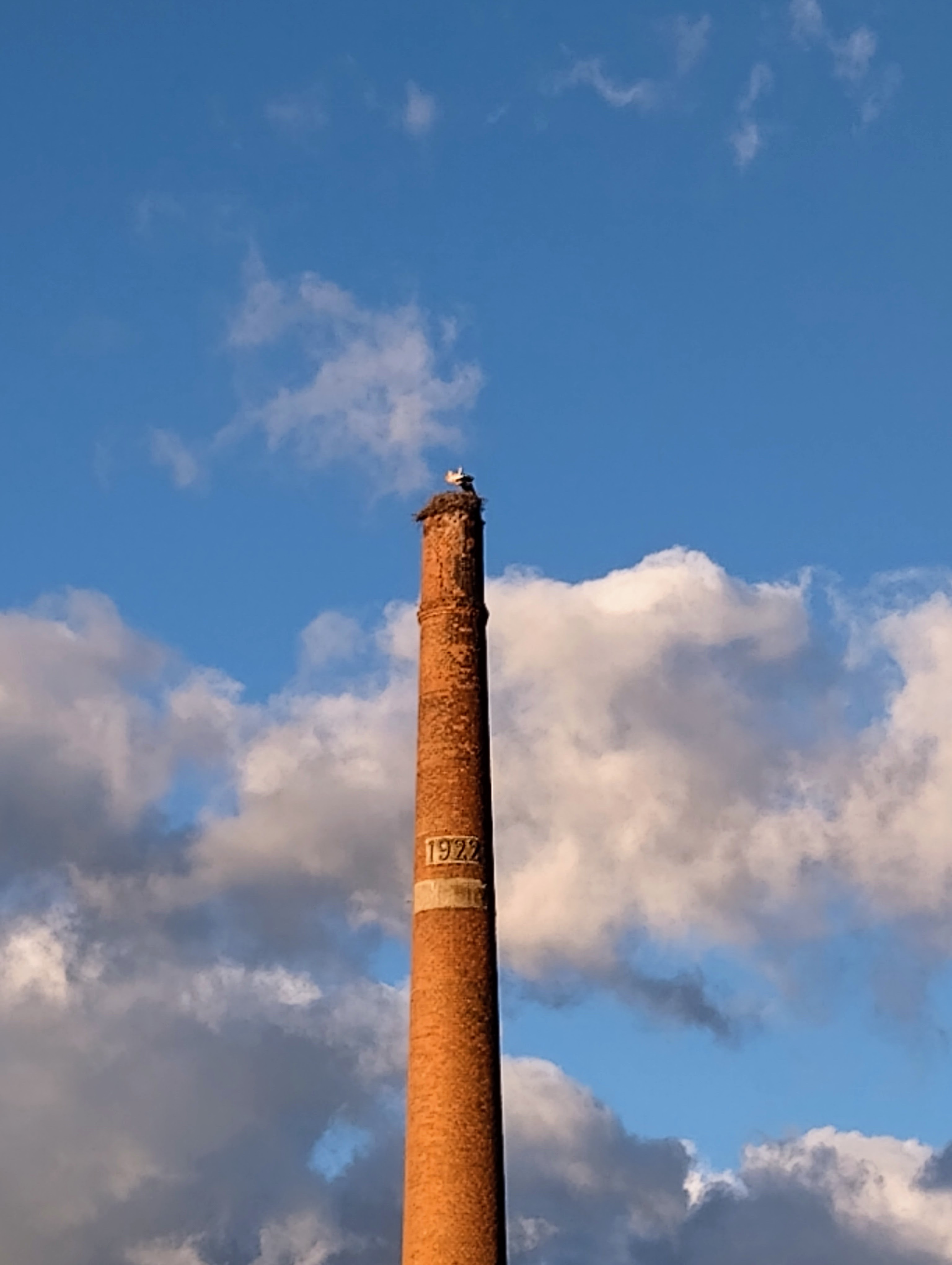
    Speaking of babies, here’s an update from Camino Geographic: every stack or church I passed wore a stork nest hat and on this day a lot of grey fluffy chicks stood up to look around. Assuming the chicks all hatched at approximately the same time, it was like watching one growing up over the weeks.

    To my surprise, frogs and storks weren’t the full extent of my animal encounters that day. I arrived in a really cool town labeled Hospital de Órbigo y Puente de Órbigo. (Is that name long enough for you? I don’t know, I think they could have stuck in a few more words.) The first thing I did was stop in a café/bar for some tortilla and zumo de naranja. They had a nice yard with tables outside, and as I was enjoying my food I suddenly saw a very fancy bird walk by. The whole yard was full of fancy poultry and other animals including two golden pheasants, a family of black chickens, and a tortoise.

    Golden Pheasant

    The puente of Puente de Órbigo is the longest medieval bridge that pilgrims cross on the Camino. A woman who happened to be crossing at the same time I did and who had walked the Camino the previous year said that she had unwittingly passed through during the annual medieval fair where everyone dresses up and there is real live jousting on the field next to the bridge.

    Victoria Castillo on the Camino de Santiago.
    Victoria Castillo on the Camino de Santiago.

    By the time I’d crossed the bridge, the painkillers I had taken in the morning had worn off. I looked around for a pharmacy and got some directions, but, as you may remember, I’m prone to getting lost. As I walked back up the main street for the fourth time, I heard an Australian accent say something like, “It’s not going to look any different no matter how many times you walk up and down.” I admitted my disorientation. The voice belonged to a nice Australian man. He and his wife helped me find some better directions to the pharmacy and his wife gave me some paracetamol just in case they weren’t open. Since I hadn’t been running into the same people as often as before, I didn’t count on ever seeing them again. Looking back, it’s funny how quickly I forgot that the Camino has a way of defying expectations. I had no idea that I’d just run into two new great friends.

    As enchanting as I found this medieval town, I felt a funny sense that I didn’t belong in any of the albergues that I looked into, and by now I’d learned to trust my intuition. I made the call to continue at least to the next tiny town, which was only another kilometer away. It was a slow, achy kilometer through the dust of passing bicycles and I was starting to develop a cough, but I was glad to still be moving. The church bells of two adjacent towns rang out at the same, clamoring across the fields to each other.

    At the edge of the town, Villares de Órbigo, there was a very old man with a walker sitting on a bench. He beckoned to me to come over. At first I thought he needed help, but when I approached him he pointed up the street and said, “Mira! Lolo y Lola!” I looked up to see two manakins dressed up standing on a wall. The old man laughed. I humored him and took a picture. Not far up the street was a very nice looking albergue. I sat down on a bench outside to check my feet and decide if I wanted to stop there. While I was there I could hear the old man beckon to every pilgrim that came by and say, “Mira! Lolo y Lola!” and laugh as if it was the first time he’d showed them to anyone.

    Lolo y Lola, making very slow time to Santiago.

    Between the cough and the always-at-risk feet, I decided to stop there at Albergue El Encanto. It was run by a very nice, welcoming lady. Apparently she has recently done some redecorating and her friends kept coming by to admire it. They were justifiably profuse in their praise, the place was absolutely lovely. The shower was nice and I performed the rare act of washing my hair. There was even a complimentary selection of teas in the kitchen which was perfect for my cough. My friends Sarah, Emma, Andrew, and Gillian, arrived with even more tea and good vibes as usual. My cough was cured and my soul happy.

    While we were all relaxing in the courtyard, the mother with the baby and small kids showed up looking for cheap accommodations. Everyone was surprised that she wasn’t booking ahead. The owner directed her to the other albergue in town which was cheaper. It was a little disconcerting and I think we all hoped that she had some outside support in case she needed it. I never saw the young family again, but I heard rumors much later which led me to believe they made it ok.

    My friends preferred to cook their own dinner in the big kitchen at the albergue, but I attended the pilgrim dinner next door where I ended up getting to practice my conversational Spanish. I was next to a Spanish pilgrim named Jemma from Ecuador who’d moved with her family to Madrid when she was a kid. She didn’t speak English but she liked to talk and laugh a lot. She and her boyfriend had started in León that day and walked over 40 km. They planned on doing similar distances every day because they only had so many days before they had to go back to work. She thought it was crazy that most pilgrims get up and go to bed so early. Little did I know her attitude was just a taste of the craziness that would be the last 100 km to Santiago.

    Day 30: Villares de Órbigo → Murias de Rechivaldo (18.7 km)

    I was the first one up and walking as soon as it began to grow light. The terrain was less flat and passed through farmland and orchards. Just outside of town there was an adorable little calf that might have been born yesterday.

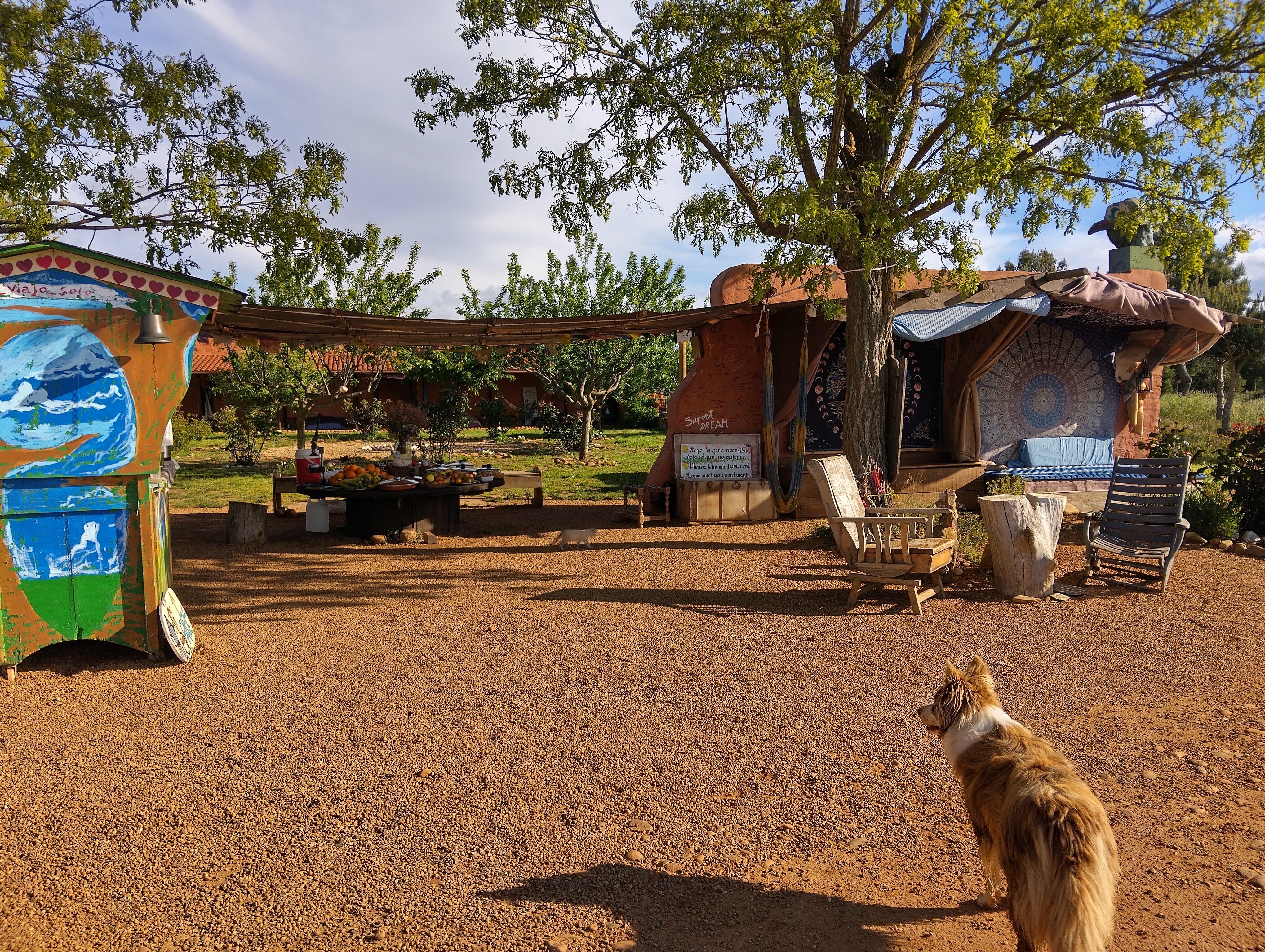
    In a stretch between towns there was a cool bohemian pop-up donativo with good snacks and great vibe. There was a dog that ran up to every newcomer and tried to get them to play soccer with him. I played with him—he was really good, no joke.

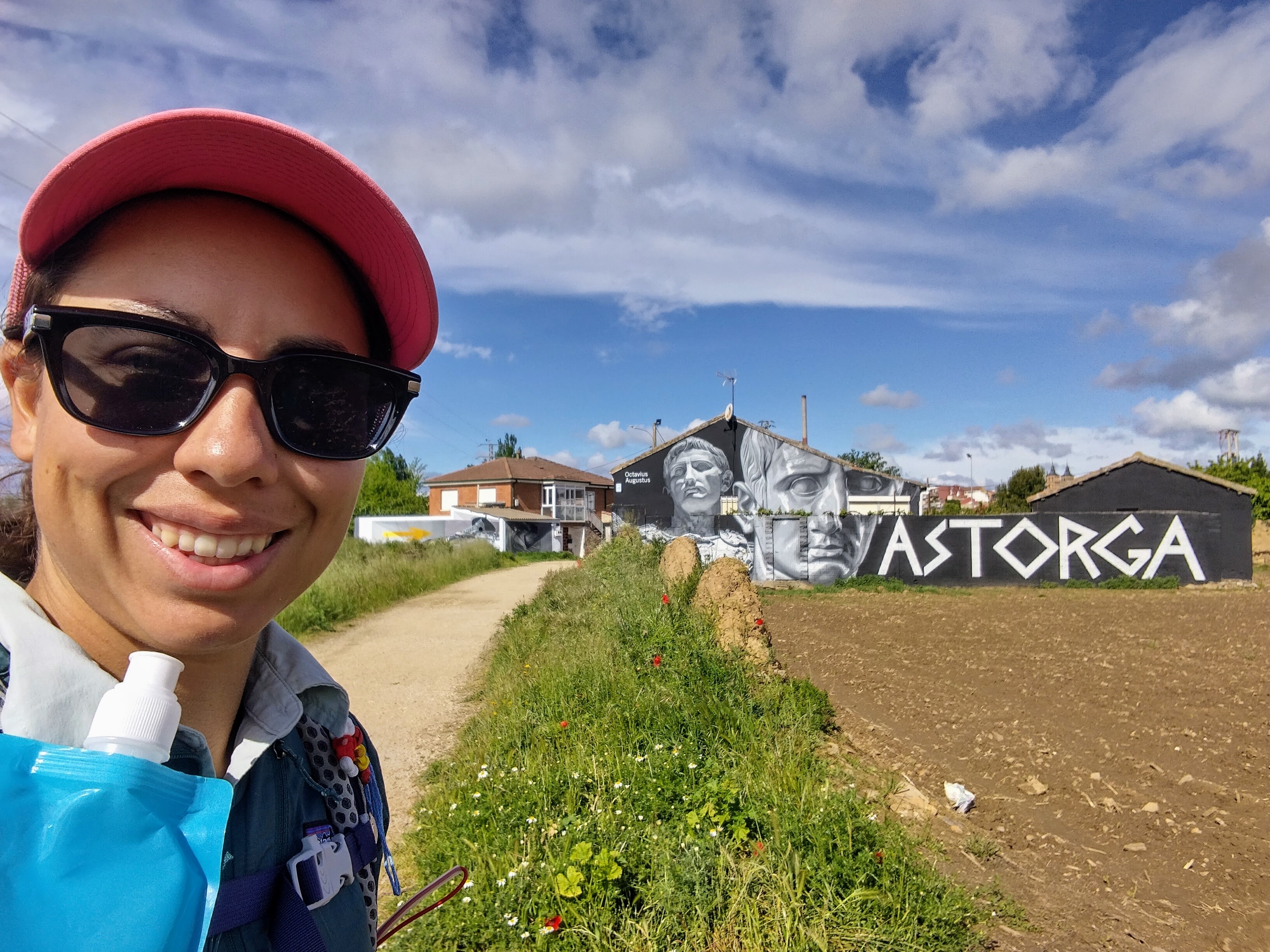
    Next I passed through Astorga, which is a small city. It would have been a great place to spend a day as a tourist, but it must have been Sunday because most of the museums were closed except for the cathedral.

    Victoria Castillo on the Camino de Santiago.
    Victoria Castillo in Astorga on the Camino de Santiago.
    Victoria Castillo in Astorga on the Camino de Santiago.

    In one of the plazas I ran into the nice Australian couple who’d given me the painkillers and we had some breakfast together. I learned their names are Desi and Larry and they are epic Camino Repeaters. Larry has done 9 and Desi has done 5 Caminos.

    Victoria Castillo in Astorga on the Camino de Santiago.
    Another Gaudi building. I didn’t mean to make it look like I was holding a tiny person.
    Victoria Castillo in Astorga on the Camino de Santiago.
    The famously ornate cathedral doorway. I think this one wins best awkward selfie.

    I toured the cathedral, but felt an itch to keep walking so I left Astorga and eventually got tired in a little town. None of the albergues were directly on the Camino so I had to turn off the path. I was surprised to see Michelle sitting outside the municipal. It’d been a long time since we’d run into each other. She didn’t recommend the municipal. It was small and didn’t have wi-fi or food, so I went to another place nearby called Albergue Casa Flor. I checked in, confidently speaking Spanish with my best Castilian accent, but when the lady saw my passport she was relieved to find that I spoke English. It turned out she was Italian and didn’t like speaking Spanish. She was very funny and often comically frazzled. She gave me real sheets and a towel and it wasn’t until I was up in the room making the bed that I noticed she had accidentally folded her scarf and her keys into them. Pretty soon there was a knock on the door and she was immensely relieved to find them.

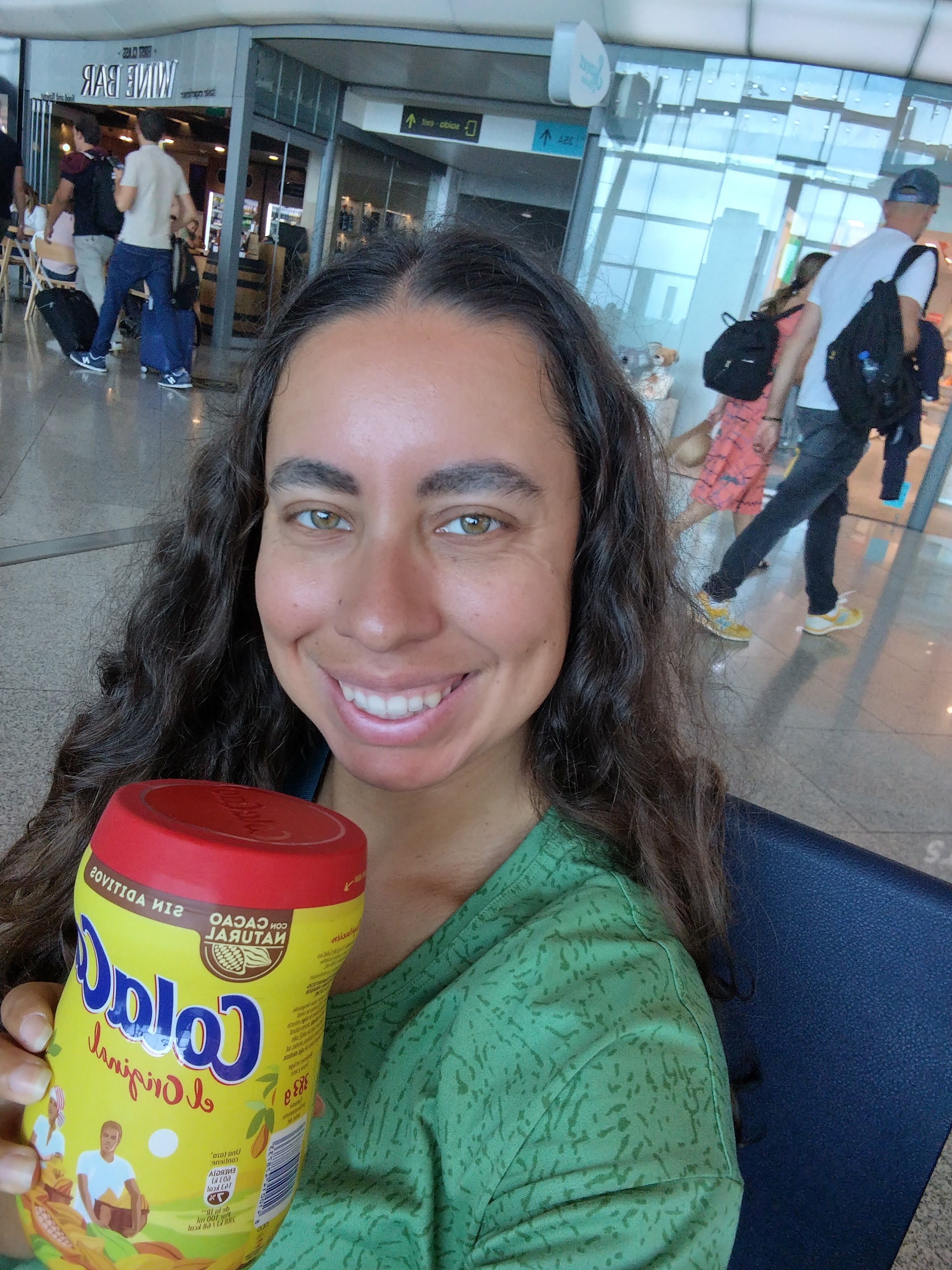
    I took a refreshing shower then lay in a hammock outside for a while to read. It started getting cold so went to the restaurant attached to the albergue for a ColaCao. I was sitting at the bar by myself for a while when the server came and asked me if I wanted to meet another pilgrim. I said ok and he seated me with a very nice Hungarian man who was having an early dinner. His English was slow but we talked a bit about the spiritual experience of the Camino. We got so into it that he was slow to finish his food and when the server noticed he was absolutely ecstatic that he had brought us together.

    The pilgrim dinner at Casa Flor was like no other on the Camino. The hospitalera made real Italian pasta and several choices of cake for dessert (I had lemon). There were a few other pilgrims that I chatted to plus a group of Italian pilgrims who watched The Way in Italian during dinner. The non-Italian speakers didn’t pay much attention to the movie except to burst out laughing when “God Bless America” came belting out Martin Sheen’s mouth in an Italian accent.

    The albergue itself had several rooms with two or three bunk beds in each, but no one else was in mine, so it was like having a really nice private room and bathroom for a good price. I got a good night’s sleep that night.

    I got word from friends in different stages of their Camino. Eunseok was already in Sarria (a week ahead of me), Carrie was ending her Camino in Astorga, Julia was in Fisterra enjoying the ocean view, Geraldine and Troy were a day ahead and warned about a chaotic albergue to avoid in Foncebadón. I especially missed Eunseok. He was the first friend I’d made on the Camino and it didn’t seem likely that we’d run into each other again.

    Day 31: Murias de Rechivaldo → Foncebadón (20.88 km)

    Victoria Castillo on the Camino de Santiago.

    I got up in the early light and found my way back to the Camino path. The terrain somewhat reassembled parts of California. Most of the way was up a gradual incline through shrubs and pine trees and lots of pretty wild flowers.

    Victoria Castillo on the Camino de Santiago.

    In the middle of nowhere I came across a guy doing beautiful wax stamps for donations and got one.

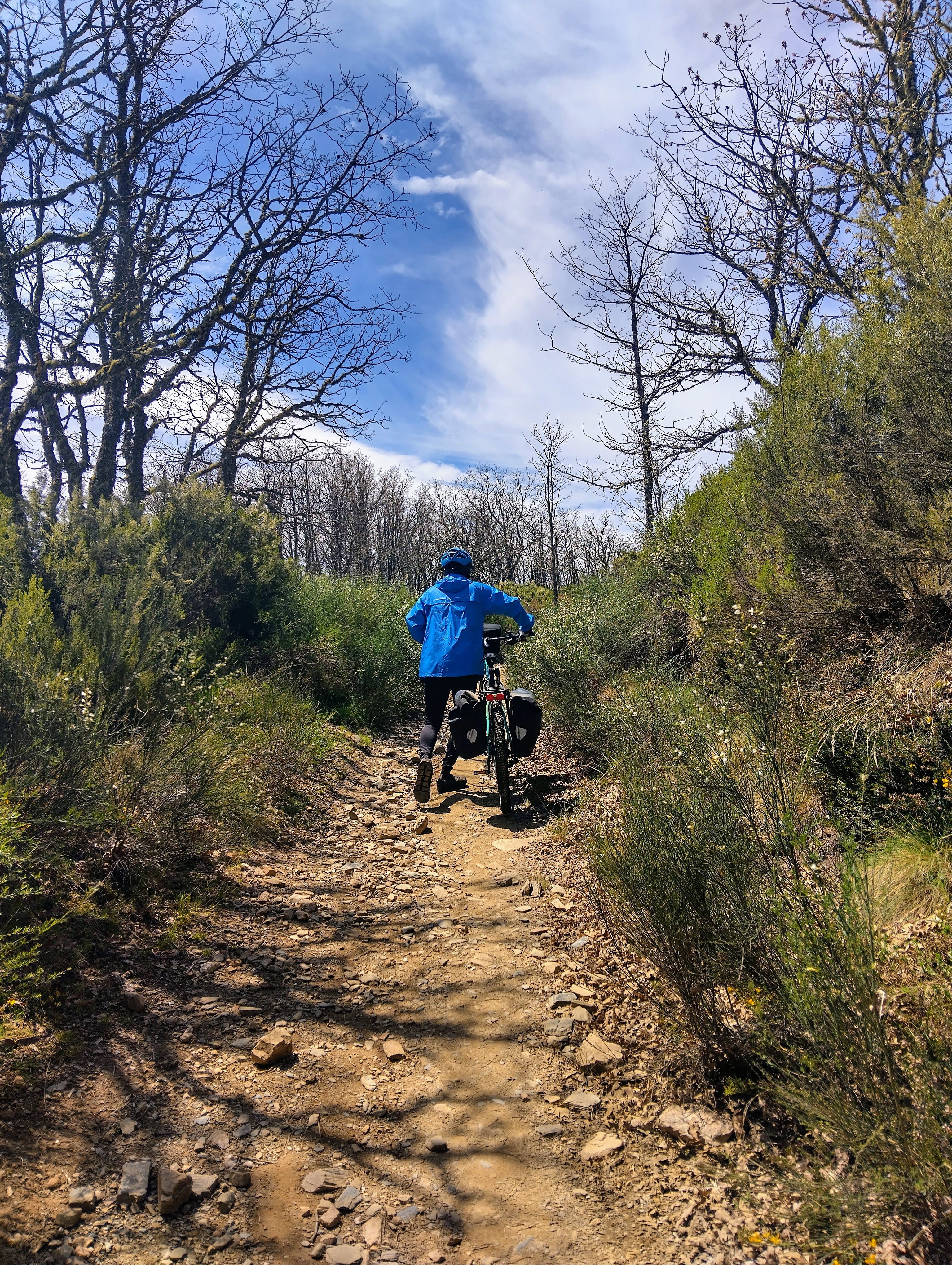
    The trail got steeper and occasionally intersected a road where cyclists were struggling with the incline. As I crossed, one of them started walking his bicycle up the rocky walking trail. I asked him why he was taking the hard way. He was too tired to cycle uphill any more so he decided to walk his bike all the way to the top of the mountain. We walked together and chatted. His name is Krishna, from London. We talked about me maybe writing a book and I promised to credit him in the acknowledgements.

    Go Krishna!

    As we came up the steepest part of the trail, we saw some ladies come walking back down towards the road. One of them had fallen and cut her hand badly. The others were helping get her and her pack to the road to meet an ambulance. They didn’t need any more help so we kept going and passed a big puddle of blood where she had fallen. It must sound like pilgrims regularly drop like flies based on the number of injuries I saw, but I know that lady was ok because I saw her later that evening bandaged up and fine. Actually I was very surprised at the efficiency of the care she got. I once spent over five hours in an emergency room waiting room back in the US while I was having a severe allergic reaction.

    When we reached Foncebadón Krishna and I said goodbye. He was only stopping for lunch there because he could obviously get a lot farther in one day on a bicycle than walking. He was the only cycling pilgrim I actually met and talked to on the Camino because he was the only one I ever saw stop.

    Victoria Castillo and friend on the Camino de Santiago.
    Me and Krishna in Foncebadón.

    But friends are not few or far between on the Camino (once you’re off the meseta) and I immediately ran into Nicolás from Colombia who I had been introduced to briefly back in Carrión. He also had shin splints now. We hobbled through town in search of an albergue. Almost everything was full because this was the closest town to Cruz de Ferro (AKA the Iron Cross) where pilgrims leave stones that symbolize their burdens. I still had my little stone in my pack and was feeling ready to get rid of it. Eventually, we ended up at the very albergue that Geraldine had warned against and got the last two beds. (We almost had to sleep in the kitchen.) Geraldine was right to not recommend the place. The owners were new and not very competent.

    After a shower that flooded the women’s restroom, I rested in a hammock outside for a while and observed the chaos. Many pilgrims continued to show up thinking they had reservations and were sent away. Bags arrived via donkey service and were redirected elsewhere. They offered a pilgrim dinner here but I didn’t exactly have confidence in it, so I opted to have dinner somewhere else. I walked into a quiet place and found Desi and Larry and a new friend Cathy from the east coast USA. We talked about lessons we’d learned on the Camino.

    I felt more than ready to unload my burden at the cross. Shin splints or not, mountains are still easier than the meseta, at least for me, and I felt like I had finished my penance. I even had a new blister on the side of my big toe, but I just used my needle and thread and it didn’t bother me at all.

    Day 32: Foncebadón → Cruz de Ferro (2.14 km)

    Some people got up super early and were very noisy, so I gave up waiting for the sun to light my path. I walked alone through the quiet morning mist with just the sound of my own footsteps and a cuckoo bird calling occasionally to hurry me along. I arrived at the iron cross at sunrise. Nicolas came up just behind me and took my picture. Then I simply tossed my rock on the pile and walked away feeling free and happy. I never heard the cuckoo bird again after that.

    Victoria Castillo at Cruz de Ferro (iron cross) on the Camino de Santiago.
  • Camino de Santiago – Days 26-27: El Burgo Ranero to León

    Oops, I forgot to mention something funny that happened while I was scarfing down that chicken at the end of the last post. Luckily no one is grading this and I have full creative control, so I’ll just write it here. This little anecdote is about Kim Kimmy and her achievement of Camino celebrity status. She had been writing daily summaries and posting them on Facebook as she went along. Apparently a lot of other pilgrims were reading her posts every day. While I had my face buried in my food, a couple of such pilgrims approached our table and asked to get a picture with her. They said “they felt like they were walking with her”, which was silly because they really were!

    Day 26: El Burgo Ranero → León (37.29 km)

    I woke up determined to take whatever means necessary (other than walking, obviously) to get to the city. Although my blisters were no longer painful, my shins felt like they were splintering into tiny pieces with every weighted step. My phone was dead and my charger was broken, which is to say civilization had collapsed and I had no means to look up transportation options. As far as I could tell, the restaurant we had eaten at the night before was the only business likely to be open, so I went straight there to look for information.

    They were very helpful with giving me the train time and directions to the station. I ate a little breakfast while I was there and noticed how happy the people working here were. They were local Spanish people, not temporary employees from abroad like in some places. But they were not dead-eyed and miserable like so many locals I had seen. The girl behind the bar was cheerful and cracked jokes with the pilgrims. Even though she spoke only Spanish and not everyone understood what she said, they laughed anyway and everyone had fun. It was hard for me to understand how they could be so happy in what I saw as such a miserable place. My favorite ancient dead guy, Epictetus, said,

    “Men are disturbed not by things, but by the views which they take of things.”

    This may not be a difficult thing to understand, but it is an almost impossible one to live your life by. In my physical pain I wandered into this town, and I viewed it as ugly, like a decaying truck stop in the boonies of America, and I became more miserable than I would have had I arrived in the same condition to a mountain cabin or a seaside resort. But the people living here weren’t miserable, so was it really ugly?

    Despite the depth of my existential impressions of the place, I was only actually in the café/bar for ten or fifteen minutes before I had to catch the train, which was due to arrive within minutes. The directions to get there were simple, it was almost a straight line, but there were no signs. I diligently followed the route I had been told into an industrial area, encouraged only by the view of tracks converging in the distance. It felt much further away than had been described and I got more and more stressed that I might miss the train. My steps were already as fast as I could manage, and had the train suddenly pulled in, I could not have run to catch it. The road came to an end near a closed, abandoned looking building. I went around the outside and found the platform, where three or four pilgrims were already waiting. This was the greatest possible relief imaginable. Even if we all missed the train, at least we would be miserable together. We did not miss the train, however; it was only a few minutes late. I bought my ticket from the conductor for €1.85 and was actually short 5 cents, but he told me without hesitation, “No te preocupes.” (don’t worry about it). This was to me, in that moment, the epitome of altruism, and I wished for the whole world to be populated by people like that conductor.

    Through the dirty train window was a view of flat, empty landscape, and once again I did not grieve at missing it. I disembarked in León. Without my phone I had no access to a map, but the top of the cathedral was visible from the train station, so I walked towards it, assuming (correctly) that the Camino would pass nearby.

    Victoria Castillo in León on the Camino de Santiago.
    “León” is Spanish for “Lion”.

    Along the way was everything I could possibly need. The busy streets were lined with open businesses, instead of the abandoned facades that make up so much of the small towns. I bought a new phone charger, and went into a bank where they changed my large euro bills into smaller ones.

    Eventually I found a metal shell in the ground. Eureka! The Camino led right up to the cathedral plaza where I ran into Ulrica who recommended a nice hostel called Globtrotters where I could stay multiple nights. Then I ran into Geraldine who told me about a good hiker store where I could get some new shoes. Even though this was a big city, the small town community feel of the Camino was still alive.

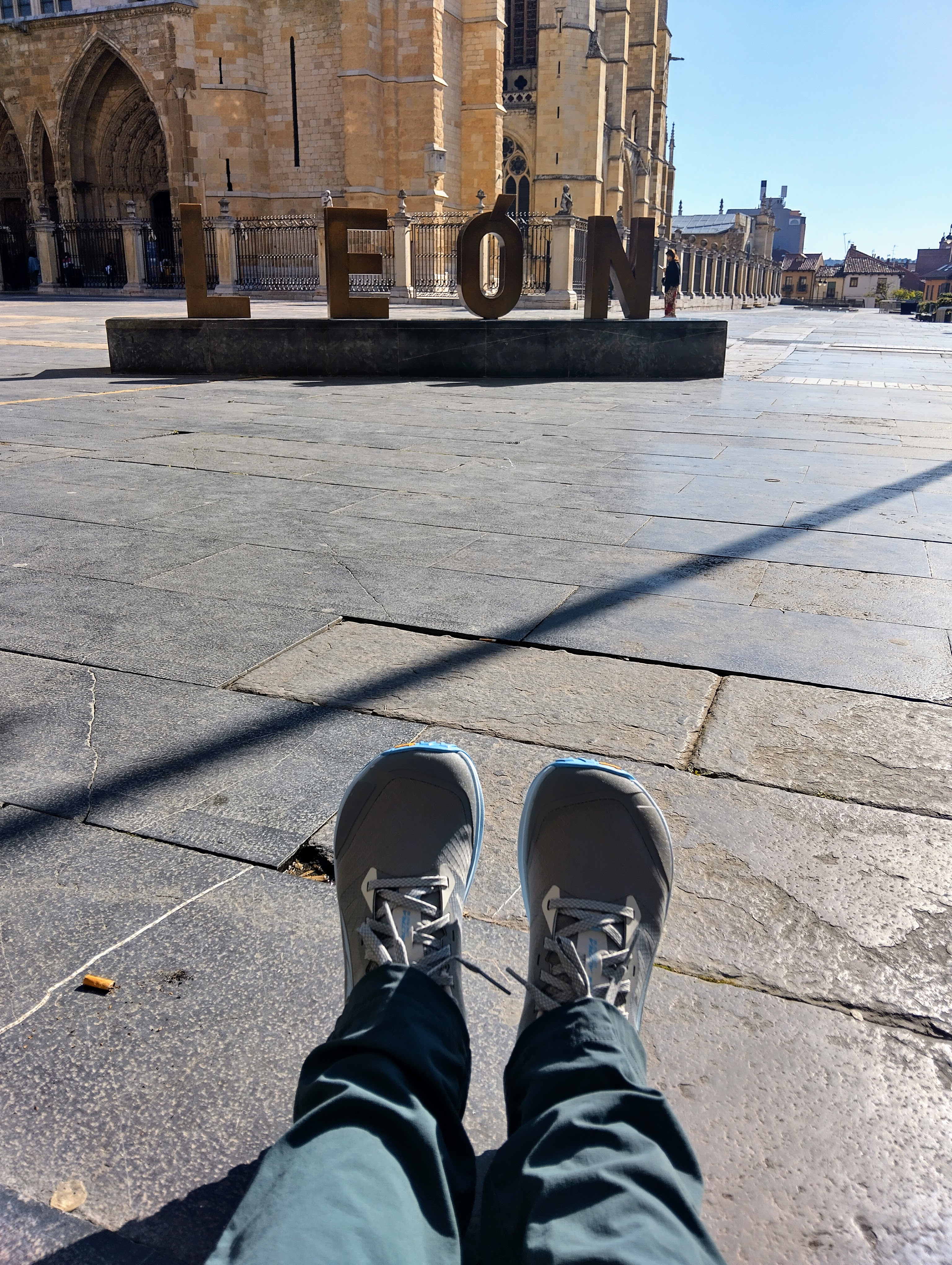
    I charged my phone in a café/ice cream parlor for a little while and reserved a bed in the hostel. There was still a lot of time before I could check in, so I went to the hiker store. After trying on a few pairs of shoes, I bought a pair of Altras with a wide toe box, one size bigger than my regular shoe size. I probably could have gone up another size, but more on that down the trail. With a new pair of what felt like clouds compared to what I’d been wearing on my feet, I considered what to do with the old pair of boots that the Camino had provided for me. I was tempted to leave them at another trail marker, but they had really reached the end of their lifespan, and in the end I sent them to live on a farm where they could run free through the fields with lots of other old boots for eternity.

    Victoria Castillo in León on the Camino de Santiago.

    Then I checked into the Globetrotters hostel. Pod beds with curtains and real sheets in an all female dorm, plus a laundry service—the height of luxury for a pilgrim like me. The shower was nice; still not enough hooks, but plenty of little stools to put things on instead. Some chatty American ladies were in my dorm. One of them also used to be an aerospace engineer in the 80s but switched to biology.

    Once I was clean and my laundry was submitted to the front desk, I ventured back out to bask in civilization. Plenty of friends and acquaintances were in the area. I talked to Derf from Arizona (I think, definitely the US anyway). Derf’s name was passed down through his family and he always thought it was German until he came to Europe and was corrected by all the Germans. Now he was beginning to suspect that it might just be “Fred” backwards. He said he was a Methodist pastor, but, if I understood correctly, only sometimes believes in God. I came away from the conversation feeling simultaneously better and more confused with the world as a whole.

    Directly across from the entrance to the cathedral I found many pilgrims enjoying the terrace service of what was to become my favorite restaurant on the Camino, Loco León. (I had to look up the name because at the time everyone just referred to it as “the restaurant across from the cathedral”.) The Aussie nurses were there having a chicken and raspberry salad which I immediately knew I wanted to order. My new shoes were cause for celebration. Lori soon joined us and busily went about finding sight seeing information. There was a tram tour of the area that looked like a good way to see more of the city without walking. We agreed to meet for the tour at 4:00. That gave me some time to pick up my laundry and compare notes with Hemingway on the weather in this region.

    On the way down to the tour, I briefly ran into Michelle who had been spending some time with Julia and reported that there was no need to worry about her anymore, she was living her best Camino life on her own terms. Michelle planned to walk the next day and it would be a little while before we saw each other again.

    The timing of the tram tour was inconceivably lucky. It started raining right when I climbed aboard and stopped exactly one hour later as the tram pulled to a stop. The tour itself was worth the €5; it took us past all the historically significant buildings and other structures in the area, most of which I wouldn’t have walked all the way over to see.

    The news that Victoria got new shoes seemed to be spreading ahead of me and I spent the evening bouncing around showing them off. I felt acutely aware that I must seem like the most pathetic little pilgrim, but I at least I was still going. I had dinner at the same restaurant, inside this time and enjoyed the great vibe and eclectic décor.

    After a day of easily finding everything I needed, enjoying great food, conversation, and even weather that cooperated with my schedule, León was close in the running (next to Pamplona) for my favorite city on the Camino.

    Back at Globetrotters, when I was getting ready for bed, I found myself listening to the inspiring story of a lovely woman from England. She had gotten a bad ear infection that had completely derailed her Camino, forcing her to go home early. But she wasn’t upset or complaining. She had a good attitude and talked about how the situation had put her on a different journey than the one she was expecting. More than anything else she was incredibly grateful for her experience. I hoped I hadn’t complained too much about my problems and resolved to have a better outlook from then on.

    I enjoyed a restful night’s sleep despite the sounds of partying outside that lasted through the night.

    Day 27: León

    Since I was staying in a hostel, not an albergue, there was no worrying about checking out by 8 am or having to find somewhere else to stay for a second night. I even got to keep my bed and leave my stuff right where it was—truly a luxurious start to my “rest day”. By now I and the other first-time pilgrims had figured out that we did exactly as much walking in the cities on our “rest days” than we did on a regular walking day, and today was no exception.

    I planned to at least see the cathedral and the Gaudi museum. As per Spanish protocol, nothing but cafés were open before 10 am, so I killed the time with a leisurely breakfast at the ice cream parlor. After that I started with the Gaudi museum. I hadn’t known anything about Gaudi before then, but the museum was excellent and I spent over two hours there and came out inspired to go to Barcelona and see more of his designs. There was also a temporary exhibit in one of the rooms of Salvador Dali drawings depicting the circles of Hell from Dante’s Inferno, which I found really cool.

    Victoria Castillo in front of León Cathedral on the Camino de Santiago.
    Here’s the cathedral at a jaunty angle.

    Next was the cathedral, the poor, pathetic, ugly León Cathedral, if (admittedly exaggerated) public opinion was to be believed. Almost everyone I talked to ragged on it pretty harshly in my opinion, comparing it to the complexities of Burgos and complaining about the restoration scaffolding inside which blocked some of the view. The emphasis here was on the stained glass rather than the intricate carvings and altars. I imagined the builders working for decades on this structure, intended to inspire awe, only to have it dismissed as not worth spending a few euros to see. Ouch. Evidently the kryptonite of awe is expectation. I’m by no means a cathedral expert or even enthusiast, but I thought the stained glass was worth seeing, and sat watching the light shine through it until they closed for siesta time.

    Siesta time feels like about half an eternity when you aren’t sleeping through it. I sat in the plaza for a long time and watched the children get out of school, waiting for pilgrims to arrive and feeling terribly lonely. Eventually Sarah found me and cheered me up. She and I have a few things in common: we’re about the same age and she also quit her engineering job a few years ago to travel. I told her that even though I was having a lot of trouble with my feet—I tried my best not to complain—anything was better than giving up and going home.

    We went for drinks with her family and we were joined by Kim Kimmy, Lori, and Eliot. Fiona and Evannah came into town late, tired and in desperate need of ice cream. Just like that, I was surrounded by friends again. How easy it was to forget that they were almost always close by.

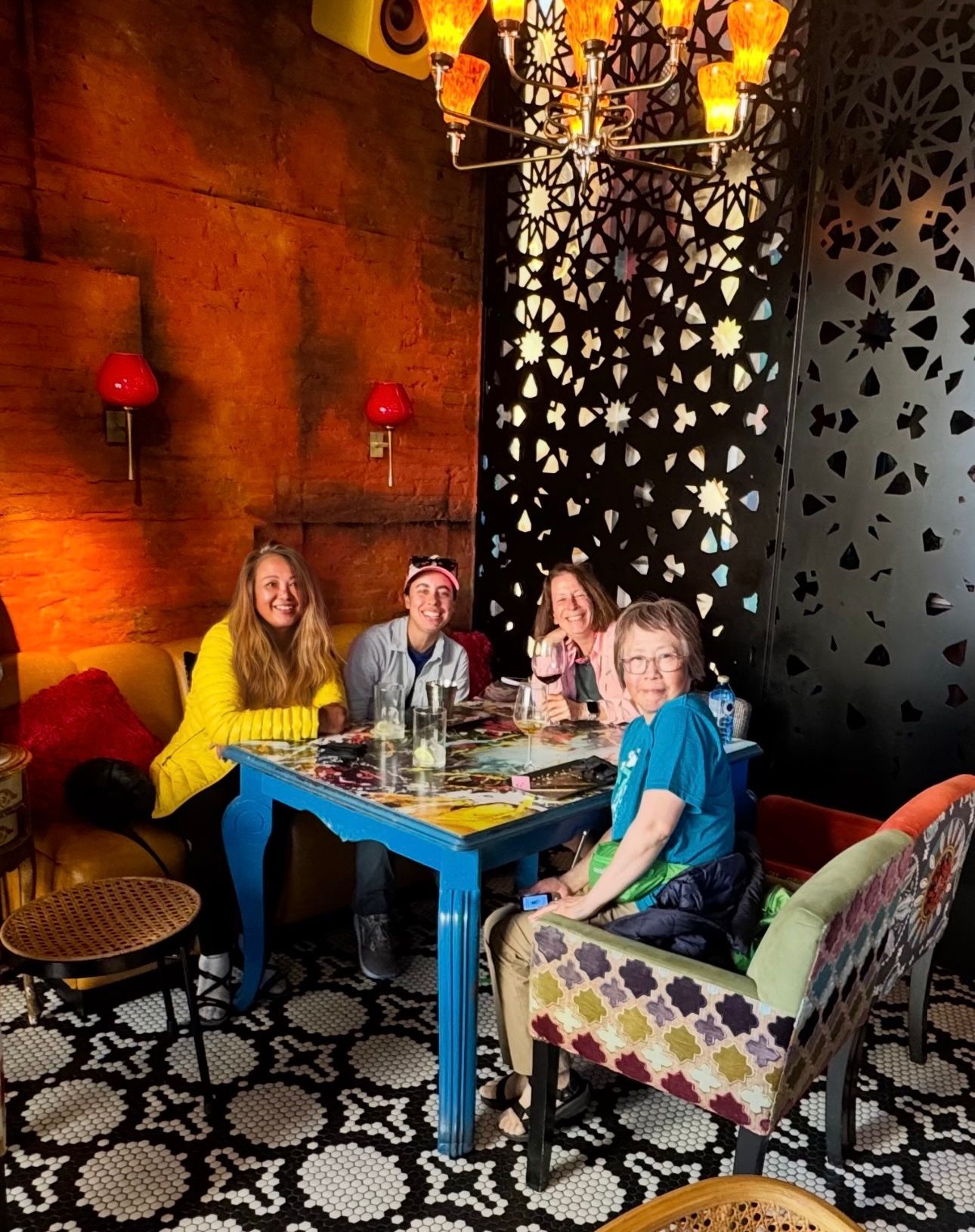
    For dinner Lori, Kim Kimmy, Noriko, and I sampled all the burgers on the menu at Loco León. Noriko declared hers to be the best burger she had ever had. Lori was of the opinion that this restaurant also had the best bathroom on the Camino; we took turns going in to admire it and were not disappointed.

    Victoria Castillo and friends in León on the Camino de Santiago.
    Kim Kimmy, me, Lori, Noriko

    We were all staying at Globetrotters and we went to bed to the sound of increasing partying outside. This city seemed to be very popular for bachelor parties. I had a good time, but I was ready to walk again and confident that, with my new shoes, it would be a breeze from this point on. Some of you with good memories may be wondering why I hadn’t picked up some trekking poles as well. It was partly because I thought better shoes would be enough, and partly because, since I had been in the city and hadn’t seen anyone walking with poles, I completely forgot they existed.

  • Camino de Santiago – Days 20-25: The Meseta

    Day 20: Castrojeriz → Boadilla del Camino (19.42 km)

    I started the morning strong, climbed the hill to the meseta, zooming past many other pilgrims. After a quick goodbye to the view of Castrojeriz behind me, I proceeded forward into the expanse of green fields, which were flat, but not as flat as the ominous warnings of Camino Repeaters suggested and did not, in fact, resemble Mordor in the slightest.

    So close!

    As I ambled along, I tried to figure life out, but didn’t make much progress. After about 8 km of nothing but wheat, barley, more wheat, and barley again, there was a makeshift food truck. It was an RV, and the owner was selling orange juice and snacks he’d picked up at the grocery store. I really needed an energy boost at that point, so I bought a glass of orange juice. Service was hard to get and then he charged what I could have bought two full breakfasts for.

    Not more than another kilometer down the trail was a town with a nice café where I got a real breakfast for a fair price. Service was still hard to get and a rude boy cut in front of me. My alter ego, Spanish Victoria, was not doing her job, possibly because the people there didn’t actually speak Spanish.

    Frustrated, I resumed the trail, my confident amble deteriorated to a weak stomp. A pilgrim who passed me was blaring a podcast from his phone. I was appalled, not at his rudeness (he was going to be out of my earshot in less than a minute anyway), but at the garbage he was wasting his time and brain cells on. I kid you not, he was listening to some guy give a lackluster description of a sandwich he had once to another guy who clearly didn’t care. On a journey where people are trying to think, this guy would rather listen to someone else’s tedious conversation than his own thoughts.

    The only reliable weather source.

    Dark rainclouds filled the sky and the distant sound of the cuckoo bird’s call became a countdown to imminent downpour. The wind picked up, rippling the fields around me like a green, undulating ocean. I imagined I was swimming in choppy, open water.

    The skies opened up just as I made it to a small town. I checked into the larger of the two albergues near the church which was topped with huge stork nests. I scored a bottom bunk, took a much needed shower with the water pressure of Niagara Falls, and spent some time relaxing next to a roaring fire in the common room.

    Pilgrim dinner was next door in the adjoining hotel. Usually we were expected to pay in advance, but here they asked that everyone pay at the bar on their way out and joked that if we’d better not forget because they know where we’re sleeping. Dinner was the usual: lentil soup, chicken or fish, and flan or rice pudding for dessert. I chatted with John from Texas who enjoys retirement on a boat with no responsibilities. I told him about my career dilemma. His philosophy was that life is good if you do what you enjoy. He said he encourages his adult kids to follow their own paths, and that I should follow my interests and work interesting fun jobs around the world.

    Back at my bunk in the albergue section of the establishment, I finished writing my journal entry for the day, put on my somewhat clean jammies, snuggled into my sleeping bag, and closed my eyes. But not for long. My eyes snapped open and my heartrate shot up. I’d forgotten to pay for dinner! I scrambled out of my warm sleeping bag, threw on my sandals, and sprinted (or as close to a sprint as I could manage) through the rain to the bar. That was a close one. I paid and returned to bed to curl up in my now slightly damp jammies.

    Day 21: Boadilla del Camino → Villarmentero de Campos (14.59 km)

    One of the nicest things about the Camino Francés is that you always walk west with the sun behind you in the morning. That morning I left earlier than usual and peaked over my shoulder every few seconds to glimpse the sunrise that was visible below the surviving clouds. The trail paralleled a canal, and I’d heard that it’s possible to travel this section by boat, but I never saw one. If one had happened to come along I would definitely have stuck my thumb out.

    Along the canal there were a few small forests where the trees grew in suspiciously neat rows. The Camino crossed a lock where I ran into a couple of the Aussie nurses. I assured them that my blisters were doing much better. Actually, the one on the bottom of my foot had grown to the size of the patch that covered it.

    Victoria Castillo on the meseta on the Camino de Santiago.

    The dark clouds showed no sign of clearing up. I arrived at a town and slipped into a café just as it started sprinkling. There I had breakfast and a good conversation with Lori from North Carolina about the history of the Camino. She’d learned somewhere that even hundreds of years ago, the Camino had been used to draw in tourism, but it had also been used as a punishment. A wrongdoer might have been sentenced to the walk to Santiago as penance for their crime with the hope that they wouldn’t come back. I admit I felt more like I was doing penance than enjoying a vacation, but it still felt worth continuing.

    One of my fellow pilgrims. No Donkey Service for him!

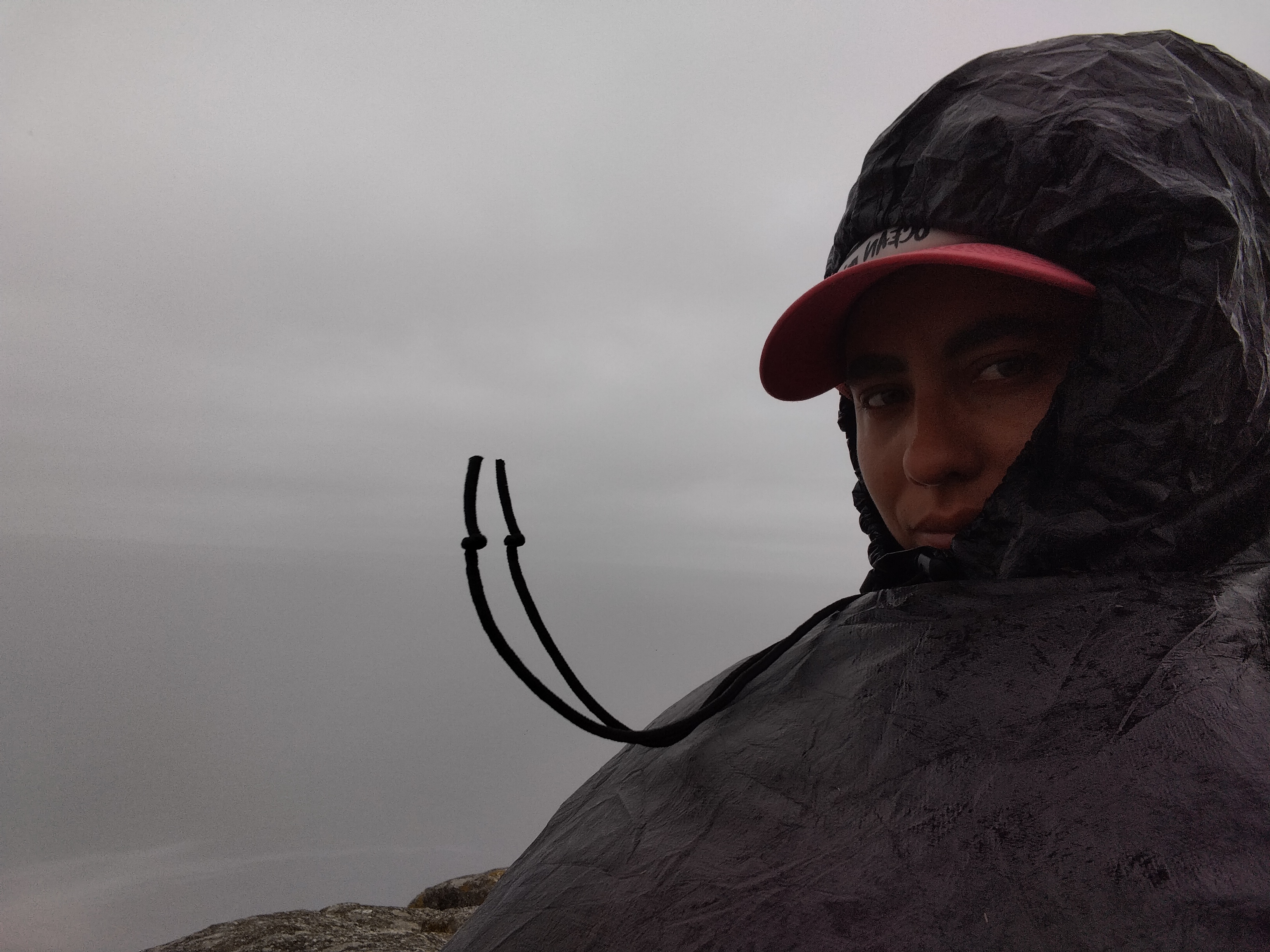
    The rain was still fairly light, so I put on my poncho and kept walking. I looked down to avoid stepping on the snails that populated the trail, which had become a grassy path next to the road. I tried to make the most of the walk by trying to plan my life (in vain) and contemplating the universe. At one point I thought I’d figured out God until I remembered there were a few hundred thousand things I hadn’t taken into account. Then it rained hard. My boots soaked through and water crept up my pant legs up to my knees. In the next town I sought refuge in a café where I found Geraldine and Troy. I removed my boots and the now drenched bottom of my pants, which I was very grateful could be zipped off, and joined them for a hot ColaCao. They very kindly gave me a bandage for my now aggravated blister. I set off again in my sandals and shorts, somehow more confident than before. The new bandage lasted less than two meters, but I didn’t care anymore. I limped my way onwards, whistling “Singin’ In the Rain” all the way to the next town. A much better use of my time than all that over-thinking.

    Victoria Castillo on the meseta in the rain on the Camino de Santiago.
    Ready for anything in my “Jesus sandals”.

    As I entered the next tiny town and began scanning for albergues, a voice called my name and I started. It was Fiona looking for coffee. She and her daughter had gotten a private room at a hostel nearby. I wished her good luck on her coffee hunt and opted for the albergue. A group of Germans were there waiting for a taxi to Carrión de los Condes because there was a power outage here. I didn’t know if it was another major blackout or just this place, but either way it didn’t bother me as long as there was a dry bed to sleep in. The place was operated entirely by one very nice hospitalero who gave me a discount due to the lack of power.

    Within a couple of hours, the rain cleared up and the power came back and a couple other pilgrims checked in. We hung our wet things outside to dry next to the donkey paddock. Meanwhile, I found a ukulele inside and occupied myself trying to remember a few songs.

    Who knows the name of this tune?

    While I was plucking away, the hospitalero came over and calmly asked me how to say “lluvia” in English. I told him, “rain”. He immediately shouted for everyone to hear, “It’s rain!” and we all dashed outside to rescue our clothes.

    Dinner was a whole lot of lentil soup and fruit. Afterwards we (including our hospitalero) watched the epic clouds billowing up on the horizon. My fellow pilgrims were Ulrica from Germany, and a Hungarian man whose name I can’t remember. Ulrica spoke a little English, the Hungarian spoke no English but a little German, and the hospitalero spoke only Spanish. We managed a little general conversation about the Camino. Ulrica said that she’d heard it said in a movie once that “you think at the pace you walk” and that idea had stuck with her and fueled her motivation to walk the Camino. I would remember that later when my thoughts became more productive.

    It must have been even colder in the albergue than it was outside because I had to put an extra blanket on top of my sleeping bag that night. The donkeys in the paddock didn’t seem to mind at all.

    Day 22: Villarmentero de Campos → Carrión de los Condes (9.67 km)

    I was the first one up in the morning and set out carrying my poncho under my arm in expectation of imminent rain that never came. It had to be a short walk because I had been warned that after Carrión there was a 17 km stretch with nothing except a food truck along the way, and I didn’t feel up to doing a 26 km day.

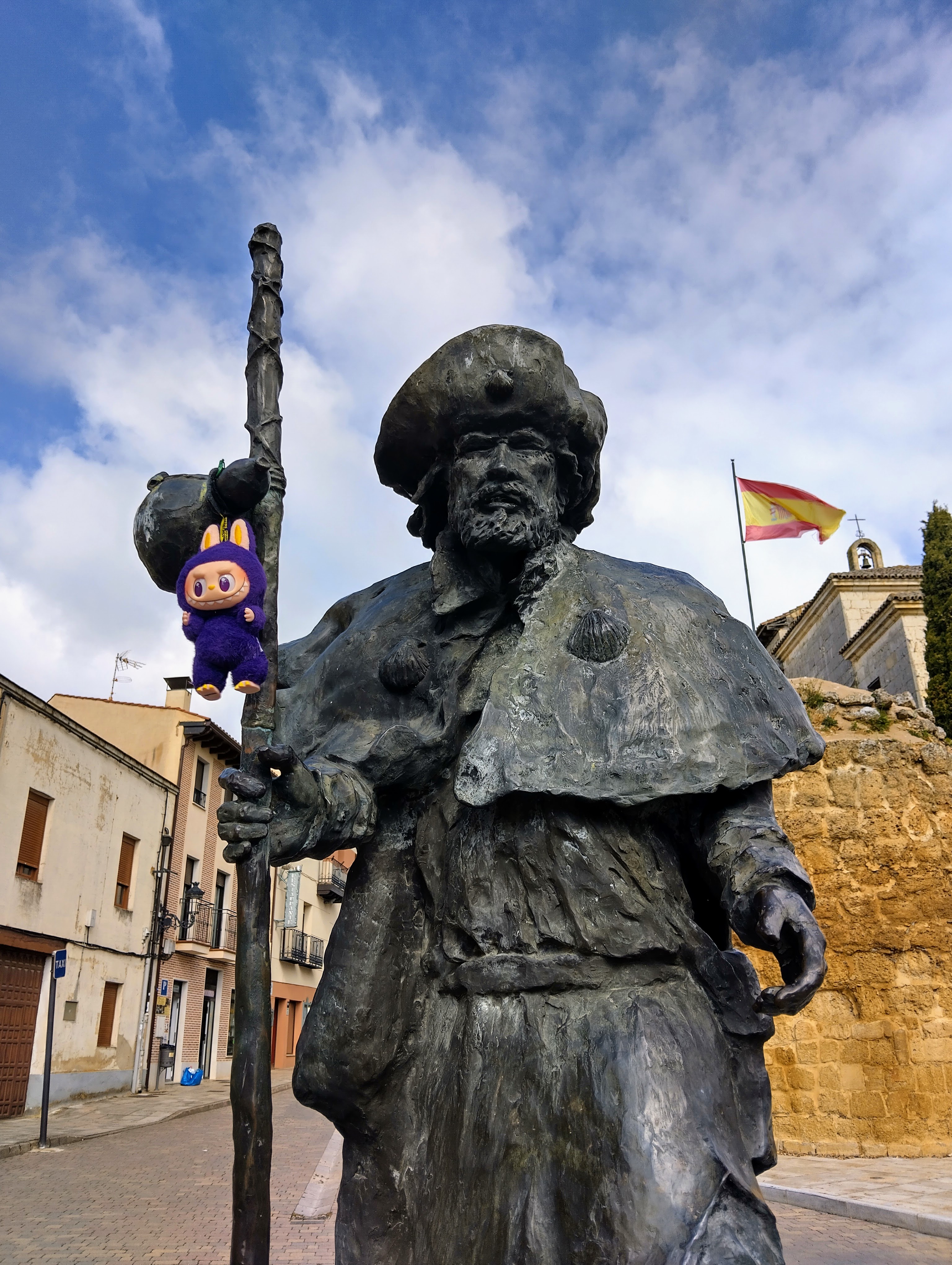
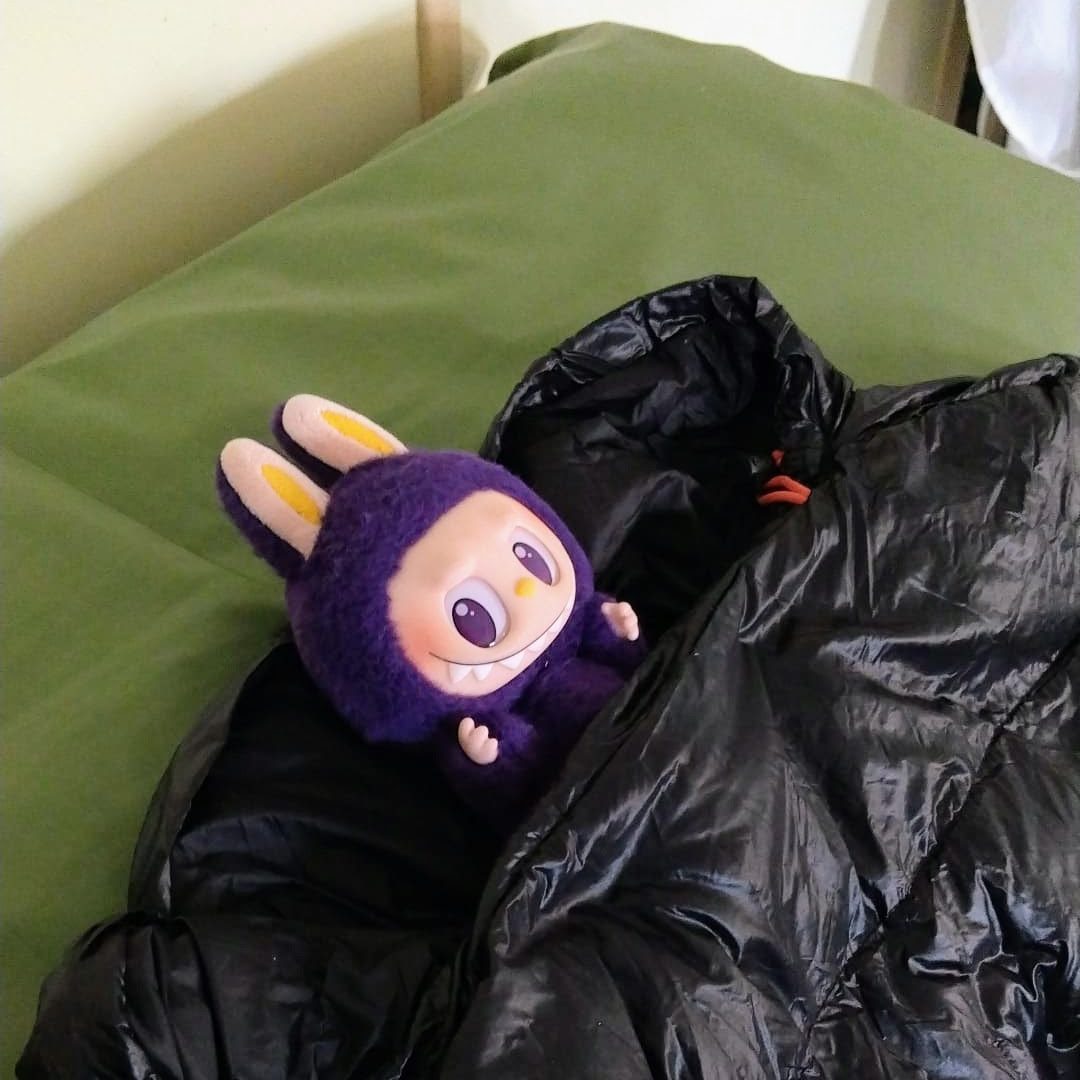
    Kim Kimmy had sent a message to the group chat that she’d lost the stuffed animal (apparently named “Labubu”) that she had hanging from her backpack. She thought he might have fallen off at a certain place near where I was. I searched the area and found him hanging from the door of a house, wet but otherwise unharmed. I decided to have a little fun with him…

    Victoria Castillo on the meseta on the Camino de Santiago.
    Eureka!
    Victoria Castillo on the meseta on the Camino de Santiago.
    Other than Labubu, I only saw two other pilgrims that morning on the way to Carrión.
    Victoria Castillo on the meseta on the Camino de Santiago.
    We stopped in at the first café for some warm breakfast.
    We saw the sights. (This might be the best photo I took on the whole Camino.)

    Labubu and I checked into Albergue Espiritu Santos which had a big female dorm and single beds. Ulrica arrived there not long after I did. We had a couple hours of peaceful rest that was only disturbed by a group of old women who failed to read the room and constantly shouted to each other across it.

    Labubu took a siesta while I machine washed my muddy clothes.

    I went to the church to see the famous singing nuns and meet up with Jack, who had been tragically slowed down by tendonitis, and found Fiona and Evannah there too. There were four nuns, one played guitar, and they did the entire performance sitting in the front row facing the alter. Afterwards they hosted a group singalong in the albergue that they run next door. There was a big turnout; we were crowded into the foyer of the albergue with people lining the open stairway up to the next floor. They had everyone introduce themselves to the group. Most of the introductions started with “I’m so-and-so from wherever and I recently retired”, so when my turn came around I couldn’t resist following the format, much my own amusement and I hope some of the others.

    Once we’d all heard and forgotten each other’s names, the nuns passed out sheets of lyrics. For a minute I thought I’d been roped into a Jesus song circle, until they kicked the party off with “Guantanamera” (a song ubiquitous at Latin American parties). With their coolness officially established, they asked whoever wanted to to share a song. An Irishman jumped right in and impressed us with a soulful ballad. Then the volunteer hospitalera asked all the Americans present to join her in singing the last song she ever sang with her late mother. To our great relief, it was just “Home On the Range”, a simple folksong that every American is practically born knowing the first verse and chorus of. As we crooned our hearts out, I found myself singing better than I’m usually able to. I suspect some magic was at work there.

    Oh give me a home, where the buffalo roam
    Where the deer and the antelope play
    Where seldom is heard, a discouraging word
    And the skies are not cloudy all day

    Home, home on the range
    Where the deer and the antelope play
    Where seldom is heard, a discouraging word
    And the skies are not cloudy all day

    Several others were eager to share. We heard a Chinese song from a group of ladies; a young Italian man borrowed the nun’s guitar to play an original song that he’d written about the Camino; a Swede with a deep voice sang a very short song that he apparently starts every morning with about how “today is gonna be a good day”. I tried to persuade Fiona and Evannah to share an Australian song, but they begged off because they still had a cough. Jack was equally averse to honoring us with an English drinking song. We finished off with the whole room singing “Ode to Joy” in both German and Spanish (pronunciation was admittedly a little rough) in honor of our German friends in the room who were feeling a little shy. Then it was back to the church for mass and a pilgrim blessing. The nuns remarked that it was huge turnout and gave everyone a paper star to carry to Santiago de Compostela, because Compostela means “field of stars”.

    It was surprisingly difficult to find dinner in the area, but eventually I found a place that served cheap burgers. I also picked up a chocolate bar from the grocery store to take on the long stretch coming up. Labubu and I got a good night’s sleep in the quiet dorm.

    Day 23: Carrión de los Condes → Ledigos (23.2 km)

    Victoria Castillo on the meseta on the Camino de Santiago.

    The 17 km stretch was flat and straight through fields, some covered in pretty flowers. “Home On the Range” played on repeat in my head as I strolled along, making me wish I knew more of the lyrics. I was solo most of the day, saying brief hellos to acquaintances as they passed me. The only people I passed were octogenarians.

    I passed Anthony (I’m not sure if he’s an octogenarian), who I hadn’t seen for a couple of weeks, still going at his own slow and steady pace. He declared, “I go all the way to Santiago!” Although I wouldn’t see him there, I believe he probably did.

    Victoria Castillo and friend on the meseta on the Camino de Santiago.

    The legendary popup bar was about 7 km in. Jack was just leaving when I arrived. We said the usual “see you down the trail”, but that was the last time I saw him in the flesh. Now that his tendonitis was better I would have had to take three steps for every one of his. I felt in no rush, however, and sat down to enjoy breakfast. Their tortilla was excellent and came with a little glass of fresh zumo de naranja. I was a little concerned about the lack of facilities, since there was still another 10 km to go through open fields with no sign of adequate tree coverage.

    I rejoined civilization (intact) at the same time as Carrie and Julia. Julia went on to catch some transportation and continue the Camino in her own way. Carrie and I went straight to the bathroom. We had lunch—the paella was disappointing—and chatted about the Camino experience so far. She had accommodation in that town, but once again I decided to push myself a little further.

    Victoria Castillo and friend on the meseta on the Camino de Santiago.

    My legs were hurting badly by the end. As I got more stiff and sore, the sunshine that had endured all day gave way to clouds. Fiona and Evannah caught up to me and we arrived in the next town as it started raining. There were signs for two different albergues and we went to the nicer looking one. It had pod style beds and a nice patio area where pilgrims were enjoying themselves. Unfortunately, they were all booked up with reservations. The other albergue had beds, but they were not so nice. I got a top bunk with a ladder this time, but it was held on by duct tape and fell off when I touched it.

    There were a couple of pilgrims who played guitar and a little music group formed. I joined them shortly before dinner. Either the magic spell was still in effect and I still sounded like I actually knew how to sing, or my companions were overzealous in their praise. I suspect a little bit of both.

    Dinner was a typical pilgrim meal: soup, chicken or fish , ice cream for dessert, and plenty of wine to drink. A few people may have had a little too much wine. I fell asleep to the sounds of random laughter about nothing and some odd folks shaving each other’s heads in the bathroom. I was glad that these were not representative of typical pilgrims and that I had found other friends.

    I burrowed deep inside my sleeping bag, and before I knew it I woke up with the disturbing sensation that someone was touching me, but I couldn’t move. I was lying on my side and it felt like a woman’s hand and arm was holding me down. Was someone trying to rob me? I could see only blackness inside my sleeping bag. I tried to call for help, but no sound came out. I tried to scream. Nothing. I recognized this nightmare: sleep paralysis. I’d had it before. If you’ve never heard of sleep paralysis, it’s when you wake up during the cycle of sleep when the body is naturally paralyzed. It is common for people to have hallucinations during this state of what are known as “sleep paralysis demons” and to feel physical pressure, usually on the chest. And it’s terrifying. Especially in a strange place surrounded by strange people. Had I not known what was happening I probably would have panicked, but I forced myself to remain calm and wait. The demon hand and arm continued to hold me down until I fell back into a state of fitful sleep.

    Day 24: Ledigos → Sahagún (15.19 km)

    The first thing I did in the morning was confirm that I had not been robbed. I hadn’t. The whole thing had been a chilling hallucination just as I’d thought. That knowledge didn’t clear up the sense of eeriness however, and I proceeded to get the hell out of Dodge.

    The trail swung near the highway, and the signs revealed that we’d entered the León part of Castilla y León. The terrain didn’t change much except that now Castilla was crossed out on all the way markers.

    Victoria Castillo on the meseta on the Camino de Santiago.

    The musical spell still lingered. An old man passed me (I was even slower than the day before) at a steady pace with his poles adding beats to the rhythm of his steps. An accompanying sequence of long notes started playing in my head. I matched the man’s pace and kept up with him in his blind spot like an obnoxious driver on the freeway. Walking to the beat helped me to keep going until there was a nice breakfast stop. The café/bar was in an albergue where they gave out wax stamps. You even get to choose the colors and design.

    Without the old man keeping pace with his poles, I got slower and slower. I rested for a little while by an old Roman bridge and finished off my chocolate bar. The town was in sight, less than a kilometer away. When I dragged myself up, I tried to walk on the softer patches of grass. Pasqual, one of my Italian friends, saw me hobbling and “towed” me the rest of the way into town. Basically, he stuck one of his poles out behind him, I held on to the end, and we marched together along to reggae music. It was surprisingly effective.

    He deposited me on the doorstep of the municipal albergue and into the care of a nice pilgrim named Pedro, who gave me a needle and thread for my blisters. These items had not been available in any pharmacy, but now I recognized that this truly was the one true way to treat blisters. I will spare you the photo of the carnage.

    I learned from friends that this town marked the halfway point of the Camino Francés. Apparently you can get a halfway certificate at one of the churches. I thought about going to get mine, but only made it as far as dinner, where I enjoyed an enormous bowl of lentils. The rest of the evening was spent listening to someone having a flute lesson somewhere in the large building that the albergue was only a part of. It was nice as far as municipals go, with pod bunk beds and ok showers. I had a good night, no sleep paralysis.

    Day 25: Sahagún → El Burgo Ranero (18.17 km)

    My journal entry for this day leaves a few things to be desired, like details and complete sentences. I had been so fixated on my blisters up until this point that I hadn’t noticed I was getting shin splints too.

    It was another sandals and toe socks day. I walked to the edge of town to wait for Kim Kimmy. She and Labubu were reunited, and she introduced me to a new friend, and one of the bravest pilgrims I met: Noriko from Japan. Noriko spoke neither English nor Spanish, only Japanese, and communicated with a special handheld electronic translator.

    Early on there was a fork in the trail, and we decided on the shorter path that wasn’t next to the road. From there my memory is a fuzzy blur. It was probably flat, there were probably fields, my legs definitely hurt. My mind kept asking, “Why are we going to Santiago?” To which I kept replying, “I don’t know, but we’re doing it anyway.”

    I arrived at the tiny town completely despondent at the site. It looked too much like Dead End, USA, complete with train tracks and a truck stop. I stumbled into the first albergue I could find (the Camino path didn’t follow where the actual businesses were for some reason) and got a cheap private room where I could cry without anyone looking at me. It had two twin beds and a bathtub so small that I just used it to wash my feet.

    My charger stopped working and my phone died, but eventually I found where Kim Kimmy and Noriko were having dinner. Apparently I was late for the reservation, but the lady running the establishment forgave me when she witnessed the incredible speed at which I ate and the profuse compliments I gave. The food was truly excellent; I think I inhaled half a chicken.

    That night I had a strange dream (no sleep paralysis) in which I was given a drug that made my vision slightly blurry so that I would “see the big picture and not get lost in the details.” Something for me to work on in the next couple of days.

  • Camino de Santiago: Days 16-19: Villambistia to Castrojeriz

    Day 16: Villambistia → Burgos (43.12 km)

    In the morning, my feet still stubbornly refused to go on. I looked up the timetable for the bus and hobbled across the road to wait, accompanied by a Kiwi named Barry. The bus stop was an abandoned, disintegrating booth covered in graffiti. Half an hour after the scheduled pickup time, we were on the verge of maybe, possibly, considering giving up and walking the 1.5 km to the next town, when the bus finally arrived. I bought myself a ticket to Burgos, the next major city, because I couldn’t risk ending up somewhere that didn’t have a pharmacy. As bad as I was hurting, two things instantly made me feel a lot better: several friends got on the bus in the next town, and it rained. Thus all FOMO was obliterated, and I felt no sense of loss for those 43 km.

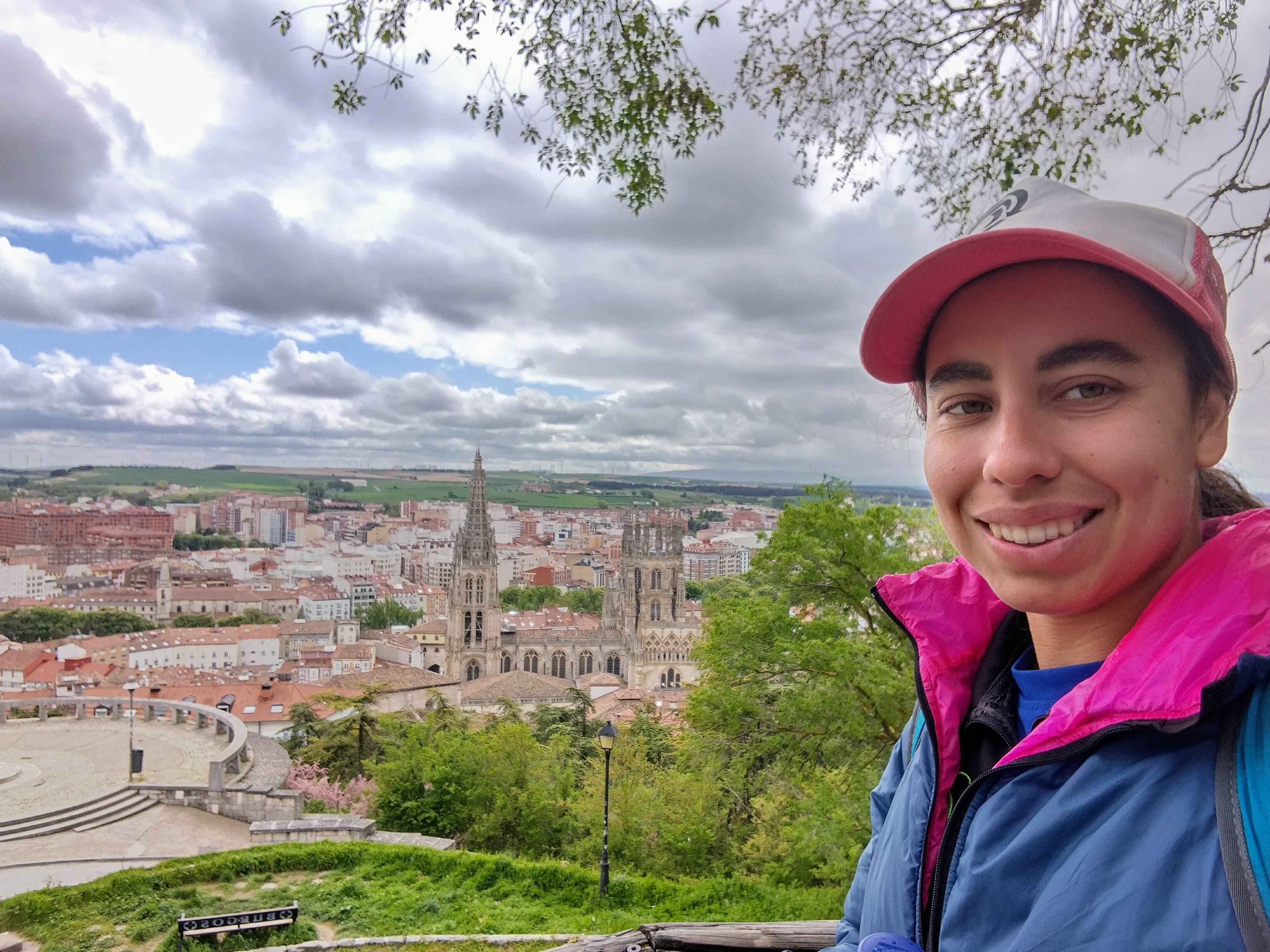
    In Burgos, we picked up some maps at the tourist office, took pictures outside of the magnificent cathedral, then looked for our respective albergues, hostels, and hotels. (I think Geraldine, Carrie, and Michelle were there but no one can find the group photo.)

    Victoria Castillo in front of Burgos Cathedral on the Camino de Santiago.

    I put my backpack in the queue for the municipal albergue, and we met up for breakfast in the café across the street while waiting for check-in time. It ended up being one of the nicest municipal albergues I stayed in, with cubby-like bunkbeds that gave a little more privacy and blocked a lot of noise. Each little block even had its own sink. My bunkmate was a nice lady with a comforting presence named Foster, originally from Australia, now living in London.

    Next stop was the pharmacy, where they told me nothing could be done for my blisters other than prevent infection and rest. In other words, no walking tomorrow either. I bought some antiseptic and walked back to the albergue in tears to hand-wash my underwear. C’est la vie! Foster caught me crying and was very sympathetic.

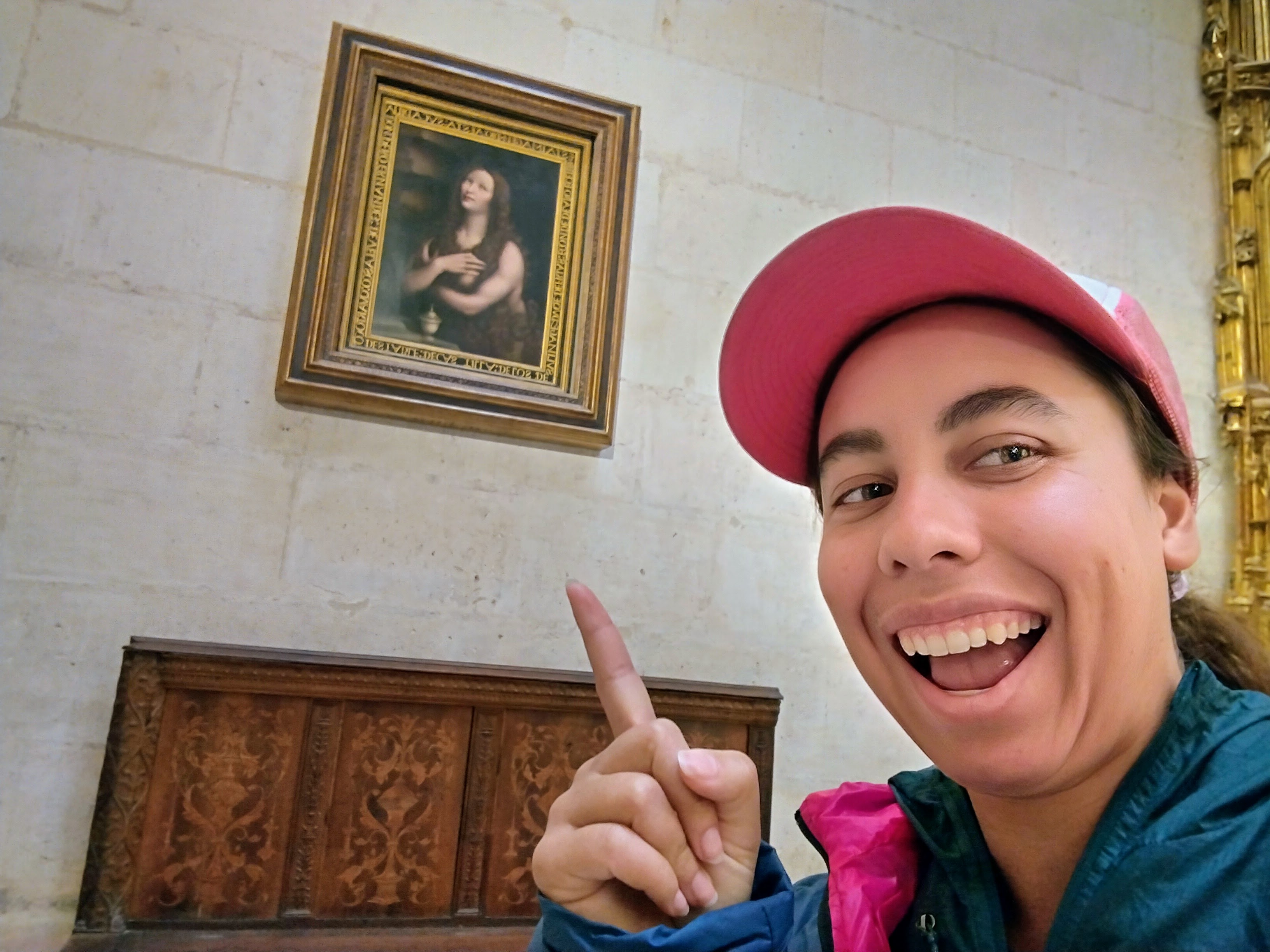
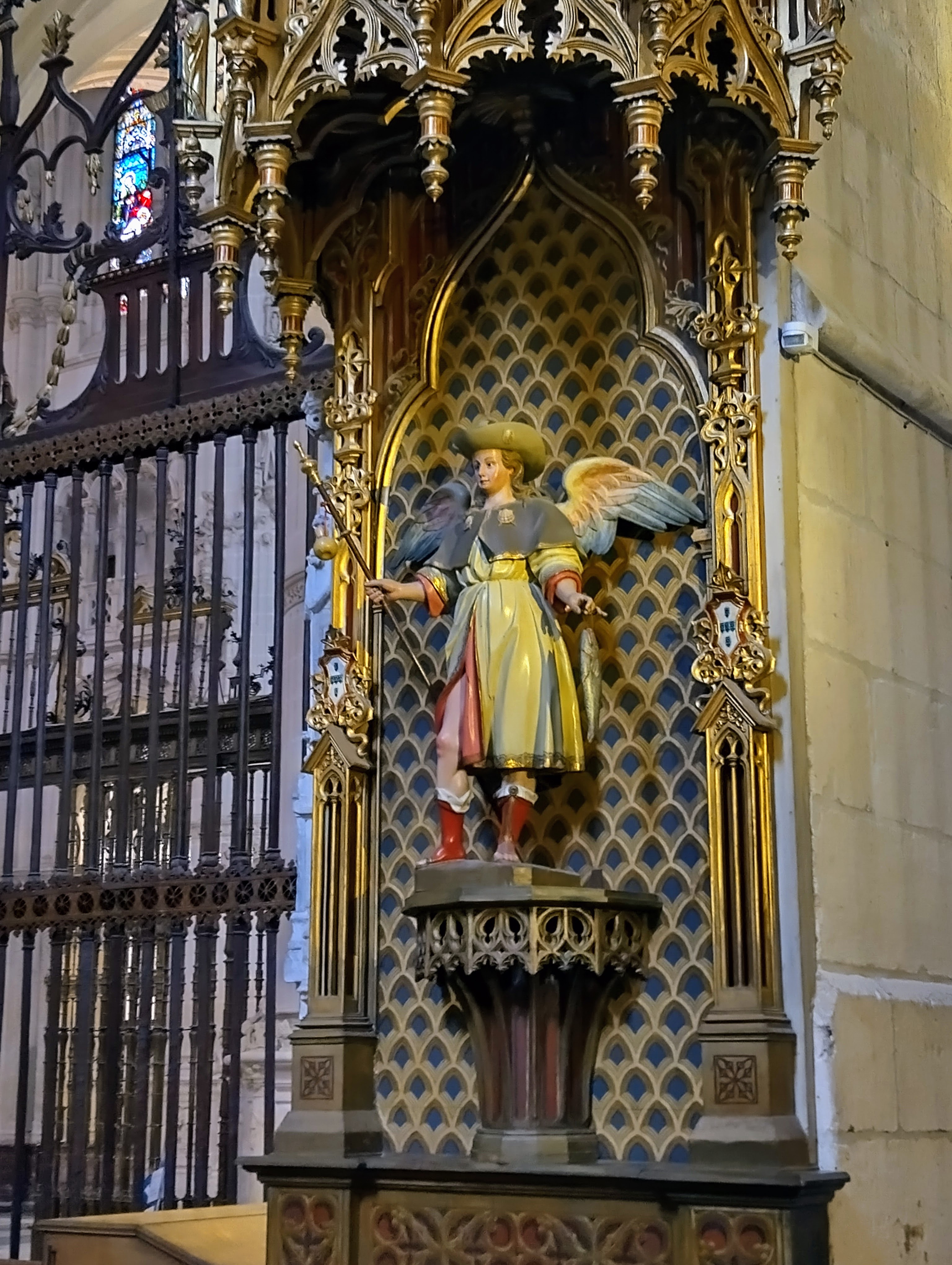
    Blisters or no blisters, the cathedral was too tempting to resist. I spent several hours hobbling from bench to bench to sit and admire the intricate stonework, carvings, paintings, and various gold thingamajigs (I believe that’s the technical term). Eunseok eventually found me there. We’d seen a lot of cathedrals together at this point, and were starting to identify some common trends, but this one went above and beyond. He remarked, “Why do rich people love tiny dogs?” vis-à-vis the many crypts of royalty with dogs at their feet. The highlights for me were Leonardo da Vinci’s Santa María Magdalena, cowgirl angel, and monkey with a shotgun.

    Victoria Castillo in Burgos Cathedral on the Camino de Santiago.
    Left: Santa María Magdalena by Leonardo da Vinci, Right: A huge dork.
    I’m sure there’s a story to this, but I see a cowgirl angel returning from a fishing trip.
    Shotgun in one hand, flask in the other. (Thanks to Geraldine for a better photo than the one I took.)

    More friends arrived throughout the day. One of those friends was Julia. I’ve alluded to her only a couple times in this blog so far, but these minor mentions do not reflect the larger presence she had in my thoughts. She was the pilgrim who came alone instead of with her husband because he had passed away; she was the pilgrim who I lit a candle for in Estella; she was the pilgrim the encouraging messages were sent to. Her introduction at Orisson had hit me like a barbed arrow that wouldn’t come out, and even though we didn’t spend much time together, it felt very important to me for her to have a good Camino. The last time I had seen her was in the Pyrenees when she enlightened us that some little structures we kept seeing were for storing hay—she grew up on a dairy farm, if I remember correctly. I thought about her often as I walked and felt instinctively that she needed some help. Luckily, Kim Kimmy had done what I’d failed to and gotten her number. We added her to the group chat when I was back in Estella. She had been struggling a little further behind most of us and almost decided to go home, but here in Burgos, an oasis of white towels and bathtubs, she sent a message saying that “life is wonderful”.

    Plans for everyone to meet for dinner were made and cancelled due to exhaustion (Troy had walked 38 km!), illness (a nasty cough was going around), and preferring a warm shower to going outside in the cold (duh). All totally understandable, and reinforced my perspective that not making plans at all is the best way to go.

    Dinner ended up being just me and Kim Kimmy wedged into the tight corner of an irregularly-shaped restaurant. We split black sausage and a complicated tortilla that inexplicably came in its separate component parts and talked about the Camino and life. One of the big topics was how people try to put you in boxes. It was something she and I had in common and a prevalent theme of my Camino. Often when I meet people—and you meet a lot of people on the Camino—I find that they try to figure me out, label me, or “put me in a box”. That’s only natural, of course. The problem is most people don’t fit into any one box. Race is an easy example, but this applies for many other things too. You’d be surprised how often people ask me where I’m from and refuse to accept the answer. Personally, I don’t think that is very polite. When I met some pilgrims with thick Korean accents who told me they were from Los Angeles, I didn’t say, “But where are you really from?”, I said, “I’m from San Diego. We’re neighbors!” The thing is, people who reject the answer to “where are you from?” aren’t really asking that. What they really want to know is, “why do you look like that?” What a question! No wonder no one has the audacity to ask it directly. Kim Kimmy had the same kind of experience, being born in one country, raised in another, and now living in third. She dubbed me her “Camino daughter” and gave me much needed life advice.

    With a lot to think about, I retired to the municipal and squirted an excessive amount of antiseptic on my feet. It was a cold night. I was fine in my sleeping bag, but Foster only had a liner. I loaned her my puffy jacket to sleep in.

    Day 17: Burgos

    Evidently the puffy jacket was sufficiently warm because Foster was practically in hibernation throughout the morning while I got the rest of my things together. She was injury free and walking that day. After she left, I found my Dutch friend in the kitchen. She was sick and needed a rest day too, so we went to the front desk and begged for permission to stay a second night in the municipal, citing the pharmacist’s advice that I not walk. They assented as long as we waited a couple of hours after the regular check-in time, which I thought kind of asinine on account of there being more beds than they could possibly fill on a cold, rainy weekday (at least I assumed it was a weekday). Nevertheless, I waited.

    And what is the best way to wait when it’s cold and raining and you aren’t supposed to use your feet? You guessed it: sit in a café and blow half your budget on Colacao. Meanwhile, I aired my toes in the cold until they were numb, and then aired them some more.

    And I ruminated. I guess I was getting a head start on the mental challenge of the meseta. I second-guessed every major life decision I’d made since my quarter-life crisis began almost three years ago. Some of them I would have reversed in that moment if the opportunity had magically walked in the door. I really would have. Feeling cold, tired, and lonely will do that to your willpower. But those kinds of feelings are temporary, and somewhere inside, between my cold toes and my unwashed hair, the quintessence that is me remembered Oh, the Places You’ll Go! by Dr. Seuss and recognized the truth in it. I was in the waiting place.

    No! That wasn’t for me! I knocked off waxing philosophical on children’s literature, got off my melancholy butt, and set off for new heights. Literally. I followed some signs that said “castillo” which led up too many stairs to a castle on the top of a hill. The castle itself was under construction and not worth photographing, but there was a great view of the city and cathedral from up there.

    Victoria Castillo in Burgos on the Camino de Santiago.

    That was as much activity as I could muster for the day. After an early dinner of croquettes that were too heavy for me to finish, I went straight to sleep.

    Day 18: Burgos → Hornillos del Camino (20.87 km)

    The city was silent in the morning in a way no city in America knows how to be. Only the pilgrims were outside to see the storks wake up on their tall, stone perches and feel the cold finally lift up to a comfortable temperature.

    I’d told myself I would walk a relatively short distance and not push myself too hard. In the next small town I stopped at a café/bar for the usual breakfast items and a bocadillo para llevar. Before the edge of town I stopped to rest on some steps with Carrie. She had a reservation at a nice albergue there. Despite the temptation to join her and what I had told myself about taking it easy that day, it was still early and I was itching to keep going.

    Just up the road there was a small church. I probably would have passed by it if there hadn’t been a line of pilgrims out the door. Curious to know what was going on, I asked a pilgrim who was just leaving. There was a nun stamping pilgrim passports and giving blessings. I got in line. Where else can you have this kind of experience? It was not a fast-moving line. The nun did not merely bless and stamp in an assembly line fashion; she was not there to reach a quota. She took the time to speak to each and every pilgrim individually. She was a wizened, elderly nun, who reminded me of my late abuela (grandmother) and was so tiny that she had to reach up to put her hand on my head—and I’m only 5 feet (152 cm) tall. When it was my turn she looked into my eyes and asked me (in Spanish) my name, and I told her in my best Castilian accent. She complimented the way I said it and we talked for a couple of minutes. One of the things she told me was that I am very young and therefore have a longer way to walk. I think she was talking more about the pilgrimage of life than the road to Santiago. I’m not really so young as all that, but perhaps my soul is and she could see it. She had an air about her that I don’t know how to put into words. Even now, I cannot seem to think, or talk, or write about her without tearing up. I got the sense that she genuinely loved every single pilgrim. The little pendant she gave me—every pilgrim got the same one—was of the Virgin Mary. I tied it to my backpack where it hung for the rest of my Camino.

    Victoria Castillo on the Camino de Santiago.
    I didn’t mean for it to look like I’m holding up a tiny backpack.

    After that the terrain became highly reminiscent of the original Microsoft Windows default wallpaper.

    I actually took this photo. Doesn’t it look familiar?

    Then it went completely flat with nothing but windmills in the distance, leading me to believe that I was already on the meseta. I stopped on the grassy side of the trail to attempt to mitigate the new blisters that were already forming on the bottom of my feet. Someone passing by was regaling a group with the story of the bus replacement from Bayonne to St. Jean. I called after them, “I was on the second bus!” They either didn’t hear me or didn’t care.

    Victoria Castillo on the Camino de Santiago.
    I call this one “Enthusiasm”.

    My final stopping place was Hornillos del Camino, twice as far from Burgos as I probably should have walked that day. I tiptoed through a cluster of cats into the municipal where I was assigned a top bunk as usual. While I was in the shower (3/10, co-ed, locking stall door, one hook, dirty floor), the ladder from my bunk mysteriously wandered off and was replaced with a wooden stool for me to use to climb up.

    The albergue was next to the church and across from a bar/restaurant that blared rock n’ roll music even through mass. Most pilgrims would have been happier if they’d served a communal dinner, but that wasn’t how they operated. They only had five small tables and every group had to put a name on a waiting list. None of my friends were around and I wasn’t in a social mood, so ended up being an awkward group of one. While I was enjoying a good steak and an even better ice cream sundae, I watched the busy waitress run back and forth. She was a Swiss girl who was trying to learn English and Spanish at the same time while everything in her head was in French. She was working so hard that I was determined to tell her she was doing a good job. That’s the kind of thing I often want to do and regretfully fail to follow through with. She was so busy that I nearly lost the opportunity, but on my way out I gave her a poke and told her, and she seemed so glad to hear it.

    The rest of the sunny evening—the daylight hours were getting longer and longer—I spent on the church terrace where most of the pilgrims staying in the municipal were hanging out. Word came through the group chat that Teresa and Archer had made it to Burgos and the end of their Camino. I missed them already. One of Teresa’s funny stories would have been great to hear right then. Feeling a little downcast, I chose to read rather than socialize and was slogging my way through Hemingway (not exactly uplifting literature), when there was a sudden commotion and two guys sprinted in the direction of the bar. I moved to where I could see what was going on. A pilgrim had collapsed in front of the bar. A lot of people were already helping and an ambulance was called, and there was nothing I could do other than get in the way, so I sat down on the steps to watch.

    While I sat there Thomas from Sweden came and talked to me. He’d noticed I seemed withdrawn and lonely. I kept trying not to cry, but couldn’t help it. He made me tell him what was wrong and I really tried. I awkwardly boiled it down to not knowing what to do with my life, difficulty defying the expectations of others, confusion over whether I’d made good decisions, and guilt over feeling sad when I’ve been lucky and had so many opportunities in life. He was sympathetic. This was his first Camino too and we talked about our impressions and expectations.

    Meanwhile, the collapsed pilgrim was lifted and propped up in a chair. The blood on his head was visible from where we sat about 50 feet (15 meters) away, but something else must have been wrong that caused him to fall in the first place. The responders commenced arguing what to do next.

    Thomas had a theory that people who do the Camino over and over again do so because they discover themselves or some sense of freedom on the Camino, but when they go back to their everyday life they don’t change anything. He literally called it going “back into the box”. So they have to come back to the Camino to find themselves again. At the time I thought this was probably true. But then I still had more than half of the way to go and a lot to learn.

    The loudest and most stressed responder won the argument, and the injured man was laid back down on the ground. The hospitalera who ran the municipal brought a pillow for his head.

    We contemplated the meseta and Thomas revealed the shocking truth that we weren’t on it yet. He predicted that the walk across the meseta would be a time when we would look inward and think without distractions and that I would discover who I am. I hoped so; although, at the moment it felt like the more likely scenario was that I would cry my way across it in confusion. Nevertheless, talking to someone helped. I resolved then to think outside of the box about what I really want from life and somehow find the courage to do it no matter what anyone else thinks. That is the hardest thing.

    An ambulance finally arrived and the professionals took over. Once they’d loaded the patient into the ambulance, it sat there for what felt like a long time and then drove off back towards Burgos. I never found out who the pilgrim was or what happened to him.

    As the sun finally started to admit that it was bedtime, I sidled my way past a volley of scraps that the hospitalera was flinging at the cats, up the wooden stool to my bunk, and into my sleeping bag.

    Day 19: Hornillos del Camino → Castrojeriz (19.47 km)

    To say I woke up with a positive attitude, ready to seize the day would be a preposterous lie. My eyes thought they smelled onions and didn’t show any sign of changing their mind. I snuck out before anyone could see me, weaving my way through the cats who had formed a militaristic pattern in the tiny foyer, presumably in preparation for an imminent invasion of the kitchen. I left intending to only walk about 10 km, but (spoiler alert) I ended up going 20 km again.

    Victoria Castillo on the Camino de Santiago.
    “Morning Mood”

    There was a lot of flat terrain again, but every time I thought I must finally be on the meseta, a hill or valley would appear around the bend, and the cuckoo bird would utter its mocking chime.

    One of the many pilgrims who passed me that day—I passed no one—was the Spaniard whose backpack had weighed 22 kg in Pamplona. He recognized me and asked about the “Korean guy with the new stuff who didn’t know anything.” I had to admit that I hadn’t seen him at all. As the good-natured Spaniard continued on at a pace I would have had to run to keep up with, he looked back at me and smiled. I was surprised how much I felt cheered up. Then I noticed that he carried only a small day pack and almost laughed.

    Later, when I’d just finished airing my feet for the fourth time, Sarah, Emma, Andrew, and Gillian caught up to me. They were cheerful as usual. Sarah chatted with me for a little while about our surroundings. She’d drawn the Microsoft Windows connection too and thought it was pretty. I found the flat bits a little too reminiscent of Oklahoma for my taste. Landscape snobbery aside, Sarah’s smile and the unbreakable good humor of the entire family cheered me up even more.

    Somewhere in the middle of the boundless green desert was a café oasis where everyone who’d passed me (so it seemed) was eating and relaxing on the patio. As I staggered up to it with fantasies of orange juice and pastries swirling before my eyes, I was suddenly and swiftly pounced upon by what, at the time, I called a “gaggle” but have since considered to be a “pack” of Aussie nurses who ardently forced their care upon me and refused to take no for an answer. They ordered me into a chair, removed my boots, applied patches of useless Compeed, chastised me for insufficient use of Vaseline, slathered more on my feet themselves, then bought me a glass of zumo de naranja (for which I was truly thankful), and dosed me with 1 g of Paracetamol (Tylenol), the only available painkiller which I’m not allergic to. All the while they vehemently argued with Eliot, a retired Scottish soldier who leads expeditions around the world, about footcare and the proper way to pack a backpack. I think he was actually right about everything, but I dared not go against them for fear of disparaging their profession. If this was their care, I certainly didn’t want to incite their wrath. Then, as quickly as the onslaught had begun, they got up and left, along with almost everyone else. I sat there stunned for a minute or two, with my four cheerful friends as the only remaining witnesses. I wanted to go inside and order more food and get a stamp, but I didn’t. In a daze, I got up and continued walking.

    Less than a kilometer down the trail was Hontanas, the town I planned to stop in. It was cute and there were several nice looking albergues/hostels to choose from, including one with a spa. But the painkillers had just kicked in, so against the better judgment of everyone else, I kept walking.

    Almost there!

    There is a lot to be said for the belief in fate, or that everything happens for a reason, or that you should trust your instincts to take you where you’re meant to be. The path beyond that town where I might have stopped finally induced me to admit that the landscape was beautiful. There were fields of grain that looked almost like soft fur that I wanted to pet, and the breeze rippled its surface like water. I came to a part of the path where I could reach the grain and run my hand over it. It did not disappoint. It really did feel like soft fur. As I was enjoying this sensation, I looked up and saw Foster coming up the trail. She had walked as far as she had time for and was walking back to Burgos to make her way home to London. She said she’d had a feeling she would see me again. If I had stopped earlier, we probably would have missed each other.

    Victoria Castillo and friend on the Camino de Santiago.
    Foster and me by the soft grain.

    Approaching Castrojeriz, the trail passed through some ruins into more rippling fields lined with flowers.

    Victoria Castillo on the Camino de Santiago.

    The town itself abutted a hill topped with a ruined castle that loomed triumphantly over the rest of the land. I limped along the cobblestone street expecting to end up in another shabby municipal albergue, when a miracle occurred. I got too tired to continue (that’s not a miracle), so I took a chance and looked into the nearest albergue, which happened to be Albergue Ultreia. It ended up being one of my favorite places I stayed on the Camino. Not only did the owner graciously welcome me in, he gave me a single bed and I didn’t even have to beg or lay siege to it. I took a shower (clean, but still not enough hooks), then hand-washed my laundry to the tune of the serenade of an old Italian pilgrim. And I got my spa experience after all in the refreshingly cold foot soaking tub they had in the rooftop garden.

    Victoria Castillo in Albergue Ultreia on the Camino de Santiago.
    Heaven is cold water when your feet hurt.

    The pilgrim dinner at Ultreia was the most fun I’d had in days. We were a party of two French, two Germans, two Italians, two Americans (including me), and a Kiwi named Dudley Moore. The food was the usual three courses: vegetable soup and bread, chicken, wine and homemade sangria to drink, and ice cream for dessert. But the real treat was the after-dinner tour of the ancient wine cellar underneath the albergue. Our illustrious guide (the owner) related the history of the place, translating all the important nouns into every language represented and making many “oohs” and “aahs” which we of course echoed through giggles. He let us turn the wine press, then we went down into the cellar where he lit and passed around some twelfth century oil lamps and showed us the old tunnels that used to lead all the way up to the castle. The tour concluded with a tasting of the wine and a toast.

    Pretending the press is full of grapes and difficult to turn.
    Victoria Castillo on the Camino de Santiago.
    The old tunnel leading up to the castle.

    As we got ready for bed, someone got the news that a new pope had been elected and was an American. This was a big surprise to everyone. I don’t know anything about how the pope is selected, but somehow I didn’t think an American would have been allowed. Silly, I know.

    My new Italian friends warned me that the real meseta would officially start tomorrow. Based on the foreboding attitude everyone seemed to have about it, I imagined a desolate wasteland resembling Mordor from The Lord of the Rings and mentally braced myself.

  • Camino de Santiago – Days 11-15: Viana to Villambistia

    The next five days were a little rough (for reasons that will become clear) and my journal entries left a lot to be desired in the way of detail. I’ve done some detective work to try and make up for it. By going through photos, WhatsApp messages, and Mark’s great vlog posts, I’ve been able to jog my memory and fill in some of the gaps.

    Day 11: Viana → Navarrete (21.51 km)

    Said goodbye to my shoes. I can’t say I miss them.

    I didn’t know for sure, but I had a funny feeling in the morning that there was going to be a lot of road walking coming up. There was. The arc of the walking day continued along the same pattern: the first 5 km are easy, the middle 10 km you start to feel it, the last 5 km are torture. My feet were in such a state that I couldn’t bear the thought of putting close-toed shoes on, so I hiked the whole way in toe socks and sandals. I still developed blisters between my toes—on both feet now.

    Victoria Castillo enters Rioja on the Camino de Santiago.

    The Camino left the fairytale region that is Navarra and entered the wine country of La Rioja. All of the small towns so far seemed to be populated solely by the elderly, and I had begun to wonder where all the young people were. Turns out they were in the city of Logroño. It seemed like a more modern city compared to Pamplona, my only point of comparison. It was far too early to stop for the day, so I had some breakfast (napolitana and Colacao), grabbed a sandwich para llevar (to-go), and traversed the whole city. The path went through a really long park which was pleasant to walk through and alive with locals, but notably devoid of public restrooms.

    Victoria Castillo in Logroño on the Camino de Santiago.
    Bridge into Logroño
    Victoria Castillo in Logroño on the Camino de Santiago.
    Those pilgrims must have used donkey service.

    Outside of the city, I walked with Teresa and Archer for a while. When I noticed Archer taking a drink from his water bladder, I suddenly remembered that I had found a magnet that looked like the one used to attach the tube to his bag. I couldn’t recall even at the time when I’d found it—it might have been sometime in between when I first heard the cuckoo bird and when I made my emergency sprint into the woods. Anyway, I remembered that I had it and asked if they’d lost theirs. Sure enough they had, so I returned it to them. I’m not sure “the Camino provides” is quite applicable in this scenario, but maybe we can call it part of the “Camino traveling lost and found”.

    We crossed a river where people were fishing off a bridge. A little further down in a no-fishing area, we found all the fish. They were aware of us and came right to the surface, sticking their gaping mouths out of the water in our direction. They must have picked up this behavior from people feeding them.

    By the time I reached Navarrete my feet were barely functional again, so I checked in to the first albergue I saw. Unfortunately it had a lot of stairs. The only other pilgrims there were a couple of French ladies. One of them saw me hobbling around so pathetically that she insisted on rubbing essential oils on my legs. I’m not sure exactly what it was because she only spoke French and a little Spanish.

    After an adequate shower, I went to see the town and buy some soap. I might have enjoyed it more if my feet had been in better shape and/or the town wasn’t so slanted. There wasn’t much going on and it was very cold outside, so once I’d found the soap, I spent some time engaging in my new favorite hobby: sitting in a café drinking Colacao.

    A big group arranged to have dinner together. It was the restaurant’s first opening in six months (some businesses along the Camino are only open during peak pilgrimage season) and we filled up half the place. The owner was a very nice lady who didn’t speak any English, so I got to be especially useful translating. I should have gotten the steak instead of the fish, but overall the food was good and we had a fun time. The owner absolutely adored Archer, who was super excited for each course. I think he made her day.

    Victoria Castillo and friends on the Camino de Santiago.
    Emma, Sarah, Teresa, Kim Kimmy, Me, Archer, Andrew, Gillian

    Sarah, Emma, Andrew, and Gillian very nicely walked me all the way back to my albergue. They’re the most cheerful family, and never rushed or worried about anything at all as far as I could tell. The French ladies were already asleep and it looked like no one else had arrived while I was out. I got ready for bed as quietly as possible and hoped my feet would start to get better soon.

    Day 12: Navarrete → Nájera (16.03 km)

    Here’s where I really have to dig for details. My journal entry for this day says this:

    “Terrible day. Painful blisters between my toes, very sore, scenery bleh. Barely made municipal due to holiday. Cried. Have a cold. Bus tomorrow.”

    What really happened was that I had a terrible day because of the blisters between my toes, got very sore, the scenery was probably fine, and I couldn’t find the municipal albergue for about an hour because I was lost in a daze in a medieval fair. Throughout all this I could feel myself getting sicker and sicker and I wasn’t the only one. Something—possibly more than one something—was going around among the pilgrims.

    I do remember that the town was nestled among red rock formations that reminded me of New Mexico. The air was saturated with the aroma of food being sold from booths by locals in medieval costumes. Other booths had things for sale and games, and there were so many people that at more than one point I was only able to make my way through the dense crowd by following closely behind a line of ponies carrying small children.

    When I finally made it to the municipal albergue, I waited in line with Kim Kimmy and Eunseok. It was the cheapest albergue (though not the worst quality) that I stayed in on the whole Camino at 6 euros. I begged the young American hospitalero for a bottom bunk and promptly passed out on it. Later I would get to enjoy Kim Kimmy’s impression of my insensible, zombie-like condition.

    Day 13: Nájera → Santo Domingo de la Calzada (20.93 km)

    I slept for 11 hours and felt sick in the morning. I went straight to the bus station. In Santo Domingo I bumped into the exuberant Dutch lady who’d been in the donativo in Estella. She gave me a piece of chocolate which revived me just enough for the walk to the city center. I waited around in a very low vibe café near the cathedral for albergues to open and friends to arrive. It started raining. I ate more than one breakfast of tortilla and zumo de naranja to avoid going outside. Michelle and Eunseok arrived and I had another breakfast with them. Somehow I was still hungry.

    Eunseok tried to help me find a private room so I could recuperate, but we didn’t have any luck. I should have gone to the municipal with them but I was too tired to think, so I ended up in a cold, drafty convent-turned-albergue with no ladders on the bunk beds and stone floors that reminded me of the Dragon’s Teeth. The woman running the place insisted I had to have a top bunk because the bottom ones were all reserved. I rested on an open bottom bunk in the meantime; I wasn’t going to climb up to the top until I was ready to sleep for the night.

    The rain turned into a thunderstorm and I was relieved not to be walking in it. Many other pilgrims got caught in it and took shelter in small cafés and under highway overpasses. When it let up, I went out with Michelle and Eunseok again and had a big lunch. Evidently my body needed fuel. I may have forgotten to eat the day before.

    Michelle was developing a nasty cough so she went to rest while Eunseok and I toured the cathedral. It was very chicken themed. The explanation for this was considered so obvious that there was no sign explaining why. I learned from another pilgrim that Saint Dominic (Santo Domingo) is famous for a miracle in which a dead and cooked rooster and hen were brought back to life. Another notable thing about this cathedral that differentiates it from others is that the bell tower is unattached to the rest of the building and you can go up into it. I ran into Kim Kimmy on the way to the tower and we ascended the narrow, spiraling staircase together, trying to figure out the mechanism for the clock as we went. We passed a dead bird who must have flown in and gotten injured. On our way back down a man was trying to pick it up—he was using a bag or something to avoid touching it directly—and it moved. It wasn’t dead after all. He brought it down under the careful supervision of his young daughter and released it in the courtyard.

    Victoria Castillo on the Camino de Santiago.

    I went back to the albergue for a late siesta and the supposedly reserved bottom bunks were still open. I’d seen these kinds of reservations given away by late afternoon, so I asked if I could take one. I was told they were going to hold them until 7:30 pm. Thus began what I like to call The Siege of the Bottom Bunk. With the moral support of my fellow bunkmates, I put my sleeping bag on a bottom bunk, messaged my friends that I would be late for dinner, and napped. At 7:30 on the dot I transferred my disposable sheet and officially declared the bottom bunk to be the captured territory of the state of Victoria.

    It started raining again, but luckily dinner was very close by. I stuffed myself with soup, pasta, and flan, because apparently three breakfasts and a large lunch hadn’t been enough, and listened to my friend’s stories of the day. Teresa and Archer had narrowly avoided the thunderstorm by finding shelter in a little town on the way.

    Victoria Castillo and friends on the Camino de Santiago.
    Archer, Teresa, Carrie, Kim Kimmy, Eunseok, Me

    It was a cold night in that old convent, and somehow windy inside with the windows closed. I curled up tight in my sleeping bag and I imagined it was the ghosts of nuns drifting around.

    Day 14: Santo Domingo de la Calzada → Castildelgado (12.48 km)

    In the morning I still had a bit of a cold but felt well enough to walk. I stuffed my pockets with toilet paper and hoped for the best.

    Outside of the town there were some smokestacks on top of which I saw the first storks. From this point forward through Castilla y León, on top of almost every smokestack or church tower, or any other tall structure with a flat top, there were stork nests.

    It was impossible to get a good picture so here’s my best effort.

    A short way up the trail there was a hill and I noticed pilgrims ahead of me turning around to take pictures. I turned to see hot air balloons rising in the cool morning air.

    As I went over the hump of the hill, an incredibly rapid mist came in and the view of distant fields that was visible only a minute before was completely enveloped in whiteness. By the time I reached the bottom of the hill, the mist vanished almost as quickly as it had come and left a “white rainbow” (or halo) shining in the warm sun.

    Most everyone stopped for breakfast at a food cart in the town of Grañón. Many friends were already there or arrived shortly after I did. There was a long but fairly quick-moving line and I chatted with Michelle while we waited. When I got to the front, I opened my mouth to order and was suddenly interrupted by the man behind me literally ordering over my head. I was dumbfounded for a second before someone took over to defend me. That someone was my previously unknown alter ego, Spanish Victoria. Spanish Victoria did what English speaking Victoria couldn’t do and resolutely declared that she was at the head of the line. The man apologized and made lame excuses for himself. Spanish Victoria ordered breakfast and washed her hands of him.

    Victoria Castillo on the Camino de Santiago.
    My talent for unflattering selfies continues to amaze.

    I continued walking, hoping Spanish Victoria would stick with me. The Camino left La Rioja behind and entered another new region, Castilla y León. The province is actually a combination of the two regions: Castilla + León = Junta de Castilla y León. First up was Castilla, land of my ancestors.

    Victoria Castillo enters Castilla y León on the Camino de Santiago.

    I don’t know anything about the politics of the region (or Spain, or Europe for that matter), but apparently not everyone wants to be junta. Almost every sign was graffitied to cross out León. Later, in León they had crossed out Castilla.

    Victoria Castillo in Castilla y León on the Camino de Santiago.
    One of the few signs where no one crossed out Castilla or León.

    My blisters felt ok until what was to be the last kilometer of the day. Kim Kimmy was planning on staying at a little albergue off the main stages and my feet insisted that I join her.

    Victoria Castillo on the Camino de Santiago.

    It was a beautiful, immaculately clean albergue. The shower was heaven; I washed my hair for the first time since Pamplona. After hand washing our laundry, Kim Kimmy and I relaxed in the backyard for a while. Then there was a communal dinner (probably chicken and vegetable soup). The only two other pilgrims were guys, so Kim Kimmy and I got a whole bedroom to ourselves. I slept very well that night.

    Day 15: Castildelgado → Villambistia (16.95 km)

    The albergue served breakfast in the morning and then we were unceremoniously rushed out. I walked on and off with one of the guys we met at the albergue (unfortunately I can’t remember his name). He was in bad shape too, with shin splints.

    I stopped to rest and eat breakfast in Belorado, where most of my friends had gone the day before. The streets had hand and footprints of people who I presumed were from the town.

    Evidently a giant was here.

    The rest of the walk is pretty fuzzy in my memory. The blisters got worse despite my frequent stops to reapply vaseline or bandages. At one point some Spanish pilgrims passed me and one of them mistook me for a Castillian and told me my accent was very convincing. I was incredibly pleased with myself for that and regained some pep in my step for a few hundred meters.

    But a few hundred meters was about all I could manage at that point. When I hit the small town of Villambistia, I checked the Buen Camino app (that’s right I finally used it) and saw that the next town was only 1.5 km further. But I couldn’t do it. I shuffled into the municipal albergue and called it for the day. I was in the middle of nowhere, off-stage, sans-amigos because I couldn’t continue through the pain.

  • Camino de Santiago – Days 9-10: Estella to Viana

    Day 9: Estella → Los Arcos (21.4 km)

    I was startled awake in the donativo that night by a noise and voices. I thought maybe someone had fallen out of bed, but decided it was none of my business and promptly fell back asleep.

    In the morning the vibe was not good. The disturbance in the night wasn’t someone falling out of bed; it was the scary pilgrim (“la jefa”) purposely waking Michelle up and berating her for snoring, even going so far as to tell her that, since she snores, she should get a private room. I don’t think I need to point out the incredible hypocrisy that took place here.

    It is tempting, in the face of this hypocrisy, to get up on a soapbox and become a hypocrite myself. When we were teenagers, I used to use a white noise machine to drown out the sound of my sister breathing at night. So I was surprised to find that, on the Camino, a nightly symphony of snores did not bother me. The reason was simple: I had changed my mindset. I had read and taken to heart the advice of an ancient dead guy by the name of Epictetus. He said this:

    “If you intend to engage in any activity, remind yourself what the nature of the activity is. If you are going to bathe, imagine yourself what happens in baths: the splashing of water, the crowding, the scolding, the stealing. And like that, you will more steadily engage in the activity if you frankly say ‘I want to bathe and want to hold my will in accordance with nature’. And do the same for every activity. So if any impediment arises in bathing, readily say ‘I did not only want this, but I also wanted to hold my will in accordance with nature; and I will not hold it like that if I am annoyed about what happens’.”

    —Epictetus, Enchiridion

    Replace “bathing” with “sleeping in an albergue”, and “the splashing of water” with “snoring” and the 1,800 year-old quote applies perfectly. For anyone who finds this advice to be easier said than done, he also wrote extensively about what is and isn’t in our control, viz. you can only control yourself, not other people. Scary pilgrim couldn’t put Michelle in a private room, but she could have put herself in one. The last thing I’ll say about this is that, for the record, Michelle only snores a little and not loudly. I will now step down from my soapbox and continue the story.

    I slipped my donation in the slot and got out of there fast, because I had something important to address. Today was Archer’s twelfth birthday! I didn’t know if I was going to see him and his mom, so I recorded a birthday message in front of the church and stood on the municipal’s doorstep to send it using their Wi-Fi.

    On the way out of town there was a slight detour around some road work that took the Camino right past a little café/convenience store. I picked up some zumo de naranja to-go and was surprised that it was half the usual price and had an ice cube in it.

    Next up were a couple of attractions so famous even I had heard of them: a blacksmith’s shop and a wine fountain. The blacksmith’s apprentice was practicing his craft right there in front of the shop. The shop is full of interesting souvenirs, as well as larger art pieces. My mom has a shell necklace that she bought there.

    Just up the hill from the blacksmith’s is the wine fountain. I didn’t want my water bladder to taste like wine for the rest of the pilgrimage, so I used my shell as a cup. The consensus about the quality was that “it could be better”. Makes sense that they don’t give the good stuff away for free.

    Victoria Castillo at the wine fountain on the Camino de Santiago.

    It must not have been much later that I first heard the cuckoo bird. When I was a kid my mother had a cuckoo clock (she probably still has it somewhere), and we would occasionally set it and watch the little wooden bird pop out and say, “Cuckoo! Cuckoo!” As I strolled through a section of trail surrounded by grasses and small dense trees, I suddenly heard the exact same sound. I’d never heard one in the wild, so my first fleeting thought was to wonder what a cuckoo clock was doing in the middle of nowhere. My intelligence quickly kicked back in, and I realized that of course it was the real deal. I never saw the bird itself, but I would hear it many more times.

    The trail passed through small towns, patches of forest, and fields. As I plodded along by myself with lamb’s wool between my toes, hoping to prevent further blisters, another affliction struck. I sprinted into the woods, jumped into a thorny bush, and dropped my pants mostly in time. I thanked my lucky stars, Jesus, Buddha, and anyone else I could think of that there was no one else around. The only two possible suspects were the wine and the suspiciously cheap iced OJ. The wine had to be ruled out because practically everyone drank it, and the woods weren’t full of spontaneously erupting pilgrims. The water in Spain is perfectly clean and drinkable, so I don’t know where that ice cube came from.

    “Cuckoo! Cuckoo!” What was a delightful sound before was now a taunting reminder of the concept of time.

    I continued plodding, taking short steps. It wasn’t long before the terrain changed to hilly fields of wheat, grapes, and olive trees; no more woods to sprint into in case of emergency. The California girl who’d just finished college (I can’t remember her name) came along, and we both observed that the hilly vineyards looked a lot like the Murrieta valley. She stopped occasionally to do yoga on the side of the trail. Yoga was the last thing I wanted to do. I kept taking short steps.

    “Cuckoo! Cuckoo!”

    There’s a common saying that “the Camino provides”. It’s the romantic notion that what you need will come to you. Usually it comes to fruition through pilgrims sharing and helping each other. Other times, much more rarely, the Camino itself provides. My feet got really sore and just when I was lamenting that I’d have to buy new shoes, I came upon a pair of boots next to a trail marker. I tried them on. They were broken in and muddy but not worn out and fit a little more loosely than my shoes. I finished the day in them.

    Victoria Castillo on the Camino de Santiago.

    At long last I shuffled into Los Arcos, tired, sore, and unsuspecting that anything might have happened in the world outside of the trail. I poked my head into a nice looking albergue, hoping to get a private room to recover myself in. None were available, and the proprietor was extremely agitated. He told me there was no hot water because the power was out in “all of Spain. And Portugal. And France, and Germany and Sweden! All of Europe!” I remember thinking it odd that he said Sweden. Unconvinced of the truth of his claim, and sensing he needed some space to calm down, I moved on.

    Victoria Castillo in Los Arcos on the Camino de Santiago.

    I ended up at the municipal, which was a far cry from a private room. The power was out there too except for the fire alarm which no one knew how to turn off. I was checked in by a pair of Dutch hospitaleras who were very calm. They didn’t know the full extent of the blackout, but the rumor was that it covered Spain, Portugal, France and Italy. They did know that the hot water heater wouldn’t work without electricity. I didn’t care; I desperately needed a shower.

    At no other time in my life have I found myself thinking about showers more than I did on the Camino. When you carry all your possessions on your back and only have two sets of clothes, things like the number of hooks available become very important. In the shower rankings I created in my head, the municipal albergue in Los Arcos still remains at the bottom. There were two showers facing each other with a shared drain in the center of the floor. Each “stall” had a short, swinging, saloon style door that didn’t reach the wall, let alone lock. There were no hooks. The top of the door curved down so that anything that was hung over it would slide to the floor. The only good thing was that, because everyone had been warned away, there was a little hot water still left. I used it all without remorse. The fire alarm continued blaring throughout.

    Clean, but still feeling ill, I dragged myself to the plaza in search of food and to get away from the noise of the fire alarm. I encountered friends looking for the municipal and pointed them towards it. There was only one restaurant that I was every aware of, and apparently they had electric stoves. I sat in the plaza and listened to the rumors escalate. When I was tired of political conspiracy theories and foreboding predictions of World War III, I went into the church. It was beautiful. The ceiling was painted with magnificent murals in a light, calming color palette.

    Teresa and Archer found me sitting on a bench outside the church staring into space. I tried to put some cheer into my voice when I wished Archer happy birthday, but I’m afraid I didn’t do a very good job. I think he said this would have been the worst birthday ever if he didn’t happen to be in Spain. At the very least, I’m sure it’s one he’ll never forget.

    I told everyone I was going to rest for a little while and then come back to scrounge for dinner. Back at the municipal, someone had finally figured out how to shut off the fire alarm. I meant to lay down just for a few minutes. At 9:00 pm I woke up and decided to go back to sleep.

    Day 10: Los Arcos → Viana (18.33 km)

    I felt lousy in the morning. Eleven hours of sleep still wasn’t enough for my body to recover. The power was back. I never did find out what had caused the blackout, but I ruled out World War III and continued the Camino.

    I trudged to the first town, trying in vain to force myself to enjoy the beautiful scenery along the way. The so-called town didn’t have much going on. There was one tiny café in which I got the last croissant. I went into the bathroom and the lights turned out on me, leaving me in complete darkness. At first I thought it was another blackout, but eventually, by aimlessly feeling around, I found the switch and the light came back on. I’d been a victim of the notorious automatic lights they seemed to use everywhere.

    Michelle was waiting for a bus. I didn’t want to, but I had to make the call to join her or I was going to hurt myself. Any illusions I’d had of being a purist and walking every meter to Santiago were gone.

    No regrets. The buses in Spain are way nicer and cheaper than back in the States. The driver asked if we were going to Viana. I didn’t know anything about it but said yes anyway. My blind trust in the universe paid off. It turned out to be a great little town with good energy and lots of history. There are ruins to explore and Cesar Borgia’s tomb is there. We found a nice albergue and had a good lunch right where we could wish pilgrims “buen camino” as they passed through.

    Victoria Castillo and friend in Viana on the Camino de Santiago.

    Back at the albergue, I realized I’d left my soap (including my mom’s fancy little dry bag) in the horrible shower in Los Arcos. Oops. It did give me the opportunity to use the little soap and bag that the nice Korean pilgrim with all new gear had given me in Pamplona. The Camino provides.

    There were a couple of pilgrims talking about paragliding and when they found out I was a pilot that’s all they wanted to talk about. I found myself quickly getting bored, so I begged off to run errands. There was a good hiking store in town where I bought another pair of toe socks to fight blisters and a souvenir pin.

    Then I went to the cathedral, walking right over Cesar Borgia to get in. Inside it had beautiful muralled ceilings similar to the church in Los Arcos, only bigger with multiple rooms. I attended mass, which was in one of the smaller rooms, and thought I was the only pilgrim there. The priest called the pilgrims up at the end and there were three others. He gave us each a pilgrim blessing and asked where we were from. He was very jovial and when I told him I’m from California he laughed and said, “I’ve seen the movies!”

    Victoria Castillo at Cesar Borgia's tomb on the Camino de Santiago.

    Dinner was a pilgrim meal at the albergue of soup and pasta. I went straight to sleep afterwards, hoping to be back to 100% health in the morning.

  • Camino de Santiago – Days 6-8: Pamplona to Estella

    Day 6 – Pamplona → Puente la Reina (23.65 km)

    A pilgrim who had stayed at the donativo the week before painted this map on the wall.

    Breakfast in the convent donativo was less communal with everyone going about their own business and leaving in their own time. I was among the last to leave and could barely hold back my tears. Part of me wanted to stay in this happy, comfortable place.

    Eunseok walked with me the entire day. He even helped me find the post office so I could ship the botas I had bought ahead to Santiago. Once that was taken care of, we hopped back on the Camino and followed it out of the city. We made a pact to be very minimal and eat cheap grocery store food for the next couple days to make up for having spent way too much money in Pamplona.

    Walking out on the busy boulevard, I finally realized that we pilgrims stuck out like sore thumbs in our hiking clothes and giant backpacks. Grandmothers wheeling strollers pointed us out to the children and explained enthusiastically that we were walking to Santiago de Compostela. They didn’t have to ask.

    The locals all know exactly where the Camino runs too, so if you lose track of the trail markers, all you have to do is ask the nearest Spaniard and they’ll point you in the right direction. Later, I heard stories of pilgrims who didn’t realize they’d taken a wrong turn somewhere being chased down and redirected back to the Camino. This magic of human way-pointing even works if there seems to be nobody around. All you have to do is spin around three times and a Spaniard, usually an old man, will sprout from the earth and point the way. This is exactly what happened to me and Eunseok in a small town on the outskirts of Pamplona. We found ourselves at a fork and couldn’t find a yellow arrow. We spun around in bewilderment and suddenly, there he was, an old man pointing the way and wishing us “buen camino!”

    Eunseok AKA Jacob by a way marker that says “Jacob’s Way”.

    Once we were out of the city the way markers were easy to spot. The terrain became rolling hills covered in crops and pilgrims passing on bicycles became a frequent occurrence. I remembered some good advice Michelle had told me, which she’d been taught when she started the PCT: every once in a while turn around and look at where you’ve been. As we worked our way up in the hills, I turned around and saw the Pyrenees in the distance behind the city, and there was snow on the peaks.

    This was the first warm, sunny day and incidentally the first with no shade. The incline got steeper and we caught up with Teresa and Archer. Archer listened to music to keep himself in the zone for the uphill climb.

    Victoria Castillo and friend on the Camino de Santiago.
    Thanks to Teresa for this photo!

    The trail took us up to a ridge lined with wind turbines and some famous steel statues of pilgrims walking. Other pilgrims were there resting in a little sliver of shade cast by a monument. They managed to make room for all four of us to sit.
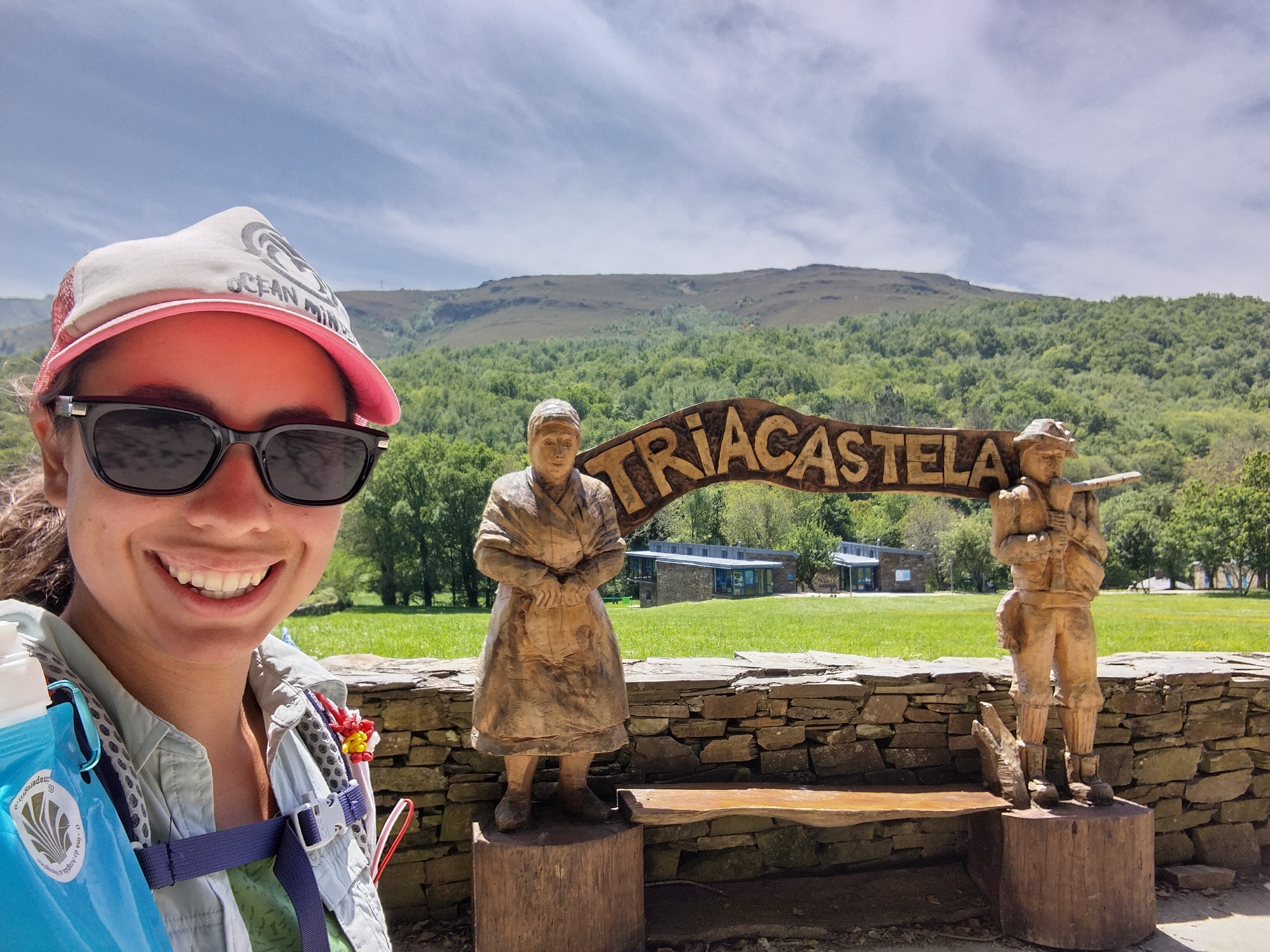
    Victoria Castillo on the Camino de Santiago.
    Alto de Perdón (Hill of Forgiveness)

    The rest of the way was downhill among loose rocks and then fairly flat along fields of crops, the edges of which were dotted with wild, red poppies. The only shade was one big tree that was emitting tufts of cotton-like pollen that floated away on the breeze. Just beyond it was a rolling field of luscious green—I later learned that it was wheat—that completely mesmerized me and Eunseok. He said he wanted to float on top of it and I agreed. There were also spectacular fields of yellow flowers, which I later learned was rape seed (used to make canola oil). Other fields contained a crop with white flowers, which I still haven’t identified.

    Victoria Castillo on the Camino de Santiago.
    The unfortunately-named rape seed flowers.
    Victoria Castillo on the Camino de Santiago.
    Mystery crop. Leave a comment if you know what this is.

    As the day wore on, it got hotter and hotter; I got more and more tired; and Eunseok got more and more sunburned. We trudged through several small towns, each replete with upscale houses and no people to be seen except for the occasional handyman. I surmised that the owners must go to work in the city during the day. Each town had at least one fountain with potable water which I took advantage of to refill my water bladder and splash myself to cool down. We passed Michelle who’d stopped for a refreshing beer.

    Victoria Castillo on the Camino de Santiago.
    Passing through the town of Muruzábal.
    Victoria Castillo on the Camino de Santiago.
    Funky statues are not an uncommon site along the Camino.

    Arrival in Puente la Reina was a relief. There was a tiny park with shady trees right outside of the municipal albergue, and we flopped down on the grass for a brief rest before checking in. There we saw an unexpected sight. On the Camino, certain pilgrims become famous. There’s something interesting about them that makes them stand out from the rest. They’re discussed and conjectured about, and if you happen to have seen them everyone wants to hear what you found out. The pilgrim we saw in the little park wasn’t just famous among pilgrims; I’d go so far as to say he had legendary status. He was a Frenchman who had started from his house, as per tradition; he had already walked to Santiago and was now walking all the way back home. He also had two dogs and a goat walking with him. Neither the dogs nor the goat were on leashes. They were resting on the grass like we were and when the man was ready to go he called the dogs to him and they patiently let him strap their packs on their backs. Then the whole entourage headed off towards France—with the goat leading the way! I was too tired and awestruck to remember to take a photo, but I swear it’s all true.

    We checked into the municipal albergue and found more friends already there: Anastasia, Jack, and Johnny. Anastasia was on her way to take a dip in the river and invited me to join her. I had to decline on account of being in serious need of dinner. Our friends recommended a pizza place they’d been to earlier. Eunseok and I went there and found Evannah and Fiona. The best thing about the Camino is running into friends everywhere. It’s almost like living in a small town except that everyone is constantly on the move. You never say goodbye to anyone, only “see you down the trail”. Sometimes you don’t see them again, but more often you do.

    We got enough pizza (although not as good as El Dragón Peregrino) to save some for the next day’s lunch. The town was adorable and quaint, like a mini version of the old part of Pamplona. On the way back to the albergue we found Anastasia. Apparently the river was green so she decided not to go in. She did recommend the church, if only to admire the particularly swole statue of Jesus.

    As I settled down to sleep on another top bunk covered in disposable sheets, I couldn’t believe it had only been six days since my journey started. I felt like I’d been walking for months, and not just because my feet were hurting. My new friends already felt like old friends.

    Day 7: Puente la Reina → Estella (21.99 km)

    Victoria Castillo on the Camino de Santiago.
    Crossing the bridge that gives Puente la Reina its name.

    In the morning Eunseok wanted to sleep in so I started off by myself. My short little legs had no chance of keeping up with my long legged Pamplona friends. The terrain wasn’t difficult, just one steep hill. The house I grew up in is basically in the bottom of a canyon and you have to walk uphill to get anywhere (i.e. to school), so I found myself able to keep my pace uphill while other pilgrims slowed down. This gave me a satisfying, if false, sense of speed.

    The trail passed through fields of wheat and the occasional vineyard. The best view was of a town shining on a hill with a rainbow over it like something out of the Wizard of Oz.

    Eunseok, Michelle, and Kim Kimmy caught up to me and we stopped for lunch in that little town. I had thought Kim Kimmy was ahead of us because she hadn’t taken a rest day in Pamplona, but apparently she’d taken one in Puente la Reina instead. I resolved never again to believe I wouldn’t see someone again. I kept to the pact to be frugal by eating the leftover pizza and also found the cheese that I had bought in the Pyrenees in my backpack. I had completely forgotten about it. It was in a vacuum sealed wrapper so it was still good.

    Down the trail, Michelle, Kim Kimmy, and I came upon a teepee tucked away in the trees. It was like suddenly being transported back to North America. There was a man there who beckoned for us to come over. As we approached, other pilgrims passed by completely oblivious, as if we’d wandered through a portal into the twilight zone. The man spoke extremely fast Spanish, but I was able to understand and translate everything he said. (This isn’t always the case; his accent was just perfect for my ears.) He told us they do Native American ceremonies regularly there and listed off some familiar ones. I can’t speak to the authenticity of his ceremonies, but even so it was very surprising to come across this in Spain.

    Victoria Castillo and friends on the Camino de Santiago.
    Evidence that the teepee wasn’t a hallucination.

    Then disaster struck: I got a blister between my toes. Right on the “webbing”. (I don’t have webbed toes, but you know what I mean.) I tried different patches and more Vaseline, but nothing helped. At one point I was wearing a toe sock just on that foot. A nice Canadian couple passed me and gave me some hiker’s wool, which I hadn’t known about. It’s literally tufts of lamb’s wool that you’re supposed to apply to hot spots to take away moisture and prevent full on blisters from forming. I sat down immediately on the ground to put it on, which is how Eunseok found me. He must have been hiding in the bushes because he was ahead of me and I never passed him. He said he’d wait for me in the next town. I started walking and the wool did help—for a while anyway.

    The final fate of a pilgrim’s feet.

    As promised, he was waiting in what I think was the town of Lorca. I should have found an albergue there and stopped for the day, but I knew everyone else was going to Estella and didn’t want to be left behind. I told Eunseok I’d be ok after a little rest, so he went on ahead.

    I was not ok after a little rest. By the time I admitted this to myself, Lorca was too far behind to tempt me to turn around. Determined to stop at the next albergue I came across, I shuffled into the next little town. There were no albergues, just a dreary bar. Michelle was in a similar predicament and we decided the best thing to do was to share a taxi to Estella.

    I asked the woman behind the bar to call us a taxi. She stared at me with disdainful, glazed eyes that lacked the energy to fully glare, as if I’d asked her to personally pick me up and carry me to Estella. Eventually she called—or pretended to call—and said the taxi would arrive in 10 minutes. Then she disappeared into the kitchen and didn’t come out again. The taxi never came. A local man offered to drive us, and since we didn’t know what else to do, we accepted. It was only 4 km and he charged us 20 euros. Feeling like suckers, we checked into the municipal albergue and picked up cheap microwavable meals from the grocery store.

    Also staying in the municipal were a really nice couple from Minnesota named George and Vinny. Vinny taught me how to treat blisters with a needle and thread. I’m pretty squeamish and generally terrified of all things medical, but Vinny got right in there and threaded me herself. If only I had recognized at the time that this was the one true way to treat blisters, I would have saved myself a lot of pain down the road.

    Victoria Castillo and friends on the Camino de Santiago.
    Thank you George and Vinny!

    Through the modern magic of WhatsApp, I found out that lots of friends were in the area. Some were a little further ahead or behind and encouraging messages were shared around. My blistered foot demanded that I take another rest day. I became torn between not wanting to be left behind and wanting to wait for those who were trying to catch up. I tried to remind myself that everyone’s Camino is unique and whatever happens is what’s meant to be.

    Day 8: Estella

    If I thought a morning hanging around in Pamplona was boring, you can imagine how I felt about a smaller town. Nothing was open and nothing was going to open—not even the pharmacy—because it turned out to be Sunday. We got booted out of the albergue at 8:00 am. The options were: café and church. And we still had to wait until 10:00 am for the church to open.

    Only one café was open. It was a nice place with a terrace overlooking the river. It was cold out so Michelle and I had a hot breakfast inside. By now I had a go-to order of a napolitana con chocolate with zumo de naranja or a Colacao (or both…ok, usually both.). If you try to order hot chocolate in Spain, they give you a big cup of melted chocolate like you would dip the churros into, so you have to make sure to order Colacao, which is a brand of powdered hot cocoa that they give you in a packet with a cup of hot foamy milk. To say I drank a lot of Colacao on the Camino is a severe understatement.

    Victoria Castillo on the Camino de Santiago.
    Look! An old church! You don’t see a different one of those every day…unless you’re on the Camino.

    The church was an old church like other old churches and we marveled at its oldness while the organist practiced. I lit a candle for a pilgrim who I knew was struggling a couple day’s walk behind. After that there was nothing to do but wander around and look for an albergue. We found the donativo. It was still an hour before check-in time, but the volunteer hospitaleros let us in anyway and gave us some leftover vegetable soup and bread for lunch. They were two old Spanish men, both named José. One spoke Spanish and a little English, and the other only spoke Catalan. It was a very different vibe from the grandmotherly ladies in Pamplona. They put the pilgrims to work folding sheets or chopping vegetables.

    After I finished my laundry shift I hid out on my bunk until dinner. There were separate dorms for men and women, and I felt a big difference in the degree to which I could relax. It’s not that I can’t get comfortable in a co-ed dorm, but they’re smellier, louder, and sometimes it’s nice to be able to change without having to perform acrobatics in your sleeping bag.

    Some of the lady roommates were: a jovial Dutch Camino Repeater, a couple of sisters from Brazil, a California girl who’d just finished college, and another girl from California who was now living in Israel. By now some clear Camino demographic patterns had cropped up. The most common nationalities of pilgrims (other than Spanish) were South Korean, Australian, and American, with a high percentage of the Americans being from California. I also met many people from Canada, the Netherlands, France, Germany, the UK, New Zealand, and Taiwan.

    Just when I finally felt rested, I emerged to find a loud, frightening scene. A woman was yelling at José in Spanish and ordering him around so vehemently that I thought she must have been his wife. I cockily asked the Dutch lady if this was “la jefa”. She wasn’t, she was the world’s scariest pilgrim. She seemed to believe she was la jefa though and ordered anyone in her path around without hesitation.

    I steered clear of her and sat at the other end of the table with the Brazilian sisters, a couple of friendly Korean men, and a polite young Irishman. We had fun conversing in mixed languages. Dinner was bread, salad, and lentil stew with chorizo—all pilgrim meal staples.

    I drifted to sleep that night missing the days when I was fresh and my feet didn’t hurt. Suddenly, I was jolted out of a deep sleep by a noise and voices that didn’t sound like they were having fun. Maybe someone had fallen out of bed. My sleepiness far outweighed my curiosity, and I passed out again, leaving it until morning to find out what had happened.

  • Camino de Santiago – Days 4-5: Zubiri to Pamplona

    Day 4: Zubiri → Pamplona (20.25 km)

    Victoria Castillo and friends in Zubiri on the Camino de Santiago.
    Bob, Kim Kimmy, Eunseok, Michelle, Mark, Me in front of the Zubiri municipal albergue.

    After a (finally) refreshing night’s sleep, I almost forgot how tired I’d been the night before. I skipped breakfast except to scarf down the last of my mom’s scones and blasted off.

    This 20 km day followed what would become a familiar pattern: the first 5 km feel so easy that you don’t notice how far you’ve gone, the middle 10 km you remember that you’re on a long pilgrimage and there’s work involved, and the last 5 km—hang on, I don’t want to spoil it. We’ll cross that bridge with our tired feet when we come to it.

    Victoria Castillo in the Basque country on the Camino de Santiago.
    This section of the Camino passes through the Basque Country.

    For about the first third of the day, I walked on and off with the Camino Repeater brothers Bob and Mark (AKA Mr. Sarcastic) and Kim Kimmy. Bob and Mark explained a lot of basic Camino information to me, the kind of thing most pilgrims probably look up before they start walking. I learned that a lot of pilgrims go by the book—that one I didn’t read—and follow popular/main stages. I’d already hit some of the main stages by following the crowd. If you zoom out from the minutiae of daily stages, there are three commonly recognized abstract or philosophical sections of the Camino Francés as well, each with its own kind of challenge. The first two are the Physical and the Mental. The Physical is obviously the challenge of getting used to walking every day. The Mental begins when you reach the infamous meseta, where the land is flat and empty and many pilgrims become lost in their own thoughts.

    They also told me about some popular Camino movies. I didn’t know there were any movies about it, but apparently they’re the reason some pilgrims show up. I promised to check out The Way (starring Martin Sheen), a documentary called Six Ways to Santiago, and a new feature film from Australia called The Way, My Way. I’m sure I’ll get around to watching them eventually.

    The trail led mostly through forest along the river for a while and was fairly flat, especially compared to the previous day’s descent into Zubiri. The yellow arrows were so frequent that it would seem impossible to go the wrong way, but nonetheless I witnessed a long trail of pilgrims follow each other down a wrong turn. Maybe the first ones to turn down that path did so on purpose to see the town that it led to. I’ll never know, but the ones who followed them seemed to do so absentmindedly, like sheep. It wasn’t as if they were wandering into an abyss from which there was no return, of course. They would certainly figure things out very soon, so I didn’t worry and continued on my merry way.

    Just over a little bridge, there was a convenient café where everyone stopped for a bite to eat or a beverage. Alexa and Dana were just leaving as I arrived and other friends were there or just behind. After a glass of fresh zumo de naranja, I didn’t feel much like sitting around though and blasted off again.

    The path became awkwardly steep and narrow in small sections. There were bottlenecks of pilgrims taking careful baby steps down concrete ramps. It opened up briefly to curve around a little park next to the river. In that park I saw something extremely rare on the Camino, something I would go weeks without finding another one of: a public bathroom. It was exactly as disgusting as you would expect a park bathroom to be. No toilet seat, no toilet paper, no soap, dirty water covering the floor. One out of ten stars.

    Here’s a pretty flower to take away the image of the gross bathroom.

    I climbed up through some plants back onto the narrow trail and nearly bumped into Michelle. We went single file along the narrow path between tall grasses dotted with little flowers. Some time later I found Kim Kimmy and we came to a fork in the trail. The left path continued along the river and the right path went through a small town. I could already see Michelle up ahead walking along the river, which was no surprise. I decided to go that way too because I was enjoying the plants and the flowing water. Kim Kimmy opted to go through the town, and shortly after we split I heard the church bell let out a single chime. Kim Kimmy told me later that she got to ring the bell. I can still hardly contain my envy.

    Victoria Castillo and friend on the Camino de Santiago.
    Me and Kim Kimmy

    But the river path was pretty, and for the first time I saw a field of lush green crops. Then modern civilization started to creep in. The trail went by a major road. I tried to ignore it and instead focused my attention on the surrounding hills. There were a large number of birds of prey circling, using thermals to rise higher and higher. I couldn’t help but think it would be an awesome place to paraglide and felt a little piqued about being stuck on the ground.

    The trail went up, overlooking the highway. A local guy was selling fruit out of the back of his car. When he figured out I understood Spanish he roped me into a conversation and showed me Tik Tok videos of himself dancing. He wasn’t good. I bought an orange and finally got away when some other pilgrims came by.

    It must have been around the start of the dreaded last 5 km that the trail switched from soft dirt to hard pavement. I stopped at a bridge that led into Trinidad de Arre (which turned out to be the outskirts of Pamplona) to change my socks and found a blister on the bottom of one toe. I shuffled slowly across the bridge and along the cobbled street for only a couple hundred meters before I found friends having lunch. Alexa was there—apparently Dana had decided to take the bus through the city—along with Bob and Mark. I ordered a bocadillo and listened to Bob and Mark regaling a group of pilgrims with tales of the Appalachian Trail.
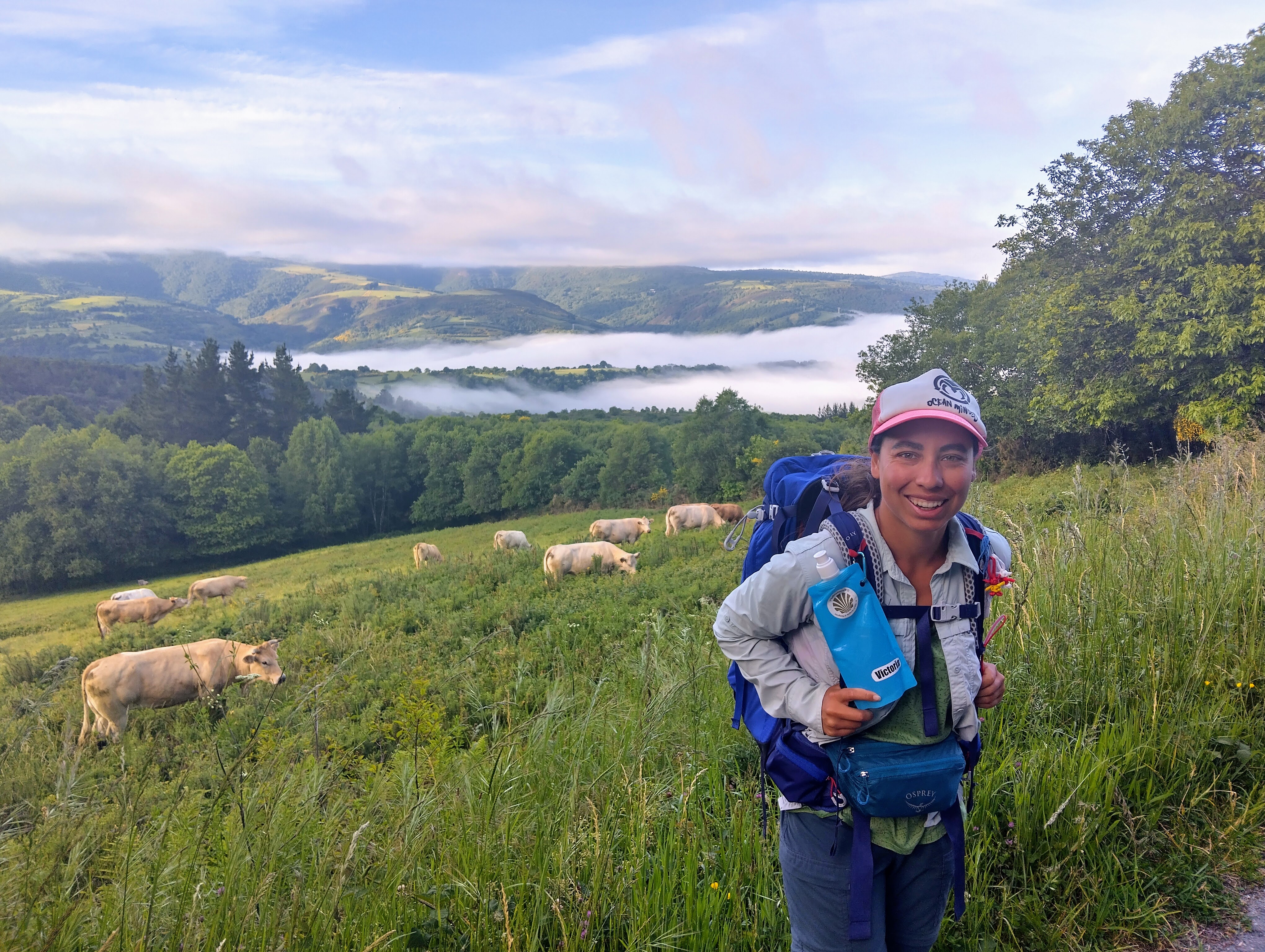
    I still needed more time to rest by the time they were ready to move on. Bob and Mark intended to pass right through Pamplona since they didn’t care for big cities and had been there before anyway. I never saw them again. I didn’t see Alexa or Dana again either, but we kept in touch. They’re both strong, fast hikers who weren’t afraid to take a totally different path if it suited them. I wasn’t alone for long though. Eunseok and Kim Kimmy soon joined me. Kim Kimmy gave me a sheet of moleskin patches for the blister. I tried using one but it didn’t stick for long.

    The rest of the walk through the city outskirts was hard because of the pain in my feet and tedious because it was through a modern looking city. Although I didn’t really know where I was going, I assumed that the cathedral would be the natural stopping place. Eunseok and I could see what we thought was the cathedral or a castle on a hill, and when we arrived we expected to enter a large building like we had in Roncesvalles. What we found instead when we passed through the gate was another city—a city frozen in time, at least to my eyes. The walls we’d seen from a distance were not those of the cathedral but the ancient walls of the fortified city of Pamplona. There were cars and electricity and other modern things, but the buildings were older than anything I’d ever seen. In my mind’s eye the cars transformed into carts and horses, the electric lights became burning lanterns, and the people didn’t don modern clothes made of synthetic fabric but medieval tunics, cloaks, and dresses made of wool and linen. Despite my infatuation with the old city—or perhaps because of it—I managed not to take any pictures within the city walls. Hopefully my words have painted at least a partial picture in your mind.

    Victoria Castillo and friend on the Camino de Santiago.
    Me and Eunseok on the drawbridge into the old city.

    With all this swirling before me, there wasn’t room in my brain to remember that my feet hurt. Eunseok and I veered off the Camino path, which was now marked with metal shells embedded in the cobbled streets, and toured the cathedral. It was beautiful and intricate, though now it blurs together with the other cathedrals I’ve seen since.

    We found a cheap albergue near the cathedral which was marked with a large shell hanging out over the street. The bunk beds were partitioned into alcoves of two. Our bunkmates were both starting their Caminos from Pamplona. One was a Spaniard whose pack weighed a whopping 22 kg. He was already taking things out to mail home. The other was a South Korean man with all brand new gear in matching mint green who hadn’t done any walking before, not even to break in his new shoes. They were both amiable characters, and while neither spoke each other’s language or very much English, they were very keen to have a conversation. It was a four-way roommate match in heaven. The Spaniard told me in Spanish what he wanted to say, I translated into English for Eunseok, he translated into Korean for the Korean man, he replied in Korean, and we went back the other way. The Spaniard was genuinely concerned for the enthusiastic but physically unprepared Korean. He showed him how to adjust the straps on his backpack and gave advice for taking care of his feet. The Korean fellow—I say fellow because it really feels like the right word for him—was simply delighted to be a pilgrim and laughed out loud when he explained that his family didn’t believe that he could do it. He gave each of us some little things; I got a little bar of soap and a net bag to put it in. I felt like I had to give him something in return. I knew he didn’t have a cord to tie his poncho, so I hastily gave him mine. In retrospect, I shouldn’t have done that, because I needed it myself.

    I took a half-decent shower in the co-ed bathroom, which thankfully had the luxury of stall doors that closed, and put on my town clothes, orange toe socks and all. Eunseok and I had arranged to meet Kim Kimmy at the town hall for a walking tour. That’s right, a walking tour, because we hadn’t done enough of that already. We saw the old keys that opened the gate for the running of the bulls, old cannon balls that the neighborhoods used to fight each other in medieval times, and the other major churches. The tour concluded with a little prayer meeting in which everyone introduced themselves and shared their reasons for doing the Camino. There were three guides who translated between Spanish, French, and English in a telephone game fashion like we’d done at the albergue earlier. Afterwards everyone went to mass, which was ok by me because we got to sit for at least some of the time.

    If you thought we couldn’t possibly do any more extra walking that day, you’d be wrong. Eunseok needed a pair of shower shoes and I went with him to help communicate. We found ourselves on the opposite side of the old city center from where we’d come in. The narrow streets and stone four story buildings suddenly gave way to a wide boulevard and modern cement towers, which shook my brain out of its medieval fantasy.

    Once the shower shoes were obtained, it was time for dinner. Up until now on the Camino there had never been more than one option—now there were restaurants everywhere. We had tapas with a nice couple from London and then went for churros con chocolate. They’re different from what you would find in the US or Mexico. The churros are small and teardrop shaped and you dip them in a huge cup of melted chocolate. Halfway through our second order of churros we found ourselves fading fast and realized it was past 9:00 pm. I still hadn’t gotten the hang of the late daylight hours.

    We’d been warned that the albergue doors would be locked at 10:00 pm. This would have been plenty of time if either of us could remember our way back or even the name of the albergue. We wandered the streets in the dimming light looking for something familiar, but it was all familiar—all the streets looked the same. Eventually we found the Camino path and followed it backwards to where we’d first turned off towards the cathedral. At 9:50 we found Michelle outside a restaurant enjoying a glass of wine, and just up the street was the hanging shell that marked our albergue. Some weeks later, I would realize that this night was the only night of my Camino that I was out after dark. I wasn’t worried about missing that little hour of sleep though, because Michelle, Eunseok, and I had decided to stay in Pamplona for a “rest day”.

    Day 5: Pamplona

    The intended rest day wasn’t very restful. With very few exceptions, albergues don’t allow pilgrims to stay more than one night and they require everyone to be out usually by 8:00 or 8:30 am. Eunseok and I got up early and managed to do some rushed laundry, but the dryer wasn’t working properly, so I ended up with wet socks to carry—again.

    Outside, the city was no longer the bustling hive of energy it had been the previous evening. The streets were deserted except for a few delivery men and nothing was open except for pharmacies and the odd café. The Spanish like to stay up late and sleep in, so most businesses don’t open until 10:00 or 11:00 am. Then everyone takes a siesta in the afternoon, so they close again from 2:00 to 4:00 pm. Hustle culture just isn’t a thing.

    Michelle was staying at a different albergue, so we went there to meet her. It was easy to find because it was on the Camino path. There was nothing to do other than wait around in the lobby. I felt a cold coming on, so I left my bag with them and went to find a pharmacy.

    Luckily for me (and most people, I imagine), the pharmacies do have longer hours, except on Sundays. I got some zinc to boost my immune system. On my way back, I saw two people waving to me through a café window. I recognized them from Orisson! It was Fiona and Evannah, a mother and daughter from Australia. Evannah had just graduated from secondary school before they came to walk the Camino together. I went in to say hello and hear about what they’d been up to. They told me about the albergue they’d stayed in the previous night. It was a donativo (payment by donation only) attached to a convent and run by volunteers. Listening to their descriptions of the amazing experience, I immediately felt drawn to stay there myself. It’s not advertised, and as far as I can tell, everyone who stayed there find out about it by word of mouth. My friends gave me a paper map and directions of how to find the convent and the albergue entrance. Apparently, they had mistakenly knocked on the door of the convent itself, which is inhabited by cloistered nuns who interact very little with the outside world. But a nun did answer and pointed them to the albergue door. I can imagine her shyly peeking out, wondering what was going on.

    I said “hasta luego” to Fiona and Evannah and went to tell Eunseok and Michelle that we’d have somewhere nice to sleep that night. They liked the sound of the place too, and besides we’d overstayed our welcome in that lobby and were getting kicked out. Check-in at the convent wouldn’t be until 1:00 pm, so there was plenty of time to kill. While Michelle took care of some personal errands, Eunseok and I explored the city walls, a museum about the festival of the running of the bulls, and the pilgrim office. The pilgrim office was showing a really cool video about Pamplona. One of the things I learned was that, for centuries in Pamplona, it was illegal to build outside of the fortified city walls. Before the law was changed, they built up instead of out. That explained the dramatic difference between the old city center and the more modern outer city. I told Eunseok about it later because he fell asleep through the video.

    Victoria Castillo on the Camino de Santiago.
    Eunseok took this photo of me looking out over the city walls.

    At check-in time, we met Michelle at the convent. There was another pilgrim there already, Johnny from New Jersey, and we were all given the grand tour together by the volunteers. We learned that the volunteers stay for two weeks before either moving to another donativo, continuing their own Caminos, or going home. Our volunteers were two amazing ladies named Rosa and Margaret, from Florida and Australia, respectively. They’d each done about 25 Caminos in the last 10-12 years! The place itself was also absolutely lovely. I was even able to hang my socks to dry in front of a lovely window with a nice view of tree leaves and flowers, all of which I could see from my bed.

    Victoria Castillo an hospitaleras in Pamplona donativo albergue on the Camino de Santiago.
    Margaret, Me, Rosa

    Once we were settled in, I basically dragged everyone, including Johnny, to the restaurant that Ernest Hemmingway famously used to hang out in. I’m not a huge Hemmingway enthusiast (more of a Jane Austen kind of gal), but I’d read a few of his books. Johnny had read more and actually remembered the plots, whereas I could barely remember the titles. Luckily for me there’s no quiz to get into the restaurant. The place was much larger than I expected, but exactly as art deco. The food was overpriced and not good; I had a steak which was very overcooked.

    Then everyone went separate ways to run errands or rest. My dad and sister had specifically requested that I pick them up some botas, or wineskins. After a lot of searching, I found them in a store on the street where the bulls run. On the way back I got lost again. I felt better about it later when Eunseok told me he got lost too.

    The vibe back at the donativo was amazing. More pilgrims had arrived and were relaxing. They don’t have Wi-Fi, so pilgrims are forced to resort to old-fashioned entertainment such as talking to one another, or playing live music on the piano or guitar in the common area. I cozied up with some soothing apple tea made by Rosa using apples from the nun’s orchard, and listened to Anastasia from Berlin play the piano beautifully. She’s a legitimate concert pianist and a really cool person.

    Victoria Castillo and friend on the Camino de Santiago.
    Me and Anastasia

    Rosa and Margaret cooked a delicious dinner using more of the apples that the nuns gave them. The comradery around the table was fun and energizing. Eunseok got another new name: Santiago, which is Spanish for Jacob.

    After dinner there was a special treat. We were led down to a private chapel that is only open to pilgrims who stay in the albergue. I didn’t expect much, maybe a room with a little altar and candles. We went downstairs to the basement and—holy cow! (Yes, I did write “holy cow” in my journal.) It was a room as large as the churches that I’d toured with a huge Baroque altarpiece that was more intricate than the cathedral. I think the unexpectedness of finding something so elaborate in a dark basement that’s closed to the public made it more sensational. Nothing that one goes to see is ever as beautiful as something that one finds by accident.

    Rosa read a statement from a priest who is usually there and we sat for 20 minutes of silent contemplation. I found myself thinking about the limitations of peoples’ perceptions of each other. We meet someone and decide what kind of person they are based on very little information and they do the same with us, but with limited knowledge of each other it’s impossible to get a complete idea of who someone really is. I wished I could see myself from the outside to see how I am perceived and why it often seems so different from who I think I am and who I want to be. Tears rolled down my cheeks. When we went back upstairs everyone went to their own spaces for a while. I asked Rosa for some more tea (I couldn’t get enough of her apple tea) and sat in the empty common area. Rosa saw that something was bothering me and sat with me. She asked me about myself and I couldn’t help but cry again. Then she did something that most people don’t do. She talked to me without trying to tell me what to do. She told me about “the tap”, a concept she’d read about. It’s when someone metaphorically taps you on the shoulder with an opportunity for something you never would have considered otherwise. I felt a little better.

    After a while the others came back to hang out in the common area. Jack from London taught me a little tune on the piano which was fun. When Anastasia came back she played a beautiful song for everyone. It got surprisingly late, and even though we were all exhausted, we were enjoying spending time together too much to want to go to bed. Rosa put her foot down for bedtime of course. I went to sleep thankful to be in such a beautiful place and felt that I would think a lot about who I want to be when I started walking again tomorrow.

  • Camino de Santiago – Day 3: Roncesvalles to Zubiri

    Day 3: Roncesvalles → Zubiri (21.34 km)

    I awakened to the low sound of monks singing exactly the kind of music you would expect monks to sing. At first I couldn’t tell if it was a recording or the sound of real live monks. I imagined monks in robes with shaved heads singing their morning prayers and the sound wafting through the corridors and reverberating through the ducts. Actually, it was a recording used to gently warn us before the lights came on and it was time to get out of the monastery so that they could clean and prepare for the next night’s wave of pilgrims.

    Breakfast was mostly bread and jam again plus some yummy little cakes. I met up with Eunseok, Michelle, and Kim Kimmy and we all set out together. It rained during the beginning of the morning, which made the path muddy, but the terrain wasn’t steep.

    Victoria Castillo and friends on the Camino de Santiago.

    I have Kim Kimmy to thank for a lot of the good photos. Most of mine are awkward selfies, which I’m sorry to say didn’t improve much in quality the more I took.

    We walked at a leisurely pace, stopping to look at the farm animals. We watched a dog herd cows from a barn to a nearby paddock. It was impressive. There was a person there, but all they had to do was open and close the gate. The dog did everything else without instruction, keeping the cows in line and quickly responding to any that tried to stray or lagged too far behind. There were also many paddocks with horses and adorable foals. A big discussion about the difference between a foal and a colt ensued. We were like kids at the zoo.

    The trail passed through a couple of cute little towns. At the second one, there was a great cafe where we found many other friends. Alexa was having fresas con zumo de naranja and I had to try some for myself. It was fantastic! One of my favorite things about the Camino/Spain is that there is fresh orange juice available in almost every cafe/bar. Most of the time they squeeze it right in front of you with a really cool juicer that even cuts the oranges automatically.

    Victoria Castillo and friend on the Camino de Santiago.
    Victoria Castillo and friends on the Camino de Santiago.
    Michelle, Eunseok, Alexa, Troy, Geraldine, Teresa, Archer, Me, Kim Kimmy, Sarah

    By the time we arrived at the next town, which I have since looked up to learn it is called Viscarret-Guerendiain (good luck pronouncing that), it was lunch time. At the entrance to the town there was a sign strongly encouraging everyone to go to the second bar, so we did. It was a pizza place called El Dragón Peregrino. I’m not what you might call a “foody”, but I still dream about their four cheese pizza. It’s literally, no exaggeration, the best pizza I’ve ever had. (Keep in mind I’ve never been to Italy.) Every pizza I’ve had since then has been a disappointment.

    Victoria Castillo and friend on the Camino de Santiago.

    It was a good thing we fueled ourselves up with pizza because the trail got more difficult after that. We went uphill and then into the forest where it was extremely muddy. My shoes and socks got soggy. I changed my socks which felt great but didn’t last because the mud kept going for miles—I mean kilometers. I found myself a new staff to help me get over the mud puddles without falling in.

    Here’s Alexa enjoying the least muddy part of the trail.

    Then came the treacherous downhill. At this point Michelle shot ahead. She got such good momentum that we didn’t see her again until Zubiri. I don’t know how she could go so fast because the descent was gnarly. As she disappeared in the distance, I remember Eunseok remarking, with deep earnestness in his voice and expression, “That is a strong woman.” A little while later, we found her umbrella mysteriously hanging from a tree and took turns carrying it.

    The thing that makes this downshill section so treacherous isn’t just the mud and the steep decline—it’s also the Dragon’s Teeth. Photographs do not do justice to the uneven rows of rocks sticking up from the earth. A certain member of the group (who shall remain nameless to preserve her/his dignity) expressed a melodramatic desire to give up, but at this point the only other options were hiking all the way back or spending the night in the mud. Needless to say everyone kept moving forward.

    Victoria Castillo on the Camino de Santiago.

    When we finally arrived in Zubiri we found Michelle waiting for us. She had been so completely in the zone going down the Dragon’s Teeth that she was surprised when we returned her umbrella to her—she hadn’t even noticed it was gone. Apparently she had gotten tangled in a tree at one point which is probably how it ended up hanging without a single drop of mud on it.

    Victoria Castillo and friends on the Camino de Santiago.
    Someone—I think it was Dana—took this photo from the balcony of their albergue.
    Victoria Castillo and friends on the Camino de Santiago.

    Alexa had a reservation in the next town, which meant another 5 km of walking for her. I wouldn’t have done it, but she’s a hardcore hiker. She already had plans to take a detour from the Camino later on to peak an extra mountain. I strongly suspect that she could have sped past us long before this point if she had wanted to, but I’m glad she decided to stick with us through the muddy Dragon’s Teeth. As she set off along the river, the rest of us wished her good luck and a flat trail and went to find our own beds for the night.

    We started at the first albergue in town which was full. They pointed us to the next one which was also full. Rinse and repeat, and four albergues later, we ended up at the municipal. Municipal albergues are usually the cheapest option and you get what you pay for. The woman at the desk was rude, the bunk beds rickety, and the bathrooms were inadequate for the number of people. But, hey, anything is better than being on a muddy trail in the dark woods at night.

    I put my disposable sheets on my top bunk and took another cold shower in which I had to press the button every 5 seconds. There was a restaurant only a block or so away, which was the maximum distance anyone was willing to walk for food at this point. We had a mediocre pilgrim meal of steak, pasta, and flan, if I remember correctly.
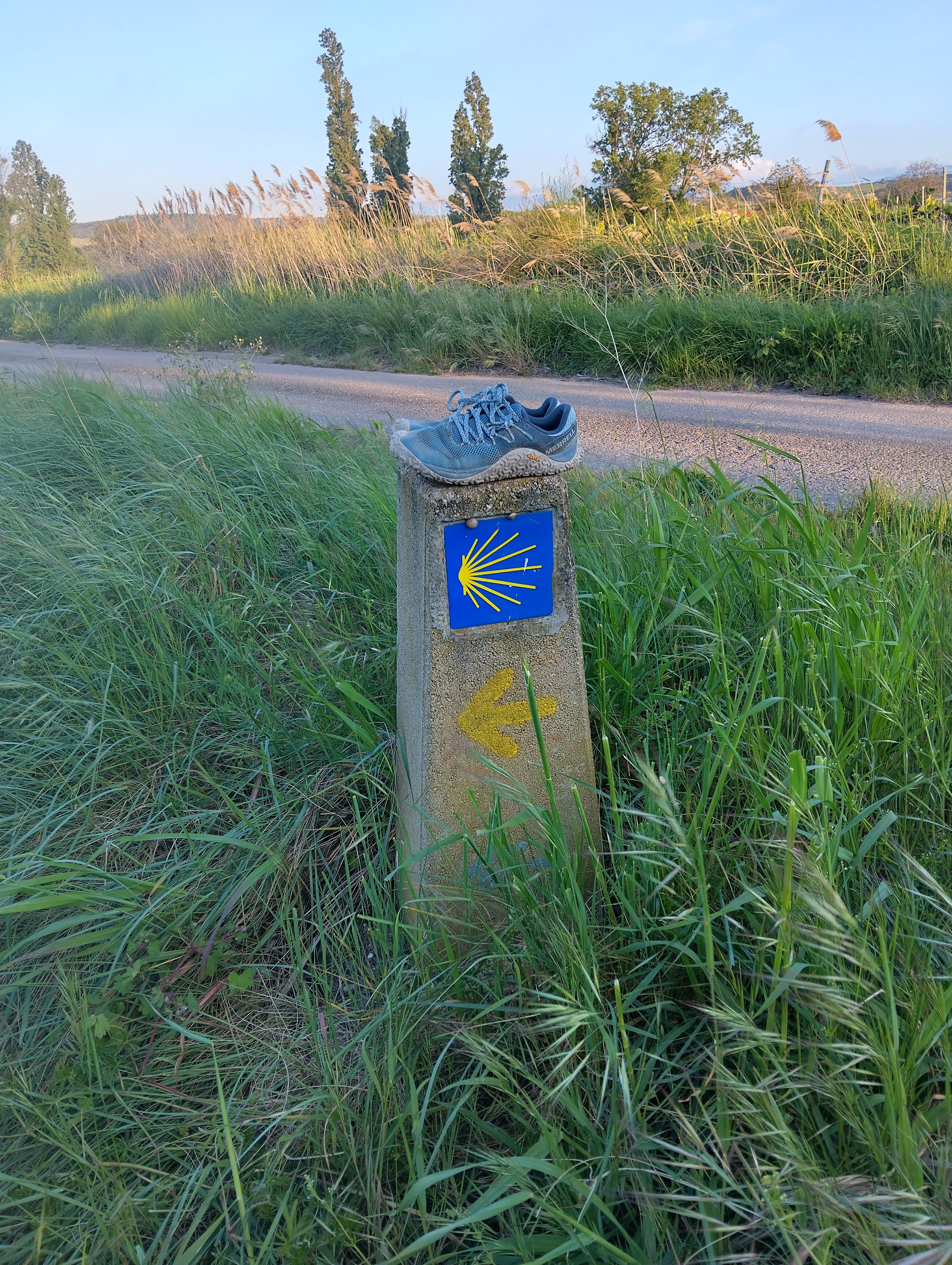
    This is when I first really noticed how late the sun stays up in northern Spain. I’m used to living closer to the equator where the latest sunset is 8 pm on the summer solstice. This was still only April but the sun was still up at 9 pm. My brain was a little confused by the light, but I was so tired that it didn’t prevent me from (finally) getting a solid night’s sleep.