
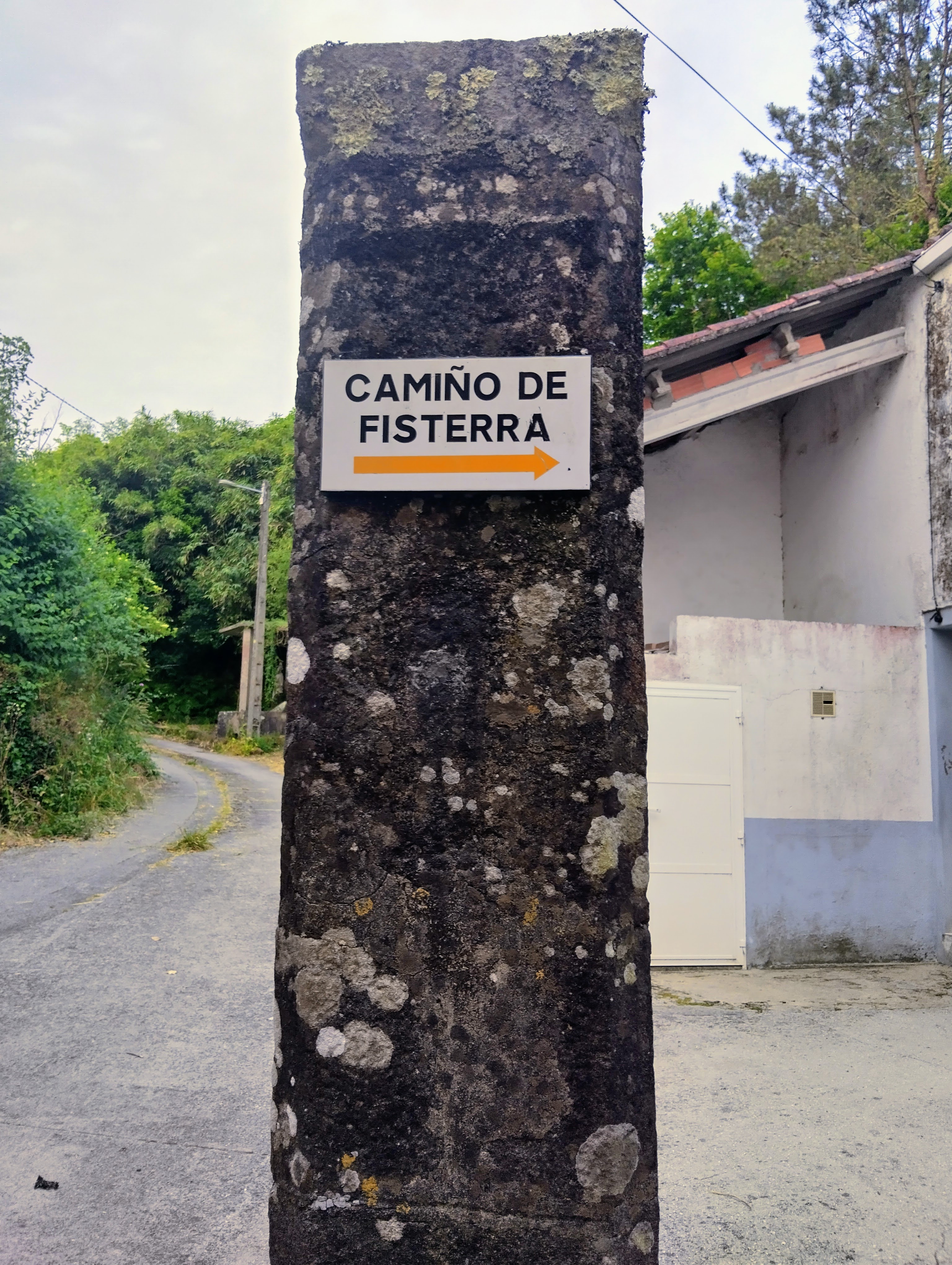
The Camino Fisterra is technically a pilgrimage of its own. I decided to keep numbering my days instead of starting over though, because for me it was all still part of one journey. Fisterra is the name of the town and Finisterre is the peninsula it stands on, enticingly known as “the end of the world”.
Day 44: Santiago de Compostela → Negreira (20.47 km)
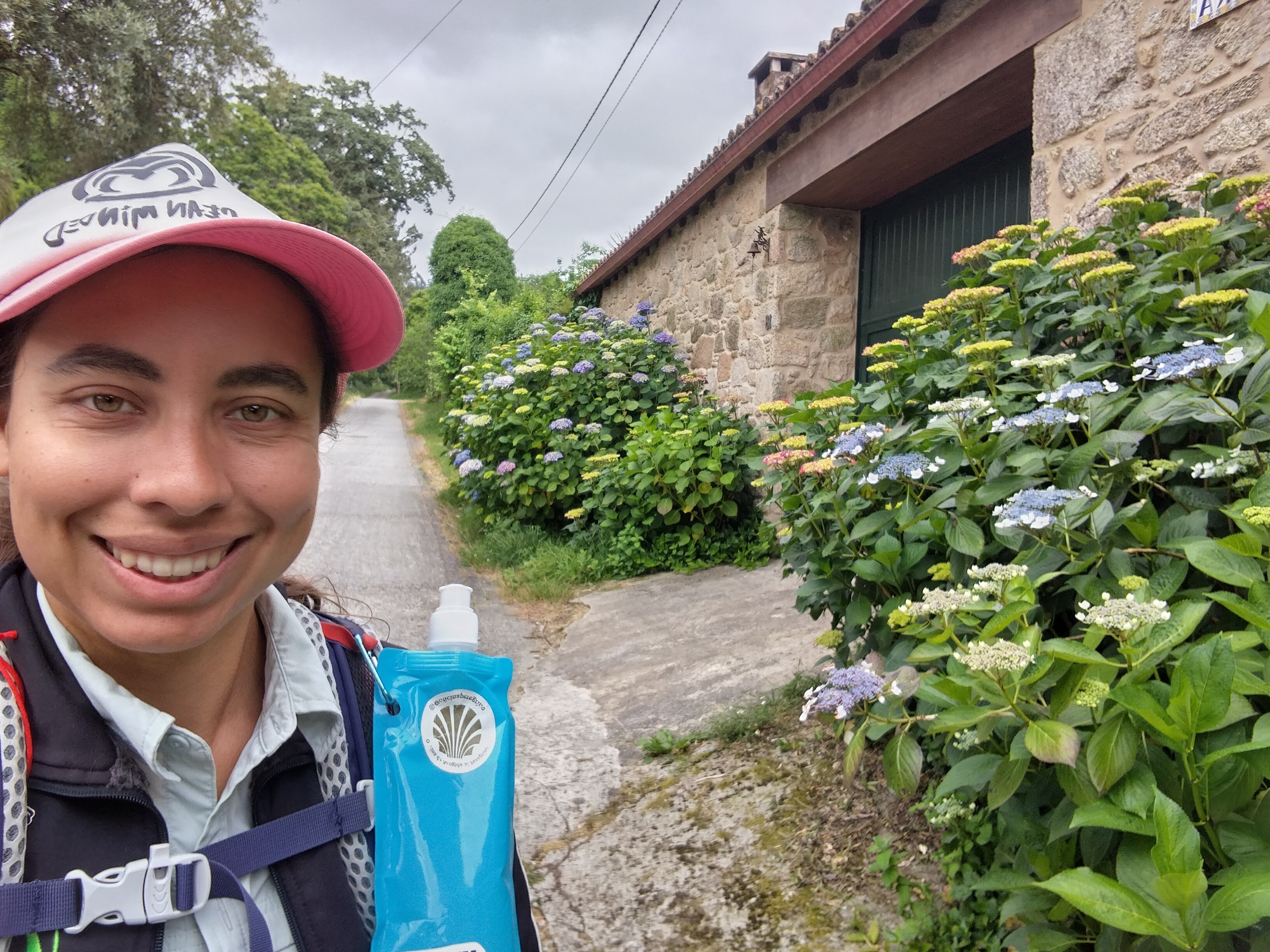
It felt good leaving Santiago in the morning despite my pack being a little heavier with the souvenirs from Pamplona. The terrain alternated between rural neighborhoods full of lovely flowers and beautiful mossy forests. There were very few pilgrims which was a relaxing change from the bustle of the city. I didn’t feel lonely like I had feared and instead enjoyed the solitude and the time to admire the things around me without having to talk. At one point I saw what I think was a wild hedgehog.
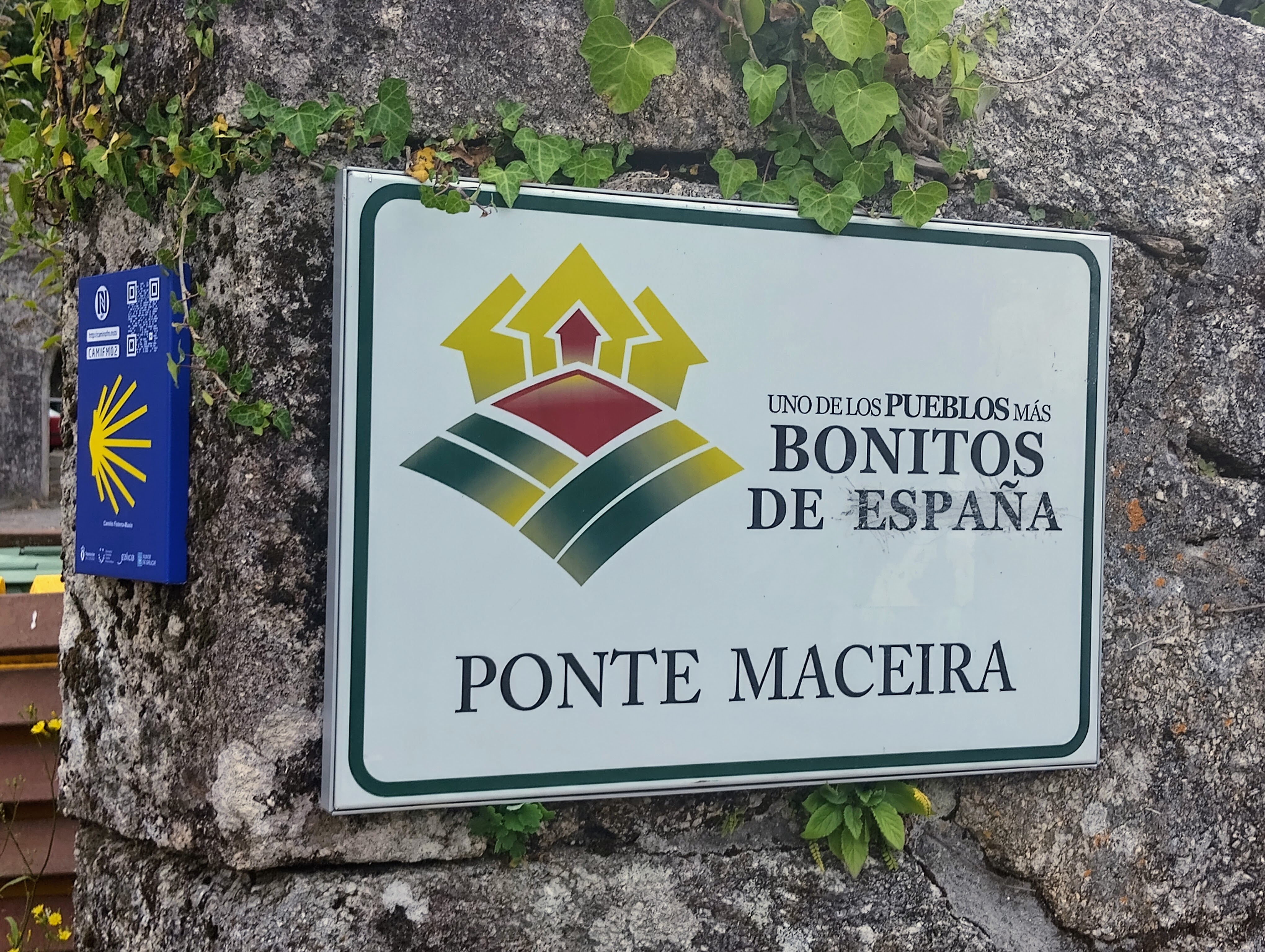
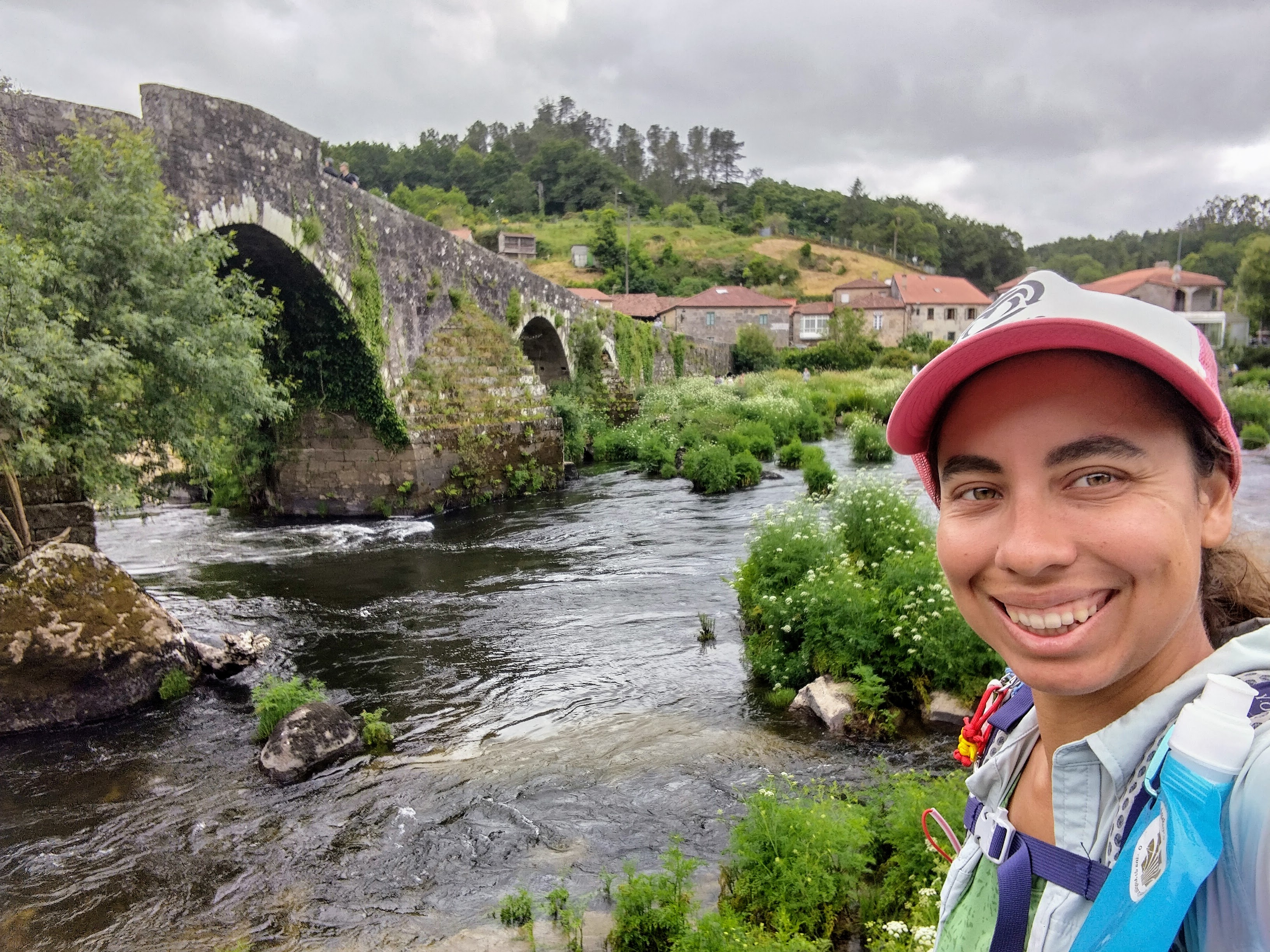
I passed through an absolutely gorgeous town that I would have stayed in just to look at longer even though it would have been an early stop, but, alas, there was not a single albergue there.
The municipal albergue where I ended up was inconveniently located uphill from the town where the only food option was the supermarket. I ate half a box of digestive biscuits in the park for lunch and unsurprisingly didn’t feel well afterward. All of the plates and silverware had apparently been removed from the albergue kitchen during covid and never returned, so dinner was a microwave lasagna on paper towels eaten with a plastic fork.
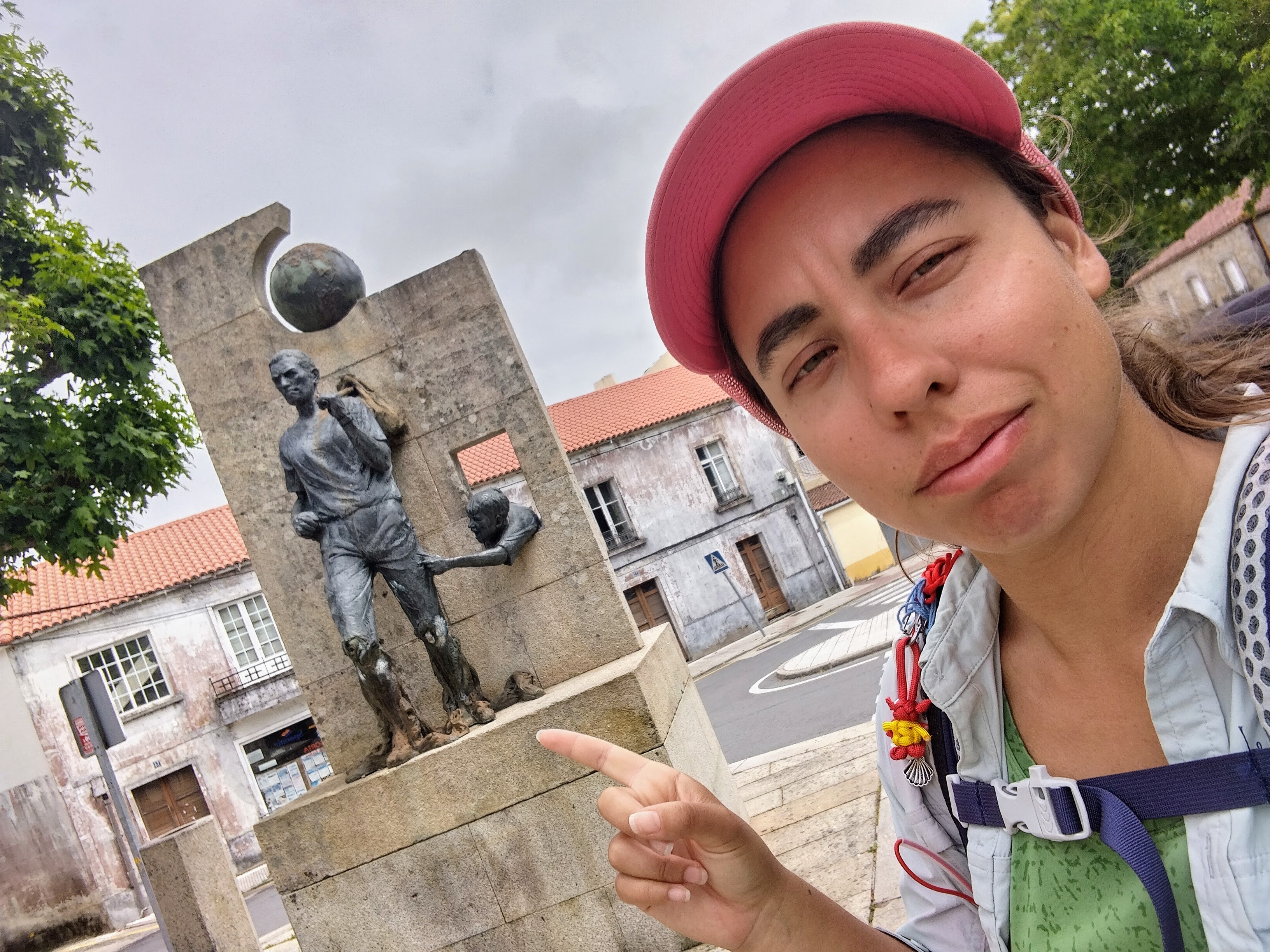
I moved beds because the “lion” (so-named by the Galician pilgrims) was snoring next to me, only to find myself next to another lion. C’est la vie.
Day 45: Negreira → Santa Mariña (21.28 km)
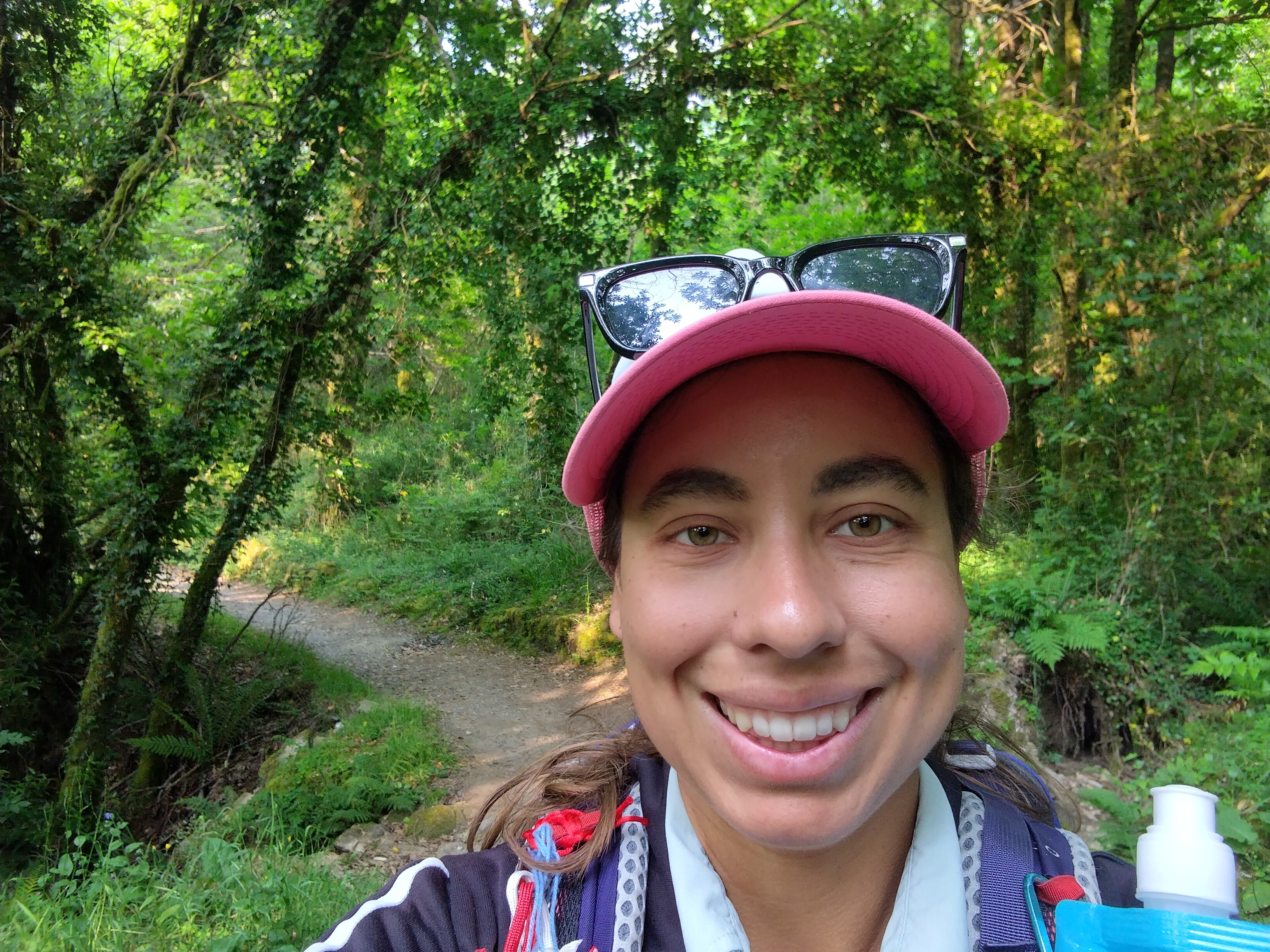
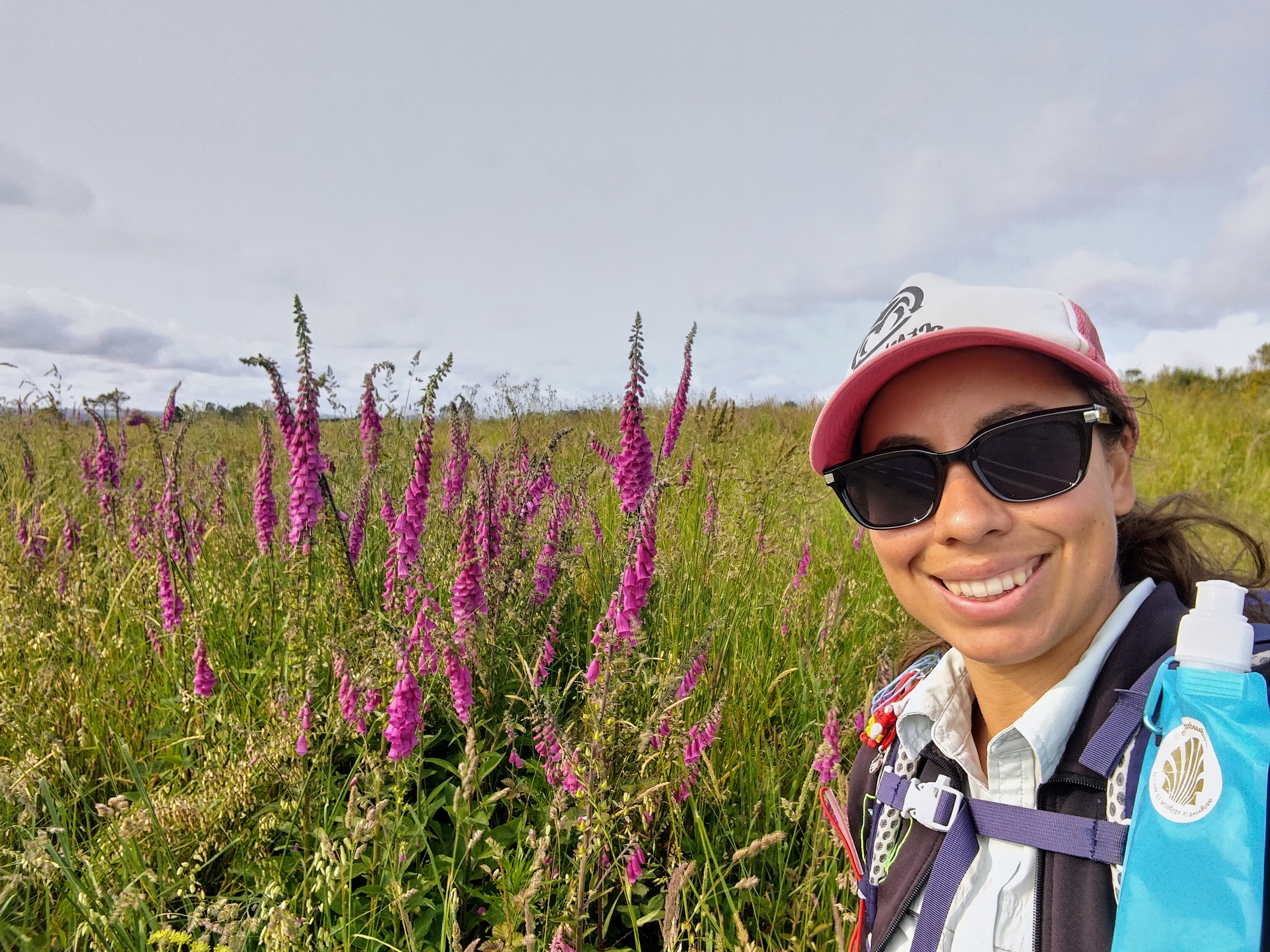
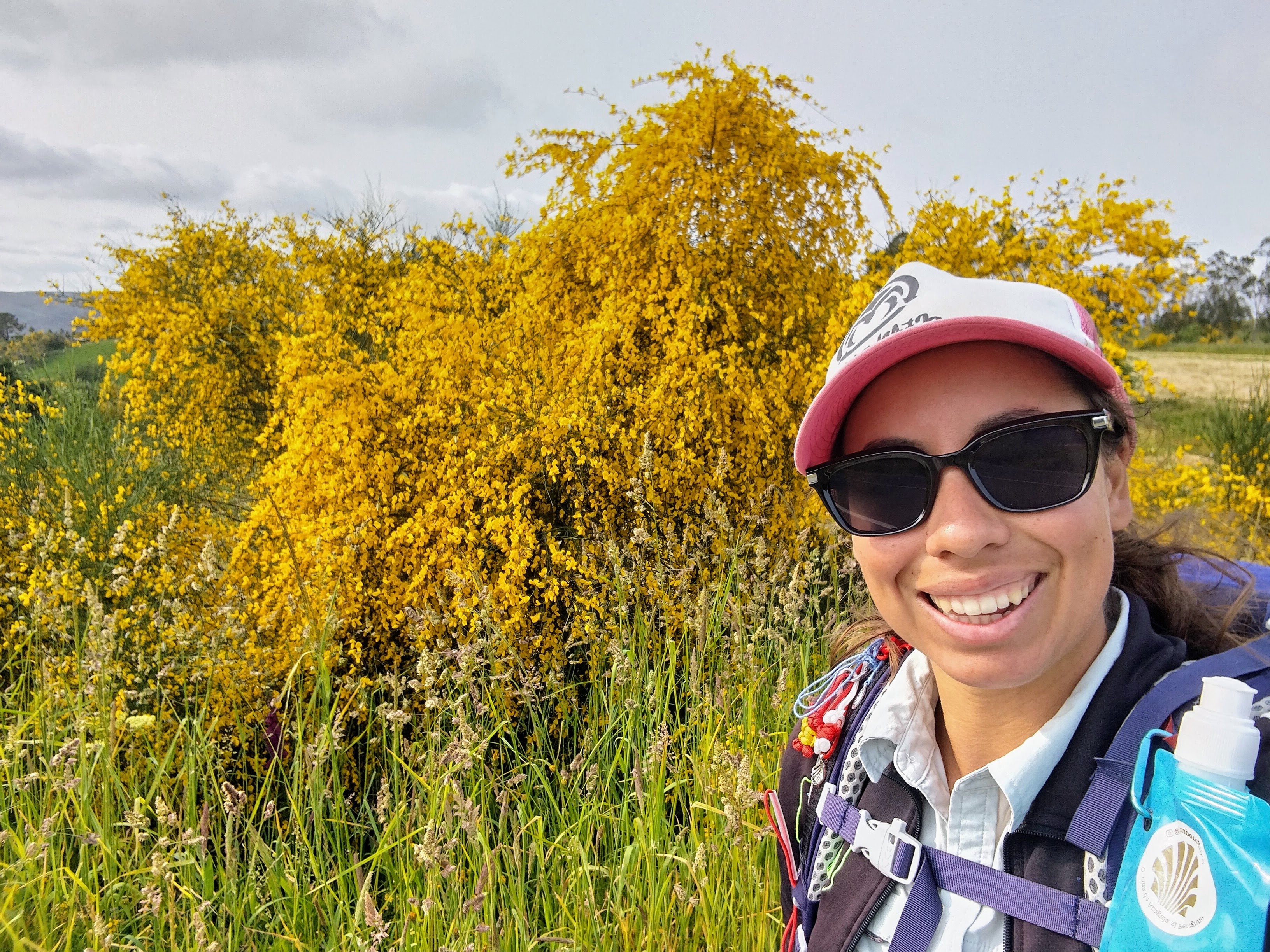
It was a pretty, quiet walk through forests and farms with few other pilgrims. My allergies had been persisting since I’d entered Galicia. Below are evidence photos of me with several suspects.
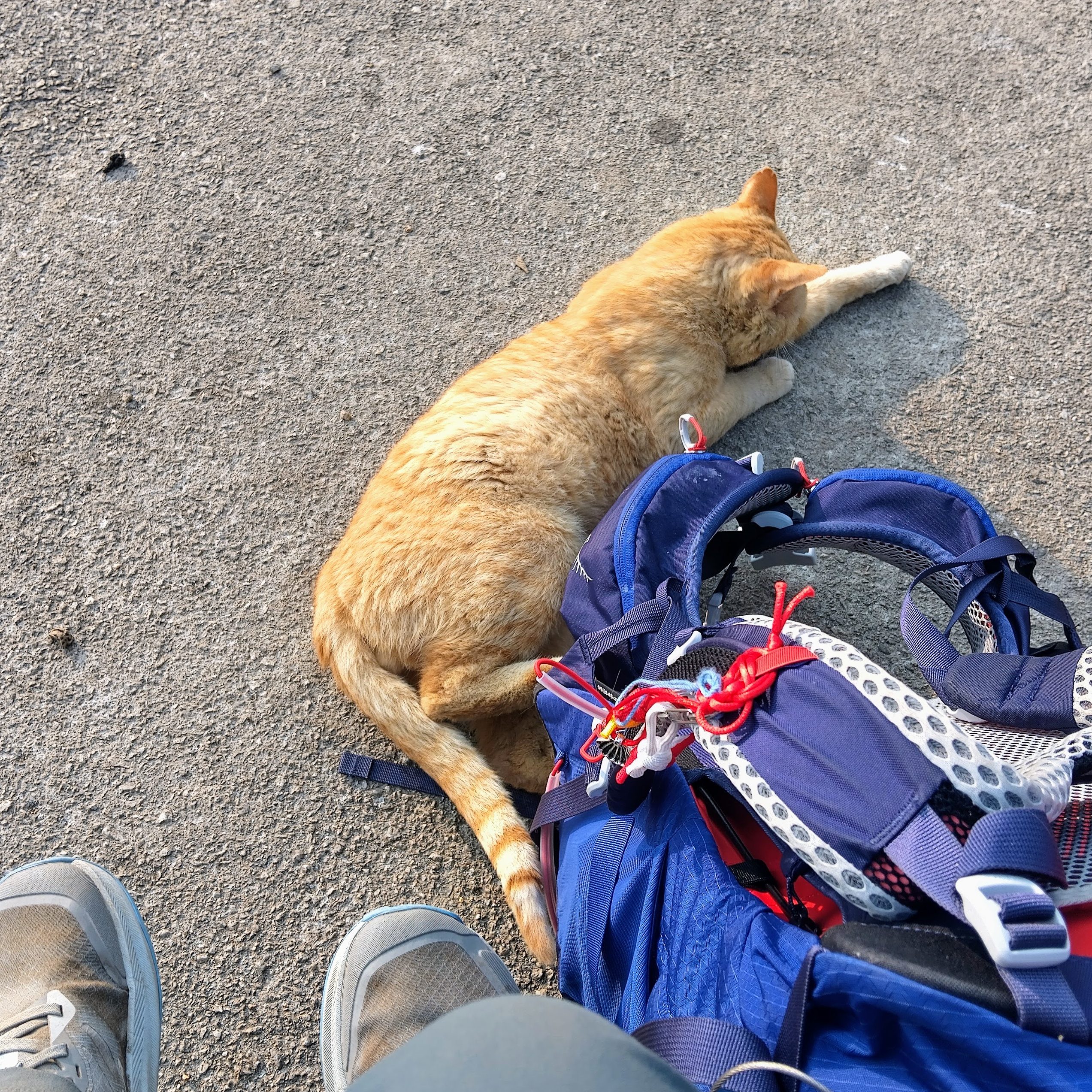
There was nowhere to stop for food, but luckily I still had the other half of my box of biscuits. When I stopped to snack, a new friend tried to hitch a ride in my backpack.
Between the pollen and the cat, my sniffles were so bad that when I entered the albergue the hospitalero thought I was crying. He was relieved to find out that I was just allergic to his country.
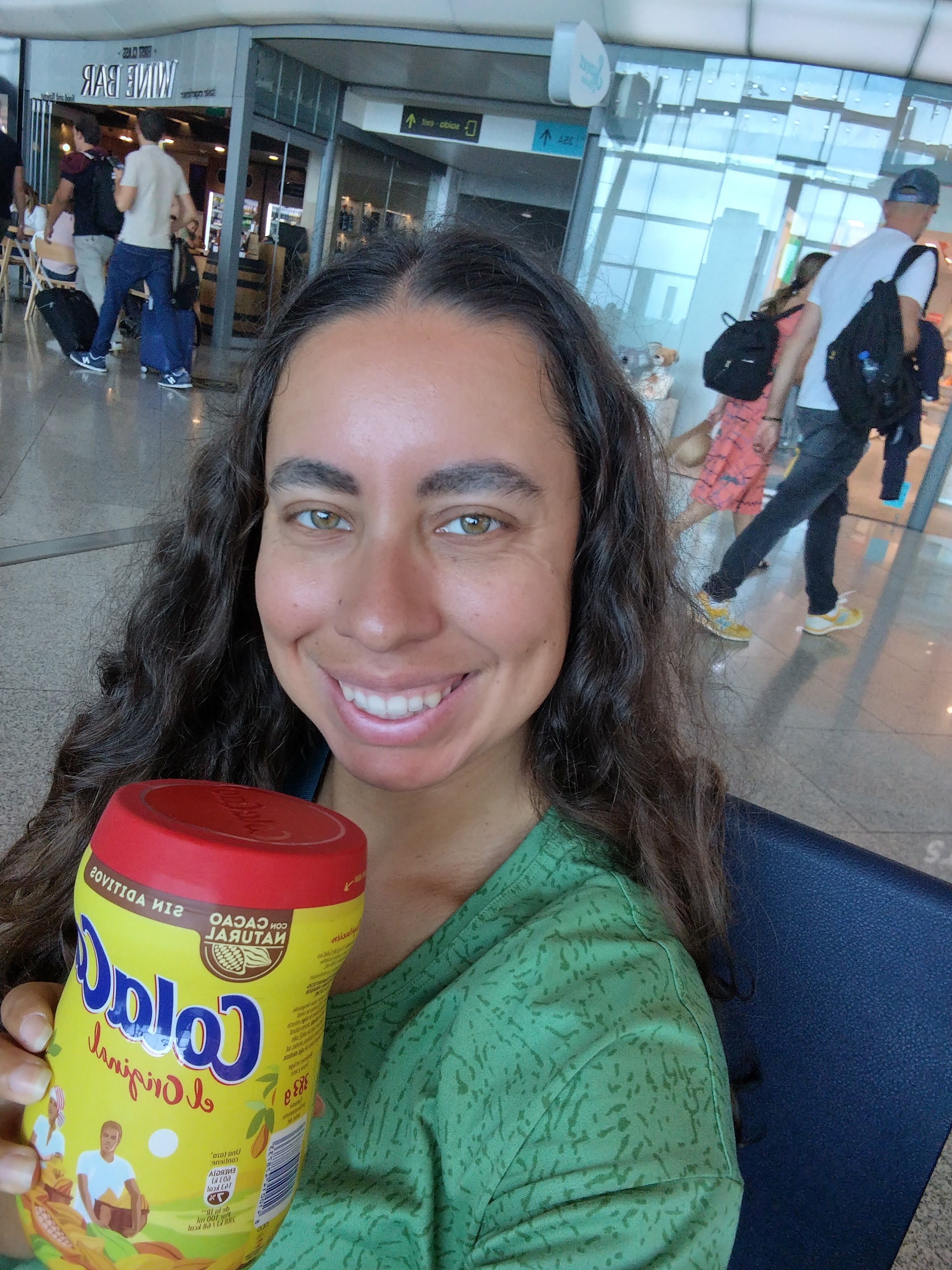
As I was nursing a ColaCao in the café, Thomas from Sweden walked in. We hadn’t seen each other since the meseta. At the time he was sure we would see each other again, but he must have thought he’d been wrong because he seemed very surprised to see me. He was walking back from Fisterra with his girlfriend and they warned me about some particularly steep hills coming up.
There was a small pilgrim dinner and the woman who tried to steal my bed in Santiago was there…awkward.
Day 46: Santa Mariña → Cee (30.9 km)
I got up before anyone else and set off to tackle the hills. Thomas was awake but apparently in no hurry to get ready. He waved goodbye as I went out.
As I walked up the steep farmland in the mist, I had one of the strangest experiences—if I can even call it an experience, the word seems insufficient somehow—of my life, and one which I have thought of every day since. I was thinking, as I often did on the Camino, about identity, and it occurred to me (in more flowing, elegant words than I can remember now) that an individual person is many things, has many attributes, that many labels can be applied to them, but that no one, not even the person themself, ever sees the whole picture. I remembered the famous speech from Shakespeare’s As You Like It:
“All the world’s a stage,
And all the men and women merely players;
They have their exits and their entrances;
And one man in his time plays many parts…”
The speech goes on to describe the stages of a man’s life with respect to age, but as I walked I forgot all that and instead presumptuously went about finishing the bard’s idea myself. My added caveat was this: that most of us are bad actors. We walk out onto the stage that is the world and try to play a part, but perform it so badly that the audience is forced to guess what the role is supposed to be, with the conclusion that every one guesses something different and the character is never understood. At the very least it was how I felt. What followed happened more in feeling than in conceptualized thought, but it is impossible to describe anything without concepts. If every identity that I adopted was merely a role, who was the actor underneath? If every distinguishable feature were a costume that could be stripped away, what was the creature underneath? Every possible aspect of myself that could be labeled fell off of me like ill-fitting clothing. Engineer, pilot, diver, sister, daughter, Hispanic, female, etc., all the way down to the fundamental aspects of my human existence until I was left with almost, but not quite, nothing. This almost nothing is me but cannot be described by any attribute that describes me. It has a form that can interact with the world, but cannot be seen unless it dons a costume, mask, or make-up, like H.G. Well’s Invisible Man. This might sound familiar if you have ever heard of the phenomenon of experience known as ego death. Only I had heard that people feel a sense of relief or even bliss in that experience, whereas I felt a cosmic terror at this glimpse of the ineffable nature of my own being. I’ve thought of it every day since.
I didn’t spend the entire walking day plunged in existential angst though, because there was an important mission ahead. If you’ve been checking the daily kilometers, you might have noticed that this was the longest walking day of my Camino. That’s because there was a 15 km stretch with no possible stops. I could have stopped before then and split it into two 15 km days, but I was too excited about getting to the ocean. After a final stop for Aquarius and bathroom, I set off into the little coastal mountains and had fun.
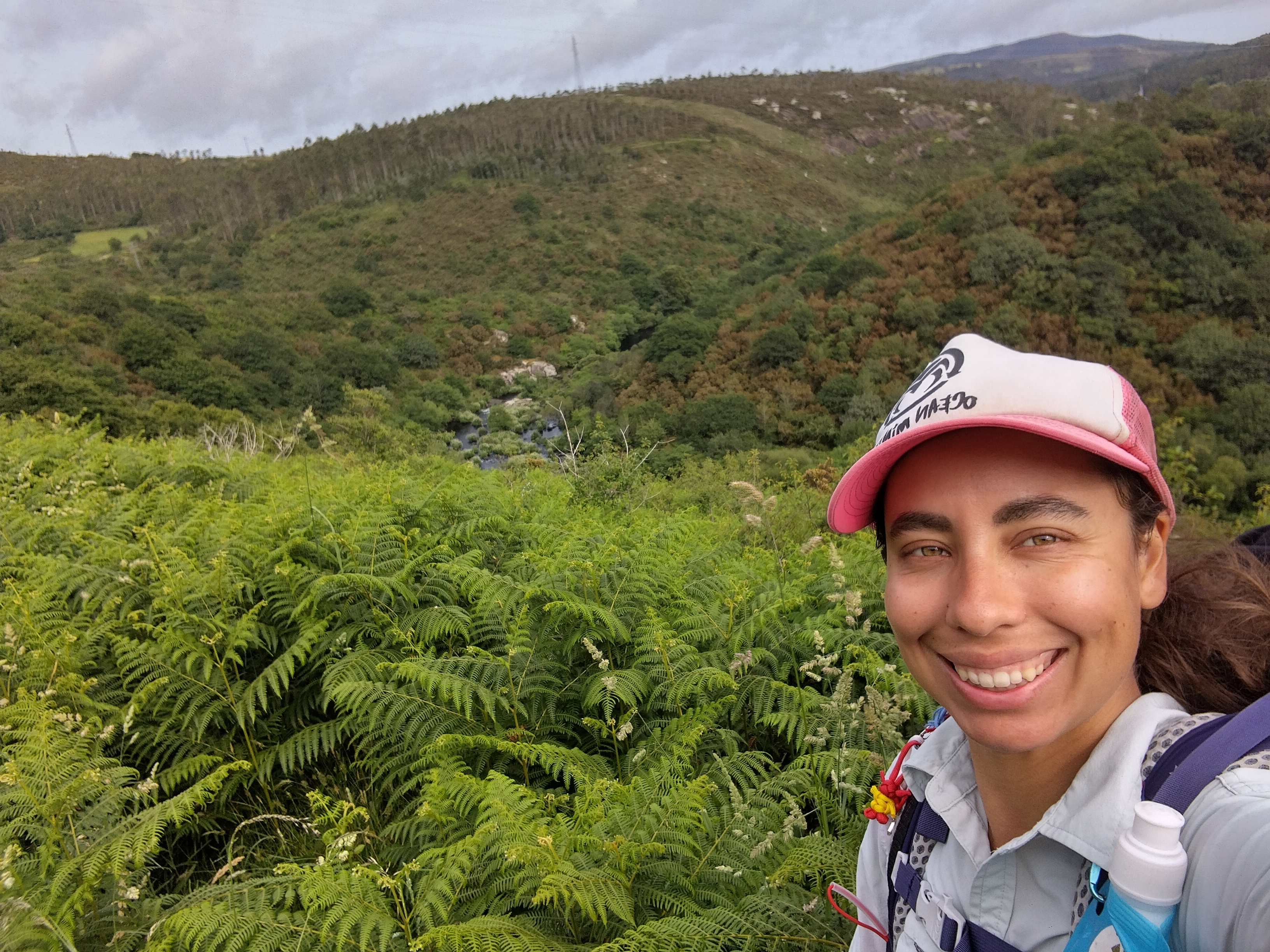
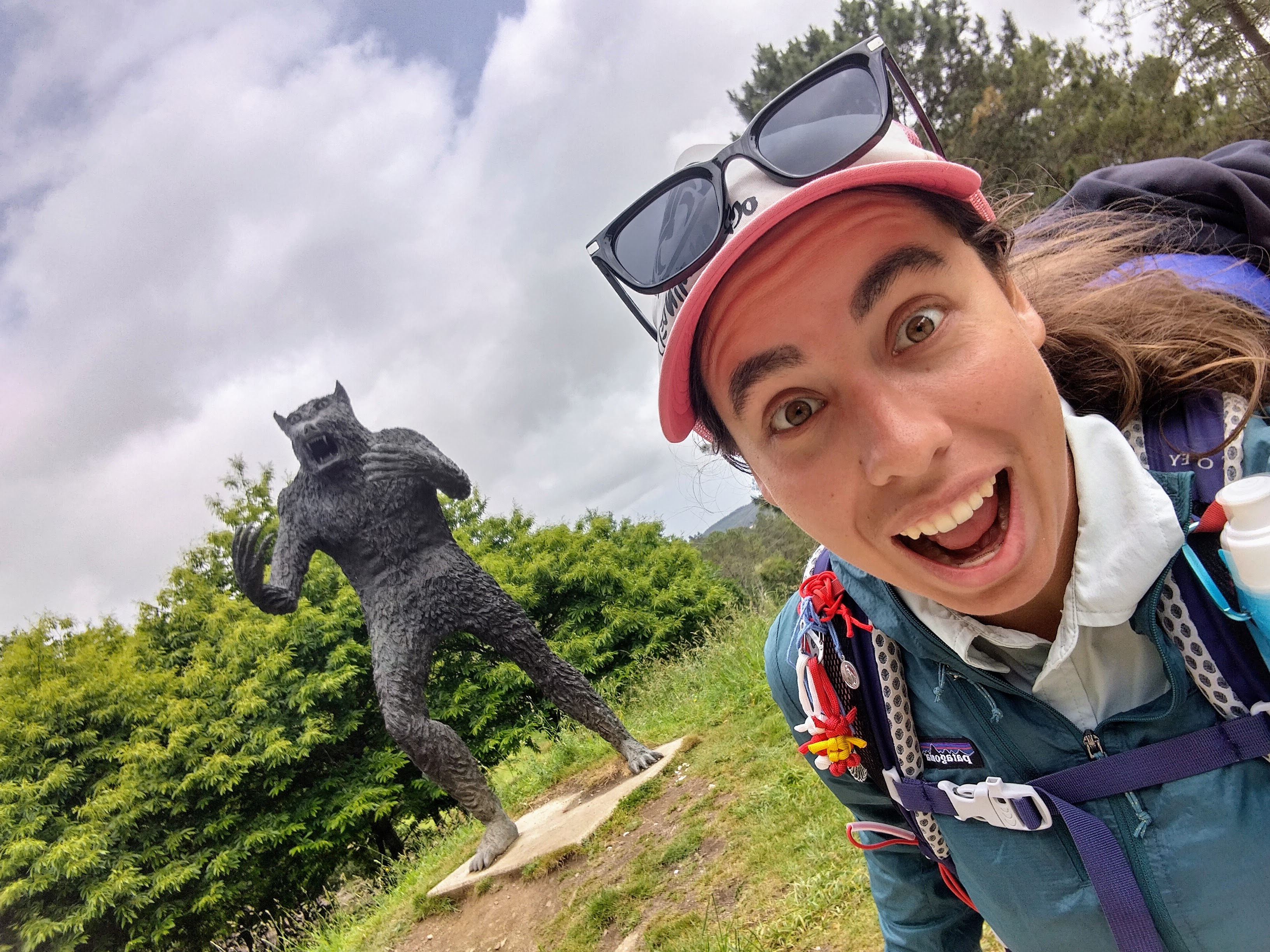
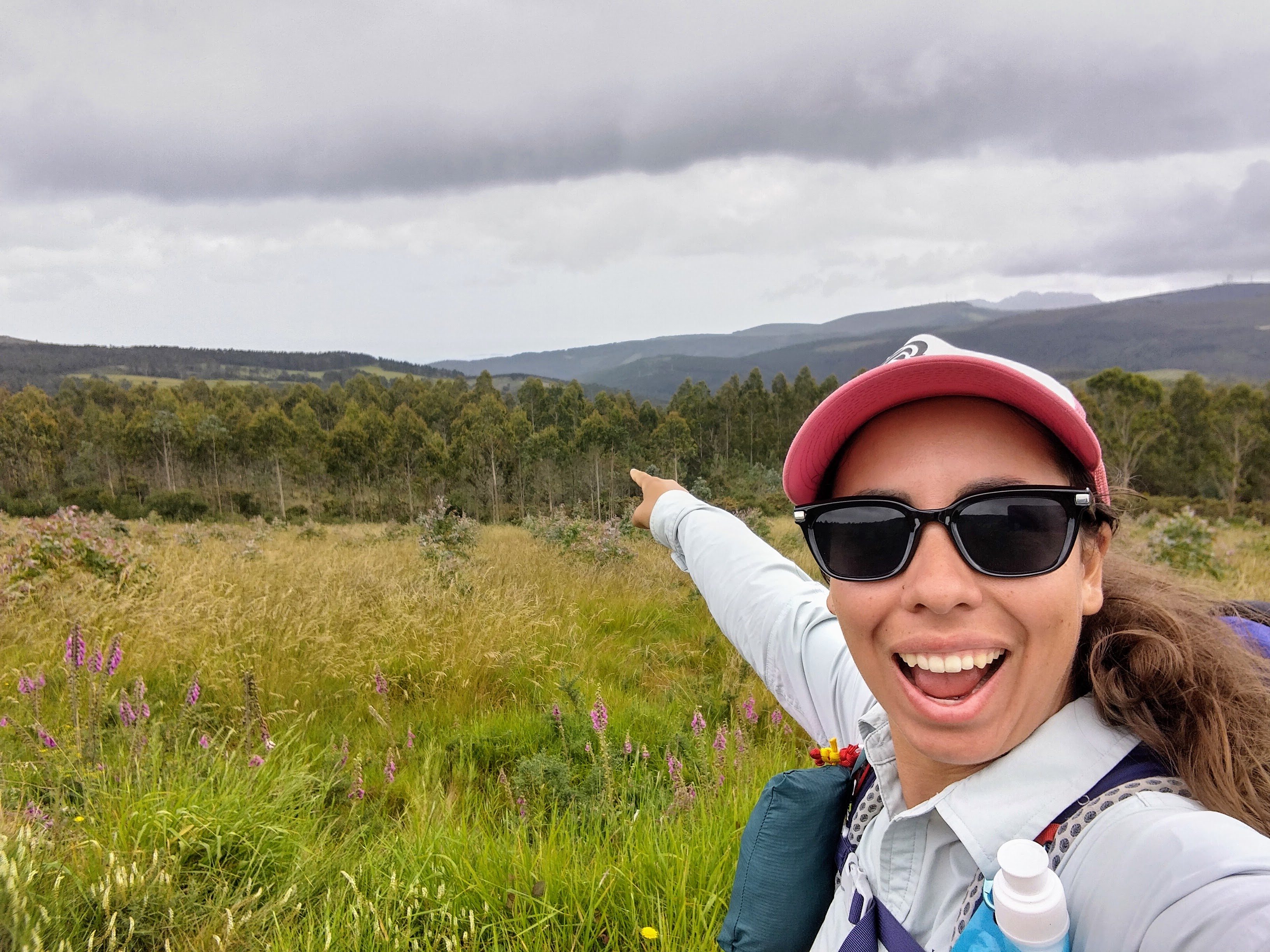
When I finally shuffled into the seaside town of Cee, my feet were in immense pain and I’d finally run out of cash. My ATM card wasn’t working, so it was a frustrating afternoon hobbling back and forth between the ATM in the plaza and the albergue to make Wi-Fi calls to my bank to solve the problem. Once that was figured out all I had to deal with were the double blisters on my toes. Compared to problems with the bank, blisters honestly didn’t bother me at all.
Unlike the night before arriving in Santiago, I was finally looking forward to being done walking. At dinner I made the mistake of stereotyping men as the culprits when it comes to snoring and I was justly rewarded with a restless night next to a woman who could have been an Olympic champion at it. That’s either karma or the curse of the night before finishing a Camino.
Day 47: Cee → Faro de Fisterra (14.85 km)
I left the albergue before sunrise. It was drizzling but not enough to make me bother to putt on my poncho. I stopped early in town for the best napolitana con chocolate that I’d had in a while, then resorted to painkillers to get my legs over the rest of the hard pavement. It was a relief to reach the soft-floored forest.
Eventually the sun came out and the forest met up with the ocean. The trail ran along a cliff high above the water. There was a little beach down below that I just couldn’t resist. I walked down, pushing my way through overgrown ferns to a secluded area, took off my damp sandy clothes and went for a dip in my birthday suit. I could see other pilgrims pass by up above but luckily none of them came down to join me.
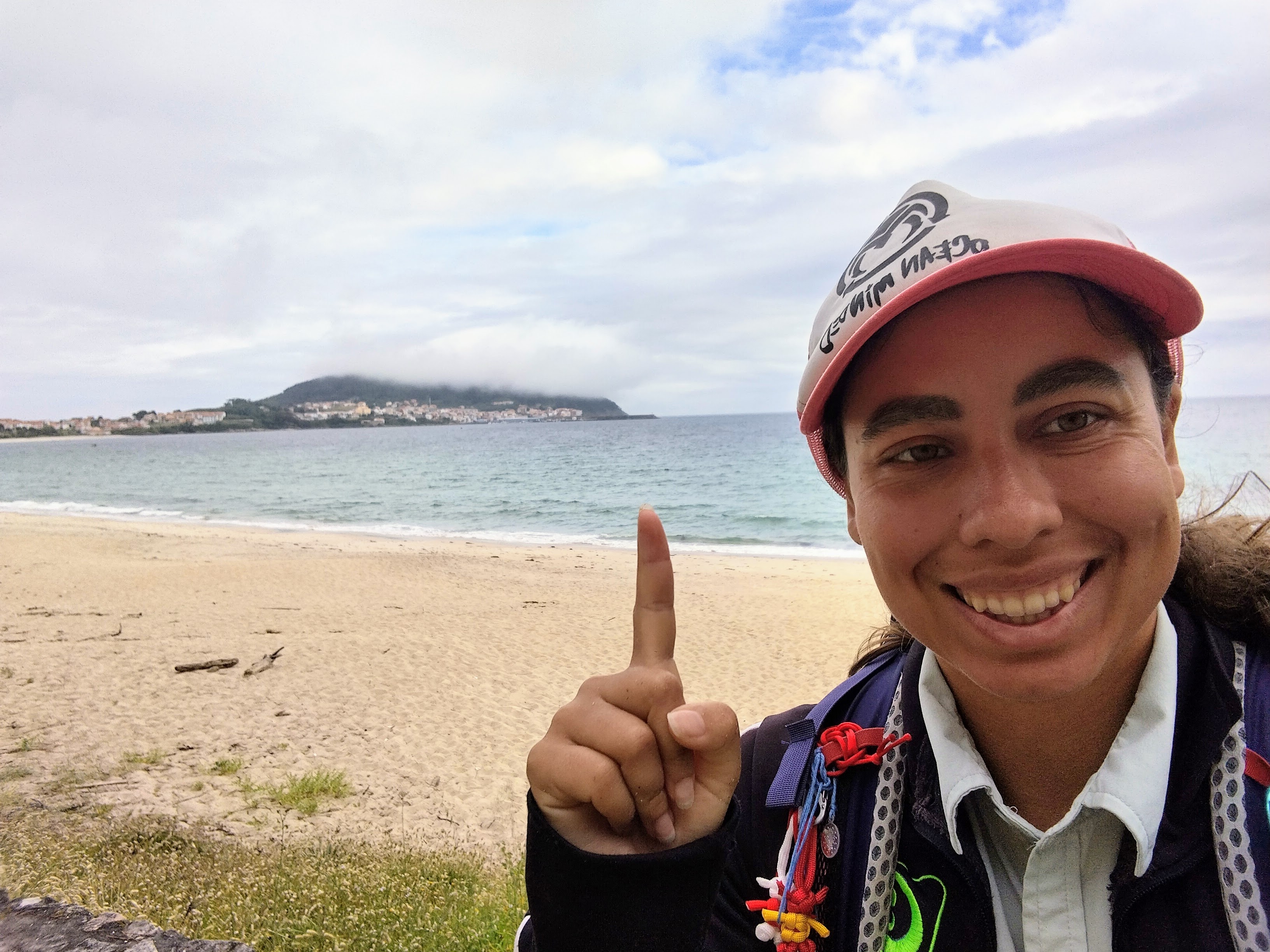
The rest of the trail followed a longer beach with a boardwalk and then through the seaside town. When I reached Fisterra it was 20 minutes before the municipal albergue opened so I got in line, checked in, and received my compostella for this little Camino. I made my bed and packed my day pack. When I got out the door it was raining, not hard, but more than the drizzle from the morning. I went back in for my poncho and then headed straight for Faro, the end of the world.
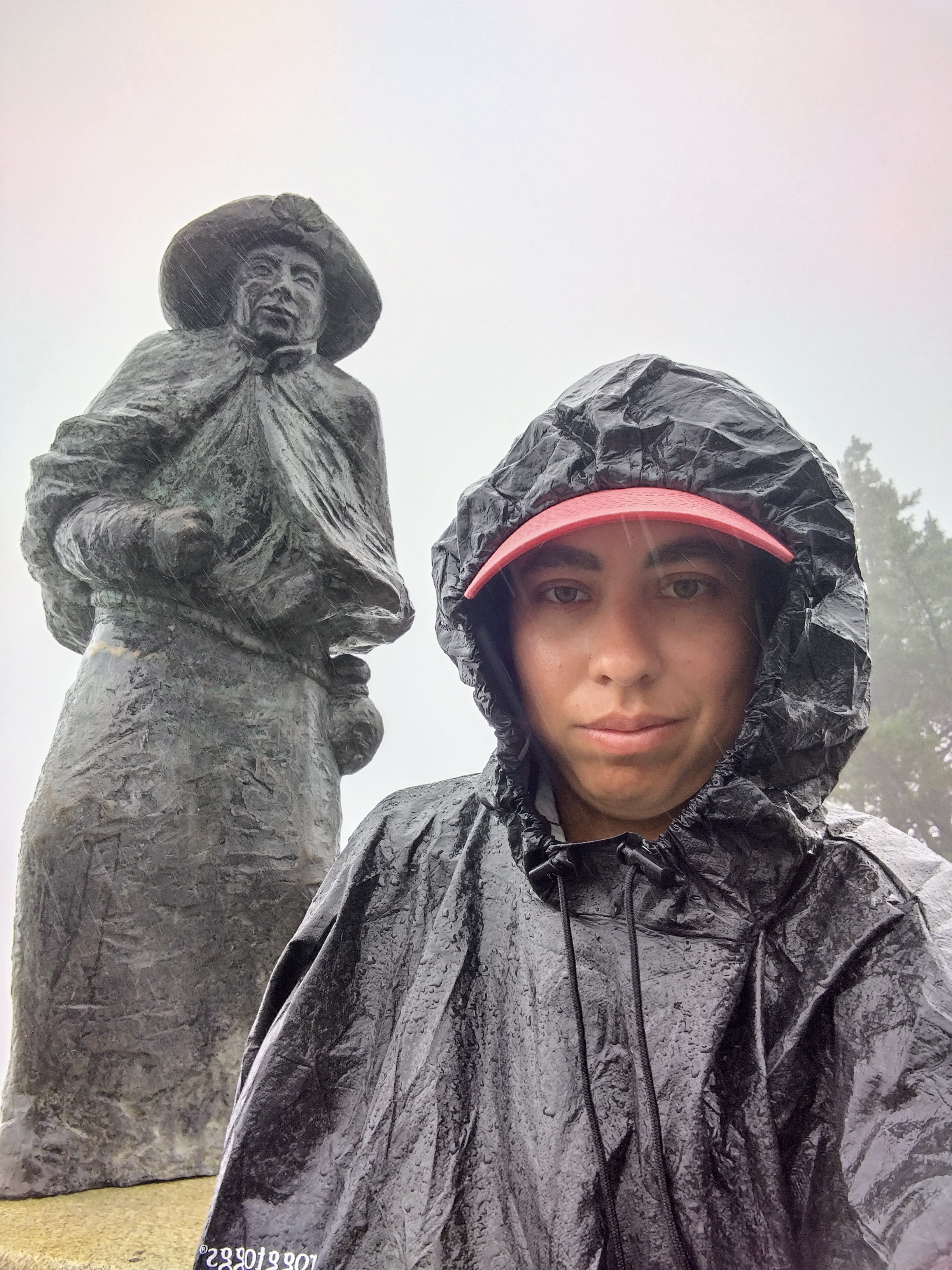
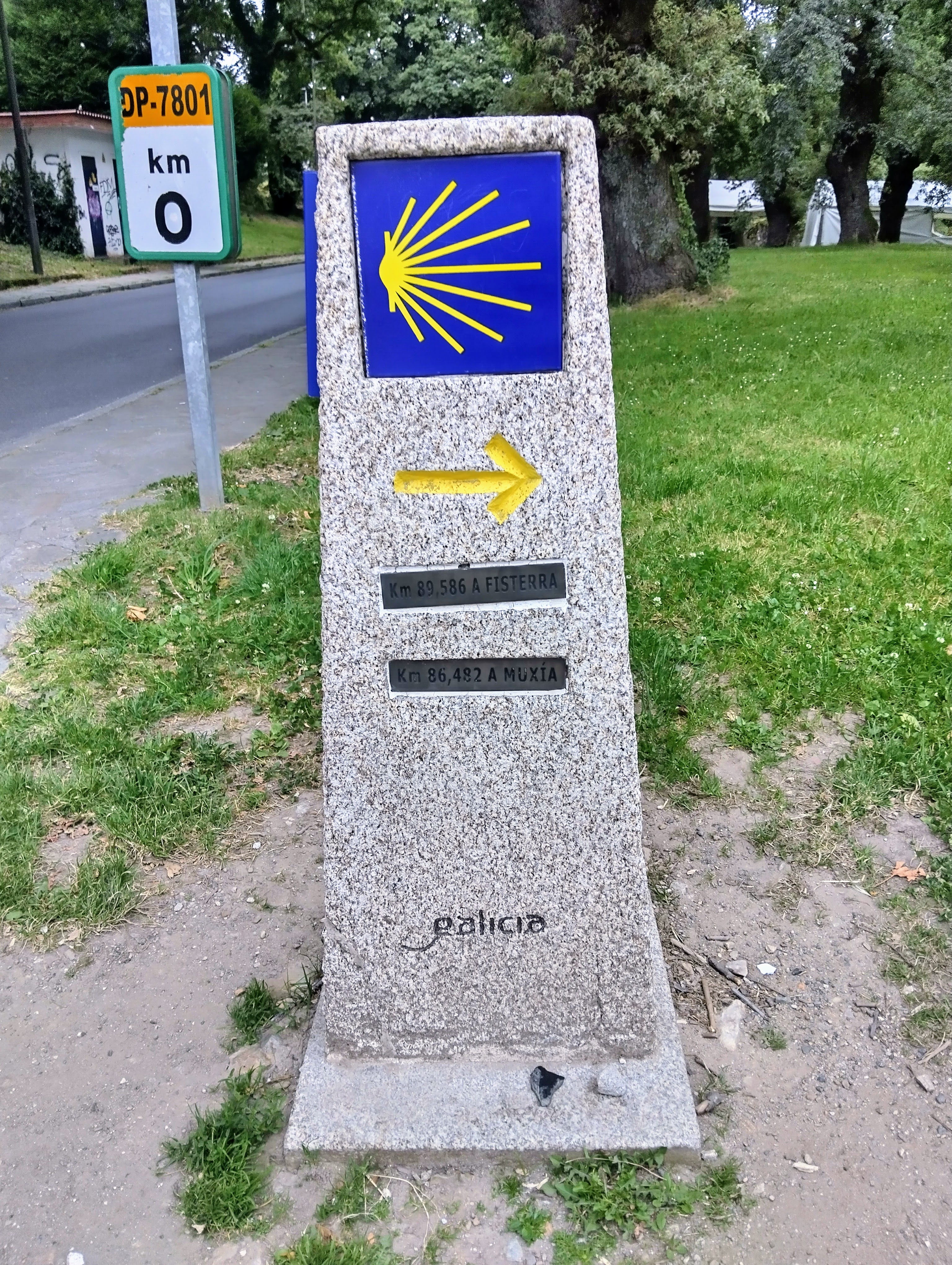
The trail was a dirt path along the road. A lot of people were walking down. It felt like just another day on the Camino. When I reached the 0.00 km marker it was surrounded by a large group of Italian pilgrims taking funny photos. When they left it was just me and a North American lady who I didn’t know. She took my photo and then asked for me to take one of her. I noticed that she was crying. She told me she’d just scattered her nephew’s ashes. I didn’t know what to do other than give her a hug, so I did and she seemed glad to have it—as much as is possible under the circumstances. Then she started walking down and I continued to see what I could see.
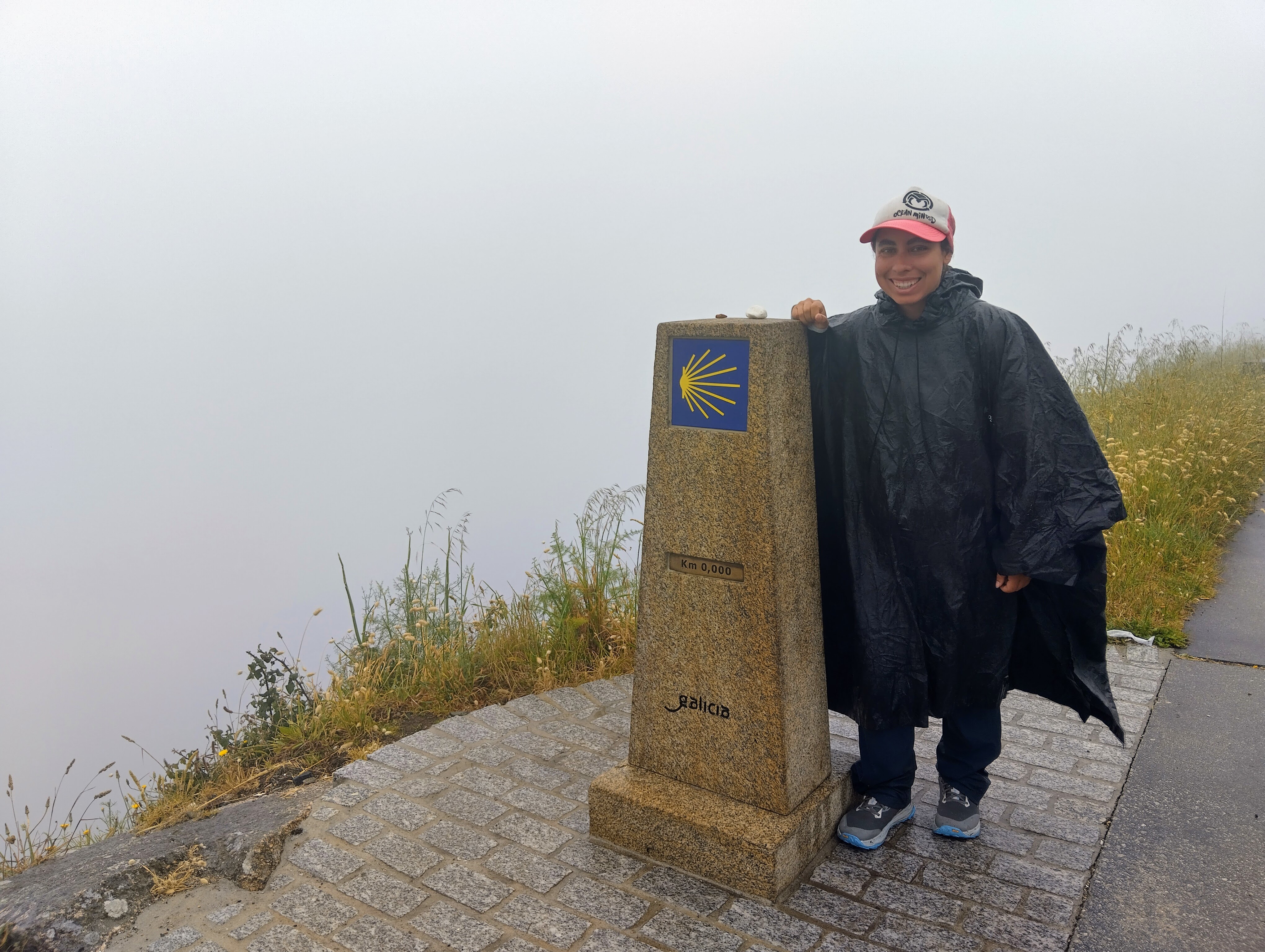
I couldn’t see anything. The view was a complete whiteout, which I found appropriate for the end of the world. I didn’t walk there to see a view on a sunny day; I walked there to experience it as it would be when I happened to arrive. The lighthouse was closed. I walked up some stairs to the side of it and sat on the rocks. It was very windy. At some moments I could see the foam on top of the water and a blurred line of the horizon through the fog.
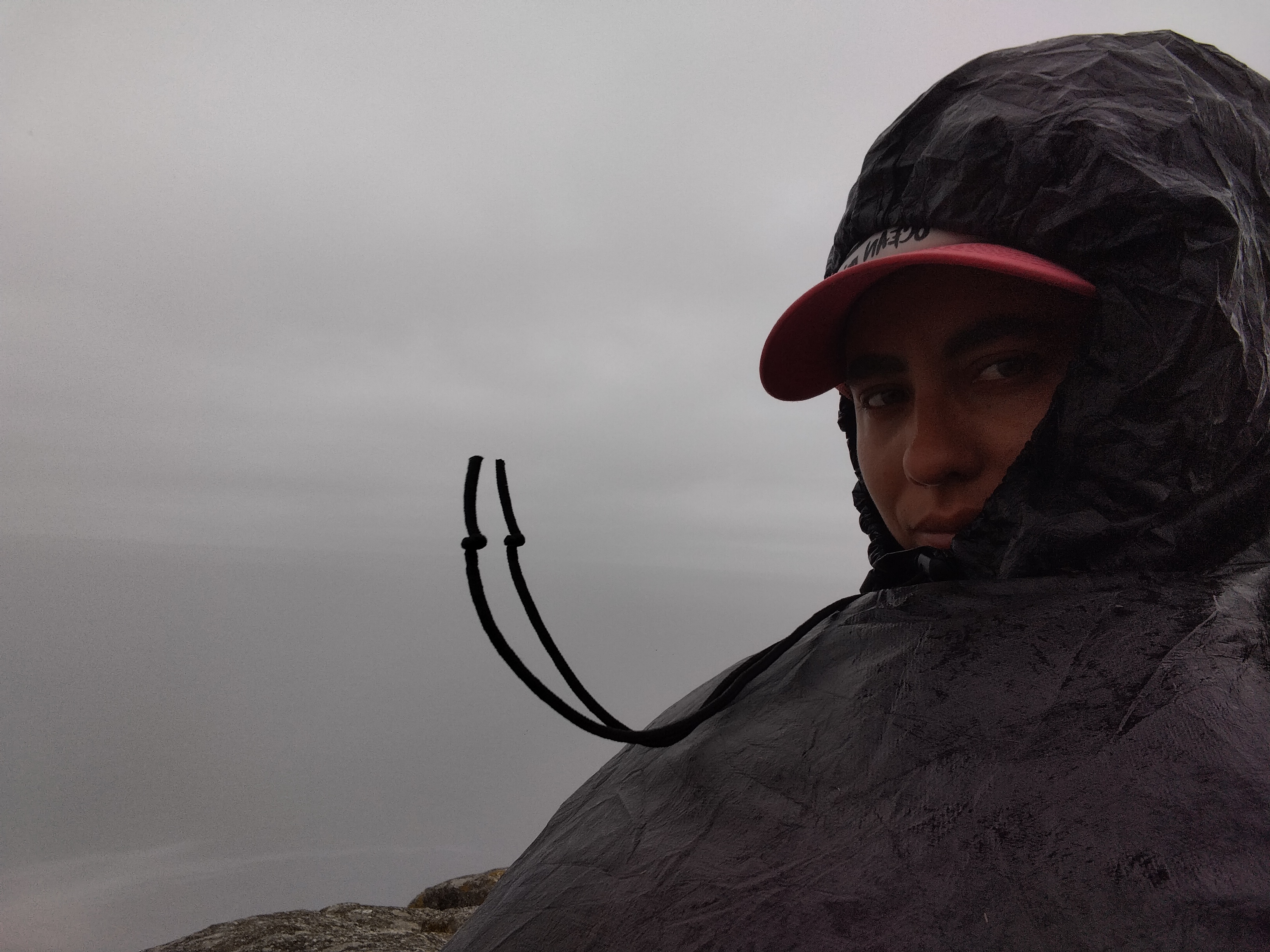
I cried, partly from the emotion of the woman who’d taken my picture, but also because it was finally over. I’d walked all the way from France to the end of the world and still didn’t know who I was. Now I knew even less because at this moment I wasn’t a pilgrim anymore.
There is a little hotel near the lighthouse where I stopped to warm myself up with my final ColaCao and change from my wet sneakers into sandals to walk down. It felt strange to walk against the yellow arrows that had been my guide for so long. There were many times along the Camino that I felt anxious if I didn’t see one for a few meters. Pilgrims on their way up only said “gracias” when I wished them “buen camino” instead of saying it in return. Then it felt truly over.
Back in town I hung my wet things and then wandered the town restlessly. I ran into the Spanish pilgrim I’d met in Pamplona whose pack weighed 22 kg. He was happy to see me and his good energy lifted my mood. It wasn’t until he was gone that I realized I’d never known his name but I had seen him once in every stage of the Camino. Soon after that I ran into Geraldine and Troy who had driven down for the day and we had lunch together. I could already feel the loneliness creeping quickly in when they left to continue their travels.
That evening, my tired thoughts rotated between dreaming of a private room with my own shower, planning things to do when I get home, and wondering how I was going to get to Porto where I planned to spend a few days resting and eating Portuguese tarts. I slept poorly again, surrounded by bunks of snoring men.
June 6, 2025
I started this entry with the date because my walking days were over; I wasn’t a pilgrim anymore. When the time that I normally would have gotten up arrived, I didn’t get up. I had nowhere to walk to. No one else got up either. Everyone lay awake (I know they were awake because the snoring had all stopped) until 7:30, half an hour before obligatory checkout time. Then we all packed up and waited for the bus in the rain.
The bus ride made me sick and I had to sit in the station in Santiago for a while to recover. There was a lot of time before the bus to Porto, so I decided to look for Kim Kimmy who was arriving in Santiago on this day. I was on the side of the city I hadn’t seen before, so naturally I got lost. Eventually I met up with her at a place called the Pilgrim House, which is a rest area for pilgrims with Wi-Fi, a kitchen, and laundry. When Kim Kimmy left to check into her albergue and go to mass I stayed there and attended a sharing session. It was just me, a young German girl trying to figure out what to study, and the facilitator, Emily from Minnesota. We talked about our impressions of the Camino and wrote letters to our future selves.
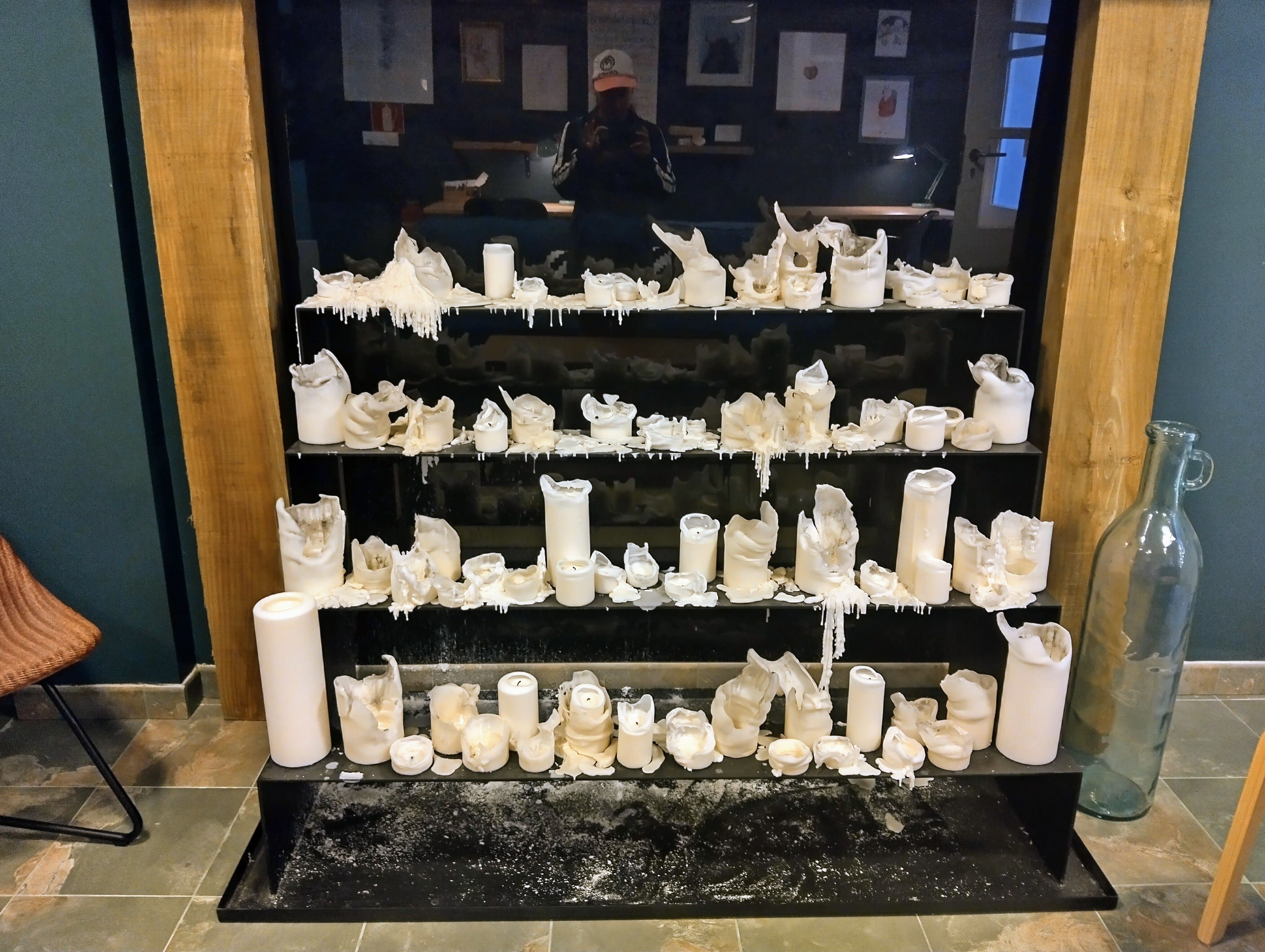
When it was time I left for the bus to Porto. Already I missed the simplicity of the pilgrim life. To know that you are a pilgrim is to have an identity; to follow the arrows every day is to have a direction; to walk with other pilgrims and be wished “buen camino” by the locals is to have a community. Without those things it was like the “Invisible Man” was naked. Somehow in my quest to find myself I’d managed to lose what little self I’d thought I had. Now I was a blank slate. Maybe that was the point of the journey in the first place, to shed the superfluous trappings of my existence and start again with greater knowledge and hopefully some wisdom. It is only now that I appreciate that the most important thing I lost was also the first: fear. I was happy, sad, anxious, depressed, angry, and in physical pain on the Camino, but I wasn’t afraid. I wasn’t afraid of having nowhere to sleep or nothing to eat or of being cold and wet. I wasn’t afraid of being judged or fitting in. I wasn’t afraid of not making enough money or failing to live up to my potential or disappointing anyone. Now I was afraid of going home and being afraid again.
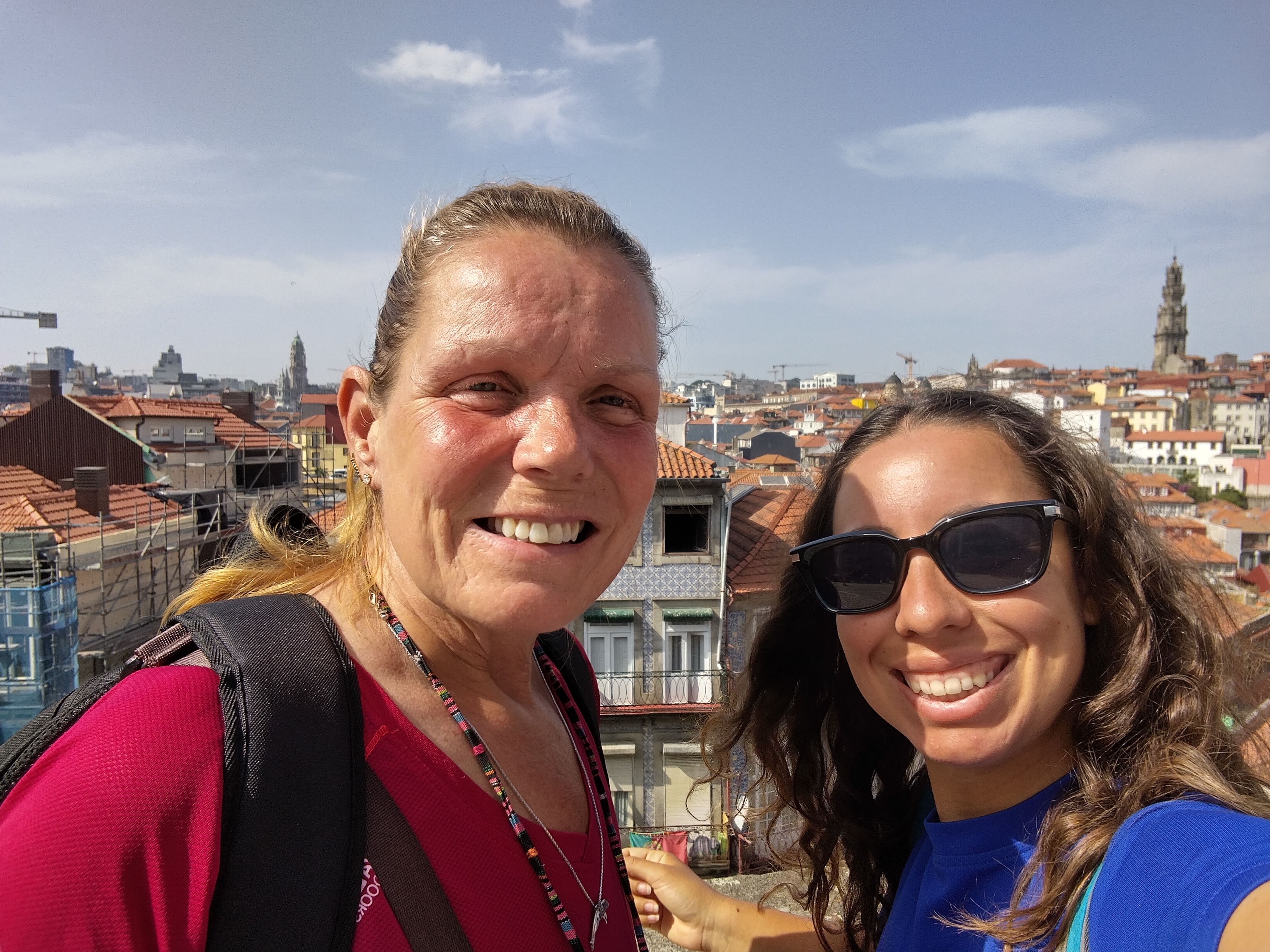
In Porto I met up with Michelle. Over the next few days, we played tourist a little, ate tarts a lot, and processed our experiences. After many good talks, we came away with new outlooks on life and a renewed optimism for the future. I still dreaded going home, and if I was independently wealthy I don’t think I would have left Europe until they kicked me out, but I had some idea of things to explore next.
They say that the Camino doesn’t stop when you reach Santiago, that you are supposed to bring the spirit of the Camino back into your daily life. Maybe that’s why some people come back to do it again. It is very difficult to be a pilgrim in daily life, the magic disappears quickly. At the same time the Camino is a mirror to life, as if you are born in Saint-Jean-Pied-de-Port and reach old age in Santiago. And even though every pilgrim walks the same path, every Camino is different, every passport filled with a different combination of stamps. Every human being has a completely different experience living in the same world.
If there were a Camino in every country in the world then I would do them all fearlessly. For now, I will do the best I can to treat my endeavors more like the Camino, to jump in without fear and without attachment.
 Victoria Castillo