
Day 28: León → Villar de Mazarife (20.95 km)
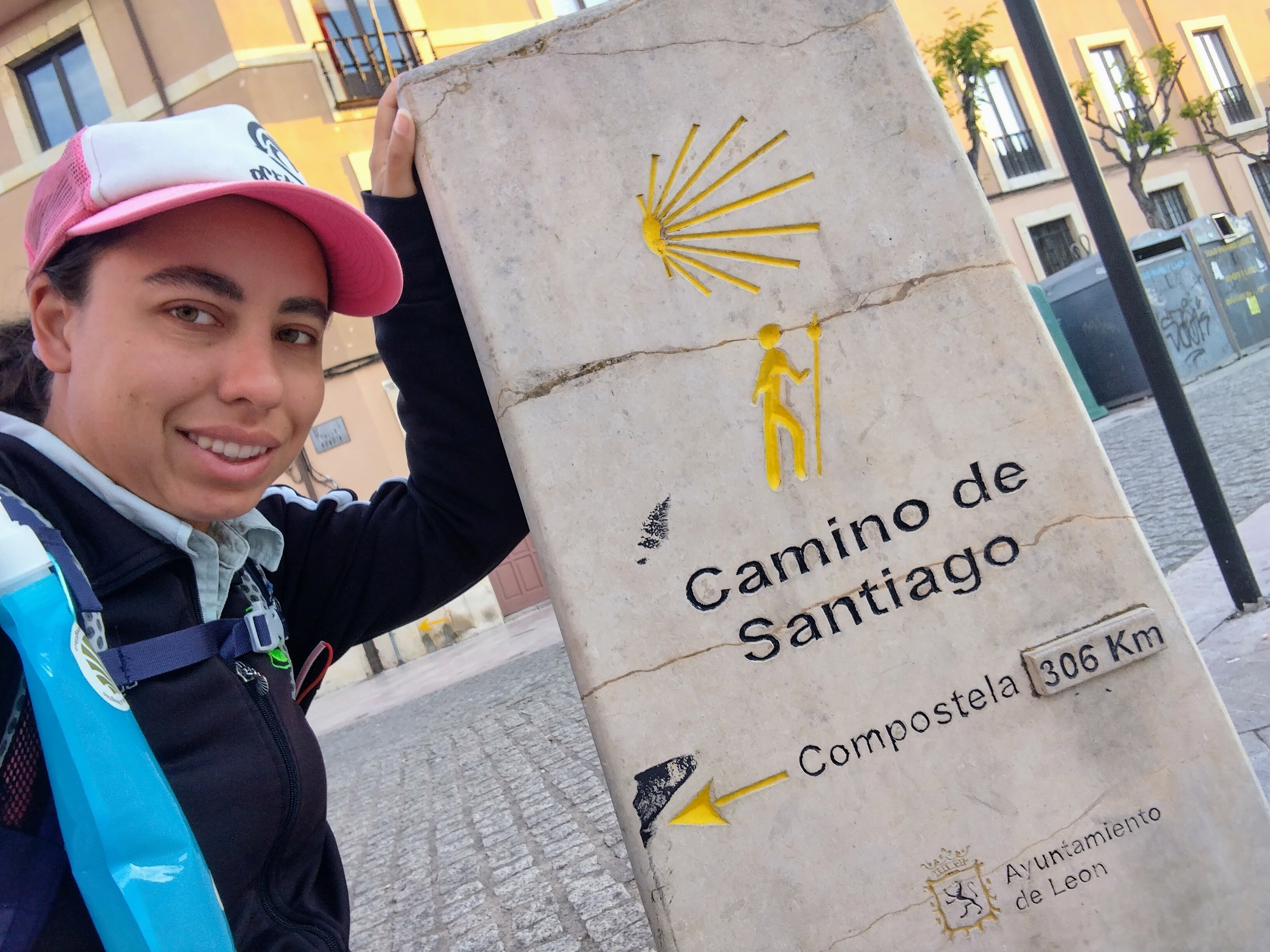
I started walking in the early light, when the only people out are the pilgrims and the street sweepers. I felt strong in my new shoes. The shells and arrows leading out of the city weren’t always obvious and sometimes I didn’t see the next one until I was literally on top of it. Walking out of the city was undeniably gross, and at one point the trail literally went through the middle of a gas station. Since I had taken the train, I had missed the walk into the city, but from what I heard it was similarly lacking in beauty. If I lived in León, I would run a rickshaw service where pilgrims could pay a couple euros to be towed behind a bicycle in and out of the city. Feel free to steal my idea.

I stopped for breakfast at a café on the outskirts of town, not long before a significant fork in the trail that had been much discussed in the last couple of days. The traditional route apparently ran next to the highway, but the alternate southern route, which was a few kilometers longer, was supposed to be more remote. Fully aware of my own sensitivity to the aesthetics of my surroundings, I opted for the southern route and was glad that I did. After a short amount of road walking, during which I saw no cars at all, I soon found myself surrounded by meadows of wildflowers and once again heard the cuckoo bird calling.
The trail went through farmland and a few nice small towns. One of the towns had more arrows pointing to the bar than the Camino and I stopped there for a bite to eat.
Despite my new shoes, which certainly proved to be an improvement, by the last few kilometers my shins and feet were in a lot of pain. I saw a copse of trees in the distance that looked like they might be part of a rest area and decided I would stop there for at least 10 minutes. As I approached, I could see benches in the shade of the trees and was about to cross over to them when I saw something else. Lying in the sun, between a bench and a trash can was a big, black hog with its feet sticking up in the air, dead. I did not stop to rest.
At the entry to the small town where I would spend the night, there was a little pond with a lot of loud chirping and barking sounds coming out of it. I stopped to see the cause and stretch my feet while I was there. There were lots of little frogs swimming along the surface and calling to each other.
I quickly found an albergue (there were two options). It was nice, but had more stairs than any pilgrim wants to climb at the end of the day. Kim Kimmy and Noriko ended up there too. Noriko gave me some cute string Yodas in Japan and Spain colors that her friend made.
We spent the afternoon handwashing our laundry and relaxing in the courtyard. There was a communal pilgrim dinner, which was delayed by the arrival in the bar of what appeared to be the entire population of the town. They were all there to watch the soccer game between the León and Ponferrada teams. Despite her protestation that she didn’t really care about soccer, our hostess was continually flitting back to the bar to check the score. The locals (and the sun) were still up watching the game or playing outside with the kids when all the pilgrims went to bed.
Day 29: Villar de Mazarife → Villares de Órbigo (16.53 km)
Other than my treatment by the Aussie nurses, I had been avoiding taking painkillers. Because of allergies I don’t usually take any medicine unless absolutely necessary. On this day I made an exception when a nice and very tired Canadian lady who I’d run into a few times before gave me some Tylenol and admitted that she would not have made it this far along the Camino without it. She gave me four tablets, but I completely forgot the dosage and so took all of them at once. Wooooooweeeeee! My head felt funny for several hours, and I forgot about my feet entirely.
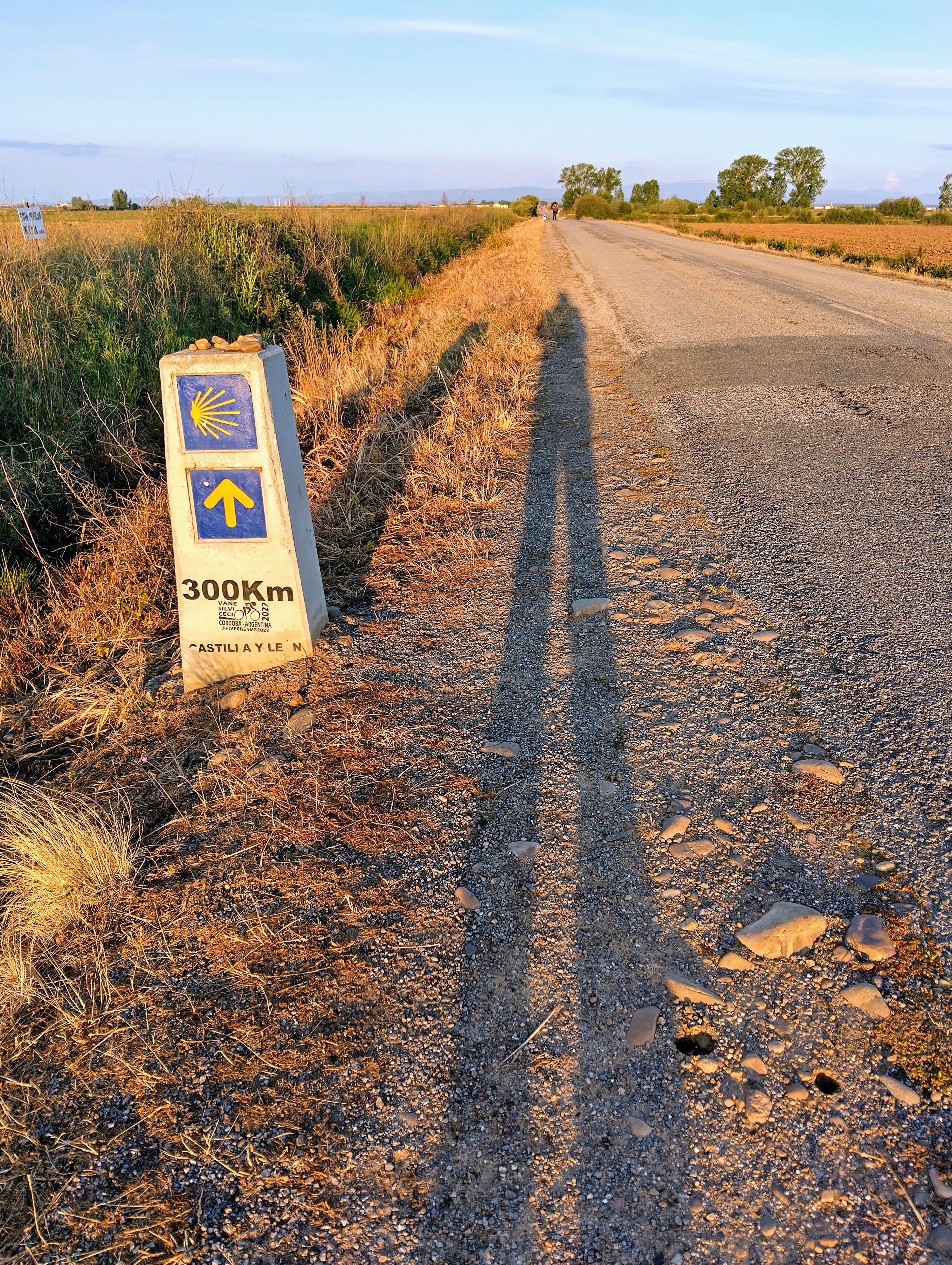
The immediate terrain reminded me of Illinois (where my family has a farm), and there were even some corn fields that had already been harvested. There were big drainage ditches along the path that were filled with more of the same frogs I’d seen in the pond the day before. These ones were a little more shy and would stop chirping and go underwater if they sensed me getting too close. Up ahead in the distance, where the Camino would lead in a few days were mountains with snow covering the taller peaks.
Somewhere beyond the frog trenches, I came upon another of those pilgrims who stand out and become much talked about. In this case it wasn’t a single pilgrim, but a family, a mother with two small children. I had seen families with children walking the Camino, but none as young as these. I can only guess at their ages, but I don’t think the oldest could have been more than seven years old. I found out from the mother that they had started walking from León, and I wanted to ask more questions when I noticed that she was breastfeeding an infant! She had no stroller and carried him in a pouch on her chest. Not wanting to disturb her while the baby was feeding, I continued on, my questions swimming through my head unanswered.
Speaking of babies, here’s an update from Camino Geographic: every stack or church I passed wore a stork nest hat and on this day a lot of grey fluffy chicks stood up to look around. Assuming the chicks all hatched at approximately the same time, it was like watching one growing up over the weeks.
To my surprise, frogs and storks weren’t the full extent of my animal encounters that day. I arrived in a really cool town labeled Hospital de Órbigo y Puente de Órbigo. (Is that name long enough for you? I don’t know, I think they could have stuck in a few more words.) The first thing I did was stop in a café/bar for some tortilla and zumo de naranja. They had a nice yard with tables outside, and as I was enjoying my food I suddenly saw a very fancy bird walk by. The whole yard was full of fancy poultry and other animals including two golden pheasants, a family of black chickens, and a tortoise.

The puente of Puente de Órbigo is the longest medieval bridge that pilgrims cross on the Camino. A woman who happened to be crossing at the same time I did and who had walked the Camino the previous year said that she had unwittingly passed through during the annual medieval fair where everyone dresses up and there is real live jousting on the field next to the bridge.


By the time I’d crossed the bridge, the painkillers I had taken in the morning had worn off. I looked around for a pharmacy and got some directions, but, as you may remember, I’m prone to getting lost. As I walked back up the main street for the fourth time, I heard an Australian accent say something like, “It’s not going to look any different no matter how many times you walk up and down.” I admitted my disorientation. The voice belonged to a nice Australian man. He and his wife helped me find some better directions to the pharmacy and his wife gave me some paracetamol just in case they weren’t open. Since I hadn’t been running into the same people as often as before, I didn’t count on ever seeing them again. Looking back, it’s funny how quickly I forgot that the Camino has a way of defying expectations. I had no idea that I’d just run into two new great friends.
As enchanting as I found this medieval town, I felt a funny sense that I didn’t belong in any of the albergues that I looked into, and by now I’d learned to trust my intuition. I made the call to continue at least to the next tiny town, which was only another kilometer away. It was a slow, achy kilometer through the dust of passing bicycles and I was starting to develop a cough, but I was glad to still be moving. The church bells of two adjacent towns rang out at the same, clamoring across the fields to each other.
At the edge of the town, Villares de Órbigo, there was a very old man with a walker sitting on a bench. He beckoned to me to come over. At first I thought he needed help, but when I approached him he pointed up the street and said, “Mira! Lolo y Lola!” I looked up to see two manakins dressed up standing on a wall. The old man laughed. I humored him and took a picture. Not far up the street was a very nice looking albergue. I sat down on a bench outside to check my feet and decide if I wanted to stop there. While I was there I could hear the old man beckon to every pilgrim that came by and say, “Mira! Lolo y Lola!” and laugh as if it was the first time he’d showed them to anyone.

Between the cough and the always-at-risk feet, I decided to stop there at Albergue El Encanto. It was run by a very nice, welcoming lady. Apparently she has recently done some redecorating and her friends kept coming by to admire it. They were justifiably profuse in their praise, the place was absolutely lovely. The shower was nice and I performed the rare act of washing my hair. There was even a complimentary selection of teas in the kitchen which was perfect for my cough. My friends Sarah, Emma, Andrew, and Gillian, arrived with even more tea and good vibes as usual. My cough was cured and my soul happy.
While we were all relaxing in the courtyard, the mother with the baby and small kids showed up looking for cheap accommodations. Everyone was surprised that she wasn’t booking ahead. The owner directed her to the other albergue in town which was cheaper. It was a little disconcerting and I think we all hoped that she had some outside support in case she needed it. I never saw the young family again, but I heard rumors much later which led me to believe they made it ok.
My friends preferred to cook their own dinner in the big kitchen at the albergue, but I attended the pilgrim dinner next door where I ended up getting to practice my conversational Spanish. I was next to a Spanish pilgrim named Jemma from Ecuador who’d moved with her family to Madrid when she was a kid. She didn’t speak English but she liked to talk and laugh a lot. She and her boyfriend had started in León that day and walked over 40 km. They planned on doing similar distances every day because they only had so many days before they had to go back to work. She thought it was crazy that most pilgrims get up and go to bed so early. Little did I know her attitude was just a taste of the craziness that would be the last 100 km to Santiago.
Day 30: Villares de Órbigo → Murias de Rechivaldo (18.7 km)
I was the first one up and walking as soon as it began to grow light. The terrain was less flat and passed through farmland and orchards. Just outside of town there was an adorable little calf that might have been born yesterday.
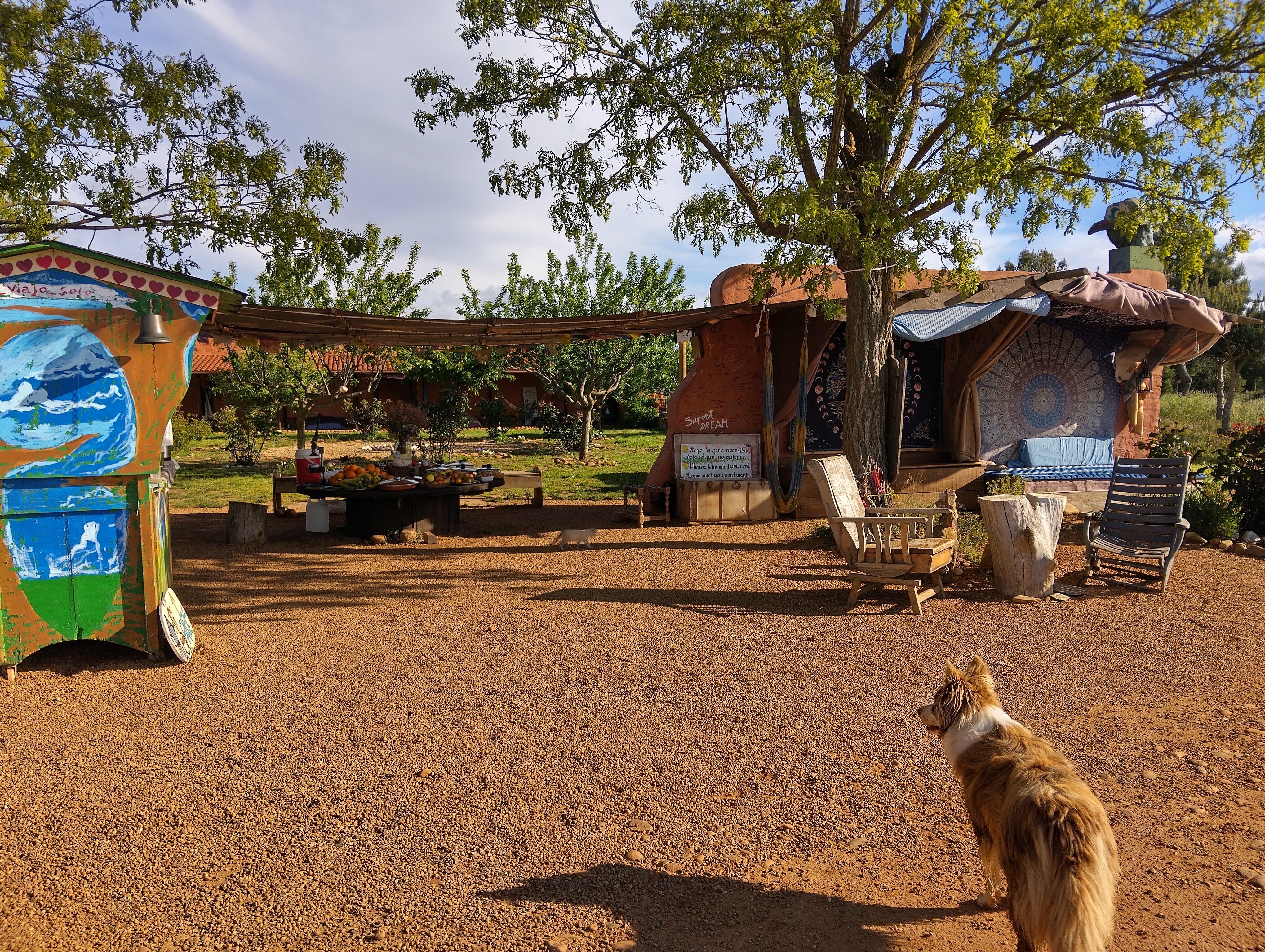
In a stretch between towns there was a cool bohemian pop-up donativo with good snacks and great vibe. There was a dog that ran up to every newcomer and tried to get them to play soccer with him. I played with him—he was really good, no joke.
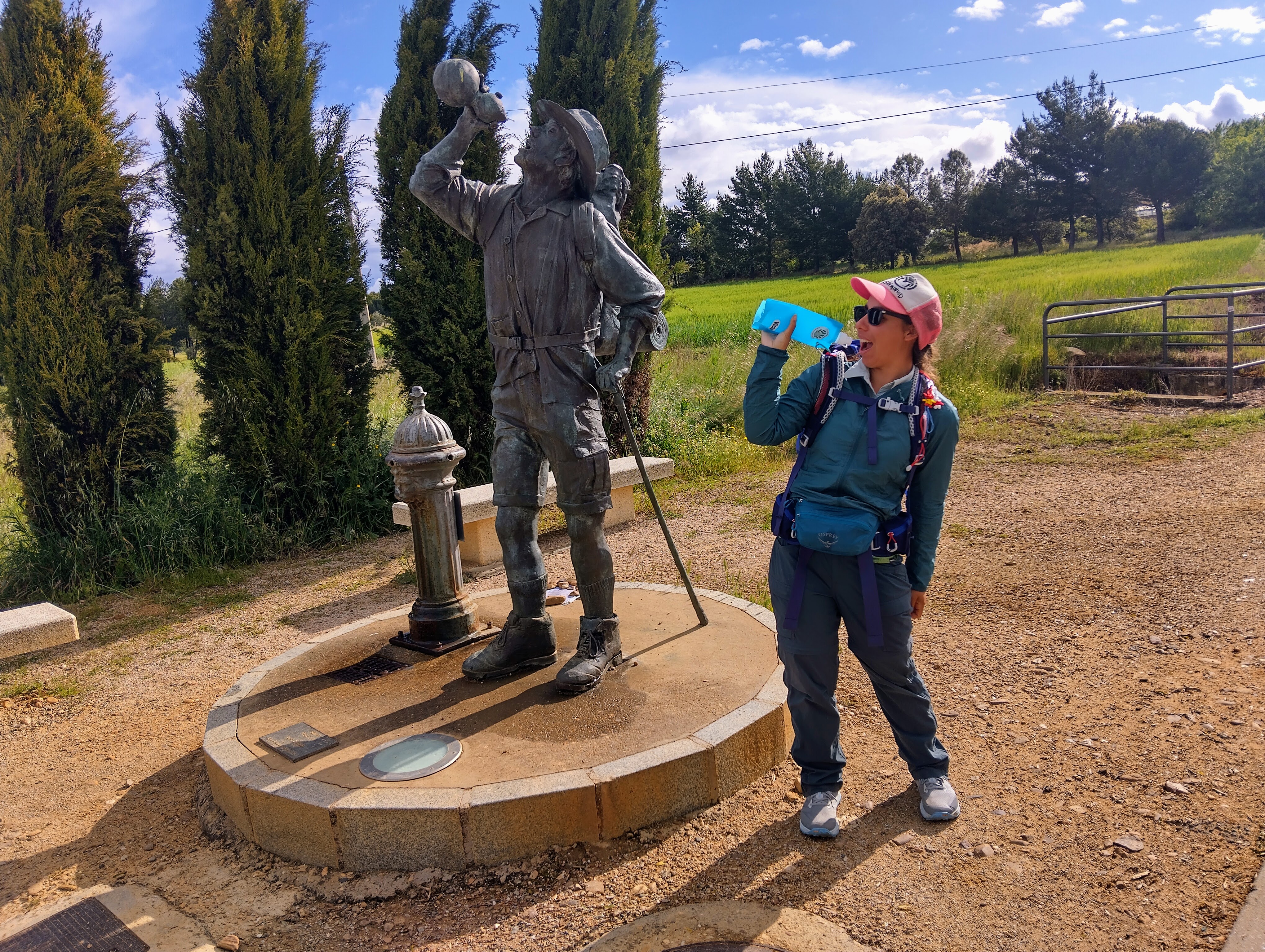
Next I passed through Astorga, which is a small city. It would have been a great place to spend a day as a tourist, but it must have been Sunday because most of the museums were closed except for the cathedral.
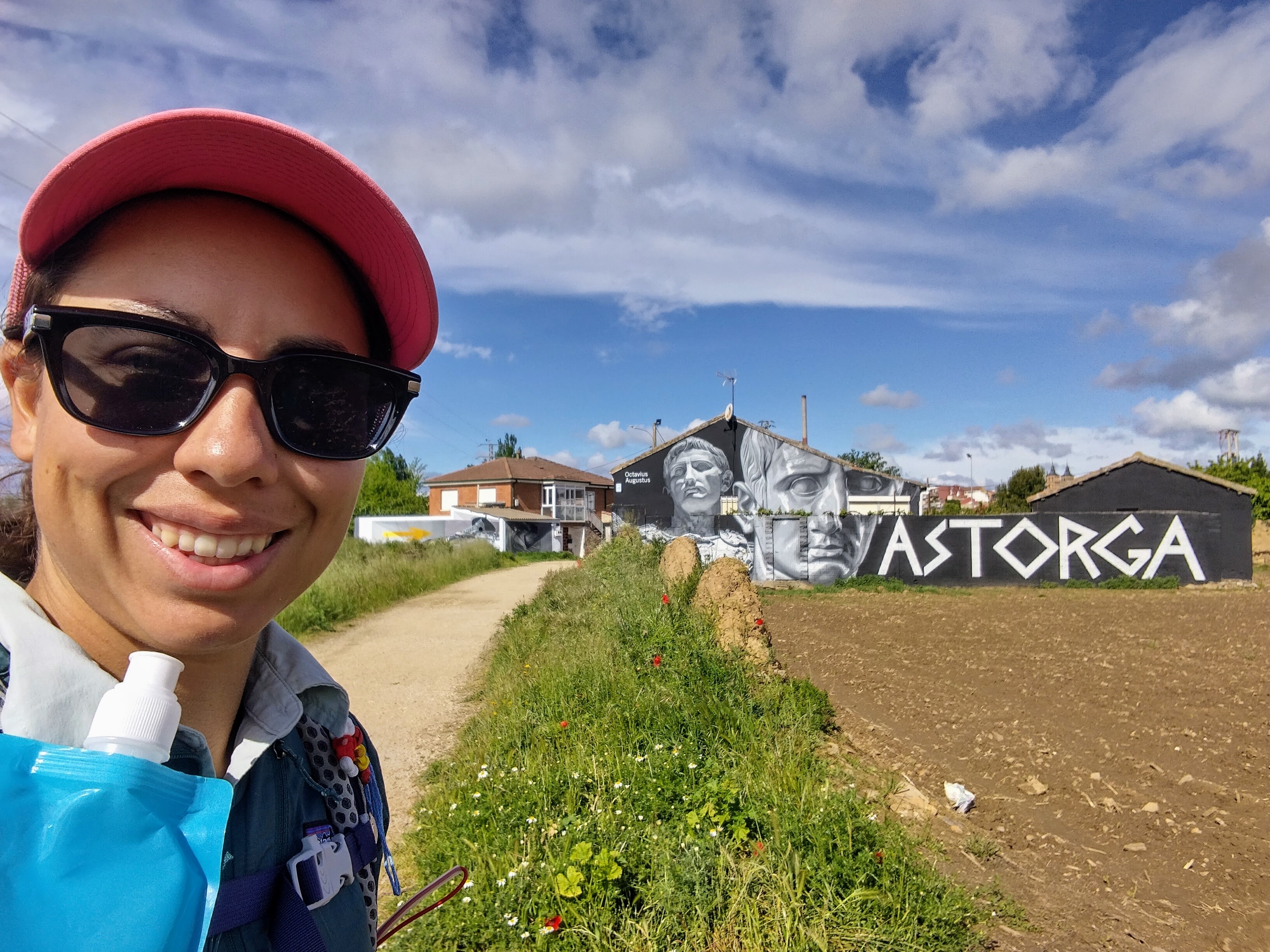

In one of the plazas I ran into the nice Australian couple who’d given me the painkillers and we had some breakfast together. I learned their names are Desi and Larry and they are epic Camino Repeaters. Larry has done 9 and Desi has done 5 Caminos.


I toured the cathedral, but felt an itch to keep walking so I left Astorga and eventually got tired in a little town. None of the albergues were directly on the Camino so I had to turn off the path. I was surprised to see Michelle sitting outside the municipal. It’d been a long time since we’d run into each other. She didn’t recommend the municipal. It was small and didn’t have wi-fi or food, so I went to another place nearby called Albergue Casa Flor. I checked in, confidently speaking Spanish with my best Castilian accent, but when the lady saw my passport she was relieved to find that I spoke English. It turned out she was Italian and didn’t like speaking Spanish. She was very funny and often comically frazzled. She gave me real sheets and a towel and it wasn’t until I was up in the room making the bed that I noticed she had accidentally folded her scarf and her keys into them. Pretty soon there was a knock on the door and she was immensely relieved to find them.
I took a refreshing shower then lay in a hammock outside for a while to read. It started getting cold so went to the restaurant attached to the albergue for a ColaCao. I was sitting at the bar by myself for a while when the server came and asked me if I wanted to meet another pilgrim. I said ok and he seated me with a very nice Hungarian man who was having an early dinner. His English was slow but we talked a bit about the spiritual experience of the Camino. We got so into it that he was slow to finish his food and when the server noticed he was absolutely ecstatic that he had brought us together.
The pilgrim dinner at Casa Flor was like no other on the Camino. The hospitalera made real Italian pasta and several choices of cake for dessert (I had lemon). There were a few other pilgrims that I chatted to plus a group of Italian pilgrims who watched The Way in Italian during dinner. The non-Italian speakers didn’t pay much attention to the movie except to burst out laughing when “God Bless America” came belting out Martin Sheen’s mouth in an Italian accent.
The albergue itself had several rooms with two or three bunk beds in each, but no one else was in mine, so it was like having a really nice private room and bathroom for a good price. I got a good night’s sleep that night.
I got word from friends in different stages of their Camino. Eunseok was already in Sarria (a week ahead of me), Carrie was ending her Camino in Astorga, Julia was in Fisterra enjoying the ocean view, Geraldine and Troy were a day ahead and warned about a chaotic albergue to avoid in Foncebadón. I especially missed Eunseok. He was the first friend I’d made on the Camino and it didn’t seem likely that we’d run into each other again.
Day 31: Murias de Rechivaldo → Foncebadón (20.88 km)

I got up in the early light and found my way back to the Camino path. The terrain somewhat reassembled parts of California. Most of the way was up a gradual incline through shrubs and pine trees and lots of pretty wild flowers.
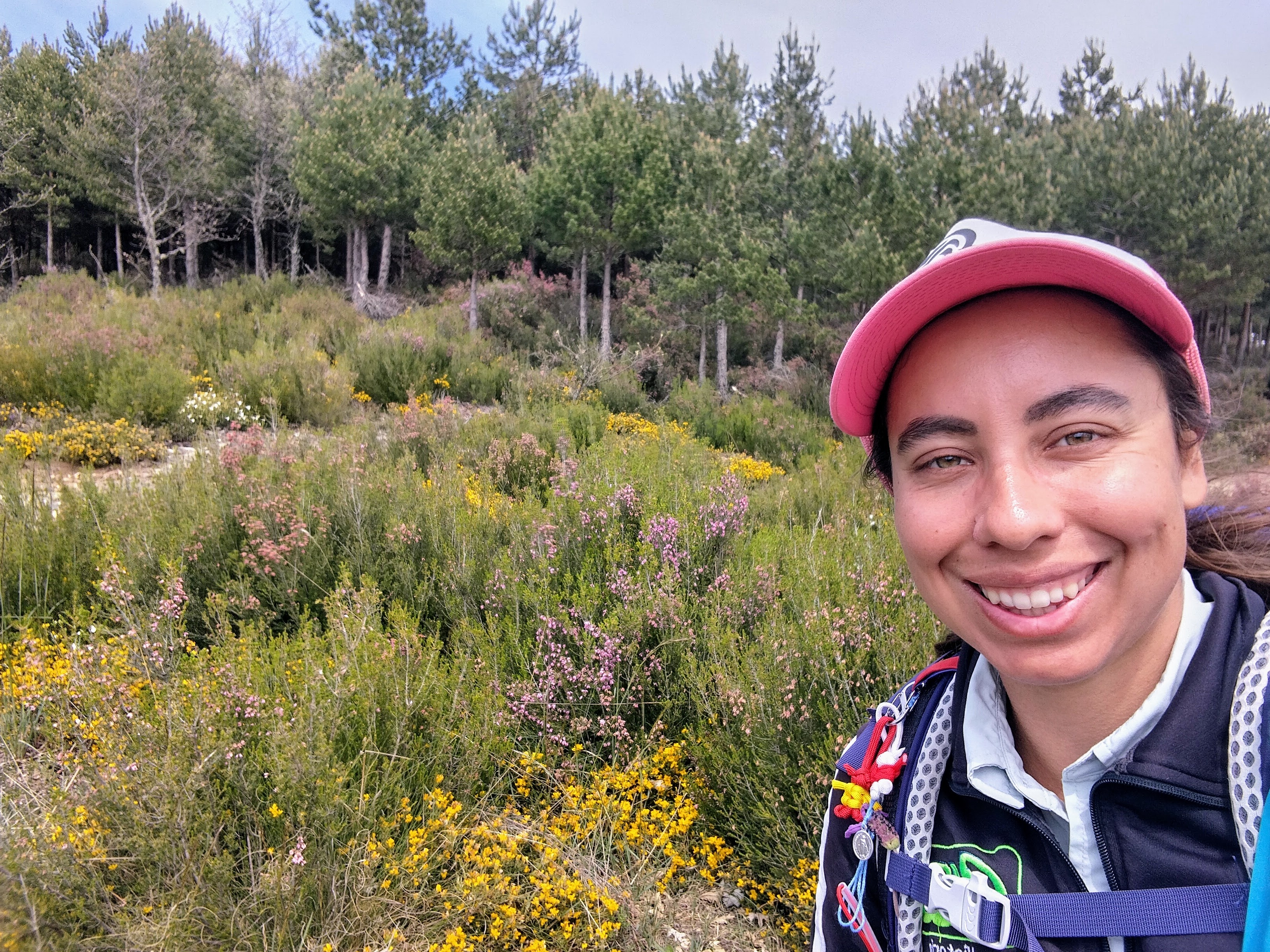
In the middle of nowhere I came across a guy doing beautiful wax stamps for donations and got one.

The trail got steeper and occasionally intersected a road where cyclists were struggling with the incline. As I crossed, one of them started walking his bicycle up the rocky walking trail. I asked him why he was taking the hard way. He was too tired to cycle uphill any more so he decided to walk his bike all the way to the top of the mountain. We walked together and chatted. His name is Krishna, from London. We talked about me maybe writing a book and I promised to credit him in the acknowledgements.
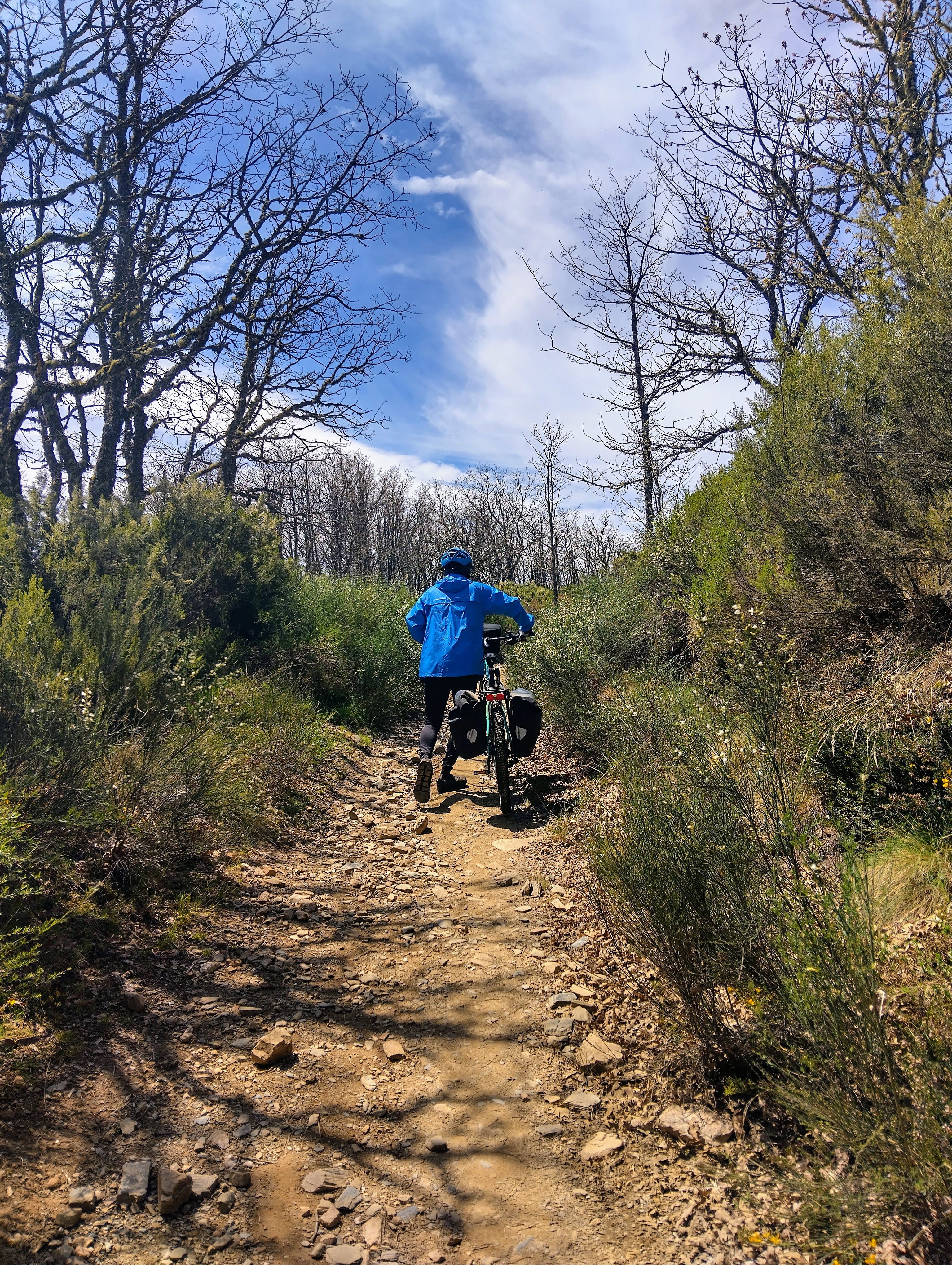
As we came up the steepest part of the trail, we saw some ladies come walking back down towards the road. One of them had fallen and cut her hand badly. The others were helping get her and her pack to the road to meet an ambulance. They didn’t need any more help so we kept going and passed a big puddle of blood where she had fallen. It must sound like pilgrims regularly drop like flies based on the number of injuries I saw, but I know that lady was ok because I saw her later that evening bandaged up and fine. Actually I was very surprised at the efficiency of the care she got. I once spent over five hours in an emergency room waiting room back in the US while I was having a severe allergic reaction.
When we reached Foncebadón Krishna and I said goodbye. He was only stopping for lunch there because he could obviously get a lot farther in one day on a bicycle than walking. He was the only cycling pilgrim I actually met and talked to on the Camino because he was the only one I ever saw stop.

But friends are not few or far between on the Camino (once you’re off the meseta) and I immediately ran into Nicolás from Colombia who I had been introduced to briefly back in Carrión. He also had shin splints now. We hobbled through town in search of an albergue. Almost everything was full because this was the closest town to Cruz de Ferro (AKA the Iron Cross) where pilgrims leave stones that symbolize their burdens. I still had my little stone in my pack and was feeling ready to get rid of it. Eventually, we ended up at the very albergue that Geraldine had warned against and got the last two beds. (We almost had to sleep in the kitchen.) Geraldine was right to not recommend the place. The owners were new and not very competent.
After a shower that flooded the women’s restroom, I rested in a hammock outside for a while and observed the chaos. Many pilgrims continued to show up thinking they had reservations and were sent away. Bags arrived via donkey service and were redirected elsewhere. They offered a pilgrim dinner here but I didn’t exactly have confidence in it, so I opted to have dinner somewhere else. I walked into a quiet place and found Desi and Larry and a new friend Cathy from the east coast USA. We talked about lessons we’d learned on the Camino.
I felt more than ready to unload my burden at the cross. Shin splints or not, mountains are still easier than the meseta, at least for me, and I felt like I had finished my penance. I even had a new blister on the side of my big toe, but I just used my needle and thread and it didn’t bother me at all.
Day 32: Foncebadón → Cruz de Ferro (2.14 km)
Some people got up super early and were very noisy, so I gave up waiting for the sun to light my path. I walked alone through the quiet morning mist with just the sound of my own footsteps and a cuckoo bird calling occasionally to hurry me along. I arrived at the iron cross at sunrise. Nicolas came up just behind me and took my picture. Then I simply tossed my rock on the pile and walked away feeling free and happy. I never heard the cuckoo bird again after that.




 Victoria Castillo