Tag: donativo

  • Camino de Santiago – Days 6-8: Pamplona to Estella

    Day 6 – Pamplona → Puente la Reina (23.65 km)

    A pilgrim who had stayed at the donativo the week before painted this map on the wall.

    Breakfast in the convent donativo was less communal with everyone going about their own business and leaving in their own time. I was among the last to leave and could barely hold back my tears. Part of me wanted to stay in this happy, comfortable place.

    Eunseok walked with me the entire day. He even helped me find the post office so I could ship the botas I had bought ahead to Santiago. Once that was taken care of, we hopped back on the Camino and followed it out of the city. We made a pact to be very minimal and eat cheap grocery store food for the next couple days to make up for having spent way too much money in Pamplona.

    Walking out on the busy boulevard, I finally realized that we pilgrims stuck out like sore thumbs in our hiking clothes and giant backpacks. Grandmothers wheeling strollers pointed us out to the children and explained enthusiastically that we were walking to Santiago de Compostela. They didn’t have to ask.

    The locals all know exactly where the Camino runs too, so if you lose track of the trail markers, all you have to do is ask the nearest Spaniard and they’ll point you in the right direction. Later, I heard stories of pilgrims who didn’t realize they’d taken a wrong turn somewhere being chased down and redirected back to the Camino. This magic of human way-pointing even works if there seems to be nobody around. All you have to do is spin around three times and a Spaniard, usually an old man, will sprout from the earth and point the way. This is exactly what happened to me and Eunseok in a small town on the outskirts of Pamplona. We found ourselves at a fork and couldn’t find a yellow arrow. We spun around in bewilderment and suddenly, there he was, an old man pointing the way and wishing us “buen camino!”

    Eunseok AKA Jacob by a way marker that says “Jacob’s Way”.

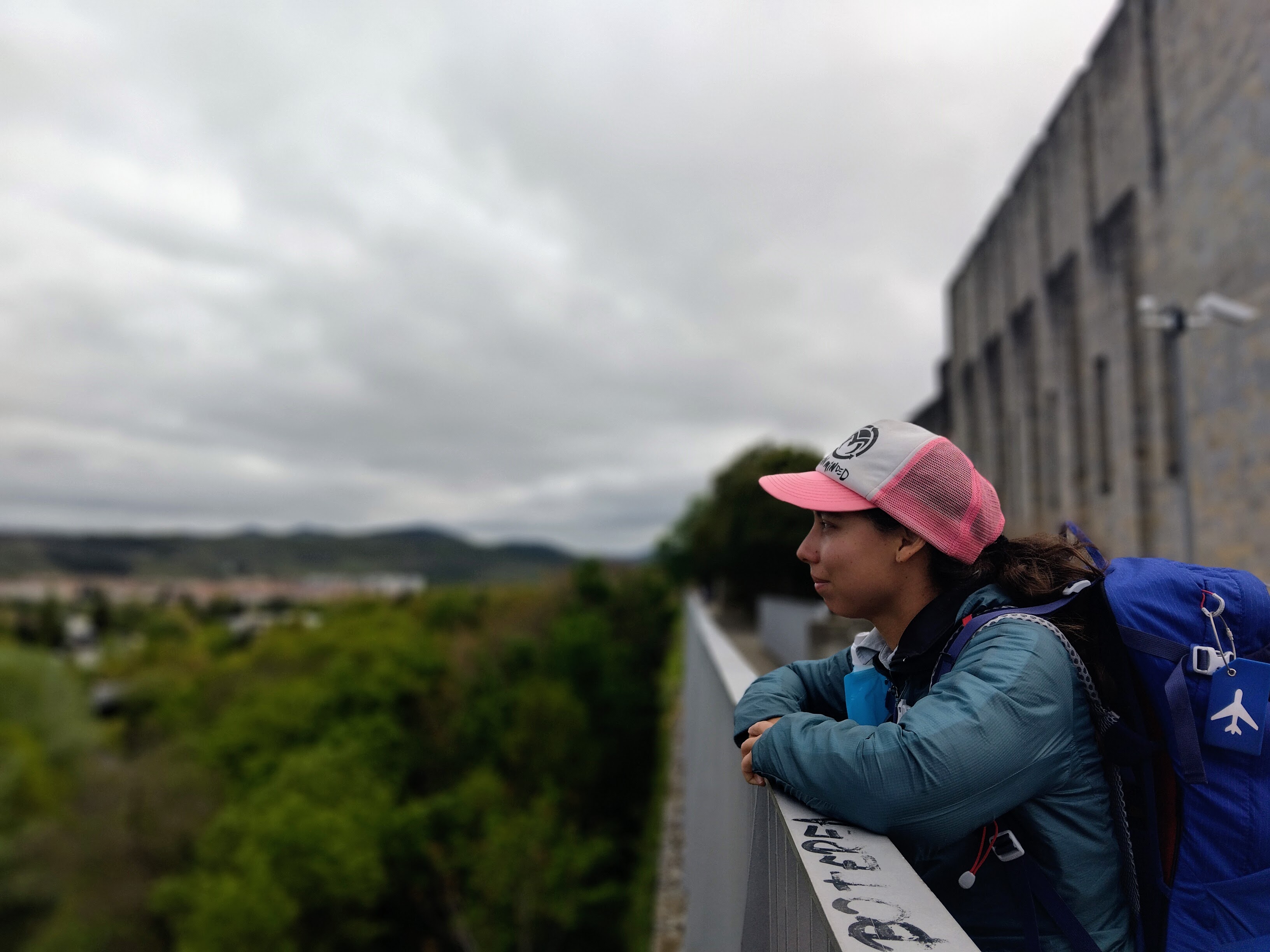
    Once we were out of the city the way markers were easy to spot. The terrain became rolling hills covered in crops and pilgrims passing on bicycles became a frequent occurrence. I remembered some good advice Michelle had told me, which she’d been taught when she started the PCT: every once in a while turn around and look at where you’ve been. As we worked our way up in the hills, I turned around and saw the Pyrenees in the distance behind the city, and there was snow on the peaks.

    This was the first warm, sunny day and incidentally the first with no shade. The incline got steeper and we caught up with Teresa and Archer. Archer listened to music to keep himself in the zone for the uphill climb.

    Victoria Castillo and friend on the Camino de Santiago.
    Thanks to Teresa for this photo!

    The trail took us up to a ridge lined with wind turbines and some famous steel statues of pilgrims walking. Other pilgrims were there resting in a little sliver of shade cast by a monument. They managed to make room for all four of us to sit.

    Victoria Castillo on the Camino de Santiago.
    Alto de Perdón (Hill of Forgiveness)

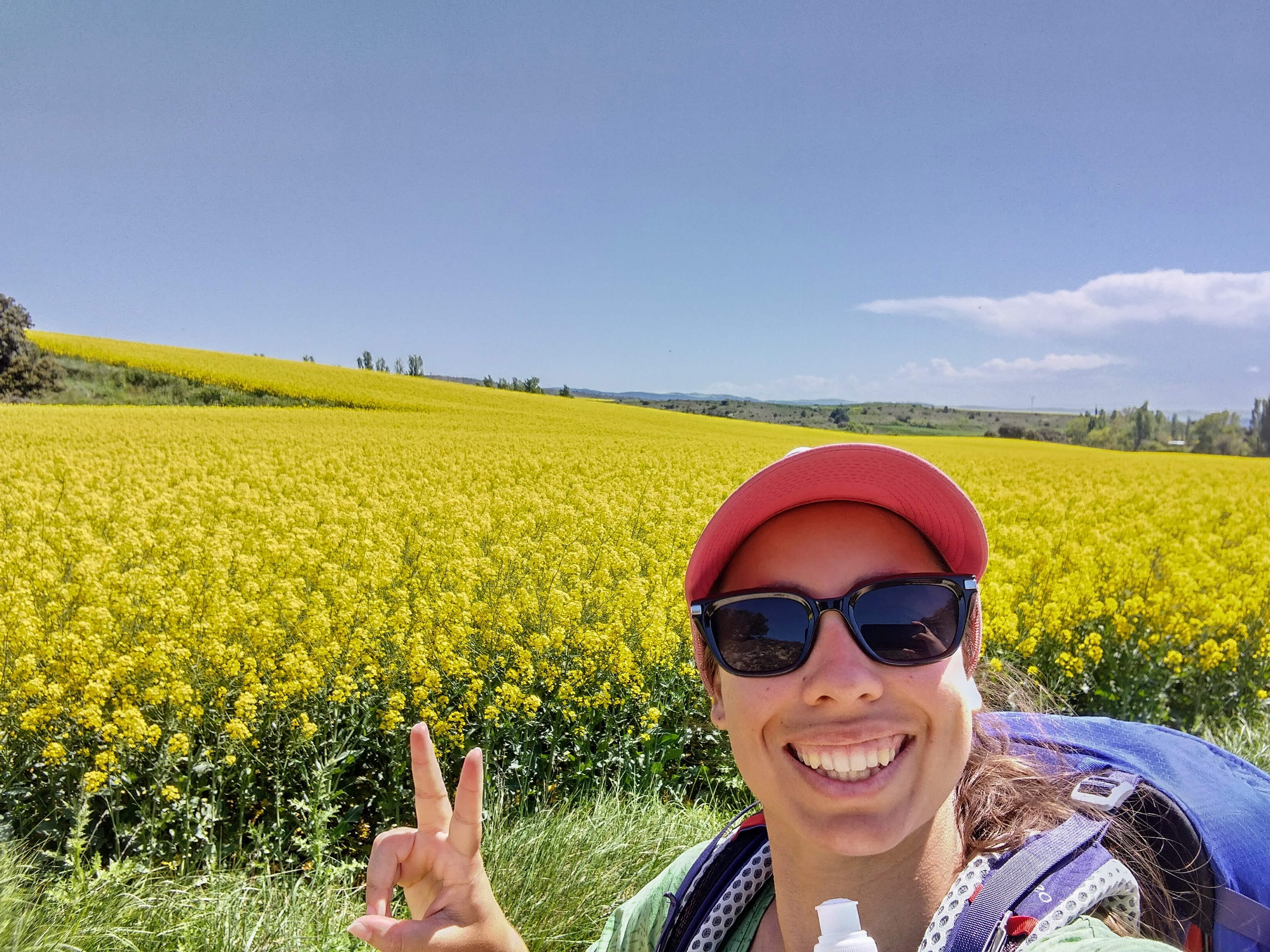
    The rest of the way was downhill among loose rocks and then fairly flat along fields of crops, the edges of which were dotted with wild, red poppies. The only shade was one big tree that was emitting tufts of cotton-like pollen that floated away on the breeze. Just beyond it was a rolling field of luscious green—I later learned that it was wheat—that completely mesmerized me and Eunseok. He said he wanted to float on top of it and I agreed. There were also spectacular fields of yellow flowers, which I later learned was rape seed (used to make canola oil). Other fields contained a crop with white flowers, which I still haven’t identified.
    Victoria Castillo on the Camino de Santiago.
    The unfortunately-named rape seed flowers.
    Victoria Castillo on the Camino de Santiago.
    Mystery crop. Leave a comment if you know what this is.

    As the day wore on, it got hotter and hotter; I got more and more tired; and Eunseok got more and more sunburned. We trudged through several small towns, each replete with upscale houses and no people to be seen except for the occasional handyman. I surmised that the owners must go to work in the city during the day. Each town had at least one fountain with potable water which I took advantage of to refill my water bladder and splash myself to cool down. We passed Michelle who’d stopped for a refreshing beer.
    Victoria Castillo on the Camino de Santiago.
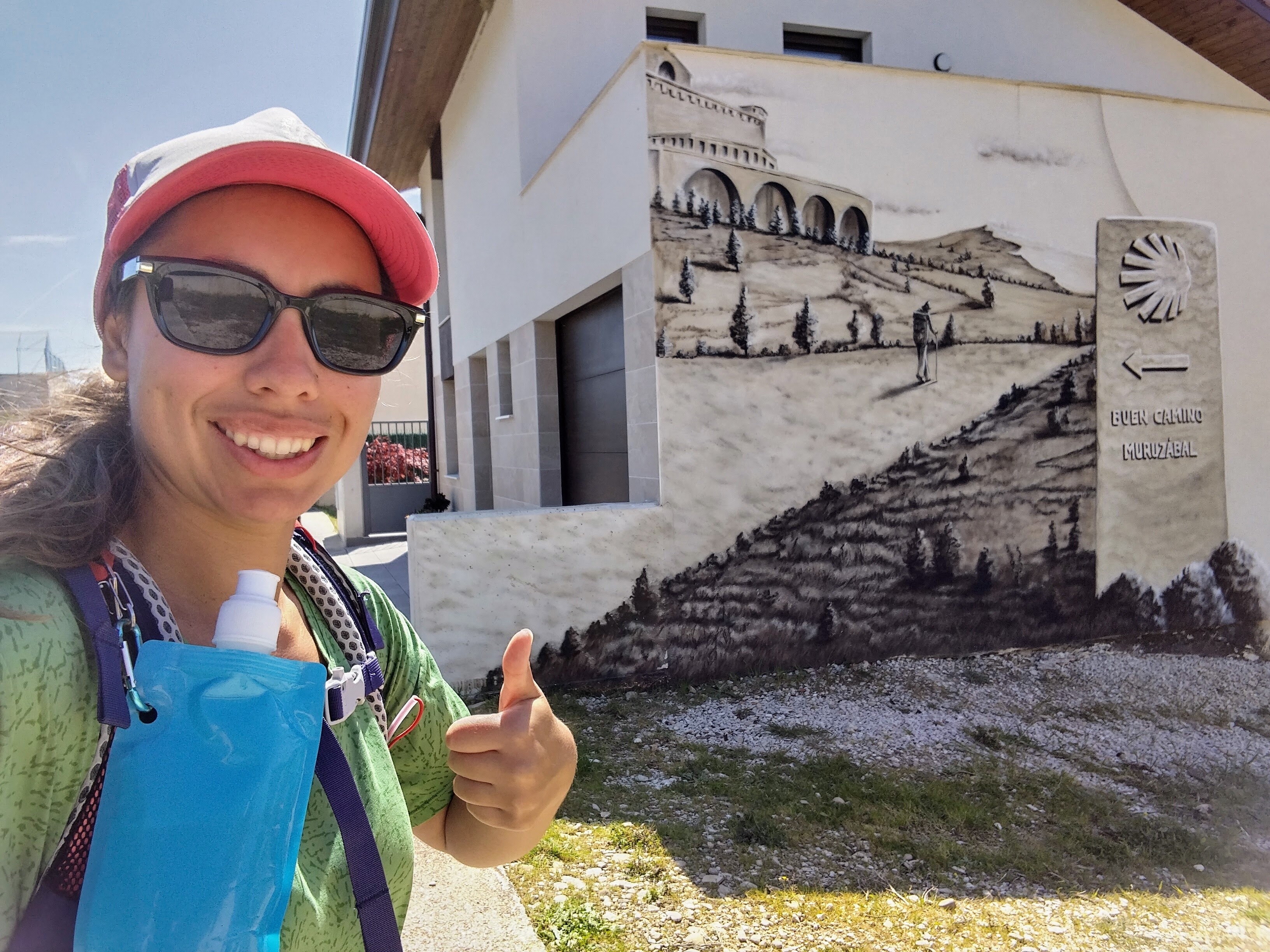
    Passing through the town of Muruzábal.
    Victoria Castillo on the Camino de Santiago.
    Funky statues are not an uncommon site along the Camino.

    Arrival in Puente la Reina was a relief. There was a tiny park with shady trees right outside of the municipal albergue, and we flopped down on the grass for a brief rest before checking in. There we saw an unexpected sight. On the Camino, certain pilgrims become famous. There’s something interesting about them that makes them stand out from the rest. They’re discussed and conjectured about, and if you happen to have seen them everyone wants to hear what you found out. The pilgrim we saw in the little park wasn’t just famous among pilgrims; I’d go so far as to say he had legendary status. He was a Frenchman who had started from his house, as per tradition; he had already walked to Santiago and was now walking all the way back home. He also had two dogs and a goat walking with him. Neither the dogs nor the goat were on leashes. They were resting on the grass like we were and when the man was ready to go he called the dogs to him and they patiently let him strap their packs on their backs. Then the whole entourage headed off towards France—with the goat leading the way! I was too tired and awestruck to remember to take a photo, but I swear it’s all true.

    We checked into the municipal albergue and found more friends already there: Anastasia, Jack, and Johnny. Anastasia was on her way to take a dip in the river and invited me to join her. I had to decline on account of being in serious need of dinner. Our friends recommended a pizza place they’d been to earlier. Eunseok and I went there and found Evannah and Fiona. The best thing about the Camino is running into friends everywhere. It’s almost like living in a small town except that everyone is constantly on the move. You never say goodbye to anyone, only “see you down the trail”. Sometimes you don’t see them again, but more often you do.

    We got enough pizza (although not as good as El Dragón Peregrino) to save some for the next day’s lunch. The town was adorable and quaint, like a mini version of the old part of Pamplona. On the way back to the albergue we found Anastasia. Apparently the river was green so she decided not to go in. She did recommend the church, if only to admire the particularly swole statue of Jesus.

    As I settled down to sleep on another top bunk covered in disposable sheets, I couldn’t believe it had only been six days since my journey started. I felt like I’d been walking for months, and not just because my feet were hurting. My new friends already felt like old friends.

    Day 7: Puente la Reina → Estella (21.99 km)
    Victoria Castillo on the Camino de Santiago.
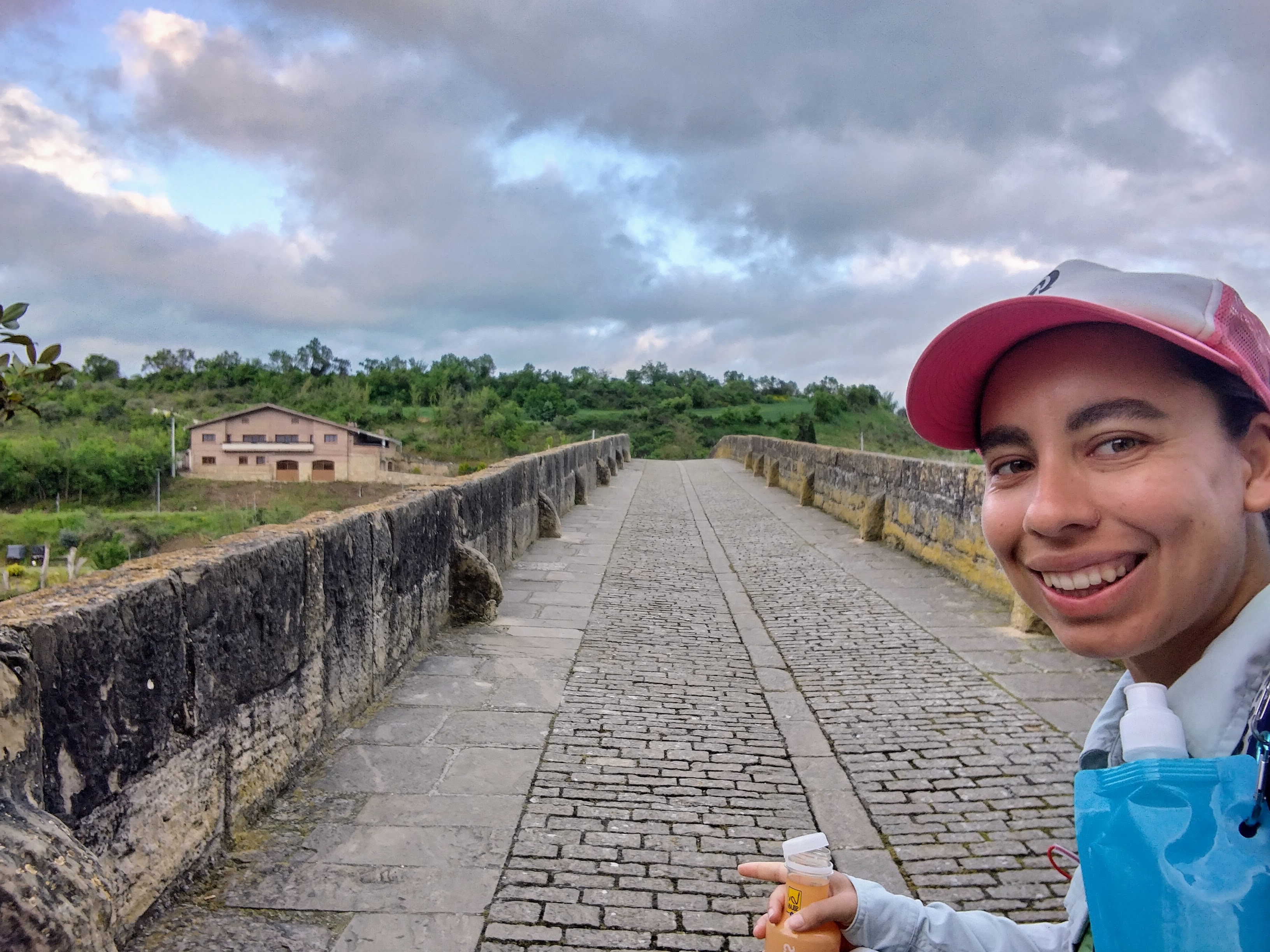
    Crossing the bridge that gives Puente la Reina its name.

    In the morning Eunseok wanted to sleep in so I started off by myself. My short little legs had no chance of keeping up with my long legged Pamplona friends. The terrain wasn’t difficult, just one steep hill. The house I grew up in is basically in the bottom of a canyon and you have to walk uphill to get anywhere (i.e. to school), so I found myself able to keep my pace uphill while other pilgrims slowed down. This gave me a satisfying, if false, sense of speed.

    The trail passed through fields of wheat and the occasional vineyard. The best view was of a town shining on a hill with a rainbow over it like something out of the Wizard of Oz.
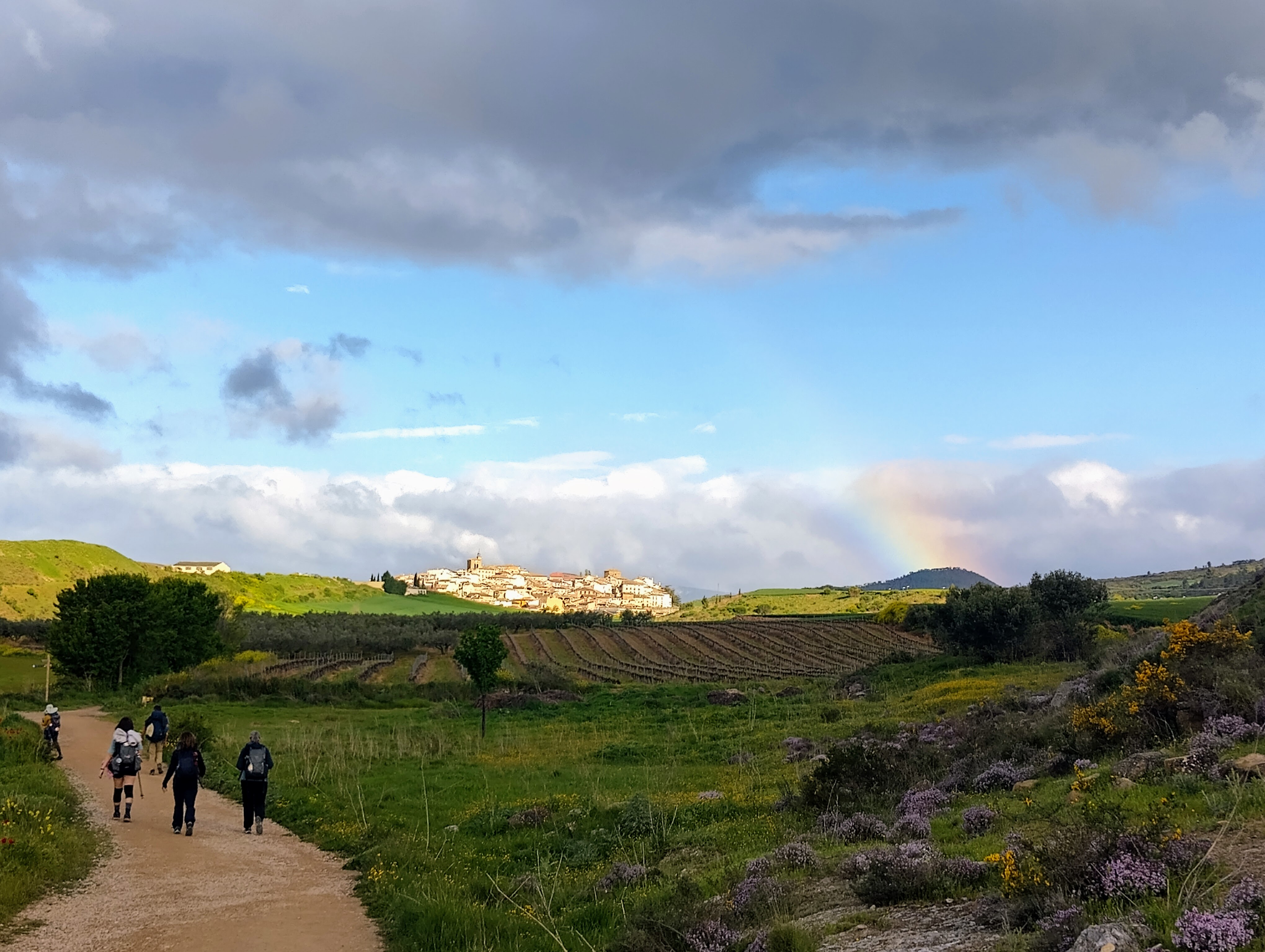
    Eunseok, Michelle, and Kim Kimmy caught up to me and we stopped for lunch in that little town. I had thought Kim Kimmy was ahead of us because she hadn’t taken a rest day in Pamplona, but apparently she’d taken one in Puente la Reina instead. I resolved never again to believe I wouldn’t see someone again. I kept to the pact to be frugal by eating the leftover pizza and also found the cheese that I had bought in the Pyrenees in my backpack. I had completely forgotten about it. It was in a vacuum sealed wrapper so it was still good.

    Down the trail, Michelle, Kim Kimmy, and I came upon a teepee tucked away in the trees. It was like suddenly being transported back to North America. There was a man there who beckoned for us to come over. As we approached, other pilgrims passed by completely oblivious, as if we’d wandered through a portal into the twilight zone. The man spoke extremely fast Spanish, but I was able to understand and translate everything he said. (This isn’t always the case; his accent was just perfect for my ears.) He told us they do Native American ceremonies regularly there and listed off some familiar ones. I can’t speak to the authenticity of his ceremonies, but even so it was very surprising to come across this in Spain.

    Victoria Castillo and friends on the Camino de Santiago.
    Evidence that the teepee wasn’t a hallucination.

    Then disaster struck: I got a blister between my toes. Right on the “webbing”. (I don’t have webbed toes, but you know what I mean.) I tried different patches and more Vaseline, but nothing helped. At one point I was wearing a toe sock just on that foot. A nice Canadian couple passed me and gave me some hiker’s wool, which I hadn’t known about. It’s literally tufts of lamb’s wool that you’re supposed to apply to hot spots to take away moisture and prevent full on blisters from forming. I sat down immediately on the ground to put it on, which is how Eunseok found me. He must have been hiding in the bushes because he was ahead of me and I never passed him. He said he’d wait for me in the next town. I started walking and the wool did help—for a while anyway.
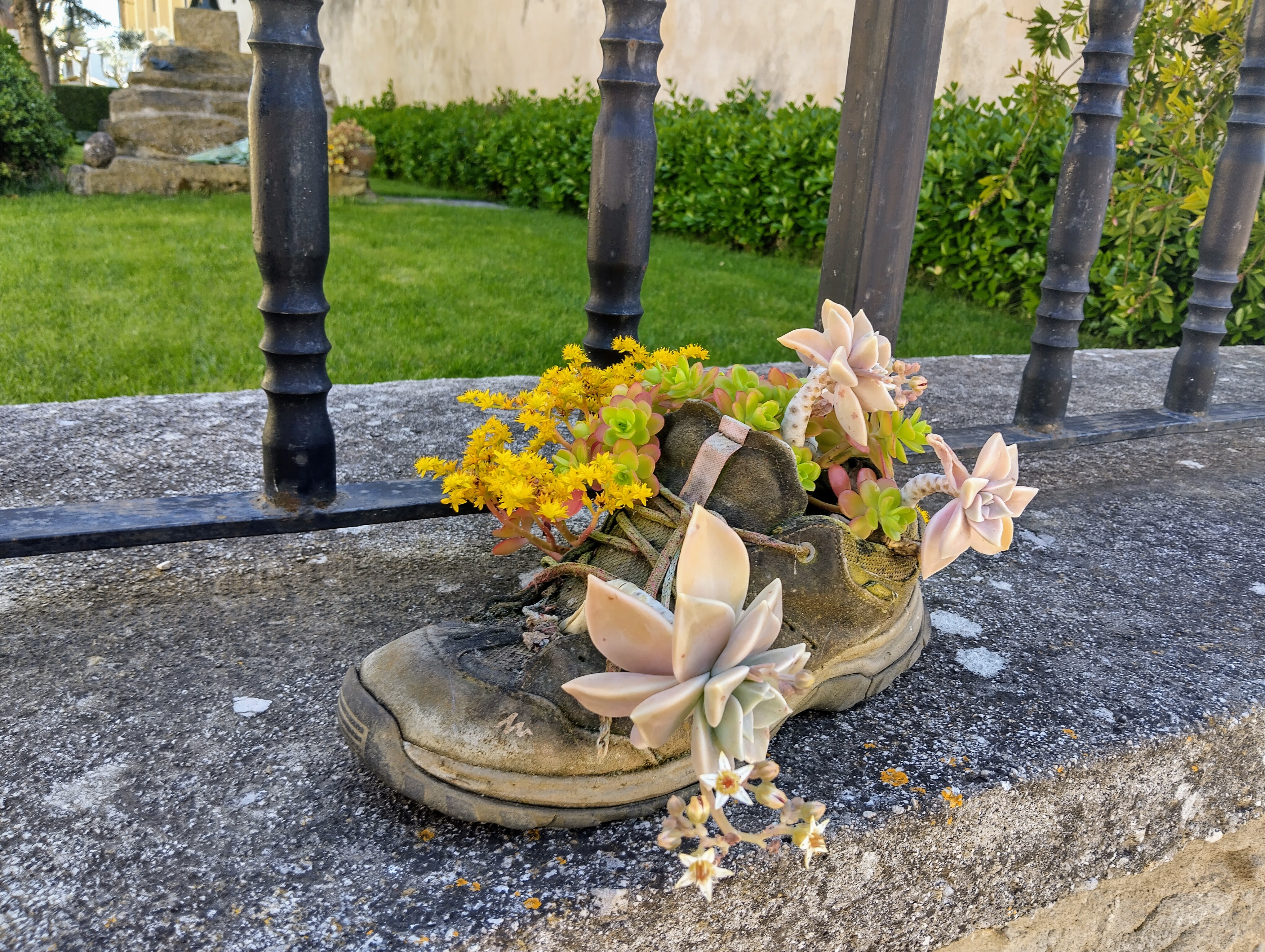
    The final fate of a pilgrim’s feet.

    As promised, he was waiting in what I think was the town of Lorca. I should have found an albergue there and stopped for the day, but I knew everyone else was going to Estella and didn’t want to be left behind. I told Eunseok I’d be ok after a little rest, so he went on ahead.

    I was not ok after a little rest. By the time I admitted this to myself, Lorca was too far behind to tempt me to turn around. Determined to stop at the next albergue I came across, I shuffled into the next little town. There were no albergues, just a dreary bar. Michelle was in a similar predicament and we decided the best thing to do was to share a taxi to Estella.

    I asked the woman behind the bar to call us a taxi. She stared at me with disdainful, glazed eyes that lacked the energy to fully glare, as if I’d asked her to personally pick me up and carry me to Estella. Eventually she called—or pretended to call—and said the taxi would arrive in 10 minutes. Then she disappeared into the kitchen and didn’t come out again. The taxi never came. A local man offered to drive us, and since we didn’t know what else to do, we accepted. It was only 4 km and he charged us 20 euros. Feeling like suckers, we checked into the municipal albergue and picked up cheap microwavable meals from the grocery store.

    Also staying in the municipal were a really nice couple from Minnesota named George and Vinny. Vinny taught me how to treat blisters with a needle and thread. I’m pretty squeamish and generally terrified of all things medical, but Vinny got right in there and threaded me herself. If only I had recognized at the time that this was the one true way to treat blisters, I would have saved myself a lot of pain down the road.
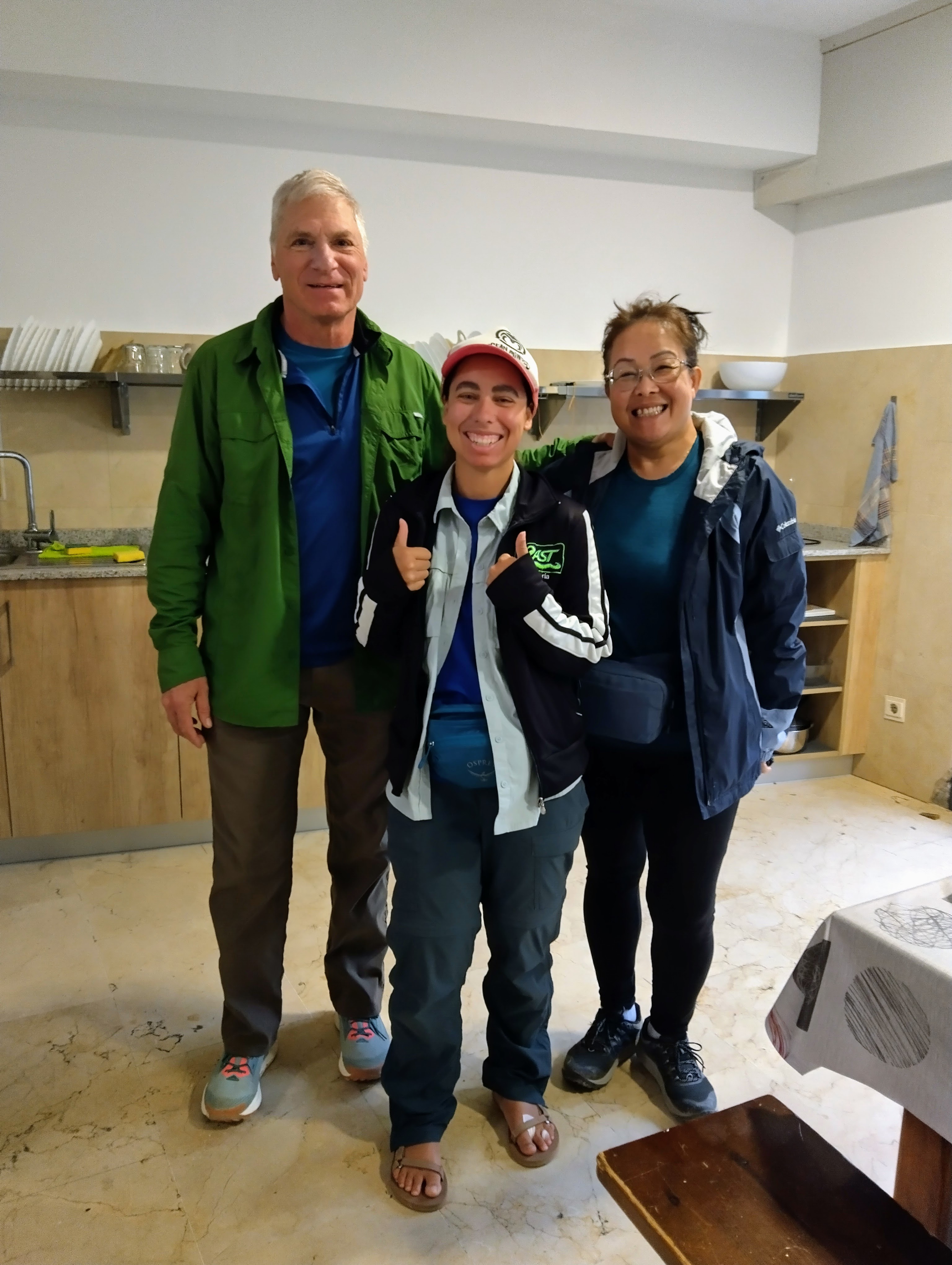
    Victoria Castillo and friends on the Camino de Santiago.
    Thank you George and Vinny!

    Through the modern magic of WhatsApp, I found out that lots of friends were in the area. Some were a little further ahead or behind and encouraging messages were shared around. My blistered foot demanded that I take another rest day. I became torn between not wanting to be left behind and wanting to wait for those who were trying to catch up. I tried to remind myself that everyone’s Camino is unique and whatever happens is what’s meant to be.

    Day 8: Estella

    If I thought a morning hanging around in Pamplona was boring, you can imagine how I felt about a smaller town. Nothing was open and nothing was going to open—not even the pharmacy—because it turned out to be Sunday. We got booted out of the albergue at 8:00 am. The options were: café and church. And we still had to wait until 10:00 am for the church to open.

    Only one café was open. It was a nice place with a terrace overlooking the river. It was cold out so Michelle and I had a hot breakfast inside. By now I had a go-to order of a napolitana con chocolate with zumo de naranja or a Colacao (or both…ok, usually both.). If you try to order hot chocolate in Spain, they give you a big cup of melted chocolate like you would dip the churros into, so you have to make sure to order Colacao, which is a brand of powdered hot cocoa that they give you in a packet with a cup of hot foamy milk. To say I drank a lot of Colacao on the Camino is a severe understatement.
    Victoria Castillo on the Camino de Santiago.
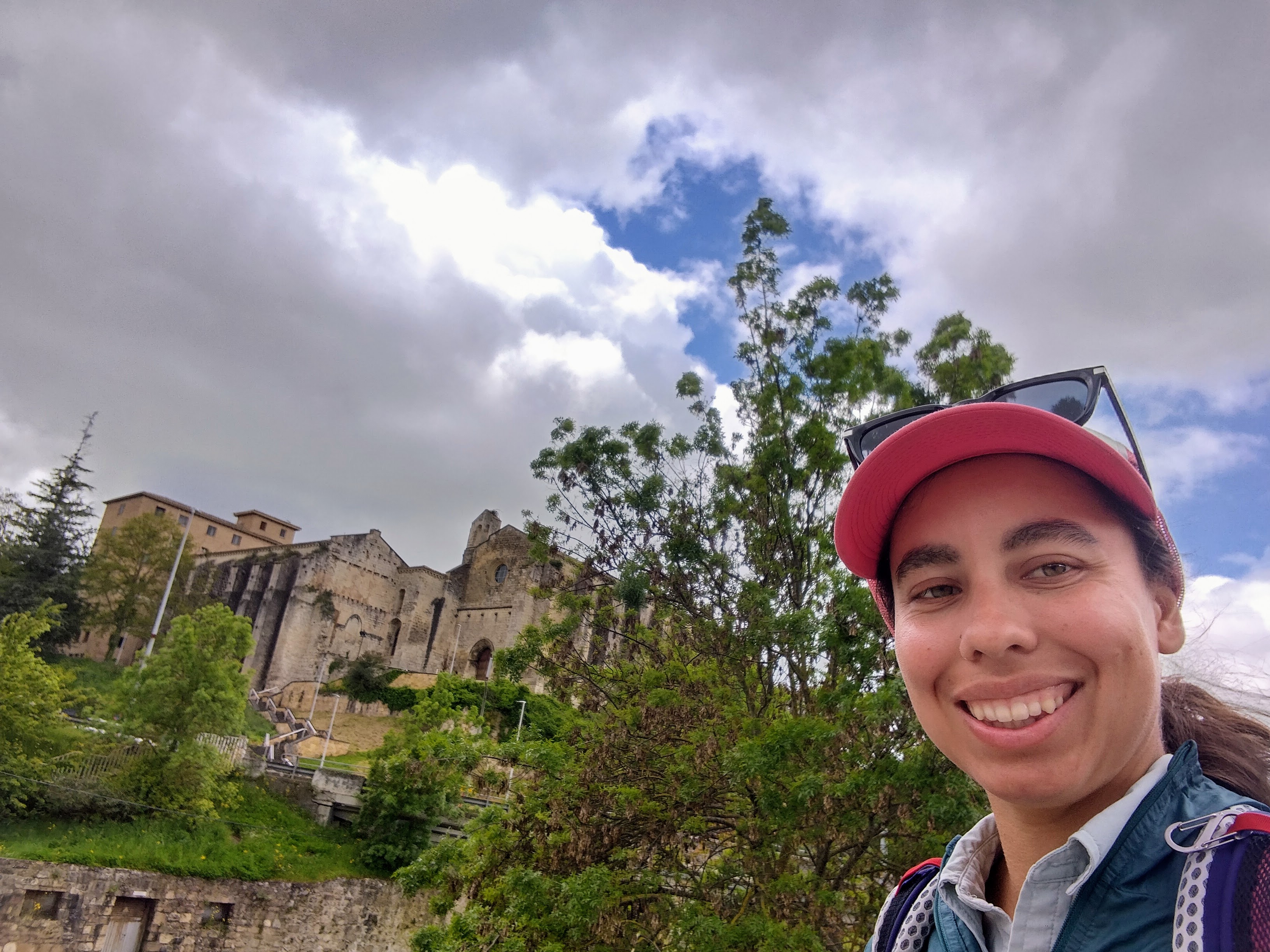
    Look! An old church! You don’t see a different one of those every day…unless you’re on the Camino.

    The church was an old church like other old churches and we marveled at its oldness while the organist practiced. I lit a candle for a pilgrim who I knew was struggling a couple day’s walk behind. After that there was nothing to do but wander around and look for an albergue. We found the donativo. It was still an hour before check-in time, but the volunteer hospitaleros let us in anyway and gave us some leftover vegetable soup and bread for lunch. They were two old Spanish men, both named José. One spoke Spanish and a little English, and the other only spoke Catalan. It was a very different vibe from the grandmotherly ladies in Pamplona. They put the pilgrims to work folding sheets or chopping vegetables.

    After I finished my laundry shift I hid out on my bunk until dinner. There were separate dorms for men and women, and I felt a big difference in the degree to which I could relax. It’s not that I can’t get comfortable in a co-ed dorm, but they’re smellier, louder, and sometimes it’s nice to be able to change without having to perform acrobatics in your sleeping bag.

    Some of the lady roommates were: a jovial Dutch Camino Repeater, a couple of sisters from Brazil, a California girl who’d just finished college, and another girl from California who was now living in Israel. By now some clear Camino demographic patterns had cropped up. The most common nationalities of pilgrims (other than Spanish) were South Korean, Australian, and American, with a high percentage of the Americans being from California. I also met many people from Canada, the Netherlands, France, Germany, the UK, New Zealand, and Taiwan.

    Just when I finally felt rested, I emerged to find a loud, frightening scene. A woman was yelling at José in Spanish and ordering him around so vehemently that I thought she must have been his wife. I cockily asked the Dutch lady if this was “la jefa”. She wasn’t, she was the world’s scariest pilgrim. She seemed to believe she was la jefa though and ordered anyone in her path around without hesitation.

    I steered clear of her and sat at the other end of the table with the Brazilian sisters, a couple of friendly Korean men, and a polite young Irishman. We had fun conversing in mixed languages. Dinner was bread, salad, and lentil stew with chorizo—all pilgrim meal staples.

    I drifted to sleep that night missing the days when I was fresh and my feet didn’t hurt. Suddenly, I was jolted out of a deep sleep by a noise and voices that didn’t sound like they were having fun. Maybe someone had fallen out of bed. My sleepiness far outweighed my curiosity, and I passed out again, leaving it until morning to find out what had happened.
  • Camino de Santiago – Days 4-5: Zubiri to Pamplona

    Day 4: Zubiri → Pamplona (20.25 km)

    Victoria Castillo and friends in Zubiri on the Camino de Santiago.
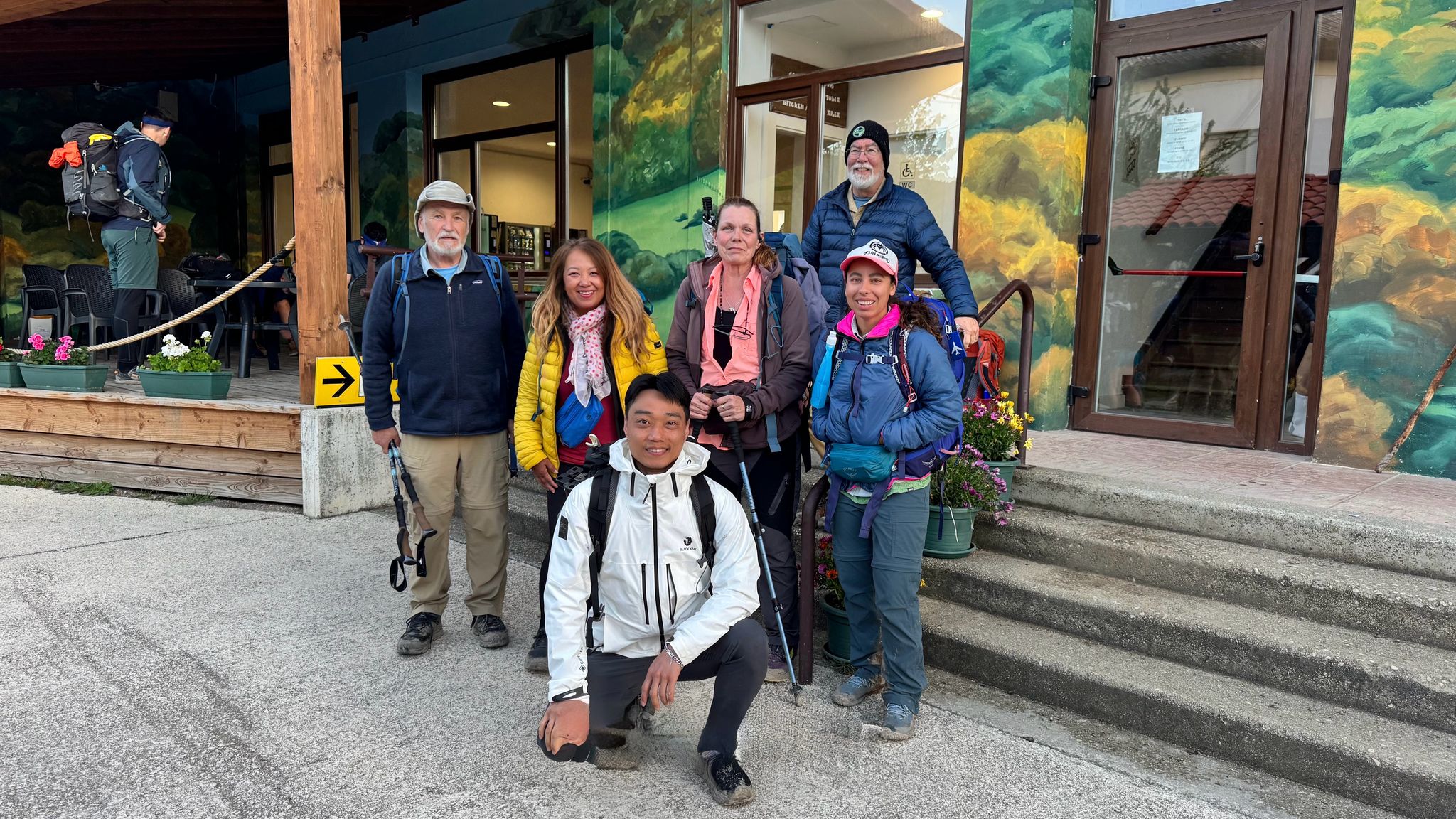
    Bob, Kim Kimmy, Eunseok, Michelle, Mark, Me in front of the Zubiri municipal albergue.

    After a (finally) refreshing night’s sleep, I almost forgot how tired I’d been the night before. I skipped breakfast except to scarf down the last of my mom’s scones and blasted off.

    This 20 km day followed what would become a familiar pattern: the first 5 km feel so easy that you don’t notice how far you’ve gone, the middle 10 km you remember that you’re on a long pilgrimage and there’s work involved, and the last 5 km—hang on, I don’t want to spoil it. We’ll cross that bridge with our tired feet when we come to it.

    Victoria Castillo in the Basque country on the Camino de Santiago.
    This section of the Camino passes through the Basque Country.

    For about the first third of the day, I walked on and off with the Camino Repeater brothers Bob and Mark (AKA Mr. Sarcastic) and Kim Kimmy. Bob and Mark explained a lot of basic Camino information to me, the kind of thing most pilgrims probably look up before they start walking. I learned that a lot of pilgrims go by the book—that one I didn’t read—and follow popular/main stages. I’d already hit some of the main stages by following the crowd. If you zoom out from the minutiae of daily stages, there are three commonly recognized abstract or philosophical sections of the Camino Francés as well, each with its own kind of challenge. The first two are the Physical and the Mental. The Physical is obviously the challenge of getting used to walking every day. The Mental begins when you reach the infamous meseta, where the land is flat and empty and many pilgrims become lost in their own thoughts.

    They also told me about some popular Camino movies. I didn’t know there were any movies about it, but apparently they’re the reason some pilgrims show up. I promised to check out The Way (starring Martin Sheen), a documentary called Six Ways to Santiago, and a new feature film from Australia called The Way, My Way. I’m sure I’ll get around to watching them eventually.

    The trail led mostly through forest along the river for a while and was fairly flat, especially compared to the previous day’s descent into Zubiri. The yellow arrows were so frequent that it would seem impossible to go the wrong way, but nonetheless I witnessed a long trail of pilgrims follow each other down a wrong turn. Maybe the first ones to turn down that path did so on purpose to see the town that it led to. I’ll never know, but the ones who followed them seemed to do so absentmindedly, like sheep. It wasn’t as if they were wandering into an abyss from which there was no return, of course. They would certainly figure things out very soon, so I didn’t worry and continued on my merry way.

    Just over a little bridge, there was a convenient café where everyone stopped for a bite to eat or a beverage. Alexa and Dana were just leaving as I arrived and other friends were there or just behind. After a glass of fresh zumo de naranja, I didn’t feel much like sitting around though and blasted off again.

    The path became awkwardly steep and narrow in small sections. There were bottlenecks of pilgrims taking careful baby steps down concrete ramps. It opened up briefly to curve around a little park next to the river. In that park I saw something extremely rare on the Camino, something I would go weeks without finding another one of: a public bathroom. It was exactly as disgusting as you would expect a park bathroom to be. No toilet seat, no toilet paper, no soap, dirty water covering the floor. One out of ten stars.

    Here’s a pretty flower to take away the image of the gross bathroom.

    I climbed up through some plants back onto the narrow trail and nearly bumped into Michelle. We went single file along the narrow path between tall grasses dotted with little flowers. Some time later I found Kim Kimmy and we came to a fork in the trail. The left path continued along the river and the right path went through a small town. I could already see Michelle up ahead walking along the river, which was no surprise. I decided to go that way too because I was enjoying the plants and the flowing water. Kim Kimmy opted to go through the town, and shortly after we split I heard the church bell let out a single chime. Kim Kimmy told me later that she got to ring the bell. I can still hardly contain my envy.

    Victoria Castillo and friend on the Camino de Santiago.
    Me and Kim Kimmy

    But the river path was pretty, and for the first time I saw a field of lush green crops. Then modern civilization started to creep in. The trail went by a major road. I tried to ignore it and instead focused my attention on the surrounding hills. There were a large number of birds of prey circling, using thermals to rise higher and higher. I couldn’t help but think it would be an awesome place to paraglide and felt a little piqued about being stuck on the ground.

    The trail went up, overlooking the highway. A local guy was selling fruit out of the back of his car. When he figured out I understood Spanish he roped me into a conversation and showed me Tik Tok videos of himself dancing. He wasn’t good. I bought an orange and finally got away when some other pilgrims came by.

    It must have been around the start of the dreaded last 5 km that the trail switched from soft dirt to hard pavement. I stopped at a bridge that led into Trinidad de Arre (which turned out to be the outskirts of Pamplona) to change my socks and found a blister on the bottom of one toe. I shuffled slowly across the bridge and along the cobbled street for only a couple hundred meters before I found friends having lunch. Alexa was there—apparently Dana had decided to take the bus through the city—along with Bob and Mark. I ordered a bocadillo and listened to Bob and Mark regaling a group of pilgrims with tales of the Appalachian Trail.

    I still needed more time to rest by the time they were ready to move on. Bob and Mark intended to pass right through Pamplona since they didn’t care for big cities and had been there before anyway. I never saw them again. I didn’t see Alexa or Dana again either, but we kept in touch. They’re both strong, fast hikers who weren’t afraid to take a totally different path if it suited them. I wasn’t alone for long though. Eunseok and Kim Kimmy soon joined me. Kim Kimmy gave me a sheet of moleskin patches for the blister. I tried using one but it didn’t stick for long.

    The rest of the walk through the city outskirts was hard because of the pain in my feet and tedious because it was through a modern looking city. Although I didn’t really know where I was going, I assumed that the cathedral would be the natural stopping place. Eunseok and I could see what we thought was the cathedral or a castle on a hill, and when we arrived we expected to enter a large building like we had in Roncesvalles. What we found instead when we passed through the gate was another city—a city frozen in time, at least to my eyes. The walls we’d seen from a distance were not those of the cathedral but the ancient walls of the fortified city of Pamplona. There were cars and electricity and other modern things, but the buildings were older than anything I’d ever seen. In my mind’s eye the cars transformed into carts and horses, the electric lights became burning lanterns, and the people didn’t don modern clothes made of synthetic fabric but medieval tunics, cloaks, and dresses made of wool and linen. Despite my infatuation with the old city—or perhaps because of it—I managed not to take any pictures within the city walls. Hopefully my words have painted at least a partial picture in your mind.

    Victoria Castillo and friend on the Camino de Santiago.
    Me and Eunseok on the drawbridge into the old city.

    With all this swirling before me, there wasn’t room in my brain to remember that my feet hurt. Eunseok and I veered off the Camino path, which was now marked with metal shells embedded in the cobbled streets, and toured the cathedral. It was beautiful and intricate, though now it blurs together with the other cathedrals I’ve seen since.

    We found a cheap albergue near the cathedral which was marked with a large shell hanging out over the street. The bunk beds were partitioned into alcoves of two. Our bunkmates were both starting their Caminos from Pamplona. One was a Spaniard whose pack weighed a whopping 22 kg. He was already taking things out to mail home. The other was a South Korean man with all brand new gear in matching mint green who hadn’t done any walking before, not even to break in his new shoes. They were both amiable characters, and while neither spoke each other’s language or very much English, they were very keen to have a conversation. It was a four-way roommate match in heaven. The Spaniard told me in Spanish what he wanted to say, I translated into English for Eunseok, he translated into Korean for the Korean man, he replied in Korean, and we went back the other way. The Spaniard was genuinely concerned for the enthusiastic but physically unprepared Korean. He showed him how to adjust the straps on his backpack and gave advice for taking care of his feet. The Korean fellow—I say fellow because it really feels like the right word for him—was simply delighted to be a pilgrim and laughed out loud when he explained that his family didn’t believe that he could do it. He gave each of us some little things; I got a little bar of soap and a net bag to put it in. I felt like I had to give him something in return. I knew he didn’t have a cord to tie his poncho, so I hastily gave him mine. In retrospect, I shouldn’t have done that, because I needed it myself.

    I took a half-decent shower in the co-ed bathroom, which thankfully had the luxury of stall doors that closed, and put on my town clothes, orange toe socks and all. Eunseok and I had arranged to meet Kim Kimmy at the town hall for a walking tour. That’s right, a walking tour, because we hadn’t done enough of that already. We saw the old keys that opened the gate for the running of the bulls, old cannon balls that the neighborhoods used to fight each other in medieval times, and the other major churches. The tour concluded with a little prayer meeting in which everyone introduced themselves and shared their reasons for doing the Camino. There were three guides who translated between Spanish, French, and English in a telephone game fashion like we’d done at the albergue earlier. Afterwards everyone went to mass, which was ok by me because we got to sit for at least some of the time.

    If you thought we couldn’t possibly do any more extra walking that day, you’d be wrong. Eunseok needed a pair of shower shoes and I went with him to help communicate. We found ourselves on the opposite side of the old city center from where we’d come in. The narrow streets and stone four story buildings suddenly gave way to a wide boulevard and modern cement towers, which shook my brain out of its medieval fantasy.

    Once the shower shoes were obtained, it was time for dinner. Up until now on the Camino there had never been more than one option—now there were restaurants everywhere. We had tapas with a nice couple from London and then went for churros con chocolate. They’re different from what you would find in the US or Mexico. The churros are small and teardrop shaped and you dip them in a huge cup of melted chocolate. Halfway through our second order of churros we found ourselves fading fast and realized it was past 9:00 pm. I still hadn’t gotten the hang of the late daylight hours.

    We’d been warned that the albergue doors would be locked at 10:00 pm. This would have been plenty of time if either of us could remember our way back or even the name of the albergue. We wandered the streets in the dimming light looking for something familiar, but it was all familiar—all the streets looked the same. Eventually we found the Camino path and followed it backwards to where we’d first turned off towards the cathedral. At 9:50 we found Michelle outside a restaurant enjoying a glass of wine, and just up the street was the hanging shell that marked our albergue. Some weeks later, I would realize that this night was the only night of my Camino that I was out after dark. I wasn’t worried about missing that little hour of sleep though, because Michelle, Eunseok, and I had decided to stay in Pamplona for a “rest day”.

    Day 5: Pamplona

    The intended rest day wasn’t very restful. With very few exceptions, albergues don’t allow pilgrims to stay more than one night and they require everyone to be out usually by 8:00 or 8:30 am. Eunseok and I got up early and managed to do some rushed laundry, but the dryer wasn’t working properly, so I ended up with wet socks to carry—again.

    Outside, the city was no longer the bustling hive of energy it had been the previous evening. The streets were deserted except for a few delivery men and nothing was open except for pharmacies and the odd café. The Spanish like to stay up late and sleep in, so most businesses don’t open until 10:00 or 11:00 am. Then everyone takes a siesta in the afternoon, so they close again from 2:00 to 4:00 pm. Hustle culture just isn’t a thing.

    Michelle was staying at a different albergue, so we went there to meet her. It was easy to find because it was on the Camino path. There was nothing to do other than wait around in the lobby. I felt a cold coming on, so I left my bag with them and went to find a pharmacy.

    Luckily for me (and most people, I imagine), the pharmacies do have longer hours, except on Sundays. I got some zinc to boost my immune system. On my way back, I saw two people waving to me through a café window. I recognized them from Orisson! It was Fiona and Evannah, a mother and daughter from Australia. Evannah had just graduated from secondary school before they came to walk the Camino together. I went in to say hello and hear about what they’d been up to. They told me about the albergue they’d stayed in the previous night. It was a donativo (payment by donation only) attached to a convent and run by volunteers. Listening to their descriptions of the amazing experience, I immediately felt drawn to stay there myself. It’s not advertised, and as far as I can tell, everyone who stayed there find out about it by word of mouth. My friends gave me a paper map and directions of how to find the convent and the albergue entrance. Apparently, they had mistakenly knocked on the door of the convent itself, which is inhabited by cloistered nuns who interact very little with the outside world. But a nun did answer and pointed them to the albergue door. I can imagine her shyly peeking out, wondering what was going on.

    I said “hasta luego” to Fiona and Evannah and went to tell Eunseok and Michelle that we’d have somewhere nice to sleep that night. They liked the sound of the place too, and besides we’d overstayed our welcome in that lobby and were getting kicked out. Check-in at the convent wouldn’t be until 1:00 pm, so there was plenty of time to kill. While Michelle took care of some personal errands, Eunseok and I explored the city walls, a museum about the festival of the running of the bulls, and the pilgrim office. The pilgrim office was showing a really cool video about Pamplona. One of the things I learned was that, for centuries in Pamplona, it was illegal to build outside of the fortified city walls. Before the law was changed, they built up instead of out. That explained the dramatic difference between the old city center and the more modern outer city. I told Eunseok about it later because he fell asleep through the video.

    Victoria Castillo on the Camino de Santiago.
    Eunseok took this photo of me looking out over the city walls.

    At check-in time, we met Michelle at the convent. There was another pilgrim there already, Johnny from New Jersey, and we were all given the grand tour together by the volunteers. We learned that the volunteers stay for two weeks before either moving to another donativo, continuing their own Caminos, or going home. Our volunteers were two amazing ladies named Rosa and Margaret, from Florida and Australia, respectively. They’d each done about 25 Caminos in the last 10-12 years! The place itself was also absolutely lovely. I was even able to hang my socks to dry in front of a lovely window with a nice view of tree leaves and flowers, all of which I could see from my bed.

    Victoria Castillo an hospitaleras in Pamplona donativo albergue on the Camino de Santiago.
    Margaret, Me, Rosa

    Once we were settled in, I basically dragged everyone, including Johnny, to the restaurant that Ernest Hemmingway famously used to hang out in. I’m not a huge Hemmingway enthusiast (more of a Jane Austen kind of gal), but I’d read a few of his books. Johnny had read more and actually remembered the plots, whereas I could barely remember the titles. Luckily for me there’s no quiz to get into the restaurant. The place was much larger than I expected, but exactly as art deco. The food was overpriced and not good; I had a steak which was very overcooked.

    Then everyone went separate ways to run errands or rest. My dad and sister had specifically requested that I pick them up some botas, or wineskins. After a lot of searching, I found them in a store on the street where the bulls run. On the way back I got lost again. I felt better about it later when Eunseok told me he got lost too.

    The vibe back at the donativo was amazing. More pilgrims had arrived and were relaxing. They don’t have Wi-Fi, so pilgrims are forced to resort to old-fashioned entertainment such as talking to one another, or playing live music on the piano or guitar in the common area. I cozied up with some soothing apple tea made by Rosa using apples from the nun’s orchard, and listened to Anastasia from Berlin play the piano beautifully. She’s a legitimate concert pianist and a really cool person.

    Victoria Castillo and friend on the Camino de Santiago.
    Me and Anastasia

    Rosa and Margaret cooked a delicious dinner using more of the apples that the nuns gave them. The comradery around the table was fun and energizing. Eunseok got another new name: Santiago, which is Spanish for Jacob.

    After dinner there was a special treat. We were led down to a private chapel that is only open to pilgrims who stay in the albergue. I didn’t expect much, maybe a room with a little altar and candles. We went downstairs to the basement and—holy cow! (Yes, I did write “holy cow” in my journal.) It was a room as large as the churches that I’d toured with a huge Baroque altarpiece that was more intricate than the cathedral. I think the unexpectedness of finding something so elaborate in a dark basement that’s closed to the public made it more sensational. Nothing that one goes to see is ever as beautiful as something that one finds by accident.

    Rosa read a statement from a priest who is usually there and we sat for 20 minutes of silent contemplation. I found myself thinking about the limitations of peoples’ perceptions of each other. We meet someone and decide what kind of person they are based on very little information and they do the same with us, but with limited knowledge of each other it’s impossible to get a complete idea of who someone really is. I wished I could see myself from the outside to see how I am perceived and why it often seems so different from who I think I am and who I want to be. Tears rolled down my cheeks. When we went back upstairs everyone went to their own spaces for a while. I asked Rosa for some more tea (I couldn’t get enough of her apple tea) and sat in the empty common area. Rosa saw that something was bothering me and sat with me. She asked me about myself and I couldn’t help but cry again. Then she did something that most people don’t do. She talked to me without trying to tell me what to do. She told me about “the tap”, a concept she’d read about. It’s when someone metaphorically taps you on the shoulder with an opportunity for something you never would have considered otherwise. I felt a little better.

    After a while the others came back to hang out in the common area. Jack from London taught me a little tune on the piano which was fun. When Anastasia came back she played a beautiful song for everyone. It got surprisingly late, and even though we were all exhausted, we were enjoying spending time together too much to want to go to bed. Rosa put her foot down for bedtime of course. I went to sleep thankful to be in such a beautiful place and felt that I would think a lot about who I want to be when I started walking again tomorrow.